
BUSINESS
NYSE Routes Tokenized Stocks Through Blockchain.com’s Crypto App
NYSE and Blockchain.com signed a Sept. 23 memo to distribute 24/7 tokenized U.S. stocks, while Blockchain.com’s live tokens still skip shareholder votes.

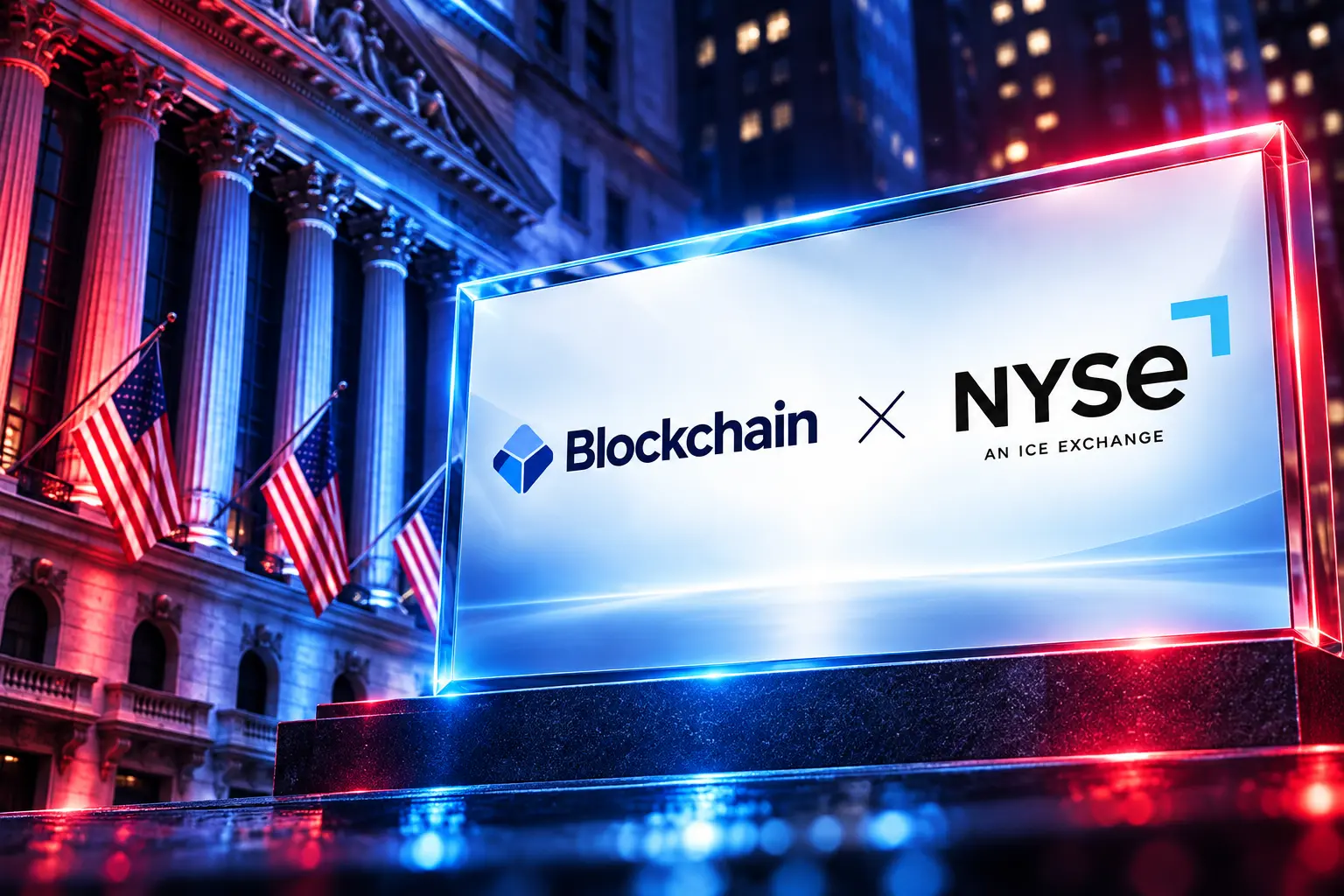
Blockchain.com and NYSE Group signed a Sept. 23 memorandum to put tokenized U.S. stocks and ETFs on NYSE’s unbuilt digital venue for more than 44 million accounts. The companies named no countries and no start date, and they tied the whole plan to regulatory approvals that have not arrived.
The line that moved on Thursday morning was round-the-clock NYSE names in a crypto app. The document they signed is a distribution memo for a venue NYSE first described in January, and the stock tokens Blockchain.com already sells are a different legal product.
The Memorandum Leaves the Trading Venue Unbuilt
The Sept. 23 statement, issued from Dallas and New York, says the memorandum outlines a distribution plan that would give Blockchain.com’s user base access to tokenized U.S. exchange-listed equities and ETFs on NYSE’s previously announced digital alternative trading system. NYSE Group President Lynn Martin called Blockchain.com’s international footprint a complement to that platform “upon launch.”
Blockchain.com, founded in 2011, now reports over 95 million wallets, more than 44 million confirmed accounts, more than $1.1 trillion in crypto transactions, and operations in more than 70 jurisdictions. Peter Smith, the firm’s executive chairman, chief executive, and co-founder, treated the missing geography as the point of the deal.
People shouldn’t be limited in owning stocks based on where they happen to live or the brokerage and information they may or may not have access to. Connecting to the NYSE digital ATS will enable us to extend the opportunity to invest in these digital assets to tens of millions of Blockchain.com users around the world.
Peter Smith, Executive Chairman and CEO, Blockchain.com Sept. 23 statement
The companies also pointed to Citi Institute’s $5.5 trillion base case by 2030 for tokenized assets. That same Citi note, published in June, put the market then at about $17 billion and said public securities, including U.S. equities, would lead the next stage rather than private funds.
THE SEPT. 23 HEADLINE FIGURES
- Confirmed accounts: Blockchain.com cites more than 44 million, which is the pool NYSE wants to reach.
- Wallets: The firm says it has supported over 95 million wallets since 2011.
- Reach: It operates in more than 70 jurisdictions, with no list of which ones would see NYSE tokens.
- Citi 2030 base: $5.5 trillion in tokenized assets, against about $17 billion in the June snapshot.
Those account numbers are real. The trading venue they would plug into is still a plan, and the first thing that can move without a new stock-market license is a pair of data feeds, not a share token.
NYSE Wants Tokens That Behave Like Listed Shares
On Jan. 19, NYSE said it was building a platform for trading and on-chain settlement of tokenized securities and would seek the approvals that work requires. The design pairs the exchange’s Pillar matching engine with blockchain post-trade systems and is meant to support more than one chain for settlement and custody.
The January note promised 24/7 operations and stablecoin-based funding, instant settlement, orders sized in dollars, and fractional share trading. Subject to those approvals, the venue would handle tokenized shares fungible with traditionally issued securities and tokens issued natively as digital securities. NYSE said tokenized shareholders would take part in traditional dividends and governance rights, with distribution through non-discriminatory access to qualified broker-dealers.
That last clause is the split in this story. If the January product is what Blockchain.com users eventually receive, they would hold something NYSE describes as the listed share in token form. Parent Intercontinental Exchange also said it is preparing clearinghouses for round-the-clock activity and is working with BNY and Citi on tokenized deposits so clearing members can move funds when banks are closed.
Martin, in that January statement, said the exchange was leading toward fully on-chain solutions “grounded in the unmatched protections and high regulatory standards” of its existing market. The Sept. 23 memorandum does not change those product terms. It tries to put a crypto retailer in front of them.
What Blockchain.com Users Hold on Ondo
Blockchain.com already sells tokenized U.S. stocks and ETFs to eligible users, and those instruments are not the January NYSE token. On Feb. 3 the firm and Ondo Finance said eligible users in 30 European Economic Area states could buy, sell, and hold more than 200 tokenized U.S. stocks and ETFs in the Blockchain.com self-custody wallet, extending a service that had gone live in Africa and South America in 2025. At that February date, Ondo Global Markets reported $556 million in total value locked and $8.7 billion in trading volume.
Ondo’s own legal page is blunt about the wrapper. An Ondo tokenized stock is a structured note, a debt instrument issued by Ondo Global Markets (BVI) Limited, a bankruptcy-remote vehicle in the British Virgin Islands, with rights under Swiss law. The note is built so the amount payable tracks the underlying security, including corporate actions. The tokens are fully backed 1:1, plus a buffer, by securities held through a regulated custodial broker-dealer, and a security agent holds a first-priority interest in those assets for tokenholders.
Holders do not have shareholder voting rights, shareholder information rights, or other shareholder rights from the company that issued the underlying security. They can redeem for the then-value of the assets. They do not appear on the share register. Ondo offers and sells the tokens under Regulation S, only to people outside the United States who are not U.S. persons and are not buying for a U.S. person.
THREE PRODUCTS THAT SHARE A TICKER
| Feature | Listed U.S. share | Ondo token on Blockchain.com | Planned NYSE digital venue token |
|---|---|---|---|
| What the holder owns | The share, through a broker | A structured note issued in the British Virgin Islands | A token NYSE says will be fungible with the listed share |
| Voting and information | Shareholder vote and issuer communications | No shareholder voting or information rights from the issuer | Governance rights, per NYSE’s January plan |
| Hours and funding | Exchange hours, cash through a broker | Onchain in the wallet, outside the NYSE floor session | 24/7 operations, stablecoin funding, dollar-sized orders |
| Who can buy | Broker customers, including U.S. persons | Non-U.S. persons under Regulation S | Not announced; needs approvals |
Carlos Domingo, chief executive of Securitize, the firm NYSE later named as its first digital transfer agent, drew that line in March when the transfer-agent memorandum was announced.
Most of these tokenized equities efforts today, they’re not really tokenizing the equity. They’re creating derivatives or price trackers. So this is about really working with the issuers to do native tokenization.
Carlos Domingo, Chief Executive, Securitize
The Sept. 23 memorandum says Blockchain.com users would access tokens on NYSE’s digital venue, which is the native product NYSE described in January, not the Ondo note. Until that venue is live and approved, the app’s working “stock” remains the note. The 24/7 NYSE headline still reads as if those two instruments were the same thing, and they are not.
Same Rights Must Travel With the Token
On Sept. 17, six days before the memorandum, the Securities and Exchange Commission issued an Innovation Exemption for a new class of Tokenized Securities Venues. Chairman Paul S. Atkins said the order would let those venues trade certain tokenized NMS stocks in a permissioned setting while the Commission thinks about further rules. The relief runs five years after publication.
The order is not a license for NYSE’s Pillar-based alternative trading system. It exempts permissioned automated market makers and their liquidity pools from the Exchange Act definition of an “exchange,” and it gives a related dealer exemption to some liquidity providers. NYSE still has to clear its own venue. The exemption does, however, state the test Washington is now willing to write down.
A venue using the relief must verify that the tokenized NMS stock offers holders the same rights and privileges as traditional NMS stock of an equivalent class. Before listing a token created by an unaffiliated third party, it must give the issuer of the underlying stock written notice and a chance to object. Other conditions sit around that core.
WHAT THE INNOVATION EXEMPTION REQUIRES
- Same rights: The token must carry the same rights and privileges as the listed share of that class.
- Issuer objection: The listed company gets written notice and a chance to block a third-party token of its stock.
- Volume caps: Tokenized NMS stocks on a venue are subject to limits on the number of symbols and the volume traded.
- Public ledger: Smart contracts must be auditable and public, and deployed on a public, permissionless ledger.
- Halt alignment: The venue must stop trading a token when the primary listing exchange stops the underlying stock.
- Five-year clock: The exemptions expire five years after publication, with a request for comment on what comes next.
Jamie Selway, director of the SEC Division of Trading and Markets, said the division is ready to work with parties that want to operate a Tokenized Securities Venue. For NYSE and Blockchain.com, the practical reading is narrower. A token that tracks a price and skips the vote is the product the Commission just declined to bless on these venues, and it is the product Blockchain.com currently distributes with Ondo.
Who Can Buy, and Who Is Locked Out
The Sept. 23 memorandum never lists the countries that would get NYSE tokens. Martin talked about Blockchain.com’s international footprint. Smith talked about people limited by where they live. The existing Ondo rail is closed to U.S. persons by design. The planned NYSE rail, as described in January, runs through qualified broker-dealers and is built to look like the listed share, which is a U.S. market structure product even if the first customers sit abroad.
That split will decide what a Blockchain.com user in Lagos, Lisbon, or London actually receives. If the NYSE venue ships as described, the user holds a token NYSE says is fungible with the listed share and carries governance. If approvals stall, the user keeps the BVI note, redeemable for value, silent at the annual meeting. The companies have not said which names would be listed first, whether issuers would have to opt in, or how a weekend trade in a stablecoin would pass through ICE clearing.
Blockchain.com has been widening its own licenses while it waits. It joined the Nigerian Securities and Exchange Commission’s Accelerated Regulatory Incubation Programme, a supervised track for digital-asset firms in Nigeria, and it has kept adding wallet access for the Ondo catalogue in Europe, Africa, and South America. That is not NYSE membership. It is the distribution map NYSE is trying to rent.
ICE Already Signed a Larger Crypto Distributor
Blockchain.com is not the first crypto firm ICE has tried to put in front of the same venue. On March 5, Intercontinental Exchange announced a strategic relationship and investment in OKX, which ICE said serves more than 120 million people. Subject to approval, OKX would provide access to NYSE tokenized equities markets and to ICE’s U.S. futures. ICE Chair and Chief Executive Jeffrey C. Sprecher said the tie-up would expand global retail access to ICE’s regulated markets and speed plans to offer on-chain infrastructure and tokenized assets to U.S. investors.
On March 24, NYSE and Securitize signed their own memorandum. Securitize was named the first digital transfer agent eligible to mint blockchain-native securities for corporate or ETF issuers on the coming Digital Trading Platform, and Securitize Markets was expected to sit among the broker-dealers on that venue. The transfer-agent role is how NYSE gets from a price tracker to a token the issuer will recognize.
HOW ICE ASSEMBLED THE TOKEN PIPE
- January 19, 2026: Announces a digital venue for 24/7 tokenized U.S. equities and ETFs, pairing the Pillar matching engine with on-chain settlement.
- March 5, 2026: Invests in OKX and says OKX may distribute NYSE tokenized equities to its global user base, subject to approval.
- March 24, 2026: Names Securitize the first digital transfer agent for the venue and a likely broker-dealer participant.
- September 17, 2026: The SEC issues a five-year Innovation Exemption for permissioned onchain AMM venues that trade tokenized NMS stocks.
- September 23, 2026: Blockchain.com and NYSE Group sign the distribution memorandum for the still-unlaunched alternative trading system.
Read in that order, Wednesday’s news is a second retail pipe, smaller than OKX on the account count ICE itself advertised, attached to a venue that still needs transfer-agent plumbing, broker-dealer access, and a regulator’s stamp. The closing bell is not moving to a crypto app on the strength of this memo alone.
Crypto Data Reaches ICE Terminals First
The memorandum also covers a two-way data swap, and that piece does not need a new stock venue. ICE Data Services, an NYSE affiliate, plans to distribute Blockchain.com’s crypto market data and analytics to its subscribing clients. Blockchain.com plans to add certain ICE and NYSE exchange data feeds to its app so those more than 44 million confirmed accounts can see real-time stock information.
Martin said NYSE looks forward to giving Blockchain.com customers “more data and choice in how they participate in the digital financial ecosystem.” Smith called tokenized stocks a catalyst for economic freedom. The data leg is the part that can show up inside the app while the ATS is still a filing. Traditional ICE clients get a crypto tape. Crypto users get an NYSE tape. No one yet gets a weekend print in a token NYSE will stand behind as the listed share.
The 24/7 stocks line is doing more work than the document. A distribution memorandum for an unlaunched venue, signed six days after the SEC said the token has to carry the same rights as the stock, is being read as if the New York Stock Exchange had opened all night for a crypto wallet. Blockchain.com’s live tokens still skip the vote. NYSE’s planned tokens are built not to. Neither company has said when the first NYSE-venue name could appear in a Blockchain.com account.
Disclaimer: This article is news reporting and analysis of a memorandum between Blockchain.com and NYSE Group, and of related tokenized-stock products and regulatory orders. It is informational only and is not investment advice, a solicitation to buy or sell any security, token, stablecoin, or crypto asset, or a recommendation of any brokerage or wallet. Readers should consult a licensed financial adviser, broker-dealer, or securities lawyer in their own jurisdiction before acting on any product described here, including tokenized stocks, structured notes, and on-chain tokens that track listed shares. Figures, account counts, product terms, and approval statuses reflect the company statements, legal pages, and Commission order cited in this piece as of their stated dates and may change as the venue, the exemption, and national rules move.

Edinburgh Opens a 2027 Tour Built for Time Trials

Korda Maps Auður From Meðalland to Irvine Bay

Apple Music Films Its New Logo in Mineral Oil

Oppo Prices the Pad Mini Above India’s iPad Mini

Austen Soaks Scotland Before Boelo Brings Weekend Gales

Volkswagen Sells the Osnabruck Plant to Clear a Board Fight

Apple’s Foldable iPhone Hinges on Samsung Display Supply

Saksham Gaur Finds He Is His Own Company’s Client

Tata Motors’ Iveco Tender Opens as Holders Still Decide

Onimusha Way of the Sword Preload Hits a Windows 11 Wall
-
 AUTO2 months ago
Volkswagen Sells the Osnabruck Plant to Clear a Board Fight
-
 NEWS2 months ago
Apple’s Foldable iPhone Hinges on Samsung Display Supply
-
 AUTO2 months ago
Tata Motors’ Iveco Tender Opens as Holders Still Decide
-
 BUSINESS2 months ago
Saksham Gaur Finds He Is His Own Company’s Client
-
 GAMING2 months ago
Onimusha Way of the Sword Preload Hits a Windows 11 Wall
-

 ENTERTAINMENT3 years ago
What is SD on Amazon Prime? – All You Need to Know
-

 BUSINESS2 months ago
Hyderabad 22-Carat Gold Jumps After a False Bargain
-

 NEWS2 months ago
iQOO 16 Locks 8,400 mAh While 100W Charging Holds