
ENTERTAINMENT
Oakley’s Sense and Sensibility Bets on the Sisters First
Oakley and Reid put the Dashwood sisters at the center of Sense and Sensibility, a 132-minute Austen film opening in the U.S. on October 16.

Focus Features has released a second trailer for Sense and Sensibility ahead of a U.S. opening on October 16. Britain already has the film, which took £1.54 million in its first weekend and finished fourth.
The campaign is selling yearning. The people who made the movie built it around two sisters who cannot live the same way and cannot let each other go.
The Sisters Are the Romance This Time
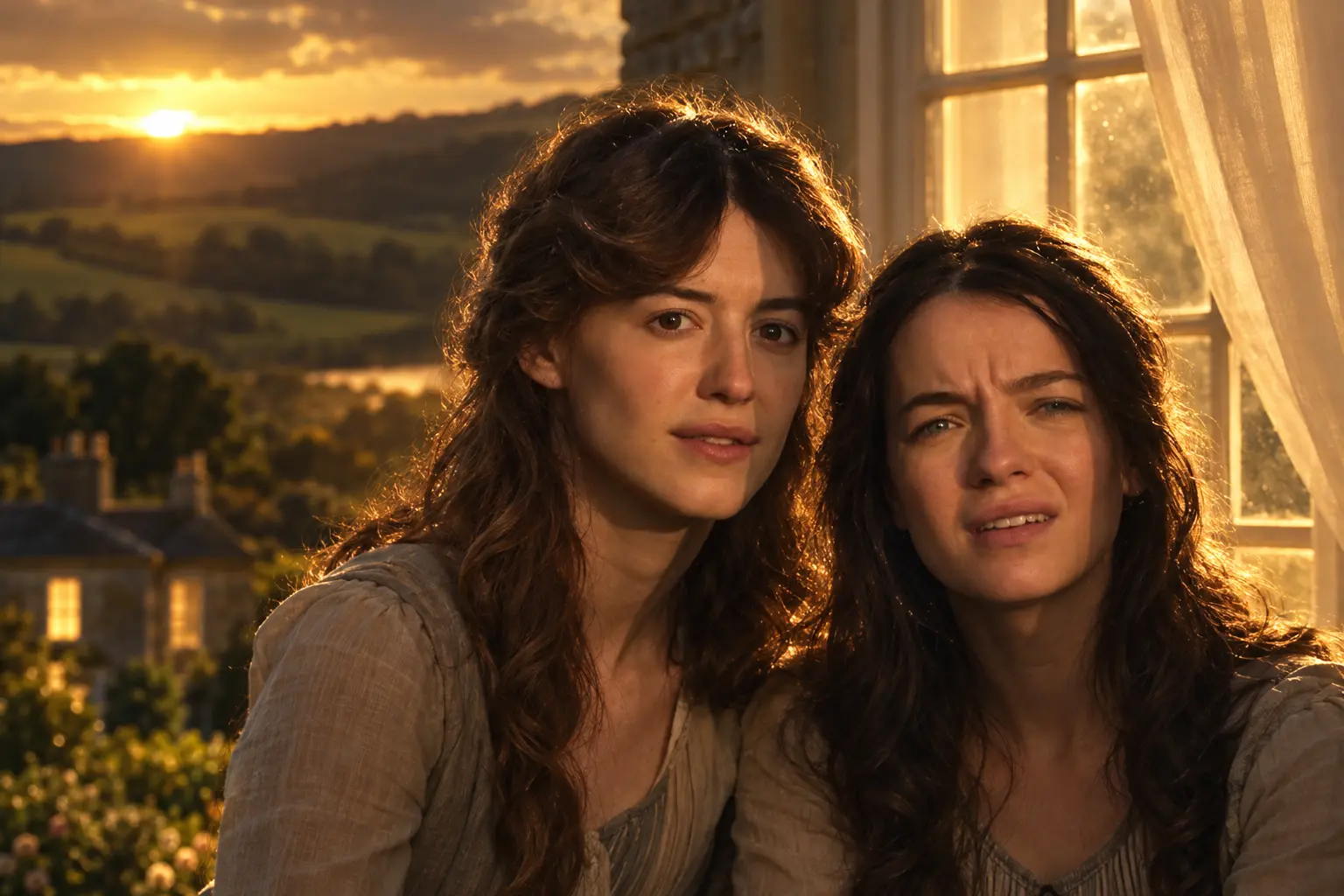
Georgia Oakley, 38, directed the 132-minute film from a script by Australian novelist Diana Reid. Daisy Edgar-Jones plays Elinor Dashwood, the elder sister who keeps her feelings packed down. Esmé Creed-Miles plays Marianne, who would rather feel everything at full volume.
Oakley has said the pairing is the film’s actual love story. The men have limits the sisters do not.
For me, the central love story was about the sisters. There are these quite clear limitations to the romantic relationships because of the time, whereas the sisterly relationship has no limits.
Georgia Oakley, director
Reid came in with the same spine. Austen is sold as romance, she said, but she did not want the ask of the narrative to be the courtships. She wanted two women changing each other, with the romances as what they learn from, or get, after that work is done.
“I tried to be respectful but not reverent,” Reid said. “I was very open to changing things.” She and her producer sat with the 1811 novel until they could name what had not been put on screen. The sisters had to stay the spine. The men had to feel worthy of them, which meant taking liberties with Edward Ferrars and Colonel Brandon so the story would not read as two women settling.
Willoughby needed less help. Reid and producer India Flint read his treatment of Marianne and saw a pattern they would now call love bombing followed by ghosting. The language in 1790s Devon is different. The behaviour, Reid said, is identical.
India Flint Took the Book to a Novelist
Flint originated the project. A veteran of Working Title, she wanted a classic and had been reading Reid’s novels. Reid’s 2021 debut, Love and Virtue, follows a sharp, funny student through a campus world of power and friendship. Flint has said Reid can catch a cultural moment and a generation’s voice, which is also what people keep returning to Austen for. Reid was about Austen’s age when the novel was written, and close in age to the women on the page.
They developed a draft, took it to Working Title, and only then went looking for a director. Oakley came on after BAFTA Award nominee Georgia Oakley had already made Blue Jean, her 2022 debut about a closeted PE teacher in Thatcher-era Britain. That film opened at £107,000 in the UK and finished at £327,000. It also earned Oakley a BAFTA nomination for Outstanding Debut and the People’s Choice Award at Venice.
Blue Jean is a movie about people who cannot say the thing they mean. Elinor Dashwood lives in that same weather. Oakley has said actors like the part because it asks them to communicate a lot while attempting to do very little, and that she saw that gift in Edgar-Jones the first time they met. Creed-Miles, she added, brought an instinct for improvisation that surprised her.
Oakley was born a few miles from Austen’s birthplace in Hampshire and grew up outside Oxford. She has lived in Mallorca with her wife, textile archivist Alice Gomme, and their daughter. Much of the film was shot in the southwest of England and in a Georgian mansion that is still occupied. “It was a little bit fraying carpets and peeling paint,” Oakley said, with approval.
She wanted nature in the frame because the book is full of waiting, for letters and for news, at a pace that is not ours. Hair was part of the same argument. Online chatter about the first trailer locked onto the sisters’ undone, even unkempt, hair. Oakley said most Austen films had kept her at arm’s length from how those women lived when nobody was painting their portrait or watching them at a ball.
Edgar-Jones has called this the first Sense and Sensibility directed by a woman. On a beach in Dartmoor, after a last scene in corsets, she said she looked around at two female producers, a female director, a female screenwriter, and Creed-Miles, and told her co-star, “Look what we did.”
HOW THE FILM GOT HERE
- June 2025: Focus Features and Working Title announce the film, with Oakley directing Reid’s script and Edgar-Jones attached as Elinor.
- July 2025: Caitríona Balfe, Fiona Shaw, Frank Dillane and George MacKay join, and filming starts in the United Kingdom.
- June 25, 2026: Focus posts the first official trailer, later passing 12.9 million YouTube views.
- September 15, 2026: The film premieres at the Odeon Luxe Leicester Square in London.
- September 25, 2026: Universal opens it in the UK and Ireland.
- September 30, 2026: Focus releases a second trailer as the U.S. date nears.
- October 16, 2026: Focus opens the film in the United States.
Tim Bevan and Eric Fellner produce with Flint of November Pictures and Jo Wallett of Kiddo Films. Arnaud Potier shot it. Francesca Di Mottola designed the production, Grace Snell the costumes, Izabella Curry the cut, and Roger Goula the score. The U.S. rating is PG.
A Second Trailer for a Film Britain Already Has
The new trailer is a date reminder more than a first look. Britain has been living with the movie since September 25. Focus still needs American ticket buyers to show up on October 16, and the studio’s own line remains the same: an irresistible new take on love and sisterhood.
The first trailer, in June, hung on a single sentence. “No one knows your heart like a sister.” That is still the pitch. Watch the new cut and you get the same wet moors, the same quick wit, and the same two women trying to survive a money shock and a set of men who do not always deserve the airtime.
Focus has been leaning on a word Oakley does not love. The film is being sold as Austen for Gen Z. “I could barely tell you what Gen Z is,” she said. “All I know is that the marketing team keep using the word ‘yearning.’” Then, dry as Elinor: “Daisy seems to be the queen of yearning.”
The joke has already escaped the campaign. People are watching Edgar-Jones and MacKay’s smallest bits of hand business and calling it yearnism, which is both mockery and a compliment. The louder complaint under the trailer, though, is older than any hashtag. A lot of viewers still do not want a new version, because they already have one.
The 1995 Version Still Sets the Terms
Ang Lee’s Sense and Sensibility, from a screenplay Emma Thompson wrote and starred in, is the film this one has to walk past. Columbia released it in December 1995 on a $16 million budget. It took $135 million worldwide. It drew seven Academy Award nominations and one win, Emma Thompson’s adapted screenplay Oscar, with Kate Winslet nominated in support and Thompson nominated for Elinor as well.
In Britain that film opened at £690,000 from 102 sites and reached £13.4 million. Focus and Working Title later did Joe Wright’s Pride and Prejudice in 2005 (£2.5 million from 397 sites, £14.6 million total) and Autumn de Wilde’s Emma in 2020 (£1.6 million opening, £7.5 million total). Returning to Austen is house style, not a left turn.
AUSTEN AT THE U.K. BOX OFFICE
| Film | U.K. opening | Sites | U.K. total |
|---|---|---|---|
| Sense and Sensibility (1995) | £690,000 | 102 | £13.4 million |
| Pride and Prejudice (2005) | £2.5 million | 397 | £14.6 million |
| Emma (2020) | £1.6 million | unlisted | £7.5 million |
| Sense and Sensibility (2026) | £1.54 million | 725 | first weekend |
Oakley knew the comparison was coming. She has told the story of an actor who had not seen Lee’s film and had not read the book, and who asked whether he should. “Well, maybe don’t,” she said. She wanted some of the cast to arrive without those pictures in their heads, and she wanted people who had never met the Dashwoods to find a way in.
Reid had to talk herself into the job. She was “super nervous” and “wasn’t totally convinced straight away,” then reread the novel, rewatched Lee’s film, and decided there was still something unsaid. She is the bestselling author of Love and Virtue, plus Seeing Other People and Signs of Damage, and this is her first screenplay. She does not want another Austen. “I have no doubt that someone will adapt her again in, like, the next five minutes.”
£1.54 Million and a Split in the Reviews
Universal opened the new film in 725 UK and Ireland cinemas on September 25, one of the widest bows of the year, and it came in at the low end of a £1.5 million to £2.5 million forecast. Fourth place, behind an Avengers encore, Resident Evil, and Heart of the Beast, is a solid start for a period drama. It is not a smash. Lee’s film had a fraction of the cinemas and a much longer tail.
THE FILM ON PAPER
- Running time: 132 minutes, rated PG in the United States.
- Critics’ score: 77% of 26 reviews are positive on Rotten Tomatoes, at 7.0 out of 10.
- Weighted score: 72 out of 100 on Metacritic, from 15 critics, logged as generally favorable.
- U.K. bow: £1.54 million from 725 cinemas, fourth place, weekend of September 25 to 27.
The notices split along a familiar line. Mark Kermode said he cried more than once. David Rooney, writing as a chief film critic, called the film fine if not strictly necessary and summed it up as “Glum and glummer,” arguing that Oakley seldom steps out from Lee’s shadow. Beatrice Loayza described a moody, naturalistic spin, slightly muted in feeling and colour, and a solid undertaking. One British pan asked why the film had fallen flat, and answered that Oakley had not dragged Austen into the present the way other 2026 literary films had.
That last knock is the tell. Oakley did not try to match Emerald Fennell’s loud Wuthering Heights. Edgar-Jones has said there was a temptation to make the film “more 2026,” and that this version honours the period while the filmmaking still feels fresh. Scott Menzel, a film journalist, called it his favourite Sense and Sensibility to date and praised it for not reinventing Austen. Matt Neglia wrote that the lack of a fall-festival berth, and the 1995 shadow, should not throw anyone off.
So the fight is not really about whether the dresses are pretty. It is about whether a quiet, sister-first, still-period film has a right to exist 31 years after a version many people still treat as finished business.
Who Plays Whom in Oakley’s Cast
Reid had to learn to love Marianne. She is an Elinor, and she had been reading the younger sister as a petulant teen until Creed-Miles played her as an intelligent woman with an uncompromising private moral philosophy. Edgar-Jones, an only child, has said she felt she inherited a sister in Creed-Miles. “I don’t have siblings myself, so I felt very lucky to inherit one on this film.”
Oakley has amplified the Elinor and Edward romance. In the novel, Edward is a more compromised object of love than the version George MacKay is playing. “I was interested in ‘the good guy,’” Oakley said. Frank Dillane’s Willoughby is so fully inhabited that Dillane was apparently surprised to learn the character is widely held to be a scoundrel. “At one point, we were talking about Willoughby as a villain, and Frank was, like, ‘What?’”
Herbert Nordrum plays Colonel Brandon with a calm that several early notices have flagged, even as they still measure him against Alan Rickman. Reid’s favourite scene in the finished film is a riverbed passage with Marianne and Brandon. The script had another scene to reassure the audience they ended up together. The performances made it unnecessary.
She is also proud of a duel, which she says audiences do not expect from Austen, and of two fights between the sisters after the London ball. Those rows, she said, are the whole film in two scenes: sense and sensibility, in the same room, at last saying the quiet part.
THE DASHWOODS AND THE MEN AROUND THEM
- Elinor Dashwood: Daisy Edgar-Jones, the elder sister who buries what she feels.
- Marianne Dashwood: Esmé Creed-Miles, uncompromising, and the role several early viewers are calling a breakout.
- Mrs. Dashwood: Caitríona Balfe, moving the family from Norland Park to a shabby Devon cottage.
- Margaret Dashwood: Bodhi Rae Breathnach, the youngest sister.
- Edward Ferrars: George MacKay, written warmer than Austen’s more boxed-in original.
- John Willoughby: Frank Dillane, the rescue that turns into a vanishing act.
- Colonel Brandon: Herbert Nordrum, the steadier long game.
- Mrs. Jennings: Fiona Shaw, the gossipy matchmaker who still sees the sisters clearly.
Stacy Martin plays Fanny Dashwood, Tom Brooke is John Dashwood, and Turlough Convery, Bethany Slater, Eliot Sumner and Chloe Pirrie fill Sir John Middleton, the Palmers and Lady Middleton. Oakley has said she would not call the film an explicit queer romance, though she sees Marianne rejecting the status quo hard enough that “if we were to make that story now, then she probably would be a queer character.” The critic Eve Kosofsky Sedgwick made a related argument about the novel as far back as 1991. Oakley also calls herself an Elinor and her wife a Marianne.
Focus Features Brings It to U.S. Theaters on October 16
Focus had first dated the U.S. release for September 11, then pushed it to October 16. The film is only in theaters October 16 on that side of the Atlantic, with Universal handling the rest of the world. Edgar-Jones was in Sydney on October 1 for a local premiere, still working the long corridor between the UK opening and the American one.
At a Los Angeles screening, Oakley watched younger viewers cheer when Willoughby got his comeuppance and when Elinor and Edward finally kissed. “I should go to the cinema in America more often,” she said. “It was so not British.” The other surprise was men over fifty, who seemed to love it. “I guess there’s men over fifty needing a happy ending.”
That is the bet Focus is taking into October. A 31-year-old shadow, a sister-first script from a novelist who had never written a film, a director whose last feature played in a handful of UK cinemas, and a trailer that keeps saying yearning while the movie itself is about two women who cannot stop watching each other. Britain has already bought a ticket. The United States gets its turn on October 16.

Edinburgh Opens a 2027 Tour Built for Time Trials

Korda Maps Auður From Meðalland to Irvine Bay

Apple Music Films Its New Logo in Mineral Oil

Oppo Prices the Pad Mini Above India’s iPad Mini

Austen Soaks Scotland Before Boelo Brings Weekend Gales

Volkswagen Sells the Osnabruck Plant to Clear a Board Fight

Apple’s Foldable iPhone Hinges on Samsung Display Supply

Tata Motors’ Iveco Tender Opens as Holders Still Decide

Saksham Gaur Finds He Is His Own Company’s Client

Onimusha Way of the Sword Preload Hits a Windows 11 Wall
-
 AUTO2 months ago
Volkswagen Sells the Osnabruck Plant to Clear a Board Fight
-
 NEWS2 months ago
Apple’s Foldable iPhone Hinges on Samsung Display Supply
-
 AUTO2 months ago
Tata Motors’ Iveco Tender Opens as Holders Still Decide
-
 BUSINESS2 months ago
Saksham Gaur Finds He Is His Own Company’s Client
-
 GAMING2 months ago
Onimusha Way of the Sword Preload Hits a Windows 11 Wall
-

 BUSINESS2 months ago
Hyderabad 22-Carat Gold Jumps After a False Bargain
-

 ENTERTAINMENT3 years ago
What is SD on Amazon Prime? – All You Need to Know
-

 NEWS2 months ago
iQOO 16 Locks 8,400 mAh While 100W Charging Holds