
NEWS
Scotland Adds a Second Gepant for Acute Migraine Attacks
Scotland’s SMC accepted atogepant for gated acute migraine, the same two-triptan step rimegepant has held since 2023, so boards now choose on price.

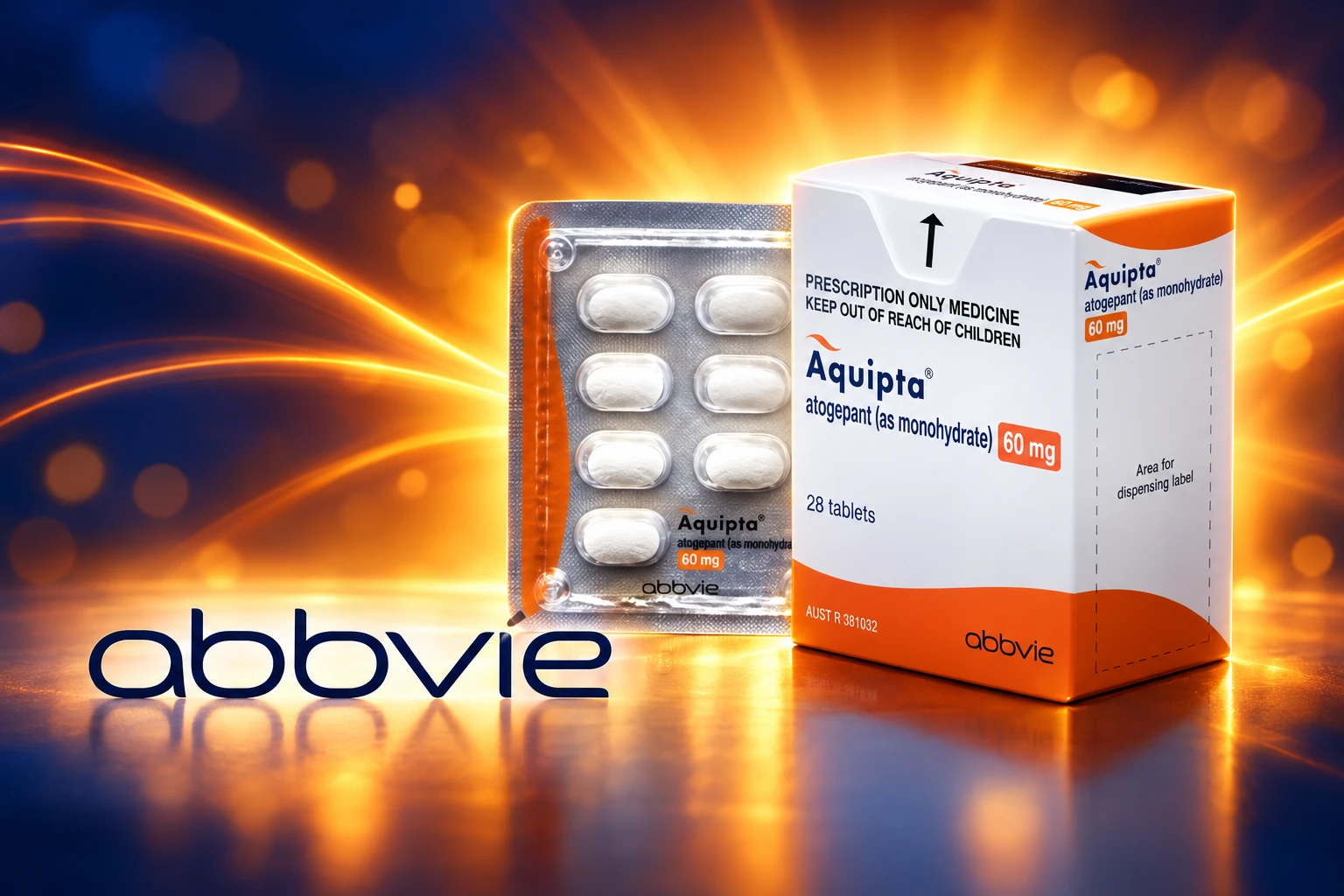
The Scottish Medicines Consortium accepted atogepant (Aquipta) for restricted acute migraine treatment on 12 October 2026. Adults on NHS Scotland can get the 60 mg tablet for an attack only if at least two triptans already failed, or triptans cannot be used, and NSAIDs and paracetamol also failed to give enough relief.
The decision follows a NICE recommendation on 30 June 2026 and a UK licence from the MHRA on 22 April 2026. Rimegepant has sat on that same restricted step in Scotland since 9 May 2023, and NICE already told clinicians in England to use whichever of the two tablets costs less.
A Restricted Nod, Three Years After Prevention
SMC advice SMC2934, published on 12 October 2026 after a short review, says atogepant is accepted for restricted use within NHSScotland for the acute treatment of migraine with or without aura in adults. The consortium’s own line is modest. Atogepant “offers an additional treatment choice in the therapeutic class of calcitonin gene-related peptide receptor antagonists.”
That class, the gepants, blocks CGRP, a peptide tied to migraine attacks. Aquipta is already on the Scottish list for prevention. On 9 October 2023, SMC2599 accepted it for adults with at least four migraine days a month who had already failed three or more preventive drugs.
AbbVie announced the acute listing on 13 October 2026. Rachael Millward, medical director at AbbVie UK, said migraine is a highly complex neurological condition and that the firm was pleased SMC had accepted atogepant as an acute option for eligible patients in Scotland. Dr David Watson, a GP with an extended role in headache at Aberdeen Royal Infirmary, said existing treatments help many people, but not all respond well or can tolerate them, and that extra choice helps clinicians tailor care.
Access to appropriate migraine care can be seriously inconsistent, creating a postcode lottery. We know that many people with migraine struggle to access the treatments they need or had to face long waits to see a specialist before finding the option that works best for them. A greater variety of treatments available is essential for migraine care and we therefore welcome today’s update from the SMC, which adds an additional treatment option for eligible migraine patients.
Rob Music, CEO, the Migraine Trust
Music’s welcome is real. The listing still leaves GPs and headache clinics with a paperwork job: the two-triptan history has to be on the record before the new tablet can be written.
The Two-Triptan Rule Has Not Moved
SMC’s restriction is copied almost word for word from the rimegepant advice issued in 2023. It is not a first-line acute drug. Cheap tablets stay in front. A patient who has only ever tried one triptan, or who still gets enough relief from naproxen and paracetamol, does not meet the rule.
WHO CAN BE OFFERED ATOGEPANT FOR AN ATTACK
- The triptan bar: At least two triptans were tried and did not give enough symptom relief, or triptans are contraindicated or not tolerated.
- The simple-painkiller bar: NSAIDs and paracetamol were also tried and did not give enough pain relief.
- The licence: Adults with migraine with or without aura, as an as-needed tablet, not as a general painkiller.
- The practical catch: The failures need to be documented, which is harder for people who bounce between GP appointments without a coded treatment history.
That last point is where Music’s warning still bites. A national listing ends one kind of variation, the health-board “no” to a licensed drug. It does not, on its own, create two failed triptan trials in a notes system that never recorded them. People who cannot take triptans because of heart disease or poor tolerance are the group this gate was written to catch. People who never got as far as a second triptan are not.
May 2023 Put a Gepant on This Gate
Pfizer’s rimegepant (Vydura) is rimegepant for the same restricted group. SMC2521, published on 9 May 2023 after a full submission, accepted it for acute migraine with or without aura, limited to patients with inadequate relief after at least two triptans, or who cannot take triptans, and who also had inadequate pain relief with NSAIDs and paracetamol. On 11 September 2023, SMC2603 accepted rimegepant for restricted preventive use in episodic migraine.
So Aquipta is the second oral gepant on the Scottish acute pathway, not the first. NICE later said rimegepant is already “the usual acute treatment” after two triptans fail. SMC’s short review for atogepant treats it as another drug in a class that is already on the shelf.
THE TWO ORAL GEPANTS ON THE SCOTTISH ACUTE PATHWAY
| Feature | Atogepant (Aquipta) | Rimegepant (Vydura) |
|---|---|---|
| How it is taken | Swallowed 60 mg tablet | 75 mg wafer that dissolves on the tongue |
| SMC acute advice | 12 October 2026, restricted | 9 May 2023, restricted |
| Who it is for | Two triptans failed or unsuitable, plus NSAIDs and paracetamol failed | The same gate |
| NHS indicative 2-pack | £25.78 (60 mg) | £25.80 (75 mg) |
| Prevention on NHS Scotland | 9 October 2023, after three failed preventives | 11 September 2023, episodic, after three failed preventives |
The wafer matters on days when vomiting makes a swallowed tablet a gamble. The swallowed tablet matters for people already used to Aquipta as a daily preventive. Those are product differences. They are not a new place in the pathway.
Why NICE Pushes the Cheaper Tablet
NICE TA1172, published on 30 June 2026, uses the same clinical gate and then adds a money rule. Clinicians should use the least expensive option of the suitable treatments, including atogepant and rimegepant, after talking through the advantages and disadvantages. They should count administration costs, dose, price per dose and commercial deals.
BNF NHS indicative prices put a two-tablet pack of Aquipta 60 mg at £25.78 and a two-tablet pack of Vydura 75 mg at £25.80. On list price the acute packs are a penny apart. Confidential deals can still flip which one a board stocks. NICE said a cost comparison suggests atogepant’s costs are similar to or lower than rimegepant’s, which is why it said the newer tablet can be used.
There has been no head-to-head trial. NICE relied on an indirect comparison that pointed to similar pain reduction at two hours, then called those results uncertain. Because the drugs work in a similar way and are taken by mouth, the committee judged their clinical effect likely to be similar, and clinical experts said they would sit at the same step. In England the drug had to be funded within 30 days of that June guidance. Scotland’s clock is the SMC advice itself, which now goes to NHS boards and area drug committees to put on local lists.
A 60 mg Daily Cap Blocks Dual Use
The licence now covers both jobs: stop an attack, and, for people with at least four migraine days a month, cut how often attacks come. The BNF dose for an attack is 60 mg once daily as required. The preventive dose is also 60 mg once daily. Product information sets a maximum dose of 60 mg a day. A person already taking Aquipta every morning to prevent attacks has used the day’s full dose. There is no second 60 mg tablet left for a breakthrough attack.
That is why some people already on daily atogepant still keep rimegepant as the rescue. The two listings look like one drug for both jobs. In clinic they often split. Daily Aquipta for prevention, a different acute drug when an attack still comes through. The SMC acute nod therefore helps people who are not already taking that 60 mg tablet every day, and people who cannot take triptans, more than it helps the group already on Aquipta for prevention.
The 60 mg tablet is white to off-white, oval and biconvex, marked A60. A 10 mg tablet exists for people on strong CYP3A4 or OATP inhibitors, or with severe kidney disease. Common effects listed for acute use include nausea and constipation. The BNF also carries a warning that the medicine may make people sleepy. Atogepant is not advised in pregnancy. Local English prescribing notes tell GPs to review how many acute packs go out, because frequent attacks may mean the patient needs prevention, not a larger acute stash.
Scotland’s Commonest Recorded Neurological Diagnosis
A Scottish Government paper on neurological conditions, using GP records for 1 May 2026, counted 425,096 people with a recorded migraine diagnosis. That was 7.1% of 6,010,834 registered patients, the largest single coded neurological condition in the set. Nearly 1.1 million people, 18.2% of registered patients, had at least one of the 25 conditions in the report.
THE GP RECORD, NOT THE ELIGIBLE GROUP
- Coded migraine: 425,096 people, 7.1% of registered patients, as of 1 May 2026.
- UK charity figure: The Migraine Trust puts migraine at 10 million adults in the UK, about one in seven.
- Disability rank: Migraine is the second leading global cause of years lived with disability among people aged 15 to 49.
- The SMC slice: Only the subset with two failed triptans, or who cannot take triptans, plus failed NSAIDs and paracetamol, matches the acute listing.
Migraine is still widely treated as “just a headache.” Attacks bring throbbing pain, nausea, vomiting and a raw response to light and sound. They stop people working and looking after family. Many patients describe being dismissed. A second gepant does not fix that. It does give GPs who have already worked through the cheap options another oral CGRP tablet to try before a long wait for a specialist injection clinic.
What the ECLIPSE Trial Found at Two Hours
SMC’s acute advice sits on ECLIPSE, AbbVie’s phase 3 study of atogepant 60 mg against placebo for attacks. After the first treated attack, 24.3% of people on atogepant were pain-free at two hours, against 13.1% on placebo. No single treatment-emergent side effect reached 2% of patients after that first attack in the double-blind period. The trial also met a key test of freedom from the most bothersome migraine symptom at two hours. AbbVie reported the pain-freedom odds ratio as 2.36.
Those figures beat a dummy tablet. They do not tell a GP whether Aquipta beats Vydura in the same patient, because that study was never run. Pain freedom at two hours still left about three in four people on atogepant with some pain at that time point. Rescue medicine and later doses sit outside the headline pair of percentages.
HOW THE ACUTE LICENCE ARRIVED
- 9 May 2023: SMC accepts rimegepant for restricted acute use, the first oral gepant on this Scottish step.
- 9 October 2023: SMC accepts atogepant for restricted prevention after three failed preventives.
- 22 April 2026: The MHRA grants a UK licence for atogepant as acute treatment of migraine with or without aura in adults.
- 30 June 2026: NICE TA1172 recommends atogepant for the same restricted acute group and tells clinicians to use the cheaper suitable gepant.
- 12 October 2026: SMC2934 accepts atogepant for restricted acute use in NHS Scotland.
Boards now have two oral CGRP tablets for the same gated group, list prices a penny apart on a two-pack, and a 60 mg daily ceiling that stops Aquipta doubling as the rescue for people already taking it every day. The SMC did not invent a new first-line acute treatment. It added a second name to a step that has been on Scottish lists since May 2023, and left price, formulation and that daily cap to decide which box gets opened.
Frequently Asked Questions
Is Atogepant Already Used to Prevent Migraine in Scotland?
Yes. SMC2599, published on 9 October 2023, accepted Aquipta for prevention in adults with at least four migraine days a month, but only after three or more preventive treatments had already failed. That prevention listing is older than the acute one and still carries its own, tighter, failure rule.
What Dose Is Used When Kidney Function Is Poor?
The usual acute dose is 60 mg as needed, with a 60 mg daily maximum. Prescribing notes cut that to 10 mg once daily in severe renal impairment (creatinine clearance 15 to 29 mL/min) and in end-stage kidney disease, and the 10 mg tablet is also used with strong CYP3A4 inhibitors such as clarithromycin, itraconazole or ritonavir, and with strong OATP inhibitors. The drug should be avoided in severe liver impairment.
Does Atogepant Tighten Blood Vessels Like a Triptan?
Gepants block CGRP rather than squeezing blood vessels, which is why they are used when triptans are unsuitable, including in some people with cardiovascular disease. The Migraine Trust has also said gepants do not appear to cause medication-overuse headache in the way older acute painkillers can, which matters for people who need frequent attack treatment. That class point is why the SMC gate sits after triptans, not instead of a first cheap tablet.
How Fast Must NHS England Fund Atogepant Compared With Scotland?
NICE said atogepant had to be funded in England within 30 days of final publication of TA1172 on 30 June 2026, which put the English clock at 30 July 2026. SMC advice is issued to NHS boards and area drug and therapeutics committees; the public SMC2934 summary does not set a matching 30-day statutory funding deadline, so local formulary updates decide when a Scottish GP can press the button.
What Pack Sizes of Aquipta 60 mg Are Listed?
The BNF lists 60 mg packs of 2, 7 and 28 tablets, with NHS indicative prices of £25.78, £90.23 and £182.16. The two-tablet and seven-tablet packs match as-needed acute use; the 28-tablet pack matches daily prevention. A 10 mg strength is listed in a 7-tablet pack at £90.23 for people who need the lower dose. Patient information also mentions a 98-tablet pack that may not be marketed.
Disclaimer: This article is news reporting on a Scottish Medicines Consortium decision and related UK prescribing advice. It is for information only and is not medical advice, a treatment recommendation, or a substitute for a consultation. It does not tell any reader to start, stop or switch atogepant, rimegepant, triptans or any other medicine. Anyone with migraine who thinks they may be eligible should speak to their GP, pharmacist or headache specialist, who can check their treatment history, other medicines and conditions before a prescription is written. Doses, list prices, licence terms and local formulary status are those given in the cited SMC, NICE, BNF and product sources and can change.

Edinburgh Opens a 2027 Tour Built for Time Trials

Korda Maps Auður From Meðalland to Irvine Bay

Apple Music Films Its New Logo in Mineral Oil

Oppo Prices the Pad Mini Above India’s iPad Mini

Austen Soaks Scotland Before Boelo Brings Weekend Gales

Volkswagen Sells the Osnabruck Plant to Clear a Board Fight

Apple’s Foldable iPhone Hinges on Samsung Display Supply

Tata Motors’ Iveco Tender Opens as Holders Still Decide

Saksham Gaur Finds He Is His Own Company’s Client

Onimusha Way of the Sword Preload Hits a Windows 11 Wall
-
 AUTO2 months ago
Volkswagen Sells the Osnabruck Plant to Clear a Board Fight
-
 NEWS2 months ago
Apple’s Foldable iPhone Hinges on Samsung Display Supply
-
 AUTO2 months ago
Tata Motors’ Iveco Tender Opens as Holders Still Decide
-
 BUSINESS2 months ago
Saksham Gaur Finds He Is His Own Company’s Client
-
 GAMING2 months ago
Onimusha Way of the Sword Preload Hits a Windows 11 Wall
-

 BUSINESS2 months ago
Hyderabad 22-Carat Gold Jumps After a False Bargain
-

 ENTERTAINMENT3 years ago
What is SD on Amazon Prime? – All You Need to Know
-

 NEWS2 months ago
iQOO 16 Locks 8,400 mAh While 100W Charging Holds