
BUSINESS
Saksham Gaur Finds He Is His Own Company’s Client
Pune founder Saksham Gaur panicked at a staff WhatsApp group, then admitted Metro Media House already runs the founder-free shop he sells to clients.

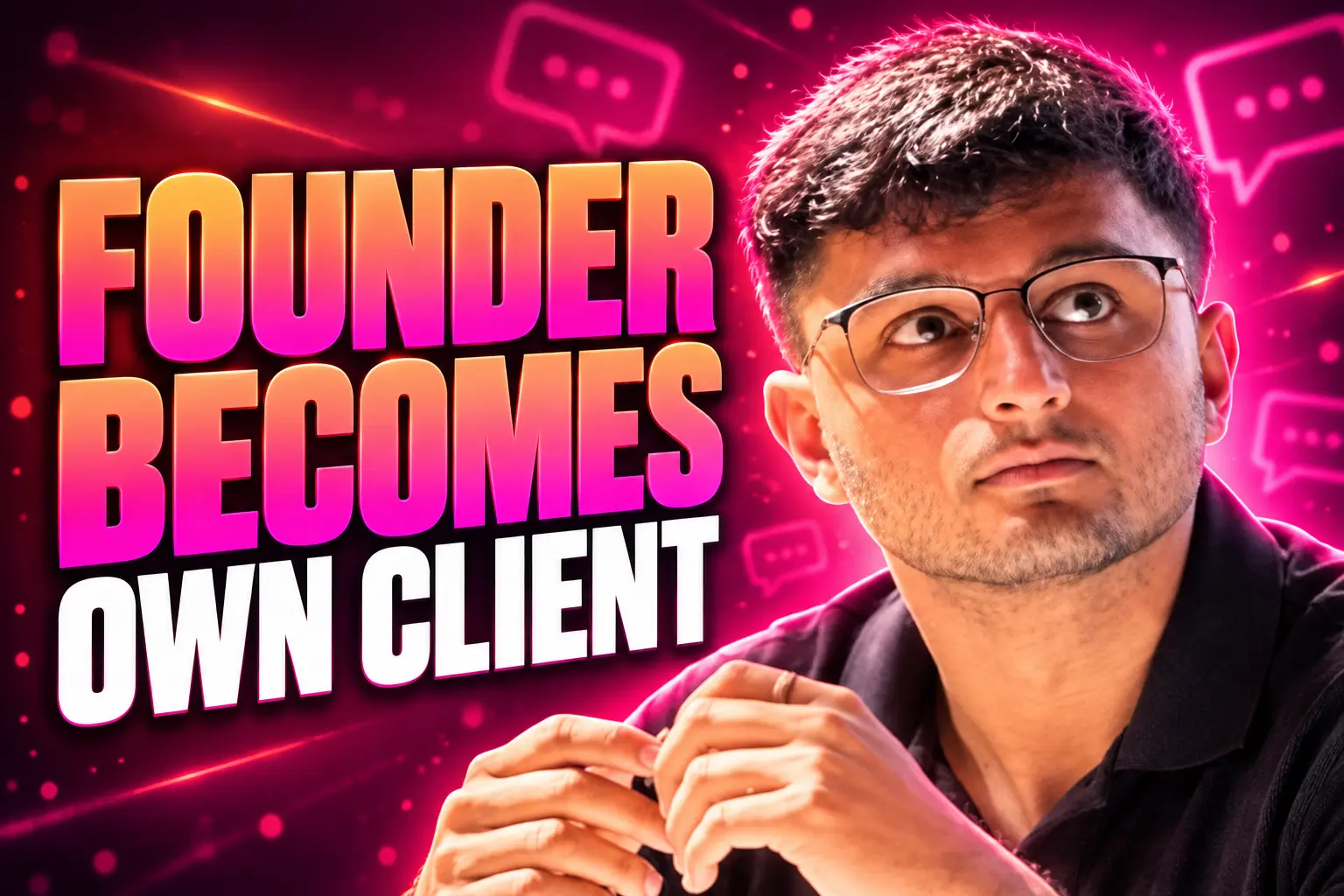
Saksham Gaur found a WhatsApp group of his entire staff, and his first thought was that they had built it against him. The Pune founder of Metro Media House wrote on LinkedIn that the chat was called MMH X SAKSHAM, and that he had become a client of his own company.
He said he learned about the group a day after posting a video on how his team was better than him. Panic came first. Then a line he could not walk back.
I am now my own company’s client. Turns out, it’s not a group against me. It’s a group that runs without me.
Saksham Gaur, founder, Metro Media House, on LinkedIn
A Group Chat Called MMH X SAKSHAM
Gaur’s first read of a “secret group” was the ordinary founder fear: complaints, a pile-on, a record of him that he would never see. The title wrecked that plot. MMH X SAKSHAM is the company times the founder, not a room about the founder.
He called the feeling mock betrayal. The chat exists so the staff can talk through work that would otherwise land on his desk. They sort what is finished, what is still open, and what is actually stuck, then they pass him only the slice that needs him.
“If something doesn’t really need me, they just handle it. Among themselves,” he wrote. That also explained a reply he kept getting when he asked for updates: “Nothing, Saksham. All taken care of.”
LinkedIn users treated the post as a hiring trophy, a sign the shop had internalised his standards and stopped tugging his sleeve. Gaur joined them. “Your job as a founder isn’t to manage everything forever,” he wrote, and then: “This is the whole point. This is what hiring right actually looks like.”
The punchline still sits in his own first sentence. He did not find a mutiny. He found that the company already ran a version of him that did not require him, and his gut still flinched.
Metro Media House Sells Founder-Free Production
That flinch is stranger once you read the sales page. Metro Media House is a Pune content shop that builds short-form and long-form video systems for tech, media, and founder brands. The homepage pitch is blunt. The firm will become the in-house team you do not manage.
“You show up. We handle everything else,” the site says. Strategy, scripts, creative direction, edits, and distribution sit with MMH. Clients are told to apply, not browse a rate card. Every job starts at three months. The shop takes 2-3 new clients per quarter.
THE PUBLIC MACHINE
| Line on the site | The figure |
|---|---|
| Views generated | 1B+ |
| Videos created | 8,000+ |
| Parallel projects | 20+ |
| Output per project | 10 to 100+ videos a month |
| New clients taken on | 2-3 per quarter, 3-month minimum |
Those numbers are the product. Aryan Arora, head of growth at Maple Inc, said CPAs dropped 33% after the partnership. Zara Jarvis, content manager for Steven Bartlett, praised the pacing and hooks. Andrew Ross Sorkin is on the testimonial wall. The promise to those names is a production desk that does not need the client in every thread.
Gaur’s staff then built the same promise inside MMH. The founder who sells an unmanaged in-house team found an unmanaged in-house team, and the unmanaged person was him.
January 2025 Already Proved the Shop Could Run
The WhatsApp surprise was not the first time the company moved without him. It was the first time the independence had a group name he could screenshot.
RocketReach lists him as founder of Metro Media House from 2023, after a BTech in computer science at IIITDM Jabalpur from 2017 to 2021. The personal brand is larger than the payroll. His LinkedIn profile shows about 8,000 followers. The company site talks about four years of brand building, which stretches back before the founder title.
THE ROAD TO A CHAT HE IS NOT IN
- Early 2024: He wrote that agency revenue had fallen to about 2-3k dollars a month, low enough that he was unsure he could pay editor Aman and the rest of the staff.
- February 2024: The shop hit its first 10k-dollar month after he went back to outreach and ran a January workshop for cash.
- 31 December 2024: In a New Year note he described a team closing in on 25 people, some full time and others on contract, and said client work was already covered for a 2.5-week absence.
- January 2025: He later wrote that the team ran the agency for 3 weeks without him for the first time, which is when he decided he had “mission oriented people.”
- March 2025: In the same thread he said the agency was not predictable until that month.
- March 2026: He wrote that no team member left in three years and that revenue per project had grown by 40%.
- 3 September 2026: He said MMH was hiring video editors with “elite taste” and that the shop was scaling.
By the time the secret chat turned up, independence was already a working habit. The group did not create the distance. It labelled it.
What the Filter Chat Decides Before He Sees It
The MMH X SAKSHAM group is a pre-meeting. Staff talk through live jobs first, drop what they can finish, and only then decide whether the founder’s time is worth spending. That is why his update requests kept coming back empty. The empty reply was the filter working.
HOW THE TEAM FILTERS HIS INBOX
- Done: They mark what has already shipped so it never becomes a status meeting.
- Pending: They name what is still open and who owns it, without copying him.
- Stuck: They try to solve blocks among themselves before anyone pings the founder.
- His desk: Only the remainder, the problems that still need Saksham, leaves the chat.
He told founders to hire people who can carry the smaller jobs so the founder can spend time on scale. On 3 September, while that argument was still in his drafts, he was also recruiting editors and promising a high-growth shop with as much work as they could handle. The filter chat will have more names in it if those hires land.
Why Traceability Dies in a Phone Chat
A staff chat that keeps the founder out can be healthy, and it can also become the only place the company thinks. WhatsApp keeps no useful archive for a firm, no clean handoff when someone leaves, and no shared record of who agreed to what. Decisions live in a scroll that the person legally on the hook cannot search.
37signals, which has used group chat since 2006, calls the habit an all-day meeting with no agenda. The guide’s warning is not about mutiny. It is about implied consensus: people talk in the room, nobody objects, and the shop pretends everyone who needed to know now knows. The people who were not in the room at that minute never signed off. Gaur’s version adds a twist. He is the missing person by design.
Rekha Israni Gehani, who writes on founder operations, has described companies that run hiring and pay talks in chat as using WhatsApp as a shadow operating system. She lists three costs: lost traceability, warped authority, and fairness that depends on who was in the thread. MMH X SAKSHAM is a milder form of that system. It is not a pay cabal. It is still the place where “done” gets defined before the founder hears that nothing needs him.
The other cost is attention. Chat trains an ASAP culture, 37signals argues, in which almost nothing is actually urgent and everything feels as if it is. A filter group can spare Gaur that noise. It dumps the noise onto the people doing the filtering, who now work a second job of deciding what the first job is allowed to know.
Staff Catch the Work He Never Hears About
The overlooked party in the LinkedIn applause is the staff. They are the ones holding the coordination tax so the founder can post that he is no longer managing everything. “All taken care of” is a calm sentence on his phone. It is a pile of judgements on theirs.
Gaur has spent years trying to push ownership onto that pile. In March 2026 he wrote that he does not set fixed salaries, that people name what they want to earn against the impact of their work, and that one person asked for a trip to San Francisco instead of a month’s pay. He called the shift psychological ownership: the team stops asking what to do and starts asking how to make the work good.
That culture makes a founder-free chat more likely, not less. People who own the work will not wait for the founder’s calendar. They will open a group, put his name in the title so the work still feels like his, and keep him off the member list so he cannot slow them down. The loyalty metric he offered is the 40% rise in revenue per project and a three-year stretch with nobody leaving. The hidden metric is how much of the company now happens in a thread he does not read.
Indian service firms already live in WhatsApp. It is the default office, the default client line, and the default place a 25-person shop thinks out loud. A founder who is not in the main ops group is free to sell, hire, and film. He is also free to be the last person to learn that a job went sideways, because the filter did its job too well.
He Is Now the Client
Gaur’s own homepage tells paying founders they can stay out of production. His staff applied the same rule to the man whose initials are in the group title. He asked for that outcome in public for years, including the January 2025 stretch when they ran the shop for 3 weeks and the December 2024 plan to keep clients steady while he was gone. When the proof arrived as a chat he had never been added to, the first feeling was still fear.
On 3 September he was still hiring editors with elite taste. The group that runs without him will get larger if those hires join, and the reply on his phone will stay the same: nothing, all taken care of.

The BMW iX4 Undercuts Mercedes and Trails Its Twin

Scotland’s Ten Big Supermarkets Already Hold the Weekly Shop

Scotland EMS Faces a State Probe After a Wagram Death

Meritz Signs Ripple to Race Korea’s 2027 Token Rules

Pocognoli’s First Camp Leaves Scotland Third and Exposed

Volkswagen Sells the Osnabruck Plant to Clear a Board Fight

Tata Motors’ Iveco Tender Opens as Holders Still Decide

Saksham Gaur Finds He Is His Own Company’s Client

Onimusha Way of the Sword Preload Hits a Windows 11 Wall

Simple Wave Chases Range as Ather Konarc Cuts Price
-
 AUTO1 month ago
Volkswagen Sells the Osnabruck Plant to Clear a Board Fight
-
 AUTO2 months ago
Tata Motors’ Iveco Tender Opens as Holders Still Decide
-
 GAMING2 months ago
Onimusha Way of the Sword Preload Hits a Windows 11 Wall
-
 AUTO1 month ago
Simple Wave Chases Range as Ather Konarc Cuts Price
-

 NEWS1 month ago
The Frame Pro’s $1,200 Labor Day Cut Needs a Soundbar
-

 BUSINESS2 months ago
Hyderabad 22-Carat Gold Jumps After a False Bargain
-

 NEWS2 months ago
Apple’s Foldable iPhone Hinges on Samsung Display Supply
-

 BUSINESS1 month ago
SEBI Reopens How F&O Settles After the Closing Auction