
LIFESTYLE
Scotland’s Maternity Review Starts as Rural Care Slips
Scotland’s maternity review began on 5 October 2026, due to report in July 2027, as Elgin delayed full services and the remit still excludes individual cases.

Scotland’s maternity review began on 5 October 2026 and is due to report in July 2027. The chair says parents will be heard. Their individual cases will not be investigated.
On the same day the review opened, NHS Grampian delayed the return of full consultant-led care at Dr Gray’s Hospital in Elgin, one of three rural areas named for special attention, until it can be done safely in 2027.
The Chair Will Listen Without Reopening Files
Professor Christine McCourt, professor of maternal and child health at City St George’s, University of London, is leading a nine-month, whole-system look at antenatal, birth and postnatal care. The Scottish Government says the independent review of maternity services begins with a brief to draw on data, inspections and the direct experiences of women, families and staff.
Health Secretary Angela Constance said most mothers receive good care, and that she has also heard from families who were let down. “Their experiences must shape improvement,” she said.
McCourt has been equally plain about the limit. It is not part of the remit to investigate individual cases. She still wants to talk to parents with both poor and good outcomes, to pull out patterns: what led to harm, and what happened afterwards, including whether families got honest explanations and support.
It’s not part of our remit to investigate individual cases. But there’s a great potential to learn from people’s experience, especially if you actually talk to a range of people.
Professor Christine McCourt, review chair
That is the bargain the review offers. Testimony in, case files closed. Paul Sweeney, Labour MSP for Glasgow, has already said the work should look at where care went wrong in the past, not only at future design. The published method does plan interviews with women and families who have experienced harm or loss. It does not reopen their investigations.
From a Wick Downgrade to a July Report
Ministers ordered a national look at maternity care in autumn 2025 after a documentary investigation into failings, and after families, staff and clinicians called for faster action on safety. A Maternity and Neonatal Taskforce was announced on 30 October 2025. McCourt was named chair on 11 June 2026, as part of the government’s first 100 days, and given forward-looking principles published in June.
Preparatory listening started in September. The main phase opened this month. Constance told parliament the chair will submit her findings and recommendations in July 2027, one month after the nine-month run ends, and that ministers will then set out a response.
THE PATH TO THE REVIEW
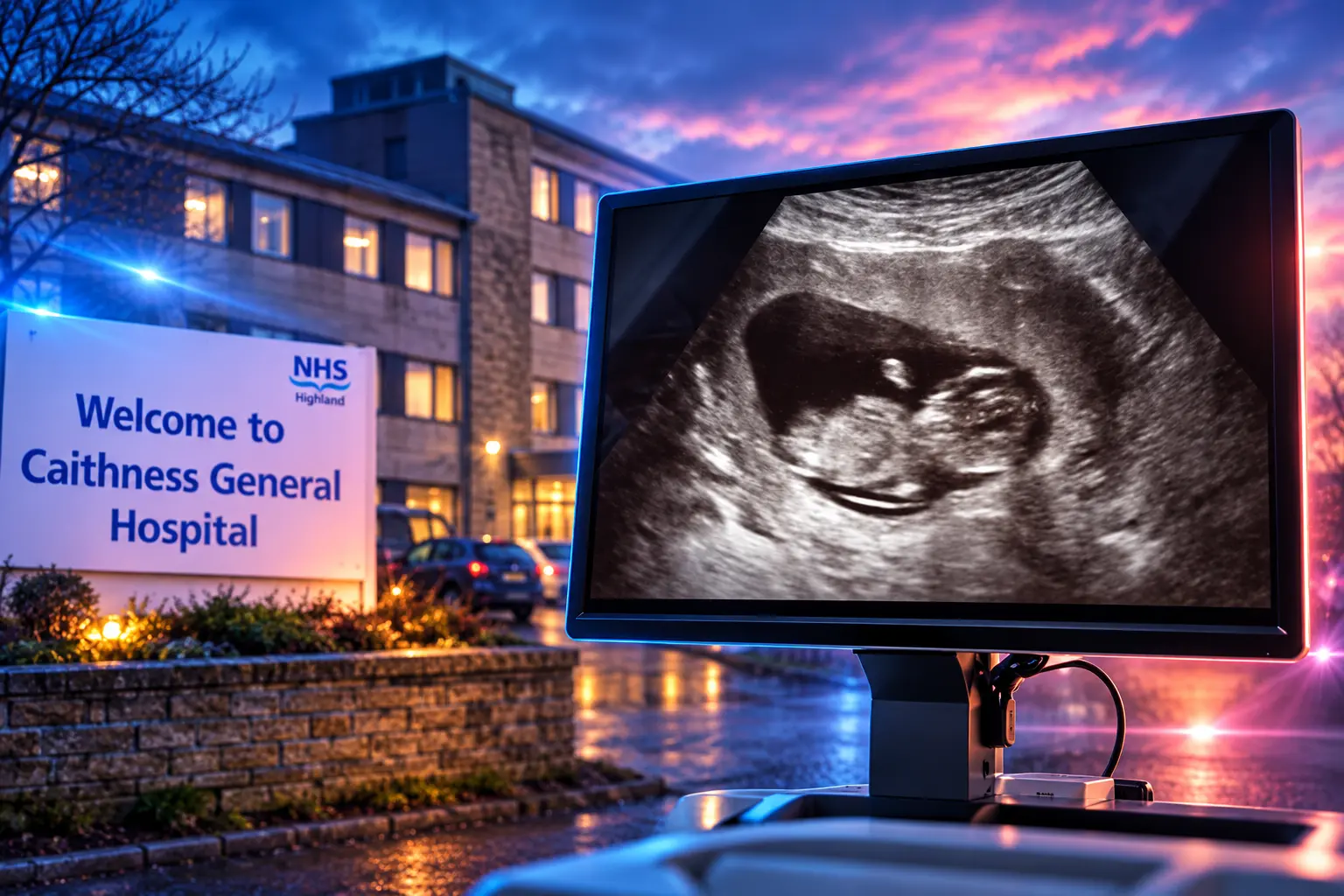
- 2016: NHS Highland downgrades consultant-led maternity at Caithness General Hospital in Wick to a midwife-led unit.
- 2018: Dr Gray’s in Elgin is downgraded, and the local unit serving Stranraer in Wigtownshire closes.
- 2020: Jacqui Hunter dies at Ninewells Hospital in Dundee while giving birth to her stillborn daughter, Olivia.
- 30 October 2025: The Scottish Government announces a Maternity and Neonatal Taskforce after a filmed investigation into failings.
- 11 June 2026: Constance appoints McCourt and sets high-level principles, including a forward-looking, population-based review.
- September 2026: The university team starts preparatory listening with recent users of maternity services.
- 5 October 2026: The review begins. NHS Grampian says full consultant-led care at Dr Gray’s will slip into 2027.
- July 2027: McCourt is due to submit her report and recommendations to ministers.
Holyrood had backed a standalone independent look at Caithness. That local probe was folded into the national exercise. Far-north campaigners are still in the room. They no longer have a review of their own.
Elgin’s Restoration Slips on the Review’s First Day
Dr Gray’s lost full consultant-led maternity in 2018 because of staff shortages. NHS Grampian had aimed to restore it by the end of 2026. On the morning the national review began, the board said that date would not hold.
Jane Gill, programme director for the Moray Maternity Programme, said a large part of the service will be in place by the end of the year, but some elements need more time. “We owe it to women and families to be completely open about that,” she said. The board wants a staged switch-on, bringing each part in when it is safe, rather than waiting for one day when everything starts at once.
NHS Grampian forecasts almost 200 births at Dr Gray’s this year, nearly twice the number three years ago. Low-risk births are already taking place, and planned caesarean sections resumed last year. Once the expanded consultant-led model is fully in, the board says four in five women in Moray would have the option of giving birth there.
The delay is recruitment. About 30 posts are still empty, including consultant obstetricians and anaesthetists. More than 70 staff have been hired across maternity and supporting services. A new special care baby unit is due in December, with six cots for infants from 36 weeks, so fewer small babies have to go to Aberdeen.
Laura Skaife-Knight, NHS Grampian’s chief executive, said the end destination is clear and the full service is “firmly within reach.” “We just need a little more time,” she said. Kirsty Watson, speaking for the Keep Mum campaign, called the missed 2026 date extremely disappointing and said pregnant women now face another winter on the road. The national review is supposed to pay particular attention to Elgin. The hospital it is meant to study will not be a full consultant-led unit while that work is done.
Six Local Births and a Hundred-Mile Road
The government has named three rural and island pressure points: Caithness, Elgin and Wigtownshire. Each already lost a fuller local service. Each still sends women down long roads for consultant-led care.
THE THREE NAMED RURAL SERVICES
| Place | When local care changed | What women face now | Position as the review opens |
|---|---|---|---|
| Caithness (Wick) | Consultant-led unit downgraded in 2016 | Most births at Raigmore Hospital, more than 100 miles away | 6 births at Caithness General in 2025; 166 Caithness births at Raigmore |
| Elgin (Dr Gray’s) | Downgraded in 2018 | Many births in Aberdeen or Inverness | Full consultant-led return delayed into 2027 |
| Wigtownshire (Stranraer) | Local unit closed in 2018 | 70 miles to Dumfries, including for short antenatal trips | Named for specific focus; no 24-hour unit expected back |
A freedom of information request showed those Caithness figures for 2025, the lowest local total since the Wick unit was downgraded. That is 3.5 per cent of Caithness births in the county hospital. Caithness Health Action Team, formed after the 2016 change, has spent 10 years on the issue. Ron Gunn, the group’s chairman, said the national review is “the best result we’ve ever had.” He still wants consultant-led care restored, and has said anything is better than a model that sends most mothers south.
CHAT and local Liberal Democrat politicians have asked McCourt to drive the A9 from Caithness to Inverness herself. They want her to feel the distance, in winter weather, that women are told is compatible with a midwife-led unit. NHS Highland says high-risk and complex cases go to Raigmore so they have specialist care, and that wellbeing of mothers and babies is its “absolute priority.”
Claire Fleming, whose third child Andrew was born in Dumfries, 70 miles from home just outside Stranraer, has been campaigning for more than five years. She travelled that distance even for short antenatal appointments. She does not expect a 24-hour maternity service to return to Stranraer. She wants the basics covered, and says they are not being done. “When they find out what is going on down here in Wigtownshire, they need to act on it,” she said. She has met MPs and the first minister. “I’ve spoken to them all and nothing’s changing, so I am praying this is the thing that changes something.”
What the Review Will Not Investigate
The review will not reopen individual deaths or harm cases. It will interview some of the families who lived them, and it will look for patterns in those accounts. That is the line McCourt has drawn, and it is the line that most worries the people who forced the review into existence.
Lori Quate’s wife, Jacqui Hunter, died at Ninewells in 2020 while giving birth to their stillborn daughter, Olivia. She had been given an overdose of a drug to bring on labour. An NHS review found that could have been a factor in her death. Quate said the phrase “forward-looking” seemed to imply limited involvement for families “who have been through the mill of this culture of failings.”
“How are they going to face forwards if they’re not willing to hear from the families?” he said. He knows a system review cannot study every file. He also argues that a case like Jacqui and Olivia’s is “almost exemplary of the systemic rot and failings that prevail throughout the entire system.”
McCourt says she will not shy away from pressures such as staffing shortages, and that independence means she can “say what we need to say.” She points to a more dispersed population than most of England, long distances, and a devolved health system. Those are fair differences. They do not answer Quate’s question about whether a family that has already been through an internal NHS review will see that file used, or only their memory of it.
The same objection is already attached to this process. A strategic review can collect testimony from people who were harmed. It cannot reopen their files. Parents who gave evidence to earlier UK maternity inquiries have warned that a report can gather stories and still leave the original cases untouched. That is not an argument against talking to McCourt’s team. It is the reason families are asking, before they speak, what their account is for.
Intensive Visits Cover About Half the Boards
McCourt’s published method is a working document. It can change after advisory groups meet. Evidence gathering is planned from October to April. Site selection, the team says, will not be based on assumptions about performance. Around half the boards get the deep look. The rest get less time. Anyone in Scotland can still email the team.
HOW THE REVIEW SAYS IT WILL WORK
- Intensive visits: Up to a full week in around half of all health boards, with staff interviews, family interviews, and listening sessions in everyday community settings.
- Lighter contact: Briefer visits or engagement in every remaining board, so no area is formally left out.
- Harm and loss: Individual interviews with women and families who have experienced harm or loss, run with a trauma-informed plan.
- Data and inspections: Healthcare Improvement Scotland reports, staffing and workload figures, maternity surveys, and national outcome data, plus the unannounced inspections of all 18 acute maternity units.
- Rural evidence: A rapid review of how remote and rural services should be configured, and possible comparison with systems such as Denmark, Sweden or Norway.
The final report is not expected to present service-based case studies of the places visited, except as examples of good practice that could be scaled. General lessons, not a league table of named units, are the product. That will frustrate anyone who wants a printed judgement on Wick, Elgin or Dumfries. It matches the government’s population-based brief. Two advisory groups, mixing professional, academic and lived-experience voices, will sit with the university team. Contributions can go to ScotlandMaternityReview@citystgeorges.ac.uk.
Staffing Shortages the Chair Says She Will Name
McCourt has already said an effective service cannot run on staff who are “excessively anxious,” or on the wrong mix and the wrong numbers. Inspection themes she intends to build on include listening to families, investigating serious incidents fully, and learning from mistakes. Constance said the review sits beside those inspections, and beside work already in train on miscarriage care, HIS maternity standards, the Scottish Patient Safety Perinatal Programme, bereavement care and triage.
A national patient survey, published on 6 October 2026, shows why a good-news average and a safety argument can both be true. Most women still rate their care as excellent or good. The labour and birth score is the one that slipped.
WHAT THE 2025 MATERNITY SURVEY FOUND
- Labour and birth: 88% rated care excellent or good, down from 91% in 2018.
- Other stages: Antenatal care 90%, neonatal unit 93%, care at home or in the community 90%; hospital or midwife-led unit after birth 80%.
- Continuity: 77% saw the same midwife at every or most antenatal check-ups, up from 63% in 2018; only 28% had the same midwife or team in labour as in pregnancy.
The review is also told to examine higher maternal mortality among Black and Asian women, and to hear from those women directly. MBRRACE-UK figures for 2022 to 2024 put UK maternal deaths at 12.80 per 100,000 maternities, 252 direct and indirect deaths among 1,969,321 maternities. In England, where ethnic breakdowns are published, the risk was nearly three times higher for Black women than for White women. Women in the most deprived areas continued to die at about twice the rate of those in the least deprived. Those are UK and England numbers, not a Scottish league table. They are the disparity the Scottish brief still names.
Jaki Lambert, director of the Royal College of Midwives Scotland, welcomed a review that puts workforce “front and centre.” The Royal College of Obstetricians and Gynaecologists also backed a forward-looking exercise that listens to people receiving and delivering care. Rural campaigners have given a more conditional welcome: they will judge the work by whether recommendations change the roads women still travel.
McCourt’s mailbox is open. Elgin’s full consultant-led service is not. The report is due in July 2027. Until then, the review will listen to parents whose cases it will not reopen, in a country where three named rural services are still sending women down the same long roads that filled the brief.
Disclaimer: This article is news reporting and analysis of a live public review of maternity services. It is for information only and is not medical, midwifery or legal advice, and it is not a judgement on any individual patient’s care. Anyone who is pregnant, planning a pregnancy, or worried about past or current maternity care should speak to their midwife, GP or specialist team, and should use the review’s own channels if they wish to give evidence. Figures, inspection programmes and service dates are those given by the Scottish Government, NHS boards, MBRRACE-UK and the review team at the time of the sources cited, and they can change as the nine-month process runs.

Edinburgh Opens a 2027 Tour Built for Time Trials

Korda Maps Auður From Meðalland to Irvine Bay

Apple Music Films Its New Logo in Mineral Oil

Oppo Prices the Pad Mini Above India’s iPad Mini

Austen Soaks Scotland Before Boelo Brings Weekend Gales

Volkswagen Sells the Osnabruck Plant to Clear a Board Fight

Apple’s Foldable iPhone Hinges on Samsung Display Supply

Tata Motors’ Iveco Tender Opens as Holders Still Decide

Saksham Gaur Finds He Is His Own Company’s Client

Onimusha Way of the Sword Preload Hits a Windows 11 Wall
-
 AUTO2 months ago
Volkswagen Sells the Osnabruck Plant to Clear a Board Fight
-
 NEWS2 months ago
Apple’s Foldable iPhone Hinges on Samsung Display Supply
-
 AUTO2 months ago
Tata Motors’ Iveco Tender Opens as Holders Still Decide
-
 BUSINESS2 months ago
Saksham Gaur Finds He Is His Own Company’s Client
-
 GAMING2 months ago
Onimusha Way of the Sword Preload Hits a Windows 11 Wall
-

 BUSINESS2 months ago
Hyderabad 22-Carat Gold Jumps After a False Bargain
-

 ENTERTAINMENT3 years ago
What is SD on Amazon Prime? – All You Need to Know
-

 NEWS2 months ago
iQOO 16 Locks 8,400 mAh While 100W Charging Holds