
NEWS
Qair’s 49.9 MW Potterton Battery Stays Under Scotland’s Line
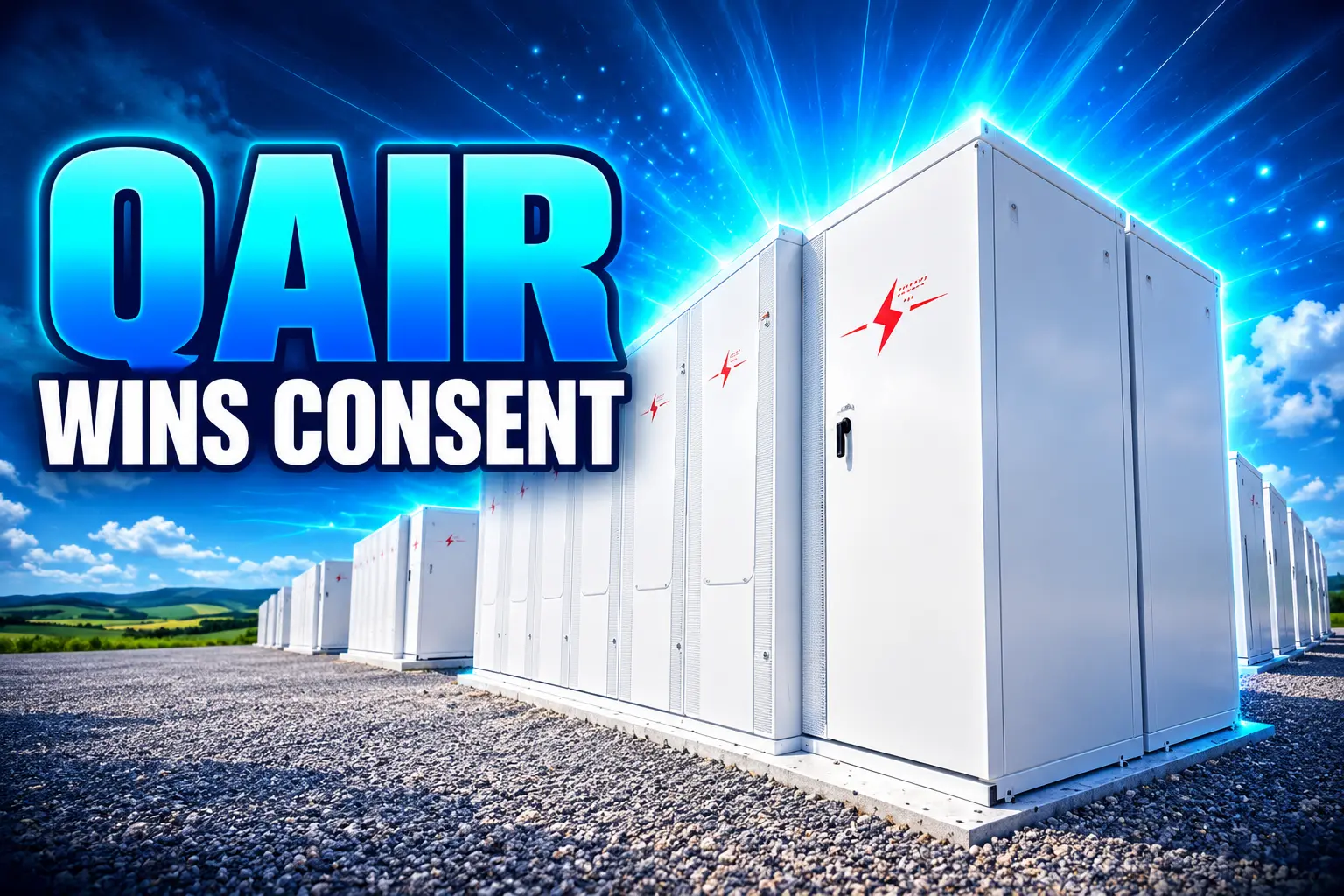
Qair’s first UK battery is a 49.9 MW Potterton farm scheme, approved 8 to 4, wired for Dyce in 2029 and quickly overshadowed by larger Scottish consents.

Aberdeenshire Council granted Qair a 49.9 MW battery on a Potterton farm on 1 July 2025, by eight votes to four. The Formartine Area Committee backed application APP/2025/0313 at Middleton Farm after officers recommended approval, and Qair later called it the company’s first consented standalone BESS project in the UK.
The paper is real. The clock is not. The same file ties the plant to Dyce Substation with a planned operational date of 2029, and Qair’s next Scottish storage consents, 342 MW then 100 MW, went to ministers rather than a local committee.
Formartine Voted 8-4 for a 49.9 MW Farm Battery
The applicant on the file is GSC Middleton Of Potterton Ltd, a Green Switch Capital vehicle. Locogen Consulting Ltd acted as agent. Qair took a majority stake in Green Switch Capital on 21 August 2024 and has been folding that UK team into Qair UK, with staff in Liverpool, London and Edinburgh.
Councillor Hassan, seconded by Councillor Johnston, moved to grant the scheme in line with the officer report. Councillor Nicol, seconded by Councillor Ritchie, moved refusal on National Planning Framework 4 Policies 9, 11 and 29, arguing the field was greenfield land that was not allocated in the Aberdeenshire Local Development Plan and that the plant would add an unacceptable cumulative load on the area and on homes nearby.
The committee split 8 for the motion and 4 for the amendment, 12 members voting. Permission issued that day as full planning permission for a Major development, the legal class that applies once an energy generating station exceeds 20 MW. Scottish ministers had already told planning authorities, in an August 2020 Chief Planner letter, to treat a battery as a generating station even though it does not make new electricity.
THE FORMARTINE VOTE
- The decision: Grant full planning permission for APP/2025/0313 at land at Middleton Farm, Potterton, AB23 8US.
- The split: Eight members backed the officer recommendation; four backed refusal on NPF4 and greenfield grounds.
- The objections: Forty-five valid representations, all against, were on the file before the 1 July 2025 meeting.
- The life of the consent: The plant may run for 40 years from final commissioning, or from 12 months after first commissioning, whichever comes first.
Qair’s Paris statement followed on 10 July 2025 and did not name Potterton, the 8-4 split, or the 2029 Dyce date. Pete McLaren, Qair UK’s head of Scottish development, had already put a warmer gloss on the local win.
This is a landmark moment for Qair UK as we expand into standalone energy storage. Battery storage is critical to unlocking the full potential of renewables in the UK, and we’re proud to contribute to a more resilient and flexible energy system.
Pete McLaren, Head of Scottish Development, Qair UK
Why 49.9 MW Keeps These Projects Local
The capacity is not an accident of the kit. It is 0.1 MW under the line that moves a Scottish battery off a council agenda and onto a ministerial desk.
Scottish Government planning guidance, published 19 March 2026, repeats the rule set in 2020: planning authorities decide 50 MW or less, and Scottish ministers decide generating stations over 50 MW under Section 36 of the Electricity Act 1989. At 20 MW or more the scheme is already Major, so the developer still has to consult the public before filing. Qair did that. Pre-application advice went out on 22 October 2024, and the proposal of application notice was agreed on 6 November 2024.
HOW SCOTLAND SPLITS BATTERY CONSENTS
- Local planning: Batteries of 50 MW or less go to the council, which must follow the development plan unless other material facts pull the other way.
- Major development: From 20 MW the scheme needs pre-application consultation with the community, even when it stays with the council.
- Section 36: Over 50 MW the Energy Consents Unit handles the file for ministers, who can grant deemed planning permission at the same time.
Action to Protect Rural Scotland later counted the Renewable Energy Planning Database to the second quarter of 2025 and found 86 applications between 40 MW and 49.99 MW, against only 25 between 50 MW and 51 MW. Most of those 50 MW files were batteries already tied to wind, solar or a substation that would have gone to ministers anyway. Aberdeenshire sat second only to Highland for the number of battery cases. Potterton is one plot in that pattern, not a one-off.
22 Green Containers on 2.33 Hectares
The Formartine committee report on APP/2025/0313 is blunter than the press note about what will actually sit in the field. The whole site is 2.33 hectares of accessible rural land in the Mid-Formartine ward. The fenced compound is about 0.28 hectares. A single access leaves a class B road off the B999, then runs about 550 metres to a U-shaped track around the kit.
WHAT THE PLANNING FILE APPROVES
| Item | On the consented drawings |
|---|---|
| Battery containers | 22 steel units, coloured green, about 6.1 m long, 2.5 m wide and 2.9 m high, plus a 0.2 m plinth |
| Transformers | 11 matching green steel units of the same footprint |
| Customer switchroom | Green glass-reinforced plastic, about 12.3 m by 3.9 m by 4.2 m |
| DNO control room | Red brick, about 7.4 m by 6 m by 4.3 m, green steel doors |
| Fire water | 180,000 litre steel tank, 10.14 m across and 2.28 m high, plus an attenuation pond |
| Grid | Connection to Dyce Substation, planned operation in 2029 |
There is no permanent lighting, only motion-sensor lamps for staff. Infrared cameras sit on 3 metre poles inside a 2 metre post-and-wire fence. Fire cover is an automated synthetic-gas suppression system plus the tank and pond. Native trees, woodland-edge planting and a seeded earth bund are drawn as screening. A voluntary community fund is offered for Potterton and Middleton of Potterton. Officers screened the scheme for an environmental impact assessment on 2 July 2024 and decided one was not required.
Potterton Objected on Fire, Views and Green Belt
Forty-five neighbours used the statutory window. The material points recorded by officers were harm to wildlife and soil, missing biodiversity gains, fire and contamination, surface water, green-belt policy, other sites, noise and electromagnetic fields, construction traffic, and flood risk. Several letters called the field the wrong place for industrial plant on the B999 approach to Aberdeenshire, and one neighbour in Oldcroft Place described Potterton as a small rural settlement that would sit too close to lithium-ion containers.
Locogen answered with a stack of reports: ecology, noise, flood and drainage, transport, cultural heritage, a landscape and visual appraisal, a battery safety plan dated 6 January 2025, and a fire-water plan. Officers told the committee the design complied with NPF4 Policy 11 on energy and with local policy on special rural areas, and that conditions could hold the mitigation. Four elected members were not persuaded. Eight were. That is the whole of the local democratic record on this battery.
The argument in the village was never that Scotland needs no storage. It was that a green field beside Potterton is a poor place to put it, and that other 49.9 MW files in the shire already crowd the same roads and the same skyline. The committee still had to apply Policy 11, which tells decision makers to give strong weight to renewable, low-carbon and zero-emission kit, including batteries.
The Batteries Cannot Plug In Until 2029
Consent is not a socket. The planning report states the grid connection in one line: Dyce Substation, planned operational date 2029. That is four years after the vote, and it is the date that matters for anyone who treats a planning decision as a switch-on. A handful of posts after the announcement still talked as if the farm would be working in 2026. The file does not say that.
Qair’s own UK timetable, set out on 24 February 2026, puts first construction on solar sites in 2026 and first commissioning in early 2027, backed by Contracts for Difference covering 190 MWp, including Lark Hill in Essex and Brecks in Nottinghamshire. Those are solar clocks. Middleton Farm remains a 2029 Dyce clock unless a later connection offer moves.
QAIR’S UK DATES AROUND POTTERTON
- 21 August 2024: Qair buys a majority of Green Switch Capital, which then listed a pipeline over 15 GW, with first projects then aimed at 2026.
- 19 December 2024: Qair says 2024 solar consents have reached 140.9 MWp, including Straws Hadley near Aylesbury.
- 1 July 2025: Formartine grants the 49.9 MW Middleton Farm battery.
- 10 July 2025: Qair in Paris calls the unnamed Aberdeenshire scheme its first UK standalone battery consent, on top of over 140 MW of solar in 18 months.
- 24 February 2026: Qair posts 190 MWp of solar CfDs, says it consented 800 MW across technologies in 2025, and puts UK solar, battery and onshore wind development at over 5 GW, plus the 1 GW Ayre ScotWind project.
Europe is adding storage at speed, which is why Paris wrapped Potterton in a continent-wide story. The European Market Monitor on Energy Storage (EMMES 9.0), from EASE and LCP Delta, said Europe’s storage capacity reached 89 GW by the end of 2024, after 11.9 GW went in that year, and it projected another 128 GW and 300 GWh of electrochemical storage by 2030. Of the 89 GW, about 53 GW was pumped hydro and about 35 GW was batteries. Qair’s own European battery book at the time was about 17 GWh, with more than 800 MWh already contracted in Poland.
Those Polish contracts, two sites at Kowala and Radkowice, are a different product from Potterton. They are two Polish batteries over 800 MWh, together more than 200 MW, with up to 17 years of capacity-market cover. Potterton has planning paper and a 2029 distribution hook-up. It does not have that kind of contracted floor.
Red Moss and Rogerhill Dwarf the Potterton Battery
Three months after Formartine voted, Scottish ministers granted Qair UK a 342 MW transmission-connected battery at Red Moss in South Lanarkshire, the company’s first Section 36 consent. That file is for 148 battery units and a new 132 kV Redshaw Substation on brownfield land, sited to take power that would otherwise stall on the Scotland and England boundary. Pete McLaren called the transmission hook-up and the brownfield plot a better fit for the grid than a green field.
On 30 July 2026 ministers went further and consented Rogerhill, 98 MW of solar plus a 100 MW battery on about 136 hectares at Rogerhill Farm near Blackwood and Kirkmuirhill. Qair said that solar farm is the largest to gain planning approval in Scotland, with output put at the annual use of about 28,675 homes and more than 40,000 tonnes of carbon dioxide avoided each year. The battery there is twice Potterton’s power rating and sits with generation on the same land.
QAIR’S SCOTTISH STORAGE CONSENTS
| Project | Battery power | Decision maker | Date |
|---|---|---|---|
| Middleton Farm, Potterton | 49.9 MW | Formartine Area Committee | 1 July 2025 |
| Red Moss, South Lanarkshire | 342 MW | Scottish ministers (Section 36) | October 2025 |
| Rogerhill, South Lanarkshire | 100 MW (with 98 MW solar) | Scottish ministers | 30 July 2026 |
Other developers have been through the same ministerial door. Scottish ministers have already approved a 200 MW battery storage project elsewhere in the country, and Aberdeenshire itself now has Section 36 battery files in the hundreds of megawatts around Rothienorman. The 49.9 MW farm beside Potterton is the small end of that queue, not the shape of what Qair is trying to build.
Action to Protect Rural Scotland, using NESO modelling obtained by freedom of information, put Scotland’s battery need at 5.9 GW to 6.4 GW by 2030. It counted 24.8 GW in the planning pipeline and 13.5 GW already consented by June 2025. NESO’s later connection-reform work treated batteries as oversupplied in the queue. Developers still file, because a consent is a ticket, and because constrained Scottish wind still pays NESO to switch off. A 49.9 MW box at Potterton does not settle that mismatch. It just keeps one more ticket alive until 2029.
Qair still has to begin the Potterton works within three years of the decision or the permission lapses, and it still has to turn a Dyce offer into a live circuit. Until then the company’s first UK battery remains a green compound on 0.28 hectares of a 2.33 hectare field, approved by eight votes to four, 0.1 MW under the line that would have sent it to ministers.
Frequently Asked Questions
Why Did Qair Size the Potterton Battery at 49.9 MW?
In Scotland a battery of 50 MW or less is decided by the local planning authority, while a scheme over 50 MW goes to Scottish ministers under Section 36. At 20 MW or more it is already a Major development, so Qair still had to run pre-application consultation; that process was agreed on 6 November 2024 before APP/2025/0313 was filed, which is why 49.9 MW avoids ministers without avoiding public consultation.
Did the Middleton Farm Battery Need an Environmental Impact Assessment?
Aberdeenshire Council issued an EIA screening opinion on 2 July 2024 under enquiry ENQ/2024/0866 and decided an environmental impact assessment was not required. The later planning file still carried ecology, noise, flood, transport and visual reports, but not a full EIA.
When Must Qair Start Building After the Consent?
Condition 1 applies Section 58 of the Town and Country Planning (Scotland) Act 1997, so the permission lapses if development has not begun within three years of 1 July 2025, which is 1 July 2028. The 40-year operating life is a separate clock that starts at final commissioning, or 12 months after first commissioning, whichever is earlier.
What Is GSC Middleton Of Potterton Ltd?
It is the special-purpose company named as applicant on APP/2025/0313, a Green Switch Capital vehicle. Qair bought a majority of Green Switch Capital on 21 August 2024 and has been bringing the UK developer under the Qair UK name, with teams in Liverpool, London and Edinburgh.
The 1 July 2025 vote still stands, the Dyce date is still 2029, and the compound is still 22 green containers behind a bund on the B999. Qair’s larger Scottish batteries already have ministerial paper. This one has a local majority and a four-year wait.

TCS Opens Q2 as Mid-Cap IT Keeps the Growth

Bitcoin’s Jobs Rally Fails While December Hike Odds Hold

The Heat Turn a Bucks Rematch Into Vice City Night

The G7 Opens Diesel Tanks While Carriers Head East

Kia Bets Fortuner Money on a Made-in-India Sorento

Volkswagen Sells the Osnabruck Plant to Clear a Board Fight

Tata Motors’ Iveco Tender Opens as Holders Still Decide

Saksham Gaur Finds He Is His Own Company’s Client

Onimusha Way of the Sword Preload Hits a Windows 11 Wall

The Frame Pro’s $1,200 Labor Day Cut Needs a Soundbar
-
 AUTO4 weeks ago
Volkswagen Sells the Osnabruck Plant to Clear a Board Fight
-
 AUTO1 month ago
Tata Motors’ Iveco Tender Opens as Holders Still Decide
-
 BUSINESS1 month ago
Saksham Gaur Finds He Is His Own Company’s Client
-
 GAMING1 month ago
Onimusha Way of the Sword Preload Hits a Windows 11 Wall
-
 NEWS4 weeks ago
The Frame Pro’s $1,200 Labor Day Cut Needs a Soundbar
-

 NEWS1 month ago
Apple’s Foldable iPhone Hinges on Samsung Display Supply
-

 BUSINESS1 month ago
SEBI Reopens How F&O Settles After the Closing Auction
-

 BUSINESS1 month ago
The Rs 4.66 Lakh Crore IPO Queue Is Mostly Paper