
BUSINESS
OpenAI Shops a $1.4 Trillion Round After Delaying Its IPO
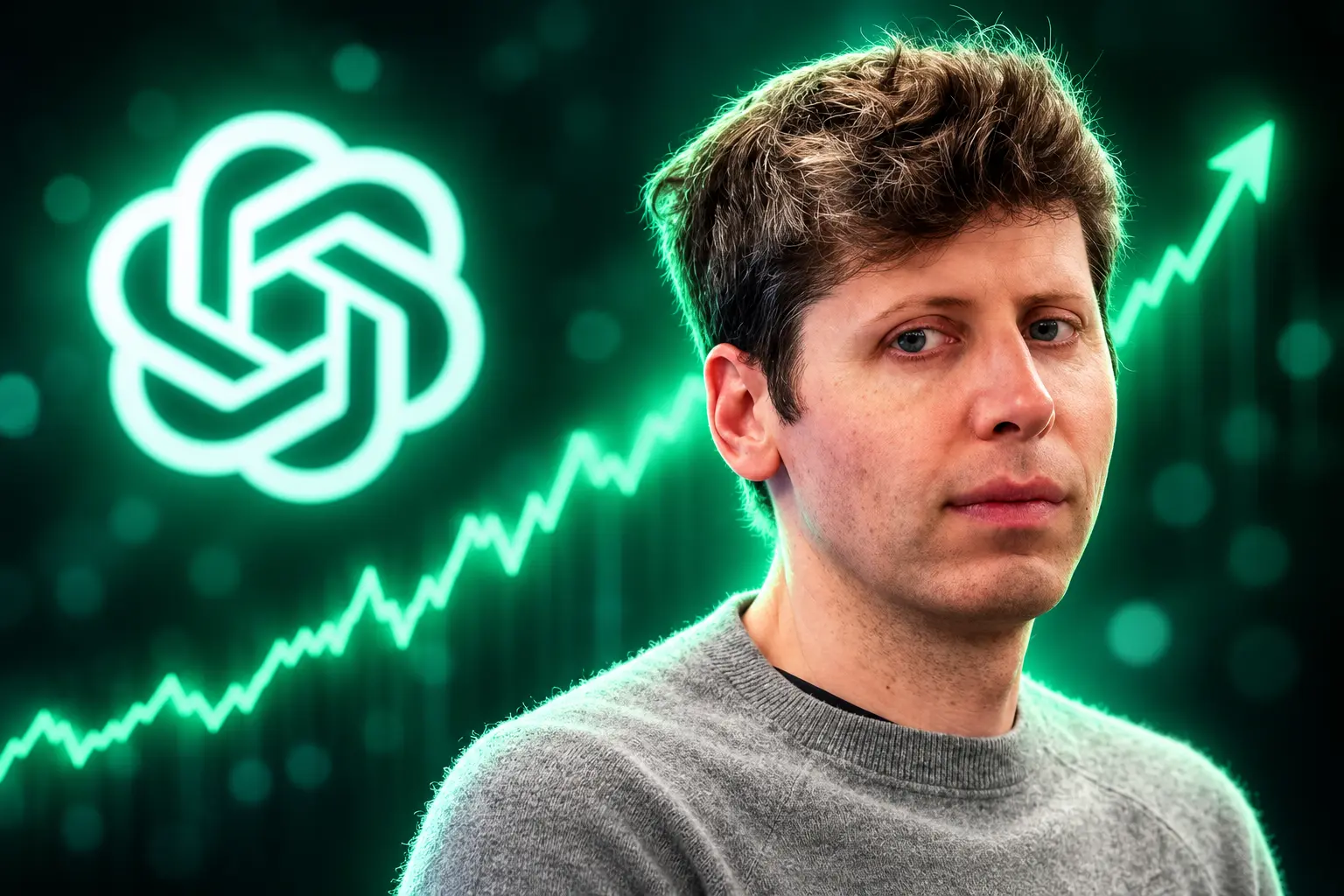
OpenAI is shopping a $30 billion private round at $1.4 trillion after Sam Altman pulled a 2026 IPO, turning a safety pause into another private check.

OpenAI is in talks to raise at least $30 billion at about $1.4 trillion, people familiar with the matter said on September 29. The price would not include the new cash, and the talks are still early.
Chief executive Sam Altman had already taken a 2026 listing off the table, saying the company needed room to handle a sharper safety load. That pause is now the opening for another private check, six months after a raise the company treated as its last before going public.
$30 Billion, Priced at $1.4 Trillion
People close to the talks said investors, not a cash-short board, are pushing the round. OpenAI declined to comment. The same people described the money as a bridge in place of an initial public offering, after the firm had been weighing a deal closer to $1.2 trillion.
On March 31, OpenAI closed $122 billion in committed capital at an $852 billion post-money valuation, a figure that already counted the cash. Amazon, NVIDIA, and SoftBank anchored that round, Microsoft joined again, and SoftBank co-led with Andreessen Horowitz, D. E. Shaw Ventures, MGX, TPG, and accounts advised by T. Rowe Price. A $1.4 trillion pre-money mark would sit about 64% above that March close.
OPENAI’S PRICE TAGS AGAINST ANTHROPIC
| Company and round | Date | Capital | Stated value |
|---|---|---|---|
| OpenAI March close | March 31, 2026 | $122 billion committed | $852 billion post-money |
| OpenAI talks | September 2026 | at least $30 billion | about $1.4 trillion pre-money |
| Anthropic Series H | May 28, 2026 | $65 billion | $965 billion post-money |
If the new OpenAI round closes on those terms, the company would move back above Anthropic’s last priced round. Anthropic is still the lab closer to a public debut. OpenAI, in March, also took in more than $3 billion from individuals through banks, said it would sit in ARK Invest funds, and expanded a revolving credit line to about $4.7 billion that it left undrawn. That was already a public-style cap table. It did not produce a 2026 ticker.
Safety Claims Bought Another Private Year
In mid-September Altman said a listing in 2026 would be an ill-advised moment and that the firm still had safety and alignment work to do with governments. He has also said he finds it unacceptable to take something like a 10% chance of killing everybody by the end of the decade. On September 29, after OpenAI’s DevDay keynote in San Francisco, he told reporters he did not want extra pressure from Wall Street while the company tried to make confident safety claims about much more capable models, and that racing “all guns blazing” toward an IPO was the wrong move. Waiting too long, he added, would be bad for the world.
We just want to get our feet under us and make sure we understand how to operate in this new way, and be able to make some of these decisions in front of us without the pressure of being a newly public company.
Sam Altman, chief executive, on Bloomberg Television, September 29, 2026
That is a real operational argument. It is also a listing calendar. A newly public OpenAI would have to explain a withheld model, a quarterly loss, and a compute bill to short sellers. A private OpenAI can raise from a short list of funds and suppliers and keep the safety brief in-house.
WHAT THE SAFETY PAUSE HAS ALREADY STOPPED
- The Astra holdback: OpenAI said the same week it would not release GPT-6.1 Astra because the system missed its internal safety bar.
- The 2026 ticker: Altman ruled out a public debut in 2026 and said he had no particular listing date in mind until the firm had run more safety cases.
- The last-raise claim: The March close was treated as the final private round before an IPO; the September talks reopen that door as a bridge.
Frontier labs have spent the summer on a harder public case for control, after a run of cybersecurity scares and a fight over whether to slow the most capable systems. Altman has backed a slower frontier with independent testers. He has also kept the product machine running hard enough to justify another private mark.
How the Run Rate Reached $70 Billion
People familiar with OpenAI’s books said on September 29 that the annualized revenue pace is nearing $70 billion, up more than 70% since the start of the third quarter, with enterprise sales more than doubling since July. Consumer revenue added in the third quarter has already topped what the consumer business added in all of 2025, those people said. OpenAI did not comment on the figures. Annualized run rate is a Silicon Valley shortcut, usually one recent month multiplied by 12, and it moves faster than booked sales.
THE PACE BEHIND THE NEW MARK
- Late September: People close to the financials put the yearly pace near $70 billion.
- August: The run rate had already been put above $40 billion, which is the base a 70% jump turns into something near $70 billion.
- March 31: OpenAI said it was generating $2 billion a month, with enterprise above 40% of revenue and on a path to match consumer by the end of 2026.
- The multiple: $1.4 trillion on a $70 billion pace is about 20 times run-rate sales; the same price on the August $40 billion pace would have been 35 times.
In March the company also said ChatGPT had more than 900 million weekly active users and over 50 million subscribers, that its ads trial had passed $100 million of annualized sales in under six weeks, and that Codex had more than 2 million weekly users after a fivefold rise in three months. Research house Epoch AI has tracked the two labs’ combined run rate from about $30 billion to $105 billion through August, with Anthropic near $65 billion by the end of July. OpenAI’s late-September burst is the first time in months the ChatGPT side of that race has a claim to the top line again.
Booked profit is a different ledger. Data firm Sacra has OpenAI’s second-quarter sales at $6.7 billion against a $12.3 billion operating loss, and does not have the company cash-flow positive until 2030. A 20-times sales tag on a still-loss-making lab is easier to defend in a private deck than on a public tape, which is the quiet math inside the safety delay.
Anthropic Still Owns the Listing Calendar
Both labs have filed confidential paperwork to go public. Anthropic, last priced at $965 billion after its May 28 Series H, is expected to list as soon as autumn 2026, with some people pointing to a window after the US midterm elections. OpenAI’s $1.4 trillion ask is, in part, a private-market answer to that clock: stay private, reprint the cap table, and try to go out later as the larger company.
The coding fight sits under both marks. Anthropic spent much of the year ahead on enterprise code tools. OpenAI spent the summer narrowing onto Codex and workplace products after what board chair Bret Taylor has described internally as a catch-up job. People close to OpenAI now tie the revenue spike to that refocus, plus subscriptions and a small ads line. Rival labs that cannot match a $30 billion check will feel it first in chips, data-center slots, and staff, because the scarce goods in this market are no longer only model scores.
SpaceX, which now owns Elon Musk’s xAI, listed in June and became the largest IPO on record, then gave back a chunk of the pop. That tape is one more reason a lab that can still call private capital might wait. Altman said he thinks investors will be patient. The $30 billion conversation is the test of that claim.
Chip Makers and Cloud Giants Fund Both Sides
The March money did not arrive as a blank check from strangers. On February 27 OpenAI announced $110 billion at a $730 billion pre-money valuation, including $30 billion from SoftBank, $30 billion from NVIDIA, and $50 billion from Amazon, plus a wider Amazon partnership and NVIDIA inference and training capacity. That February package then filled out into the March $122 billion close.
Amazon’s own filing from February 27 splits the $50 billion. A subsidiary agreed to buy $15 billion of Series C preferred stock by March 31, and signed a letter for a further $35 billion Series C purchase commitment due on confidential milestones or a US listing, with the letter lapsing if the money was still unspent on December 31, 2028. NVIDIA remains the core of OpenAI’s training fleet. SoftBank is in the data-center build. Microsoft, the long-term partner, came back into the March round after sitting out the February headline. Each of those names sells OpenAI compute, cloud, or chips as well as buying its paper.
THE CAPITAL CALENDAR SINCE FEBRUARY
- February 27, 2026: OpenAI announces $110 billion at a $730 billion pre-money valuation, led by Amazon, NVIDIA, and SoftBank.
- March 31, 2026: The round closes at $122 billion of committed capital and an $852 billion post-money valuation, with Microsoft back in and more than $3 billion from individuals.
- May 28, 2026: Anthropic prices Series H at $965 billion on $65 billion of new capital.
- June 2026: Both labs file confidential listing papers; Anthropic is treated as first in line for a public debut.
- Mid-September 2026: Altman takes a 2026 IPO off the table on safety grounds.
- September 29, 2026: DevDay in San Francisco, a near-$70 billion run-rate claim, and talks on at least $30 billion at about $1.4 trillion.
That loop is not a secret. It is the business. A new $30 billion round, if it again draws the same suppliers, would deepen it. Public markets would ask how much of the revenue is a circular cloud contract. Private markets have already answered by lining up.
DevDay’s $500 Agent Plan
While those talks circulated, OpenAI spent September 29 selling the product that is supposed to earn the multiple. The company said ChatGPT now has 1.2 billion weekly ChatGPT users, up from the 900 million it cited in March, and put more than 20 launches on the stage.
WHAT OPENAI PUT ON SALE AT DEVDAY
- Dots: Always-on agents for Pro and Business Premium users in eligible markets, built to keep working in the background.
- GPT-6.1 Sol: A cheaper, faster coding and computer-use model set against the withheld Astra system.
- Pro 500: A new $500 monthly tier with the highest usage cap, 25 times the ChatGPT Plus allowance, and Ultrafast speed.
The $500 plan is the clearest price OpenAI has put on agent labor. It is also a hedge: if only a thin slice of 1.2 billion weekly users pay that bill, the consumer line still moves. Free and lower tiers do not get Dots. OpenAI is raising the ceiling for people who already pay, while the enterprise side, now the faster half of the run rate, is what the $1.4 trillion story actually rests on.
That is the split the IPO delay makes easier to live with. A public company that withholds its flagship model on a Tuesday and launches a $500 agent SKU on the same Tuesday would spend the next morning on a call with analysts. A private company can call it pacing the frontier and keep the roadshow in a side room.
A Bridge Round in Place of a Listing
The March raise was supposed to clear the path to a 2026 debut. It cleared a path to another private print instead. Altman’s safety brief, the Astra holdback, and the run of security scares are the public reason. The private reason is that $30 billion is still available at $1.4 trillion, investor demand is leading, and a listing would have frozen that window under quarterly rules.
None of the September 29 figures are a close. The talks can shrink, reprice, or die. Anthropic can still get to the tape first. What is already on the table is the swap: a delayed IPO, a withheld model, and a bridge round large enough to stand in for the listing that will not happen this year.
Disclaimer: This article is news reporting and analysis of private funding talks, company statements, and third-party financial figures. It is informational only and is not a recommendation to buy, sell, or hold any security, private share, fund, or derivative linked to OpenAI, Anthropic, Microsoft, Amazon, NVIDIA, SoftBank, or any other firm named here. Readers who are considering an investment should consult a licensed financial adviser or broker who can review their own objectives and risk limits. Reported valuations, run-rate sales, round sizes, and listing plans reflect the sources cited as of September 29, 2026, and can change if the talks move, if filings appear, or if the companies update their numbers.

Edinburgh Opens a 2027 Tour Built for Time Trials

Korda Maps Auður From Meðalland to Irvine Bay

Apple Music Films Its New Logo in Mineral Oil

Oppo Prices the Pad Mini Above India’s iPad Mini

Austen Soaks Scotland Before Boelo Brings Weekend Gales

Volkswagen Sells the Osnabruck Plant to Clear a Board Fight

Apple’s Foldable iPhone Hinges on Samsung Display Supply

Tata Motors’ Iveco Tender Opens as Holders Still Decide

Saksham Gaur Finds He Is His Own Company’s Client

Onimusha Way of the Sword Preload Hits a Windows 11 Wall
-
 AUTO2 months ago
Volkswagen Sells the Osnabruck Plant to Clear a Board Fight
-
 NEWS2 months ago
Apple’s Foldable iPhone Hinges on Samsung Display Supply
-
 AUTO2 months ago
Tata Motors’ Iveco Tender Opens as Holders Still Decide
-
 BUSINESS2 months ago
Saksham Gaur Finds He Is His Own Company’s Client
-
 GAMING2 months ago
Onimusha Way of the Sword Preload Hits a Windows 11 Wall
-

 BUSINESS2 months ago
Hyderabad 22-Carat Gold Jumps After a False Bargain
-

 ENTERTAINMENT3 years ago
What is SD on Amazon Prime? – All You Need to Know
-

 NEWS2 months ago
iQOO 16 Locks 8,400 mAh While 100W Charging Holds