
BUSINESS
Morgan Stanley’s Digital Asset Lab Keeps DeFi Off Core Systems
Morgan Stanley opened a Digital Asset Lab to test DeFi vaults and tokenized cash away from core systems, after listing crypto ETFs and E*TRADE trading.

Morgan Stanley has set up a Digital Asset Lab to test DeFi vaults, tokenized deposits and stablecoins without touching its core systems. Megan Brewer, who leads market innovation and labs, said the rooms are where technology has to earn the right to scale. Amy Oldenburg, who heads the digital-asset team, put vaults on the list and said the tech is too early to put the rest of the platform at risk.
The bank already sells crypto through listed funds and E*TRADE. The missing piece is not another ticker. It is whether on-chain cash and automated vaults can sit behind that stack without opening the live ledger.
The Lab Sits Off the Bank’s Core Systems
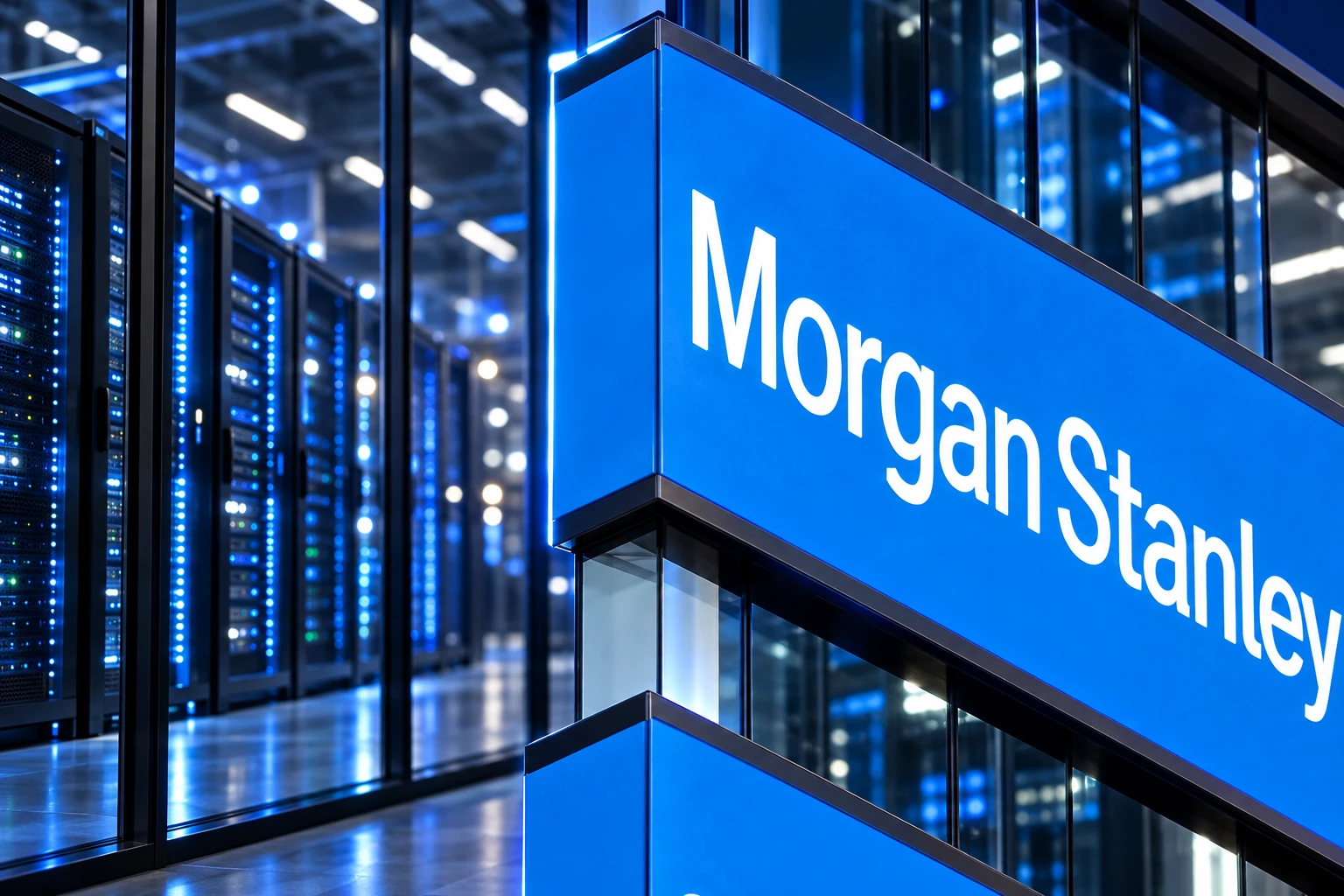
Brewer described the Digital Asset Lab as part of a network the firm already runs for electronic trading, cybersecurity and machine learning. Permanent staff work with specialists from other desks, and nothing is allowed to talk to production systems until that work is done. The rooms cover 20,000 square feet in New York, Glasgow and Bangalore, and they are laid out like data centers.
It’s where technology earns the right to scale at the firm.
Megan Brewer, head of market innovation and labs, in an interview
She said the bank runs up to 270 projects a year through the labs, and that the point is to let teams learn and build so the firm can make evidenced-based decisions. Oldenburg said the new lab gives her group a secure, compliant and segregated place to try digital assets. Her list goes past bitcoin wrappers and into forms of digital money.
WHAT THE LAB WILL TEST
- Stablecoins: How dollar tokens could move inside the firm without sitting on the core ledger.
- Tokenized deposits: Bank money represented on a chain, still a test, not a product.
- CBDCs: How a central-bank digital currency would clear against Morgan Stanley books.
- Tokenized money market funds: Fund shares that settle around the clock instead of on the fund clock.
- DeFi vaults: Smart-contract pools that allocate cash on a preset strategy, which Oldenburg called too nascent for the live platform.
There is no client launch date on any of those items, and no Morgan Stanley-branded stablecoin or tokenized deposit has come out of the rooms.
E*TRADE, Three ETFs and a Reserve Fund Came First
The lab is arriving after a year of products that already give clients crypto exposure through wrappers and a brokerage link. Those live lines are the distribution the vault work would eventually plug into, if it ever clears the filter.
THE LIVE CRYPTO STACK
| Product | Opened | Fee | What clients get |
|---|---|---|---|
| Morgan Stanley Bitcoin Trust (MSBT) | April 8, 2026, NYSE Arca | 0.14% | Spot bitcoin in an ETF, first bank-issued fund of its kind |
| Ethereum and Solana trusts | July 2026 | 0.14% | Spot ether and solana, with staking rewards passed through |
| E*TRADE spot crypto | July 16, 2026 | 50 bps | Bitcoin, ether and solana via a linked zerohash account |
| Stablecoin Reserves Portfolio (MSNXX) | April 16, 2026 | 0.20% net | A government money fund built for issuer reserves |
| Morgan Stanley Digital Trust | Approved June 18, 2026 | Not public | Custody, staking and collateral, still In Organization |
E*TRADE from Morgan Stanley said eligible clients can buy, sell and hold Bitcoin, Ethereum and Solana in a linked zerohash account at 50 bps, and view those holdings next to stocks. Transfer tools were flagged for later in 2026. The same release is blunt about who holds the coins today: Morgan Stanley Smith Barney does not transact in or custody digital assets. Trades and storage sit with Zero Hash LLC, outside the brokerage, and those holdings are not FDIC insured or SIPC protected.
A Wealth Management Pulse Survey run from April 1 to April 20 among 940 U.S. investors found 32% ranked “an established company I can trust” as a top reason to pick a crypto platform, ahead of seeing digital assets next to traditional holdings (26%) and low fees (25%). Chad Turner, head of Morgan Stanley Wealth Management Platforms, said the E*TRADE rollout advances the digital-assets strategy in an integrated way. Matt Jones, head of E*TRADE, said clients want to invest, trade, bank and plan in one place.
The July release also said digital-asset services will move to Morgan Stanley Digital Trust, National Association, In Organization, once that vehicle is running. Until then the retail coins stay at a partner, and the DeFi experiments stay in the lab.
Why DeFi Vaults Stay Off the Live Platform
A DeFi vault is an on-chain pool that takes in deposits, often stablecoins, and uses smart contracts to push that cash across decentralized markets on a set strategy. Depositors get a token that tracks their share. For an asset manager it looks like a fund, except code does part of the portfolio work and it can run when cash desks are closed.
That 24-hour loop is the draw and the problem. Oldenburg told interviewers there is a very reasonable path to see vaults as part of the future. She also said the bank has to understand how the technology works first.
It is too nascent, we cannot put the rest of the platform at risk.
Amy Oldenburg, head of digital assets, in an interview
A vault’s risk does not freeze when the strategy is written. The contracts keep reallocating as markets move, so a lab run on a Tuesday does not describe Wednesday’s book. That is why the isolation is not a press flourish. It is the only way a G-SIB can watch a moving on-chain strategy without wiring it to wealth accounts.
Oldenburg posted the same caution in public on September 29, stressing a secure environment and real utility rather than a go-live date.
Our new Digital Asset Lab gives us a secure environment to test tokenization and digital money to understand where they can deliver real utility and efficiency.
Great discussing the work with Megan Brewer and @business @annairrera and @isabelletanlee: https://t.co/QtxMJv4QSw
— Amy Oldenburg (@AmyOldenburg_) September 29, 2026
Tokenized deposits, CBDCs and tokenized money funds sit on the same test list because they are cash equivalents that would have to settle against the bank. Vaults are the item that would then try to put that cash to work automatically. It is not in front of a wealth client.
The Digital Trust Is Still In Organization
The Office of the Comptroller of the Currency granted preliminary conditional approval for the trust charter on June 18, 2026, in Corporate Decision 1378. Morgan Stanley Digital Trust, National Association would sit in Purchase, New York, as a wholly owned subsidiary of Morgan Stanley Capital Management. The OCC letter calls the parent a global systemically important bank. Final approval to commence business is still outstanding, and the agency can modify, suspend or rescind the preliminary nod until then.
The planned work is custody of certain digital assets, plus purchase, sale, swap and transfer to support client investing. The trust would also handle staking as a fiduciary and act as collateral administrator for digital-asset lending by an affiliate. It must limit itself to trust-company operations and not meet the Bank Holding Company Act definition of a bank.
Capital terms are heavy for a vehicle that has not opened. The trust must hold $50 million in tier 1 capital for its first three years, with the greater of 50% or $25 million in eligible liquid assets, plus a separate 180 days of operating expenses in those same liquid assets. It has to give the OCC’s large-bank supervisory office 60 days’ notice, and a written non-objection, before any significant change to its plan. Activities must also fit the GENIUS Act.
One bank trade group filed the only public comment, questioning whether the work belongs in a national trust bank and raising resolution and concentration concerns. The OCC said those points were not grounds for denial. Until final approval, E*TRADE’s coins stay at zerohash, and the lab stays off the core. The charter is a path to bring custody in-house. It is not that path completed.
The Stablecoin Fund Holds $5 Million
Morgan Stanley Investment Management on April 23 announced a government money market fund for stablecoin reserves, the Stablecoin Reserves Portfolio, ticker MSNXX. Inception was April 16. The fund seeks a stable $1 net asset value and invests only in cash, Treasuries with 93 days or less remaining, and overnight repos backed by Treasuries or cash. The minimum ticket is $10 million. The advisory fee is 0.15%; after a waiver the net expense ratio is 0.20%, against a 0.35% gross.
That design tracks the one-to-one backing rules in the GENIUS Act, signed July 18, 2025 as P.L. 119-27. Issuers of U.S. payment stablecoins must hold permitted reserves dollar for dollar, and registered government money market fund shares that invest only in those same assets count as eligible reserves. MSNXX is the shelf product for that rule. The August 31 factsheet listed $5 million in net assets.
So the bank has a live reserve fund that issuers can use, and a lab that will now test tokenized versions of money funds. The first is tiny. The second is not in production. Cash on-chain is the through-line, not a new coin listing.
New York, Glasgow and Bangalore Already Run the Filter
Glasgow is already one of the three lab cities, alongside New York and Bangalore. The Digital Asset Lab does not create that network. It adds a crypto brief to rooms that have been screening electronic trading, cybersecurity and machine learning. Up to 270 projects a year go through, and most never touch the platform. That throughput is the actual control, more than the name on the door.
THE FILTER IN FIGURES
- 270 projects: Annual cap Brewer cited for the whole lab network, not for crypto alone.
- 20,000 square feet: Combined floor space in the three cities, fitted out like data centers.
- 50 bps: What E*TRADE charges on spot bitcoin, ether and solana while zerohash still holds the coins.
- 0.14%: The bitcoin ETF fee, matched on the ether and solana trusts.
Oldenburg’s team can now try tokenized deposits and vaults in those rooms. Brewer’s network still decides whether any of it earns the right to scale. Retail trading is live and legally parked at a partner. The trust has a preliminary OCC letter and no open doors. The reserve fund is live at $5 million. The lab is where the next layer has to sit until those other pieces are allowed to connect.
If a vault or a tokenized deposit ever leaves the glass, it will do so because it survived the same filter as the last 270 projects, not because the bank issued another press line. Until then the core systems stay where Brewer put them: out of reach.
Disclaimer: This article is news reporting and analysis for information only. It is not investment advice, a solicitation, or a recommendation to buy, sell or hold Morgan Stanley securities, MSBT, MSNXX, ether, solana, bitcoin or any other digital asset, and it is not legal or tax advice. Readers should consult a licensed financial adviser, broker or attorney before acting on any product, fee or custody arrangement described here. Fees, asset figures, charter status and lab plans reflect the company, regulator and fund documents cited above and can change.

Edinburgh Opens a 2027 Tour Built for Time Trials

Korda Maps Auður From Meðalland to Irvine Bay

Apple Music Films Its New Logo in Mineral Oil

Oppo Prices the Pad Mini Above India’s iPad Mini

Austen Soaks Scotland Before Boelo Brings Weekend Gales

Volkswagen Sells the Osnabruck Plant to Clear a Board Fight

Apple’s Foldable iPhone Hinges on Samsung Display Supply

Tata Motors’ Iveco Tender Opens as Holders Still Decide

Saksham Gaur Finds He Is His Own Company’s Client

Onimusha Way of the Sword Preload Hits a Windows 11 Wall
-
 AUTO2 months ago
Volkswagen Sells the Osnabruck Plant to Clear a Board Fight
-
 NEWS2 months ago
Apple’s Foldable iPhone Hinges on Samsung Display Supply
-
 AUTO2 months ago
Tata Motors’ Iveco Tender Opens as Holders Still Decide
-
 BUSINESS2 months ago
Saksham Gaur Finds He Is His Own Company’s Client
-
 GAMING2 months ago
Onimusha Way of the Sword Preload Hits a Windows 11 Wall
-

 BUSINESS2 months ago
Hyderabad 22-Carat Gold Jumps After a False Bargain
-

 ENTERTAINMENT3 years ago
What is SD on Amazon Prime? – All You Need to Know
-

 NEWS2 months ago
iQOO 16 Locks 8,400 mAh While 100W Charging Holds