
NEWS
John Ternus Trims Apple’s Middle as Memory Stays Scarce
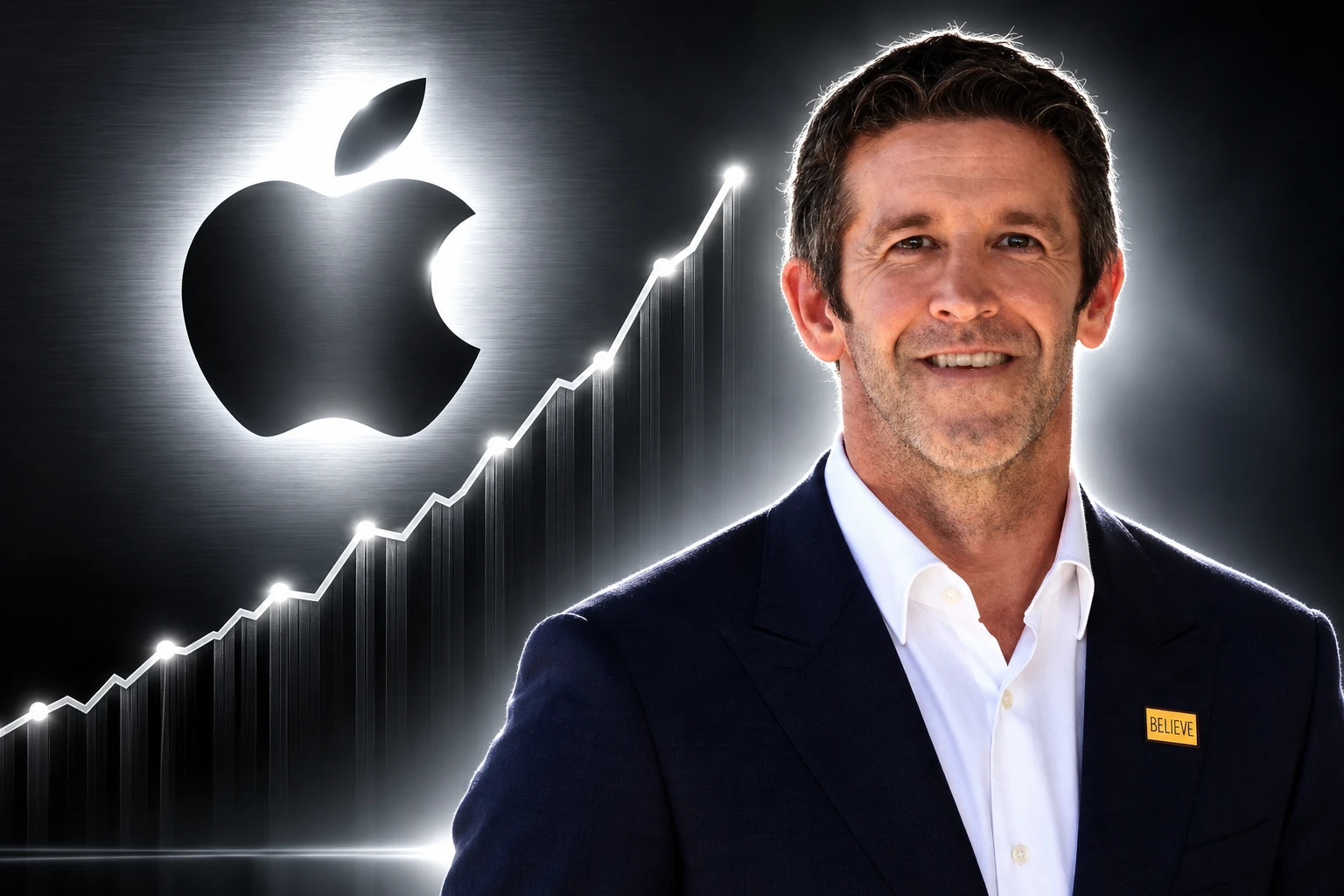
John Ternus is trimming Apple coordinators and side projects as memory makers sell capacity to AI buyers, the cost bind Cook called a hundred-year flood.

John Ternus has begun cutting Apple hardware program managers in his first month as chief executive, as memory prices keep climbing.
People inside the company describe small dismissals, paused side projects, and trims around Siri, Vision Pro, and Fitness+. Those moves land while Samsung, SK hynix, and Micron keep high-end memory sold through to AI data centers.
Coordinators Cut First in Hardware Engineering
Ternus took the job on September 1, 2026, after 15 years of Tim Cook. He is 51, a mechanical engineer from the University of Pennsylvania who joined Apple’s product design team in 2001 and ran hardware engineering from 2021. The first staffing changes tied to his watch are not a factory purge. They hit the people who keep hardware on a calendar.
Over a two-week stretch in September, hardware engineering dismissed a number of engineering program managers, a role that has coordinated timelines across teams for decades. The cuts reached several program managers, including roughly half a dozen directors, among the company’s most senior ranks. Those employees got weeks to find another seat inside Apple. Anyone who does not will be laid off later this year.
On September 29, Mark Gurman wrote that Ternus wants Apple to run faster, leaner, and launch more often, and to pull more revenue from products it already sells. Managers in product groups, he was told, are being pushed to deliver more devices on shorter timelines. One person familiar with the situation said everything is a lot more hands-on than it used to be, and that it is hectic right now.
The informed reading of that memo is speed, not shrinkage. Cutting the coordinators who have run Apple’s hardware calendar, then asking those same groups for more launches, is the strain inside the building. Some customers already hear “leaner” as a prelude to another price rise, after Cook confirmed Mac and iPad increases on his last earnings call.
WHAT WE KNOW
- Hardware EPMs: Several program managers, including about six directors, were dismissed in September and told to find other Apple jobs or leave later this year.
- Smaller team cuts: Fitness+, Siri, Vision Pro, and AI software engineering have seen limited reductions, some tied to performance.
- AppleCare halt: A summer plan to drop about 5,000 customer-service jobs after AI agents took on the work was pulled back.
- Memory bind: Cook told investors on July 30 that memory pricing was a hundred-year flood and that September costs would rise again.
WHAT IS UNCONFIRMED
- Headcount total: Apple has not published how many program managers beyond the directors are out, or a company-wide target.
- Named projects: Which early development efforts were slowed or cancelled has not been listed in public.
- Next round: Employees expect more cuts later this year or early next year; that remains a belief, not a filing.
Apple’s own June-quarter release still described a company of more than 150,000 people. Against that base, a handful of Fitness+ jobs and a cluster of hardware coordinators is a rounding error on the payroll and a loud signal in Cupertino.
Three Chipmakers Hold Apple’s Memory Bill
The people with real leverage on Ternus’s first month do not work at Apple Park. Dynamic random-access memory used in phones, Macs, and iPads is made at commercial scale by three suppliers: Samsung Electronics, SK hynix, and Micron Technology. Those same firms make the high-bandwidth stacks that sit beside AI accelerators. Hyperscalers have already booked much of the premium output.
Cook put that structure on the record on July 30. He said the DRAM market has three suppliers, that more of them would help on supply and perhaps on price, and that Apple was evaluating all options. Sanjay Mehrotra, Micron’s chief executive, said in June the shortage should last well into 2027, and that it is hard to say when supply will catch demand. Micron posted $41.46 billion of fiscal third-quarter revenue and described its HBM output as sold through.
Deloitte’s tech practice wrote in July that AI demand has driven memory chip prices to levels that doubled AI-server DRAM costs in the first quarter, with a fourfold rise possible for the full year. Capacity keeps moving toward HBM and enterprise drives, which leaves fewer wafers for the commodity chips in a laptop or a phone.
On the pricing front, we reluctantly raised prices, I would say. And we did it because we’re in, what I would characterize as a hundred-year flood on the memory pricing with exponential increases in memory prices, and so that was the rationale for it.
Tim Cook, Apple CEO, Q3 fiscal 2026 earnings call
He also said Apple paid more for memory in March than in December, paid still more in June, and expected to pay more again in the September quarter, with some offset from older inventory and cheaper non-memory parts. Beyond September, he said market pricing for memory was still rising and could weigh more on the business.
By the end of September, a live contract tracker had 16-gigabit DDR5 chips quoted at $57.62, with a tracked basket of memory contracts up more than 340% from a year earlier. Scarce-lot HBM3E 36-gigabyte stacks were indicated near $2,100, several times typical long-term agreement levels. That is the bill Ternus inherited. Layoffs at the edges of hardware and services do not rewrite it.
The $109.4 Billion June Quarter
Cook’s last full quarter as CEO did not look like a company in retreat. For the three months ended June 27, 2026, Apple posted quarterly revenue of $109.4 billion, up 16% from a year earlier, with diluted earnings of $2.02 a share, up 29%. Gross margin was 50.1%, including about 2 percentage points from tariff refunds. Net income was $29.79 billion.
iPhone sales were $54.3 billion, up 22%. Mac sales were $10.4 billion, up 29%, a June-quarter record even with supply limits Cook called significant. Wearables, Home, and Accessories rose 6% to $7.88 billion. iPad sales fell 6% to $6.19 billion. Research and development rose to $11.73 billion from $8.87 billion a year earlier, so the last Cook quarter did not starve engineering.
The quieter line is Services. It still set a June-quarter record at $30.74 billion, up 12% from a year earlier. From the March quarter, when Services were $30.98 billion, the figure slipped $237 million. That is a small percentage of a huge pile, and it is the first sequential fade investors have had to argue about in years, because Services is the high-margin ballast under hardware.
MARCH QUARTER VERSUS JUNE QUARTER
| Line | Quarter ended March 28, 2026 | Quarter ended June 27, 2026 |
|---|---|---|
| Total sales | $111.2 billion | $109.4 billion |
| Services | $30.98 billion | $30.74 billion |
| iPhone | $56.99 billion | $54.25 billion |
| Mac | $8.40 billion | $10.35 billion |
| iPad | $6.91 billion | $6.19 billion |
Seasonal drops from March to June are normal for iPhone. The Services dip is the one that does not explain itself with a chip shortage. On the July 30 call, Apple told investors to expect September-quarter revenue growth of 9% to 11%, with gross margin of 47% to 48% including about 1 percentage point of further tariff refunds. That is a step down from the June print, and executives pointed at supply and memory, not at demand drying up.
Inventories tell the same story from another angle. Finished and component stock rose to $11.09 billion on June 27 from $5.72 billion on September 27, 2025, a 94% increase in nine months. Apple was buying ahead. Even that buffer, Cook said, would fade after September.
Why Ternus Wants a Leaner Hardware Shop
The leaner pitch did not start in his first 28 days. While he ran hardware, Ternus told an all-hands that Apple should hire fewer people, ask more of the engineers it already has, and cut organizational bloat. He put up a slide of annual headcount growth and argued the company should accomplish more with fewer employees. That is an engineer’s complaint about layers, not a finance staff’s complaint about a DRAM invoice.
Apple’s board made the handover official on April 20, 2026, saying Ternus would take over as chief executive on September 1, with Cook moving to executive chairman. Cook, who joined in 1998 and became CEO in 2011, had taken the company from about $350 billion of market value to $4 trillion and from $108 billion of fiscal 2011 sales to more than $416 billion in fiscal 2025. Headcount rose by more than 100,000 people on his watch. The installed base passed 2.5 billion active devices. Services became a more than $100 billion business.
Ternus’s public promise was continuity. In the same release he said he had worked under Steve Jobs, had Cook as a mentor, and would lead with the values that have defined Apple for half a century. The private version, according to people who have heard him, is a company that experiments more, depends less on a spring-and-fall launch clock, and puts engineers closer to the top. Changing that clock, employees have said, could take years.
He has also talked with Eddy Cue, who runs Services, and Kevan Parekh, the chief financial officer, about launching new services and taking more revenue from the ones Apple already has. That conversation sits next to the $237 million sequential Services dip. Hardware can only absorb so much of a memory spike if the high-margin software and subscriptions line is no longer compounding every quarter.
Fitness+ Audio Was an Early Cut
Before the hardware EPM dismissals, Apple cut a handful of Fitness+ staff, including people who worked on Time to Walk and Time to Run, the audio sessions that play from an Apple Watch without a video. New audio releases are expected less often. The service itself has not been killed. Fitness+ has long been treated internally as a weak digital product with a loyal audience, which makes it an easy place to save money and a hard place to disappear.
The other trims are broader and thinner. Siri, Vision Pro, and AI-related software engineering have had limited cuts. Some of those reductions were described as performance-based. Apple had already dissolved a much larger Vision Pro hardware group earlier in 2026, before Ternus sat in the job, so the headset’s payroll was shrinking on the way into the handover.
WWDC26, in Cook’s telling on the July call, unveiled an all-new Siri AI. Weeks later, the Siri organization is one of the groups taking small nicks. That is not a contradiction Apple has explained. It is what a company looks like when it is funding a software rewrite and still hunting for costs on the same org chart.
THE CUTS AND PAUSES SO FAR
- Hardware program managers: Dismissed in September, including about six directors, with internal job searches before year-end exits.
- Fitness+ audio: A handful of jobs gone, including Time to Walk and Time to Run staff; fewer new audio drops, service still live.
- Siri, Vision Pro, AI software: Limited reductions across those groups, some on performance grounds.
- Early projects: Work judged less essential has been slowed or cancelled; Apple has not named the list.
- AppleCare: A roughly 5,000-job AI-replacement plan from the summer is not moving.
None of those items, stacked together, offsets a memory bill Cook compared to a flood. They do show where Ternus will spend political capital first: middle management in his old hardware shop, and products that do not move the earnings needle.
Apple Pulled Back a 5,000-Job AppleCare Plan
The largest number attached to this period is a cut that did not happen. Over the summer, Apple worked on a plan to let go of about 5,000 AppleCare customer-service workers, many of them remote, on the theory that better AI phone and web agents could do parts of the job. That plan was halted. The company is not pursuing those dismissals now.
That pause matters because it undercuts the simple story that the new boss arrived to fire his way to a cleaner margin. Ternus is exploring how AI might speed development and take on tasks people do now. He also declined, at least this summer, to turn that idea into a five-thousand-person support cull. The people who lost roles in September were coordinators and content staff, not the AppleCare floor.
Employees still think a broader round could come later this year or early next year. Some teams have already seen planned budget increases reduced and headcount frozen. Until Apple files a restructuring charge or names a program, that is expectation, and it should be treated as such.
Faster Launches Still Wait on Memory
Ternus wants more products, arriving outside the usual spring and fall windows, with fewer people standing between engineers and executives. The wafer allocation that feeds those products is already spoken for in the AI buildout. Shipping more often does not create DRAM. It asks the same three suppliers for more of a part they can sell at a higher price into a data center.
THE HANDOVER AND THE CUTS
- April 20, 2026: Apple names Ternus as the next chief executive, with Cook moving to executive chairman on September 1.
- June 27, 2026: The fiscal third quarter closes at $109.4 billion of sales, with Services down $237 million from March.
- July 30, 2026: Cook, on his final earnings call, calls memory pricing a hundred-year flood and guides September growth to 9% to 11%.
- September 1, 2026: Ternus becomes CEO. Cook stays as executive chairman, including work with policymakers.
- Mid-September 2026: Fitness+ audio staff are cut, including Time to Walk and Time to Run.
- Late September 2026: Hardware engineering dismisses program managers, including about six directors, and Gurman outlines the leaner, faster plan.
Cook already said Apple raised hardware prices reluctantly. He also said iPhone prices had been held, with the door left open. If the shortage lasts through 2027, as Mehrotra and other memory executives have sketched, Ternus’s choices stay ugly: eat the cost in gross margin, lift device prices again, or keep chipping at projects and coordinators so the 2027 iPhone does not have to carry the whole bill.
Directors who do not land another Apple role face layoffs later in 2026. Mehrotra has already told customers the memory shortage should last well into 2027.

Edinburgh Opens a 2027 Tour Built for Time Trials

Korda Maps Auður From Meðalland to Irvine Bay

Apple Music Films Its New Logo in Mineral Oil

Oppo Prices the Pad Mini Above India’s iPad Mini

Austen Soaks Scotland Before Boelo Brings Weekend Gales

Volkswagen Sells the Osnabruck Plant to Clear a Board Fight

Apple’s Foldable iPhone Hinges on Samsung Display Supply

Tata Motors’ Iveco Tender Opens as Holders Still Decide

Saksham Gaur Finds He Is His Own Company’s Client

Onimusha Way of the Sword Preload Hits a Windows 11 Wall
-
 AUTO2 months ago
Volkswagen Sells the Osnabruck Plant to Clear a Board Fight
-
 NEWS2 months ago
Apple’s Foldable iPhone Hinges on Samsung Display Supply
-
 AUTO2 months ago
Tata Motors’ Iveco Tender Opens as Holders Still Decide
-
 BUSINESS2 months ago
Saksham Gaur Finds He Is His Own Company’s Client
-
 GAMING2 months ago
Onimusha Way of the Sword Preload Hits a Windows 11 Wall
-

 BUSINESS2 months ago
Hyderabad 22-Carat Gold Jumps After a False Bargain
-

 ENTERTAINMENT3 years ago
What is SD on Amazon Prime? – All You Need to Know
-

 NEWS2 months ago
iQOO 16 Locks 8,400 mAh While 100W Charging Holds