
BUSINESS
Why Does Scotland Place So Little Value on Its Wool?
Scottish hill wool is worth less on the farm than at auction: a 2.5 kg fleece at 68p a kilo comes to £1.70, which is short of a £1.93 shear.

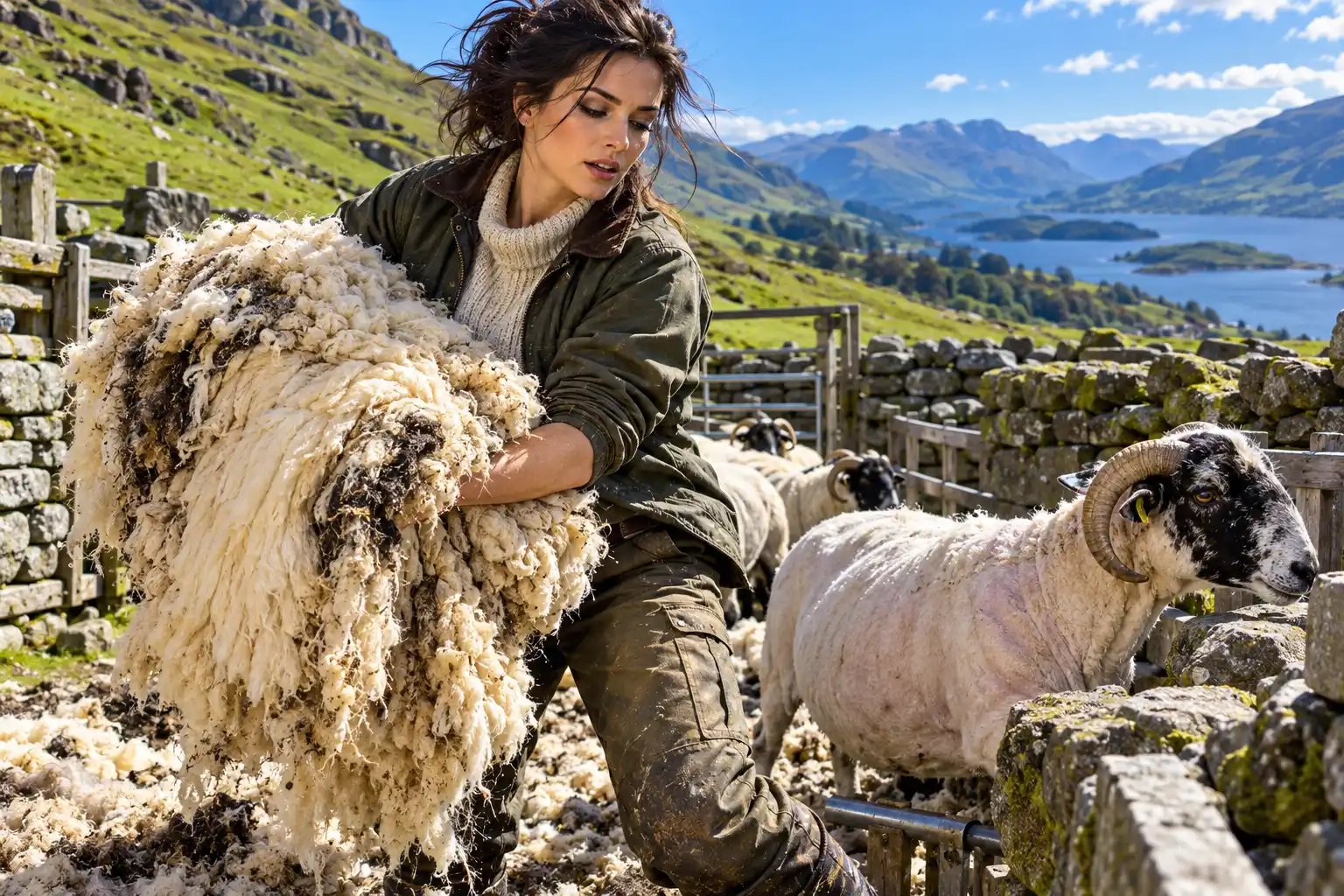
The fleece comes off every summer whether or not a buyer wants it. On a Scottish hill that wool is coarse mountain fibre, the sort sold for carpet, and the farm cheque has been missing the cost of the shear.
Sheep on those hills are kept for lambs. The clip is graded and auctioned in bulk, and you are paid what remains after that sale. A stronger auction price is a different number from the one on your statement.
The question of why Scotland places so little value on its wool comes down to that gap. The sections here price a single fleece, separate the auction from the cheque, and follow the guarantee that once tied them together. They then match the main hill grades to the shearer’s bill, and show where the wool goes once it leaves the shed.
What Is a Scottish Fleece Worth?
The June 2026 Scottish sheep count puts the national flock at 6.50 million, 2.2% under the five-year average, so the clip is still a large national volume. Size does not set the price you are paid. The figure on a member statement is the return after the wool has been graded and sold, not the number called in the sale room.
For the 2025 clip that return averages 68p per kilogram for the 2025 clip, against 40p for the 2024 clip. The rise is 70%, and British Wool calls it the best level in ten years. Cheviot wool on the same return is 85p per kilogram. Many core grades of Mule, Texel, Romney, hill and Cheviot cross sit between 70p and 75p.
Blackface, the mountain wool Scottish hill flocks know best, is priced on its own rows. Five grades from British Wool’s 2025 list, in pence per kilogram, show how wide one breed still is.
| Grade | 2023 | 2024 | 2025 |
|---|---|---|---|
| Blackface Fine No 1 | 20p | 44p | 70p |
| Blackface Medium No 1 | 18p | 36p | 67p |
| Blackface No 2 | 12p | 30p | 56p |
| Blackface Light Grey | 5p | 10p | 44p |
| Blackface Dark Grey and Black | 5p | 10p | 15p |
A dark grey or black Blackface fleece at 15p a kilo is a different product from a Fine No 1 at 70p. On the 2.5 kg fleece the National Sheep Association treats as typical, those two grades are worth 37.5p and £1.75. The spread is the grade written on the sheet.
The Gap Between the Auction and the Cheque
In the first four auctions of the 2026 selling season, British Wool sold 3,000 tonnes of new-season wool at an average of £1.70 per kilo. That was 70p per kilo above the same point a year earlier, and clearance in the last three of those sales was close to 90%. Andrew Hogley, the chief executive, says auction prices are around 70% higher than 12 months ago in both the UK and New Zealand, with global demand for crossbred wool competing for supply.
The £1.70 does not land as £1.70 on the farm. The 2024 clip of 19,290,044 kg sold at an overall average of 99.5p per kilogram. By 30 April 2025 the Board had sold 82% of it, 15,897,015 kg, at an average of £1 a kilo, and the rest after that date. Members were paid 40p a kilo for that same clip. The tonne values you may see quoted are the same returns written another way: 40p a kilo is £400 a tonne, and 68p a kilo is £680 a tonne.
The split sits inside the British Wool Marketing Scheme 1950, which still regulates UK fleece wool except in the Shetland Islands. Around 30,000 farmers sell through the pool. A 2022 government review of the Board described most auction lots as 8 tonnes of one type, drawn from many farms, with scouring typically done in 50 tonne batches. Your sack is not offered as your sack. It joins a grade, and the cheque is what remains of that grade after the Board’s costs.
Shetland is the exception written into the scheme, so a fine island fleece can be sold under its own name. A 2022 review for ministers judged that the original reason for regulating the market, security of supply for the national economy, no longer held. The report on the 2024/25 scheme year still describes those marketing rules as in force, with the method of collection and sale unchanged.
How Did the Wool Guarantee End?
Wool once carried enough weight that the Lord Speaker still sits on the Woolsack. Edward III tied that seat to the wool trade in the 14th century. When the sack was opened in 1938 it was stuffed with horsehair, not wool. By 26 January 1966 it had been refilled with wool from England, Scotland, Wales, Northern Ireland and Commonwealth producers.
The farm price did not keep the symbol. A written answer on 12 February 1993 set out the official series: the UK auction average was 138.70p per kilogram in 1984-85, and 61.08p per kilogram in 1991-92. The guaranteed price for 1992 was still 117p per kilogram. Synthetic cloth had taken the mass clothing trade, and the guarantee was topping up an auction that no longer covered it.
PRICES ON THE PARLIAMENTARY RECORD
- 1984-85: The UK auction average stands at 138.70p per kilogram in the series later given to Parliament.
- 1991-92: The auction average stands at 61.08p per kilogram, while the guarantee is still above £1 a kilo.
- 1992: The guaranteed price is 117p per kilogram, against an auction already near 61p.
- 30 April 1993: Wool collected after this date does not qualify for the guarantee.
The Agriculture Act 1993 made that cutoff. From the 1993 clip, the producer return was the auction price minus marketing costs. In the same February 1993 answer, Scottish producers were drawing over £100 million a year in ewe premium and hill livestock compensatory allowances. The public money sat on the breeding ewe. The fleece was left to the sale room, and the flock stayed on the hill because of the lamb, not because of the wool.
Hill Breeds and the Lamb Calendar
With the guarantee gone, the breed on the hill decided what a buyer would pay. Scotland’s cheap rows are mountain and hill wools. A crossing fleece that mills want for knitting is a different market, and it is a small share of the clip.
Scottish Blackface on the Grade Sheet
British Wool’s 2025 grade values for Blackface wool put Fine No 1 at 70p per kilogram, up from 44p in 2024 and 20p in 2023. Dark grey and black Blackface is 15p, up from 10p and, the year before that, 5p. The fibre is long and coarse, used for carpets and tweed rather than a fine jersey, so the sheet was never going to read like a knitting-wool price list.
- Fine No 1: The top Blackface row on the 2025 list, at 70p per kilogram.
- Light grey: A colour fault that drops the same family to 44p.
- Dark and black: The low row, at 15p, before damaged and stained oddments go lower still.
Cheviot Wool and the Crossing Breeds
Cheviot at 85p a kilo is one Scottish type that clears a shear on a 2.5 kg fleece. That weight at 85p comes to £2.125, which is 19.5p above a £1.93 guiding rate. Bluefaced Leicester, the ram used to get Mules out of hill ewes, sits in another part of the same list: 600p per kilogram in 2025, after 450p in each of the two years before. That is £6 a kilo, or £15 on a 2.5 kg fleece. The market pays when the fibre is the kind a mill wants. It does not pay that for kempy mountain wool, and mountain wool is what most of the Scottish hill clip is.
READ THE GRADE BEFORE THE HEADLINE
- The auction: £1.70 a kilo is a blend of everything sold in those opening sales.
- Your row: The cheque follows the grade, from 15p dark Blackface up to £6 Bluefaced Leicester.
- The test: Multiply your grade by the kilos in the sack, then set the result beside the shear.
A headline recovery can be real for the sale room and still leave a dark hill fleece in the pence. The row on the sheet is the one that belongs to your sheep.
Sheep Kept for Lambs
A commercial calendar is built around the lamb crop. Keeping a ewe on for a heavier fleece fights that calendar, because the meat buyer wants a young sheep and the wool buyer is not offering enough to change the plan. Older carcases also pick up an extra handling step that lambs miss.
- Under 12 months: Sheep and goats have no specified risk material to remove.
- Over 12 months: The skull, including the brain and eyes, and the spinal cord are specified risk material, including where a permanent incisor has erupted.
- Where it comes out: Removal is at the slaughterhouse or at a cutting plant authorised for that job.
The rule does not set the wool price. It does fit a trade that finishes young sheep and treats the ewe’s annual fleece as a cost of keeping her, not as the reason she is there.
Where Does Scottish Wool Go After the Shed?
Most of what the pool sells still goes into carpet and other hard-wearing uses, in those large scoured blends. Farmers delivering hill wool are feeding that trade, not a knitwear mill that can put a breed name on a label. Fully traceable lots are the smaller line: buyers pay a premium above the auction for wool that can be named back to the scheme, and British Wool works with more than 180 licensees.
The higher auction price reaches the member only if the mill can still sell the carpet. Hogley has said some manufacturers in the supply chain have found the rise hard to absorb. A clearance rate near 90% means buyers were still taking the wool at the new level. If that rate falls, the farm cheque is the next number to stall.
Wash a synthetic pile and a different bill shows up in the water. Napper and Thompson estimated in 2016 that an average 6 kg wash of acrylic fabric releases over 700,000 fibres. Wool does not add that plastic. It also does not get a free pass on carbon: a 2020 life-cycle assessment of a lightweight woollen sweater put the impact at 0.17 kg of CO2 equivalent per wear, give or take 0.02, and methane from the sheep accounted for 53.7% of the greenhouse gases. The jumper has to stay in use for a long time before that farm methane is spread thin.
The Campaign for Wool, which the then Prince of Wales set going in 2008 and which launched in 2010, made a film that asks why a fibre with those uses lost its place in the market.
When Does Shearing Cost More Than the Fleece?
Shearing is not a choice you make because the wool cheque looks good. On a breed that grows a continuous fleece, the coat does not moult itself away, and a heavy, dirty summer fleece is where blowfly strike starts. Phil Stocker, chief executive of the National Sheep Association, has described the job as welfare work that many flocks were still doing at a loss.
For many flocks, shearing has been an essential welfare job done at a loss. Two seasons ago the average payment was 40p/kg. There is now a real prospect of £1/kg for core types.
Phil Stocker, chief executive, National Sheep Association, 18 September 2026
The contractor guide rate for shearing ewes that he is using is £1.93 a head. A typical 2.5 kg fleece at the 2025 average of 68p a kilo is worth £1.70, which is 23p short of that rate. At £1 a kilo the same fleece is worth £2.50 and leaves 57p once the shearer is paid. British Wool’s outlook for the 2026 clip adds a further 25p to 30p a kilo to the producer return, which is £930 to £980 a tonne, and several core types are put above £1 a kilo in that outlook.
Hill and mountain wools, Stocker says, still have ground to make up. That is the part of Scotland a sale-room average does not finish describing. Intake for the 2026 clip was running slightly ahead of the season before, which points to more farmers sending wool into the pool again. Sending it in does not, by itself, lift a 15p grade up to the core types Stocker has in mind.
What to Do With a Fleece This Season
The arithmetic above is enough to decide whether this clip paid for the shear. It is not enough to decide whether the sheep gets shorn. Do the welfare job, then read the grade before you judge the cheque.
- Shear for the sheep: Book the shear on the welfare calendar, not on the wool forecast, because flystrike does not wait for a better auction.
- Keep the fleece in a higher row: Dry wool, free of stain, straw and heavy grey, is what separates 70p Fine No 1 from 15p dark Blackface on the same list.
- Use the depot unless you are outside the scheme: Mainland flocks, and islands other than Shetland, deliver through British Wool. Shetland can sell outside the pool.
- Compare your grade with £1.93: Multiply pence per kilo by the kilos you actually packed. Ignore the £1.70 until you have that product.
More than 100 shearing and wool handling courses are on the 2026 list, after over 900 people attended the year before. Handling is the skill that moves a fleece between rows. The world price cannot repair a cotty, stained or dirt-loaded sack once the grader has seen it.
Frequently Asked Questions
What Is the Difference Between a Greasy Price and a Clean Price?
The greasy price is the wool as it leaves the sheep, with dirt and grease still in it. The clean price allows for what remains after scouring. At British Wool sale BW224 on 15 September 2026, the average greasy price was £1.657 per kilogram and the average clean price was £2.470 per kilogram. Season reports that cite £1.70 are quoting a greasy auction average, which is still not the payment on a member statement.
Is Shetland Wool Sold Through British Wool?
Shetland wool is outside the British Wool Marketing Scheme, which regulates fleece wool in the rest of the United Kingdom. A producer in Shetland can sell on the open market under the island’s own name. Flocks elsewhere in Scotland, including the other islands, are inside the scheme, so a private deal off the Board is outside those rules.
Does a Sheep Have to Be Shorn If the Wool Will Not Sell?
A sheep from a wool breed still needs shearing when the fleece will not pay, because the coat keeps growing and a heavy summer fleece raises the risk of heat stress and flystrike. The price decides whether the wool is worth delivering, not whether the animal can be left in a full coat. Once it is off, a British Wool depot or drop-off point is the route for flocks inside the scheme.
Who Gains First When the Wool Price Rises?
The auction price moves first and the member payment follows on a later clip, so a sale room at £1.70 a kilo in September 2026 can sit beside a 68p return from the 2025 clip. Carpet mills meet the higher buying price before the next farm cheque is worked out. Clearance is the check on whether they are still taking the wool: it was close to 90% across the last three of those opening sales.
Set your own grade beside £1.93 a ewe before you decide what this clip was worth. A 2.5 kg Blackface Fine No 1 at 70p comes to £1.75, which is 18p short of the shear. The same weight at 15p comes to 37.5p. The £1.70 sale-room average describes the auction. It does not describe the sack in your shed.

Edinburgh Opens a 2027 Tour Built for Time Trials

Korda Maps Auður From Meðalland to Irvine Bay

Apple Music Films Its New Logo in Mineral Oil

Oppo Prices the Pad Mini Above India’s iPad Mini

Austen Soaks Scotland Before Boelo Brings Weekend Gales

Volkswagen Sells the Osnabruck Plant to Clear a Board Fight

Apple’s Foldable iPhone Hinges on Samsung Display Supply

Saksham Gaur Finds He Is His Own Company’s Client

Tata Motors’ Iveco Tender Opens as Holders Still Decide

What Is SD on Amazon Prime?
-
 AUTO2 months ago
Volkswagen Sells the Osnabruck Plant to Clear a Board Fight
-
 NEWS2 months ago
Apple’s Foldable iPhone Hinges on Samsung Display Supply
-
 BUSINESS2 months ago
Saksham Gaur Finds He Is His Own Company’s Client
-
 AUTO2 months ago
Tata Motors’ Iveco Tender Opens as Holders Still Decide
-
 TECHNOLOGY3 years ago
What Is SD on Amazon Prime?
-

 GAMING2 months ago
Onimusha Way of the Sword Preload Hits a Windows 11 Wall
-

 BUSINESS2 months ago
Hyderabad 22-Carat Gold Jumps After a False Bargain
-

 NEWS2 months ago
The Frame Pro’s $1,200 Labor Day Cut Needs a Soundbar