
BUSINESS
Piccadily’s Portavadie Distillery Is Still a Proposal
Piccadily Agro finished its Indian plants, but the Portavadie Scotch distillery is still a proposal as Scotland cuts output into a whisky glut.

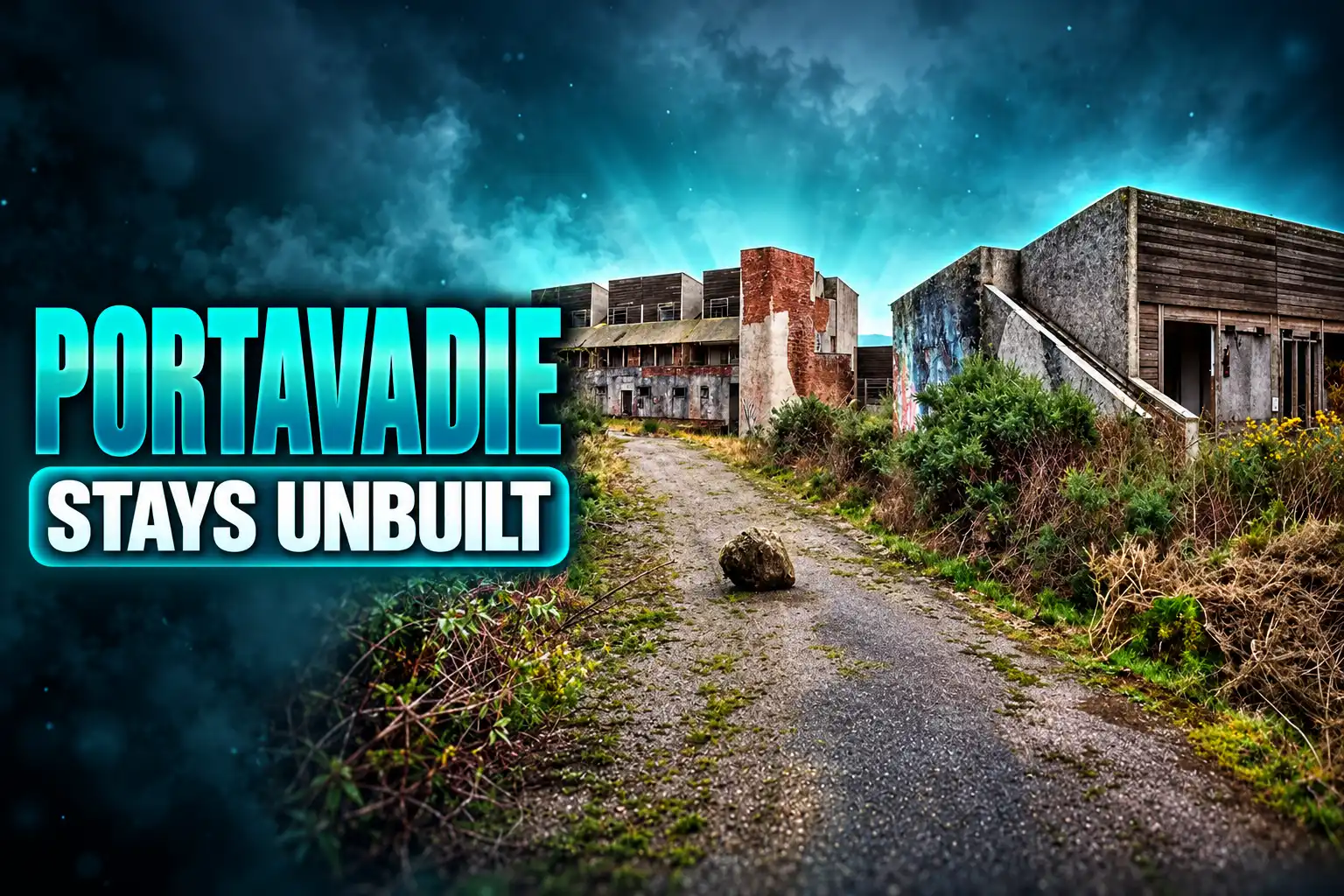
Piccadily Agro Industries still has no working stills at Portavadie, the Scottish site in a ₹1,000 crore ($118.4 million) plan set out in November 2024. The Indian malt producer finished its domestic plants. The Cowal site is still a proposal, and it now sits against a glut of unsold Scotch.
The company told investors the work would take 24 months. That window runs to November 2026. Haryana and Chhattisgarh are already distilling. Loch Fyne is not.
A ₹1,000 Crore Plan and a Two-Year Clock
On 13 November 2024, Piccadily Agro Industries Limited filed a ₹1,000 crore expansion plan with BSE. It covered three sites: a brownfield lift at Indri in Haryana, a new plant at Mahasamund in Chhattisgarh, and a first overseas distillery at Portavadie in Argyll and Bute.
Funding already in the door was ₹262 crore from a September 2024 preferential allotment and ₹50 crore from promoters, a ₹312 crore raise. The rest, the company said, would come from internal accruals and debt. The aim was more malt for Indri single malt and Camikara rum, plus a Scottish postcode.
Piccadily called Portavadie an industry first for an Indian alco-bev company. It said HM Revenue and Customs approvals were in place to start work on a 58-acre parcel, with a visitor centre attached. Promoter Siddhartha Sharma put the pitch in global terms.
Our expansion across India and Scotland demonstrates our ambition to redefine the global spirits industry while solidifying India’s position as a producer of high quality, premium alcohol.
Siddhartha Sharma, Promoter, Piccadily Agro Industries Limited, 13 November 2024 press release
The same note said India and Scotland together would take overall capacity to 460 kilolitres per day, including 60 KLPD of malt. The accounts filed for the year to 31 March 2026 show a smaller finished map, and they no longer talk about Portavadie as a site under construction.
Indri and Mahasamund Are Already Running
The Indian half of the plan is the part that happened. At Indri, on a 168-acre campus in Karnal district, ENA and ethanol capacity rose from 78 KLPD to 220 KLPD, and malt spirit from 12 KLPD to 30 KLPD. A new grain plant at Village Beltukri, Mahasamund, started commercial operations on 31 December 2025 at 200 KLPD, on 26 acres.
Together those units give Piccadily 450 KLPD of distillery capacity, the figure in the 2025-26 annual report, with 30 KLPD of that as malt at Indri. Barrel stocks at Indri stood at 87,000 on 30 June 2026. The company wants more than 100,000 barrels by March 2027. Malt spirit output in 2025-26 was 6,153,974 bulk litres. Revenue from operations was ₹1,135 crore, against ₹886 crore the year before.
The Indri Experience Centre opened in 2025. Cashmir vodka and further Indri bottlings followed. By mid-2026 the group listed more than 25,000 retail and on-trade outlets, 31 country markets and 35 duty-free locations. The stills that pay the bills are in Haryana and Chhattisgarh, not on the Cowal shore.
THREE SITES, TWO OUTCOMES
| Site | November 2024 promise | 2025-26 annual report |
|---|---|---|
| Indri, Haryana | 250 KLPD (220 ENA/ethanol, 30 malt); over 100,000 barrels | 220 KLPD ENA/ethanol, 30 KLPD malt; 87,000 barrels at 30 June 2026 |
| Mahasamund, Chhattisgarh | 210 KLPD, remainder by Q2 FY26 | 200 KLPD; commercial from 31 December 2025 |
| Portavadie, Scotland | First international distillery; HMRC approvals to commence; 58 acres | Proposed; land, board and statutory approvals done; plant and options under evaluation |
The gap is not a rounding error. It is the difference between spirit that can be sold now and a Scotch label that cannot exist until a still house is built, licensed and then left to mature stock for three years.
Portavadie Remains a Proposal on Loch Fyne
Portavadie Distillers and Blenders Ltd was incorporated on 30 April 2021 as company SC697433. Piccadily bought the whole share capital in FY 2020-21. The registered office is 1 Police House, Kames, Tighnabruaich. Portavadie Distillers remains active at Companies House, with accounts made up to 31 March 2026, and its SIC code is distilling, rectifying and blending of spirits.
The ground is the old Polphail “ghost village,” built in the 1970s for oil-platform workers who never moved in. The empty housing came down by 2016. Argyll and Bute Council granted planning permission in November 2022 for a distillery, visitor centre and restaurant looking over Loch Fyne, on the Cowal peninsula, with the Portavadie to Tarbert ferry as a tourist link toward Islay.
In the year to March 2026 Piccadily subscribed 700,000 ordinary shares of £1 and said it held the entire share capital of 2,842,001 shares. That is a UK subsidiary on the books. It is not a working still house.
FROM POLPHAIL TO A PAPER DISTILLERY
- 30 April 2021: Portavadie Distillers and Blenders Ltd is incorporated in Scotland.
- FY 2020-21: Piccadily Agro buys the entire share capital to enter foreign distilling.
- November 2022: Argyll and Bute Council grants planning permission at Polphail.
- 13 November 2024: The parent files the ₹1,000 crore plan and says HMRC approvals are in place to commence.
- 31 December 2025: The Mahasamund plant in India starts commercial operations.
- Year to 31 March 2026: The annual report calls Portavadie a proposed malt distillery and says options are being evaluated as the UK-India trade deal takes effect.
A November 2025 earnings deck still put “likely commissioning” in FY27 and said evaluation of plant and machinery was in progress. The later annual report is cooler. It records a proposed malt distillery in Portavadie that Piccadily “proposes to develop, over time,” with board approval, land, statutory approvals and funding arrangements completed, and with “various possibilities” opened by the UK-India free trade agreement.
That is a live option on a licensed plot. It is not the 24-month Scottish launch the 2024 release described.
Quiet Stills on the Existing Scotch Map
While Piccadily kept Portavadie on the drawing board, Scotland’s working distilleries spent 2025 and 2026 taking spirit out of the system. Estimates compiled by Commercial Spirits Intelligence put maturing stock at about 1.4 billion litres, roughly three years of current consumption, against less than 400 million litres a decade earlier. The casks in those warehouses were filled against a demand view from the boom years. When drinking slowed, the only lever left was the next fill.
The Scotch Whisky Association said 2025 exports were £5.3 billion, down 1.8% in value, and 1.34 billion bottles, down 4.3% in volume. Single malt fell 6% in value. Mark Kent, the SWA’s chief executive, said member companies were under strain not felt for decades, and that more businesses would close during 2026 without support from Westminster and Holyrood.
The international trading environment continues to be challenging for Scotch Whisky producers, with tariffs and geo-political tension causing significant turbulence in some key markets. At home, the industry faces soaring costs, from year-on-year duty increases to new packaging taxes.
Mark Kent, Chief Executive, Scotch Whisky Association, 12 February 2026 export statement
Advisory firm BTG counted 69 Scottish distillers showing signs of distress, 19% of the local total, up from 49 in the last quarter of 2025. Duncan McFadzean of Noble & Co has said as many as a quarter of Scotland’s roughly 160 distilleries could be put up for sale. That is the same surplus that has already put distilleries already going up for sale into a second whisky loch.
STILLS ALREADY GOING QUIET
- Holyrood, Edinburgh: Production is on pause with no restart date, a Lowland site known for experimental malts and yeasts.
- GlenWyvis, Highlands: The community-owned distillery moved to appoint administrators in late September 2026 after it failed to secure funding.
- Ian Macleod: The independent cut annual output by 30% at Glengoyne and Rosebank on a weaker forward-demand outlook.
- Diageo and LVMH: Teaninich was paused in September 2025; Glenmorangie halted distillation; Cameronbridge workers struck over planned Scottish job cuts.
Rob Carpenter, a Holyrood co-founder, said his anecdotal reading was that the industry might be producing around a third of its normal level. Building a new malt works into that is a wager on a later decade, not a response to empty shelves in 2026.
India Bought 220 Million Bottles of Scotch
The wager has a map. In 2025 India was Scotch’s largest market by volume, taking 220 million bottles of Scotch, up 15%, and £286 million of value, also up 15%, enough to rank third by value behind the United States and France. The United States, still first by value at £933 million, shipped 120 million bottles, down 9.2% for the full year and 15% by volume from May to December after a 10% tariff in April 2025.
Piccadily does not need Portavadie to sell Indri. It needs Portavadie if it wants a spirit that can legally be called Scotch, distilled and matured in Scotland for at least three years. Even a first fill in FY27 would not be Scotch until about 2030. By then the UK-India trade deal, which the annual report already treats as operational, is meant to ease the tariff path for British whisky into the same drinkers who already buy Indri.
That is the quiet logic in the filing’s new wording. A Scottish still house is less a 2024 trophy and more a long option on a market that, unlike the United States, was still growing in 2025. Foreign buyers circling distressed Scottish plants are making a similar calculation, only they can purchase stills that already exist. Piccadily chose to keep its own planning permission and wait.
The Licence Comes After the Building
HMRC’s producer approval sits at the end of that wait, not the start. In April 2025 an HMRC spokesperson said the department can approve and issue alcohol producer licences and warehouse approvals only once premises have been built, and only if it is satisfied that those involved are law-abiding. The “HMRC approvals” in the 2024 release were approvals to commence a project. They were not a licence to make Scotch.
From 1 February 2025 new producers apply for Alcoholic Products Producer Approval rather than the old DLA1 distiller’s licence. HMRC still wants a plan of the finished premises, and it still tests fitness. That test is why Portavadie drew political noise in Scotland once Sharma’s record became public.
Siddhartha Sharma, the promoter named on the November 2024 release, was convicted in 1999 in the Jessica Lal murder case in Delhi and released in 2020. In December 2024 and April 2025, MPs asked the Treasury what fit-and-proper checks had been done on the Portavadie investment. HMRC would not discuss individual cases and repeated that final licences come after brickwork. Piccadily has said the finished distillery would be owned and operated by the UK company.
That is not settled, because there is still no still house to inspect. Polphail’s slope toward Loch Fyne has planning permission, a live UK company, and a parent that already run 450 KLPD in India. First spirit, if FY27 holds, would then need three years in cask before a bottle can carry the word Scotch. The 2024 plan sold a dash to the Highlands. The 2026 accounts describe a plot Piccadily proposes to develop, over time.

Gold Prices Slip to $4,120 as France Lifts the Dollar

Gemini Call for Me May Reach Friends and Family

Yemen Forces Claim Mokha as the Mecca Pact Activates

TCS Opens Q2 as Mid-Cap IT Keeps the Growth

Bitcoin’s Jobs Rally Fails While December Hike Odds Hold

Volkswagen Sells the Osnabruck Plant to Clear a Board Fight

Tata Motors’ Iveco Tender Opens as Holders Still Decide

Saksham Gaur Finds He Is His Own Company’s Client

Onimusha Way of the Sword Preload Hits a Windows 11 Wall

The Frame Pro’s $1,200 Labor Day Cut Needs a Soundbar
-
 AUTO4 weeks ago
Volkswagen Sells the Osnabruck Plant to Clear a Board Fight
-
 AUTO1 month ago
Tata Motors’ Iveco Tender Opens as Holders Still Decide
-
 BUSINESS1 month ago
Saksham Gaur Finds He Is His Own Company’s Client
-
 GAMING1 month ago
Onimusha Way of the Sword Preload Hits a Windows 11 Wall
-
 NEWS1 month ago
The Frame Pro’s $1,200 Labor Day Cut Needs a Soundbar
-

 BUSINESS1 month ago
Hyderabad 22-Carat Gold Jumps After a False Bargain
-

 BUSINESS1 month ago
The Rs 4.66 Lakh Crore IPO Queue Is Mostly Paper
-

 AUTO1 month ago
Simple Wave Chases Range as Ather Konarc Cuts Price