
BUSINESS
The G7 Opens Diesel Tanks While Carriers Head East
G7 nations will release 100 million barrels of oil and diesel before the U.S. midterms, after Gulf crude already found routes around Hormuz.

G7 leaders agreed Friday to release 100 million barrels of oil and diesel over four months, with a large diesel draw in the first 20 days. President Trump says the Iran war ends after the November 3 midterms. A third U.S. carrier group is already at sea.
The USS Theodore Roosevelt left San Diego on September 27, and the USS Makin Island amphibious group followed a day later with the 13th Marine Expeditionary Unit. A U.S. official said the ships could reach the Middle East by late October.
9,000 Troops Leave San Diego for the Gulf
The inbound force is built around two West Coast groups. The Roosevelt strike group sailed with the cruiser USS Chosin. The Makin Island group includes the landing ships USS Anchorage and USS John P. Murtha, plus about 2,000 Marines.
THE INBOUND FORCE
- Headcount: Officials put more than 7,000 sailors and 2,000 Marines on the ships, a combined 9,000.
- Already on station: The carriers USS George H.W. Bush and USS George Washington are in the region, along with the USS Boxer amphibious group.
- Three-carrier risk: Officials have not said whether the Roosevelt will join both flattops or replace one of them.
- If all three stay: The Navy would again have three carriers in the theater, a posture last used in April, the first time since 2003.
That mix would lift the U.S. naval presence above 20,000 sailors and Marines, with hundreds of aircraft. Trump told a Mobile, Alabama, crowd on Friday night that oil prices will come tumbling down when the war ends, and that Iran “played their cards too tough.” He has also said Tehran is “ready to fold up” and that the fight will be “very quickly ended,” maybe before the vote.
The ships do not match a wind-down. They match a president who wants more options after November 3, including new strikes he has called possible once the midterms are done.
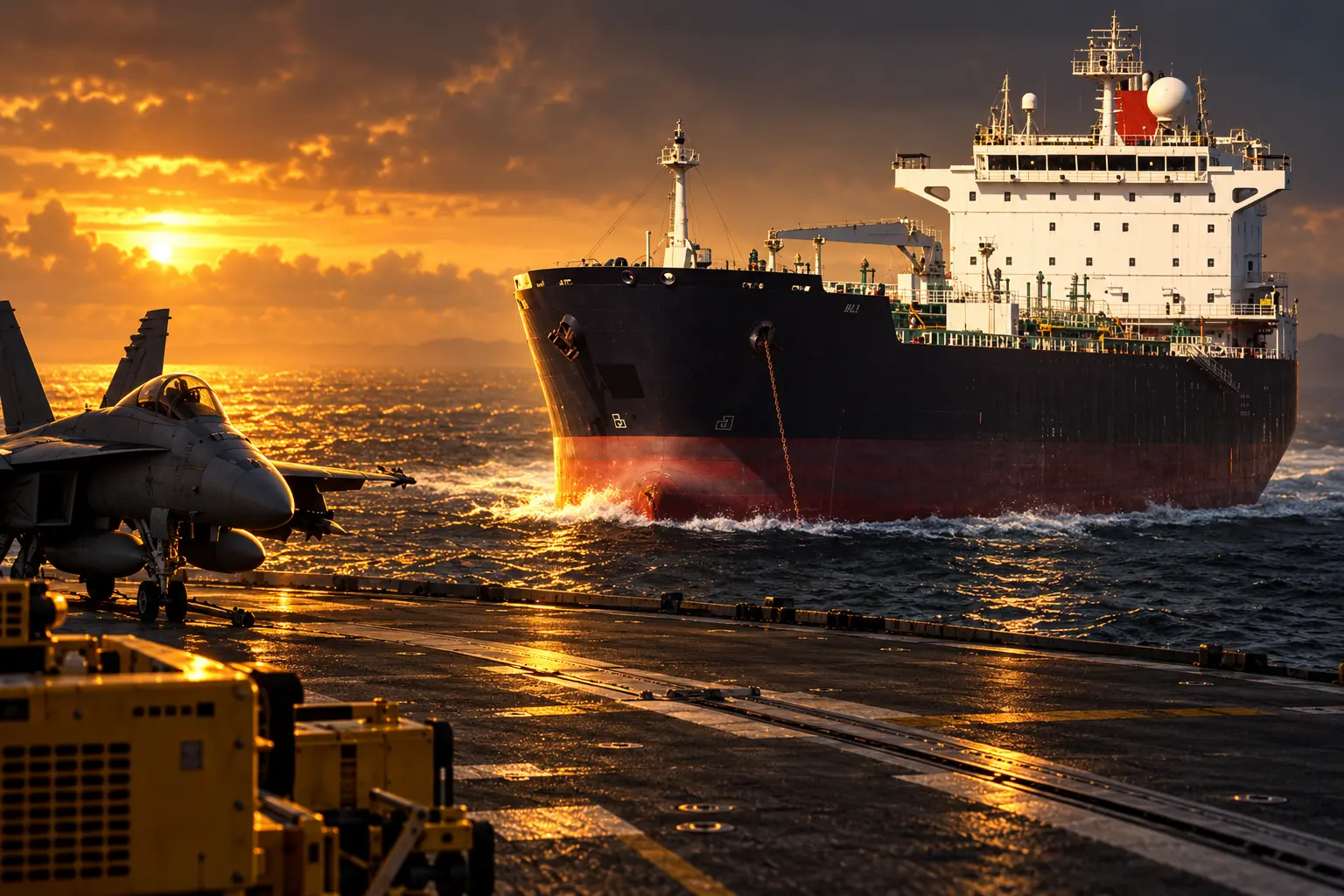
The G7 Opens Diesel Tanks Before November
The fuel move is the piece that can show up at the pump before ballots are counted. France holds the G7 presidency and convened a leaders’ video call on Friday, after Trump spoke overnight with President Emmanuel Macron. The joint text asks the International Energy Agency to finish March’s unfinished stockpile work and to put diesel out first.
We will implement our commitments with a coordinated release through the IEA of 100 million barrels to begin immediately over four months, including a frontloaded substantial diesel release within the first 20 days by G7 members and partners.
G7 leaders, joint statement, October 2, 2026
The same statement pledges members to refrain from energy export curbs among themselves, a clause written against a threatened U.S. diesel export ban. It also tells refineries to stagger maintenance and raise use where they can, and it asks the IEA for a follow-up report before 20 days.
THE FRIDAY ENERGY PACKAGE
- The volume: A joint draw of 100 million barrels over four months, run through the IEA.
- The diesel: A large product release in the first 20 days, a window that closes in late October.
- The ban: G7 members promised not to restrict energy shipments to one another.
- The leftover: The 100 million barrels complete March pledges that have not yet been fulfilled, rather than opening a fresh tally on top of them.
Trump then told reporters at the White House that Europe has a lot of diesel and that the United States is “not going to be doing the export ban.” He added that the ban “was never really on the table,” after weeks of floating it as leverage. The first 20 days of the diesel draw land before November 3. The four-month clock runs into early 2027.
Forty Percent of Gulf Crude Now Skirts Hormuz
The reason a diesel dump is even on the table is that crude has already found other doors. Maritime data firm Kpler, using vessel tracks, satellite imagery, draught changes and port checks, found that at least 16.5 million barrels a day of non-Iranian crude left the Middle East Gulf from September 1 to 28, matching the pre-war average once Iran is taken out. That is 10.5 million barrels a day above March’s monthly average.
When the war began on February 28 and the strait closed, the seven-day average of non-Iranian crude leaving the region fell 72 percent in 10 days, to 4.5 million barrels a day. The barrels came back. The map did not. Before the war, 83 percent of the region’s crude crossed Hormuz. In September, 40 percent left without crossing it.
WHERE SEPTEMBER CRUDE LEFT THE GULF
| Exit | Share of non-Iranian crude | How it moved |
|---|---|---|
| Strait of Hormuz | 60% (9.9 million b/d) | Mostly shuttle tankers, many dark |
| Gulf of Oman coast | 23% | UAE pipeline out to Fujairah |
| Red Sea | 17% | Saudi East-West Pipeline to Yanbu |
| Bypass share before the war | 17% | The same two pipeline doors, then quieter |
Kuwait, Qatar, and most of Iraq have no pipeline around the strait, so their recovery had to come back through Hormuz. In August, more than 70 percent of the crude that did cross changed tankers off Fujairah or Sohar. Kpler counts at least 63 very large crude carriers on that shuttle run, with a core fleet of 35 making the trip about every 16 days.
Pipelines Took the First Wave
March belonged to the pipes. Saudi Arabia pushed crude west to Yanbu on the Red Sea, where loadings rose from 0.75 million barrels a day before the war to 4.3 million in June. The UAE sent crude through the Abu Dhabi Crude Oil Pipeline to Fujairah, where loadings rose from 1.1 million barrels a day to 2.7 million.
That Red Sea door is not a quiet one. On July 20, Yemen’s Houthis declared a maritime embargo on vessels serving Saudi ports, and Saudi crude through the Bab el-Mandeb strait fell from above 3.5 million barrels a day to a few hundred thousand in August. An attack on the East-West Pipeline on September 10 halted Yanbu loadings altogether. Seven days later, all six of Juaymah’s Gulf-coast moorings were full. By September 27 the pipeline was moving again and all seven Yanbu berths were occupied. Confirmed Saudi crude crossing Hormuz jumped from 0.7 million barrels a day in August to 2.8 million in September.
A Shuttle Fleet Now Works the Strait
On Iran’s designated corridors, tankers broadcasting an AIS position fell from 13 trades in March to none by May. Some dark ships do not switch the transponder back on until they are as far as southern India. Kpler still counts the crossings from radar, draught, and the port where the cargo finally shows up. In September, Saudi Arabia led with at least 5.1 million barrels a day of confirmed crude, the UAE followed at 3.2 million, and Iraq at 2.6 million. Asia still took 84 percent of the region’s crude in August, against 87 percent before the war.
Friday’s Projectiles Found the Outbound Lane
Volume is not the same as a safe lane. On Friday the UK Maritime Trade Operations centre logged two tanker hits. Warning 148-26, timed at 1122 UTC, said a tanker on an outbound Hormuz transit was struck by an unknown projectile, with a small fire and a blackout on board. The fire was put out, the ship stayed underway, and the crew was reported safe.
Hours later, Warning 149-26, timed at 2142 UTC, said the master of a crude tanker about four nautical miles east of Oman reported an unknown projectile on the port side. All crew were safe, and no pollution was reported at the time. That is the U.S. outbound route along the Omani coast, the path skippers have used to stay off the northern Iranian lane.
UKMTO WARNING 149-26
Click here to view the full warning.⤵️https://t.co/4vjKc1kTda#MaritimeSecurity #MarSec pic.twitter.com/wJUAcPtJBU
— UKMTO Operations Centre (@UK_MTO) October 2, 2026
UKMTO told vessels to transit with caution. Iranian lawmakers have also advanced a bill that would charge ships for using the strait, bar traffic tied to Israel or to states Tehran calls hostile, and require other vessels to get clearance from Iran’s armed-forces staff. The bill still needs a full parliament vote and Guardian Council review. The Trump administration rejects the claim that Iran will run the waterway.
The Blockade Left Iranian Crude on the Beach
The recovery Kpler describes is a recovery that leaves Iran out. Iranian crude averaged 1.7 million barrels a day before the war. A U.S. naval blockade from April 13 pushed crossings close to zero by May. A June memorandum and a temporary waiver brought them back to 1.1 million barrels a day, then the waiver was pulled and the blockade was reimposed in July. Crossings have stayed near zero since. Count Iran, and September’s regional crude is 91 percent of the pre-war level. The missing slice is Tehran’s.
THE OIL CALENDAR SINCE FEBRUARY
- February 28, 2026: The war begins and the strait closes, cutting non-Iranian crude by 72 percent in 10 days.
- March 11, 2026: IEA members agree to make 400 million barrels of emergency oil available, the agency’s largest collective action.
- April 13, 2026: The United States imposes a naval blockade on Iranian ports; crossings fall toward zero by May.
- July 2026: The blockade is reimposed after a short waiver, and Iranian sailings stay near zero.
- September 22, 2026: Talks resume; Washington rejects an Iranian offer to reopen the strait within seven days if the blockade is lifted.
- October 2, 2026: G7 leaders order the leftover 100 million barrels out, diesel first, as two more tankers report hits.
Kpler’s satellite read of Iranian onshore crude shows stocks near 67 million barrels since mid-August. Mohsen Rezaei, secretary of Iran’s Supreme National Security Council, wrote that Trump can “win every day in your own imagination,” and that reality is shaped by Iran, its people, its soldiers, and its missiles. The barrels in those tanks are not in the shuttle fleet.
Why Pump Prices Did Not Follow the Tankers
Crude leaving the Gulf is not the same product as diesel in a farm tank or a truck stop. When the IEA tallied March pledges, Europe’s slice was 68 percent oil products and 32 percent crude. The Americas slice, led by 172.2 million barrels of U.S. government stocks, was all crude. That is why Trump leaned on Europe for diesel, and why a G7 text that talks about leftover March barrels still puts product in the first 20 days.
On March 11, the IEA’s 32 members agreed on the largest ever oil stock release, 400 million barrels, after Hormuz flows of crude and products had fallen to less than 10 percent of pre-conflict levels. Members hold more than 1.2 billion barrels in public emergency stocks. The agency called the disruption the largest in the history of the global oil market and said the buffer still depended on regular transit through the strait. Seven months later, Gulf producers have rebuilt an export system around that strait. The shortage that still bites is refined product, which never came back with the crude, and which a shuttle fleet of dark VLCCs does not manufacture.
A victory lap on restored crude misses that point. The workaround is real, and it is expensive in time, ships, and risk. Inventories of diesel have been thin enough that Washington spent a week threatening to stop U.S. exports unless Europe opened its tanks. Europe opened them. Trump then said the ban was never really on the table. The political calendar, not the shuttle schedule, set the timing.
Houthis Now Hold the Red Sea Gate
The other chokepoint did not wait for a G7 call. After several years of calm, Yemen went back to war in July, pitting the Iran-backed Houthis, who hold most of the northwest including Sanaa, against the internationally recognized government backed by Saudi Arabia. The Houthis have taken Yemen’s entire Red Sea coast, including territory along the Bab el-Mandeb Strait, the southern gate to the sea and a path for Saudi crude that has already been used as a Hormuz bypass.
The United Nations Population Fund said Friday that fighting has displaced more than 145,000 people, including about 35,000 women of childbearing age and more than 3,200 pregnant women. Nine health facilities in the western governorates have been destroyed or put out of action, and eight more have suspended services. Sources on both sides said 80 combatants were killed in a single day of fighting near Taiz, on high ground over the coast the Houthis seized in recent weeks. They have not taken Taiz city.
On Saturday, loud explosions were heard in Sanaa, and Houthi media reported Saudi airstrikes on the capital, the first bombing of Sanaa the Houthis had claimed since Thursday night. The same channel reported missile strikes on the telecoms network in Saada. The Saudi-led coalition has accused the Houthis of a drone strike on an electricity station in Medina that feeds the Prophet’s Mosque. The Houthis denied it.
G7 members asked the IEA for a follow-up report within 20 days, a deadline that falls in late October, the same window officials gave for the Roosevelt and the Makin Island group to arrive. The diesel in those tanks can move on a government order. The ships still have to cross an ocean.

The BMW iX4 Undercuts Mercedes and Trails Its Twin

Scotland’s Ten Big Supermarkets Already Hold the Weekly Shop

Scotland EMS Faces a State Probe After a Wagram Death

Meritz Signs Ripple to Race Korea’s 2027 Token Rules

Pocognoli’s First Camp Leaves Scotland Third and Exposed

Volkswagen Sells the Osnabruck Plant to Clear a Board Fight

Saksham Gaur Finds He Is His Own Company’s Client

Tata Motors’ Iveco Tender Opens as Holders Still Decide

Onimusha Way of the Sword Preload Hits a Windows 11 Wall

Apple’s Foldable iPhone Hinges on Samsung Display Supply
-
 AUTO2 months ago
Volkswagen Sells the Osnabruck Plant to Clear a Board Fight
-
 AUTO2 months ago
Tata Motors’ Iveco Tender Opens as Holders Still Decide
-
 BUSINESS2 months ago
Saksham Gaur Finds He Is His Own Company’s Client
-
 GAMING2 months ago
Onimusha Way of the Sword Preload Hits a Windows 11 Wall
-
 NEWS2 months ago
Apple’s Foldable iPhone Hinges on Samsung Display Supply
-

 ENTERTAINMENT3 years ago
What is SD on Amazon Prime? – All You Need to Know
-

 AUTO2 months ago
Simple Wave Chases Range as Ather Konarc Cuts Price
-

 NEWS2 months ago
iQOO 16 Locks 8,400 mAh While 100W Charging Holds