
NEWS
ScotRail’s New App Deal Outruns the National Ticket
ScotRail locked a nine-year, one-bid SilverRail retail contract that cannot be broken until 2030, a year after Scotland’s earliest national ticket date.

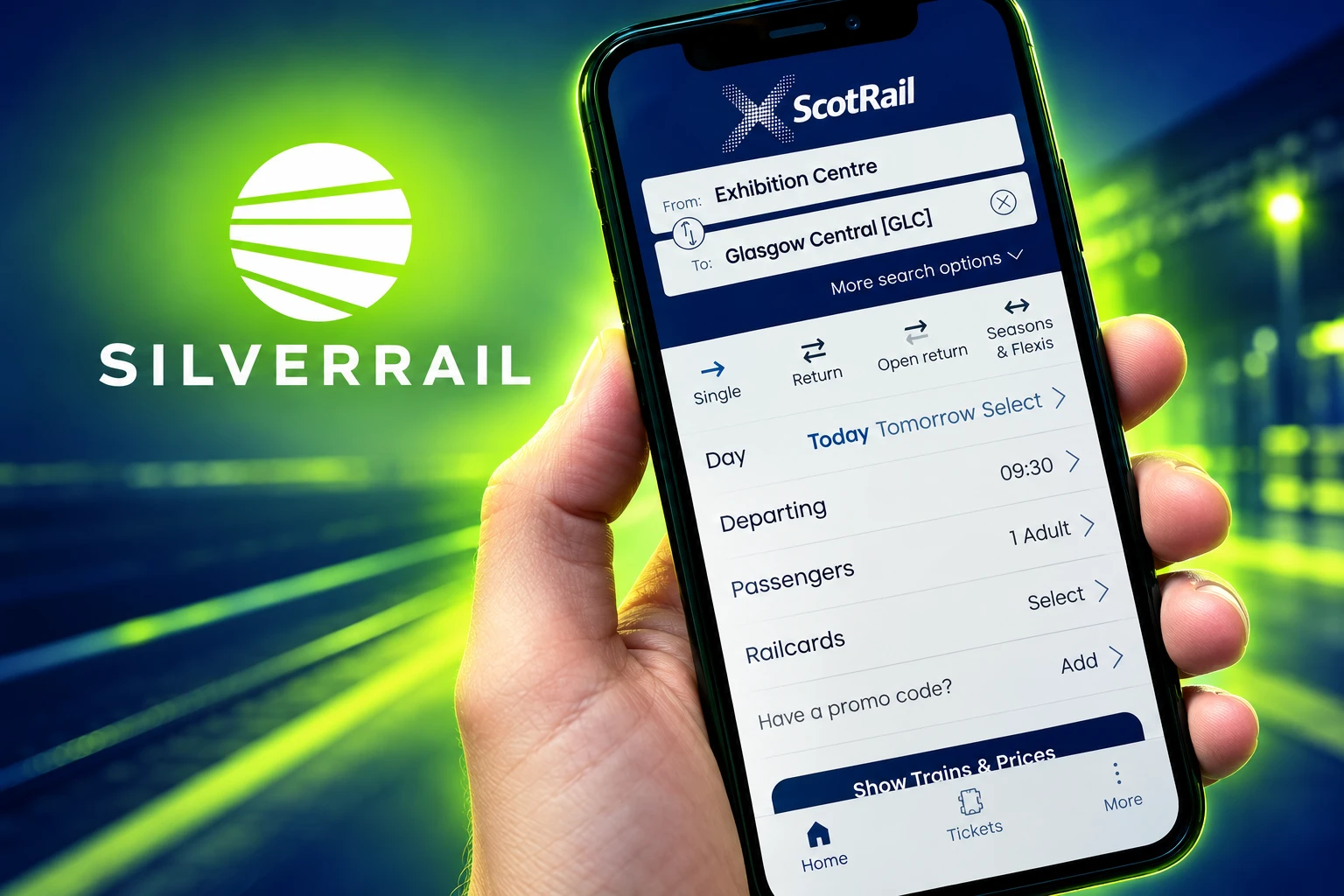
ScotRail has awarded SilverRail Technologies an £83.8 million, nine-year retail contract that cannot be broken until 2030. The deal, concluded on 29 May 2026 after one tender, already runs the live app that replaced Trainline on 30 July.
That lock now sits across the same years in which Transport Scotland still treats a national integrated ticket as a foundation project, with 2029 the earliest date officials have put on paper.
One Bid for the Whole Retail Stack
The award notice published on 14 August names SilverRail Technologies of Maiden Lane, London, as the winner of Retail Systems Procurement. ScotRail Trains Limited valued the contract at £83.8 million excluding VAT. Quality carried 70 percent of the score and price 30 percent, under a negotiated procedure with a call for competition first advertised on 21 May 2024.
Only one bid came in. The notice records that 53 percent of the work is likely to be subcontracted, covering manufacture, supply and maintenance of ticket vending machines plus software and support for on-train mobile sales and ticket-office sales. SilverRail is listed as an SME.
THE SILVERRAIL AWARD
| Term | Detail |
|---|---|
| Contract value | £83.8 million, excluding VAT |
| Length | Nine years, with the earliest break in 2030 |
| Tenders received | 1 |
| Share likely subcontracted | 53 percent |
| Date concluded | 29 May 2026 |
| Winner | SilverRail Technologies (SME, London) |
Claire Dickie, ScotRail’s commercial director, has said the deal covers the whole retailing estate, not the app alone, and that a full competitive process followed the May 2024 advertisement.
The contract with SilverRail covers our entire retailing estate over a nine-year period, not just the ScotRail app, and represents good value to the taxpayer, providing us with the modern retailing infrastructure we need for the years ahead.
Claire Dickie, ScotRail commercial director
The business case, released under freedom of information, specified replacing the current Trainline white-label solutions. SilverRail lists Trainline as a customer on its website. The same case is titled “Modernising ScotRail’s Digital Retail Estate for £26.5 million savings.”
The National Ticket Is Still a 2029 Job
Transport Scotland’s August 2024 ten-year smart ticketing delivery strategy set a vision of one payment method across buses, trains and other public transport. After that review, the agency said that over the next 10 years it would focus on establishing the right foundations, working with operators and exploring a national system if required.
A 2023 public survey for the strategy found 79 percent of respondents would like to use integrated tickets. Only 14 percent of people who had made a multi-modal journey had used one. Transport Secretary Stephen Flynn later said a tap-on, tap-off system would “definitely” be in place before 2031. The paperwork under the retail tender is tighter than that ceiling.
FROM FOUNDATIONS TO A BREAK CLAUSE
- 21 May 2024: ScotRail publishes the Retail Systems tender, seeking a central ticket issuing system, website, app and smart kiosks, with handheld and ticket-office systems as future options.
- August 2024: Transport Scotland publishes the refreshed Smart Delivery Strategy and a 10-year foundations plan.
- 21 November 2025: ScotRail and Scottish Rail Holdings meet Transport Scotland’s Transport Integration and Connectivity directorate. Officials record that the national scheme is 2029 at the earliest and that this contract’s first break is 2030.
- 29 May 2026: The SilverRail contract is concluded.
- 30 July 2026: The ScotRail New Official App and new website booking engine go live, replacing Trainline.
- 14 August 2026: The utilities award notice is published, confirming one tender and the £83.8 million value.
- April 2029 onward: The strategy roadmap says introduce a new national integrated ticketing system, subject to business case and funding.
- 2030: Earliest contractual break on the SilverRail deal.
Annex B of the 2024 strategy does not promise a working national ticket in 2029. It schedules the national system from April 2029 onward, still tagged “subject to business case & funding,” alongside account-based ticketing and multi-modal pre-purchase.
July’s Switch Already Put Passengers on SilverRail
The reckoning is not a paper clash in 2029. Passengers have been on the new stack since 30 July 2026, when ScotRail moved accounts to the new supplier and stopped ticket sales on the old Trainline-powered app at midday. Guest checkout stayed open for same-day trips, but season and flexi customers had to download the ScotRail New Official App, reset a password, and rebuild payment details.
From Thursday, 30 July, we’ll be introducing a new ScotRail app and website booking engine, to
replace the current system (supplied by Trainline). This means that from 30 July, customer accounts
will be transferred to the new supplier and ticket purchases will only be available…— ScotRail (@ScotRail) July 29, 2026
Freedom of information figures for 30 and 31 July show 492 complaints in total, 364 of them classed as app failures. ScotRail exchanged about 600 emails with SilverRail across those two days and said social media volume was too high to tag. The disclosed cost of developing, testing, accrediting and launching the app and online booking engine is about £420,000, of which about £190,000 went to third-party suppliers, £179,000 to project delivery and staffing, and £51,000 to accreditation, licensing and development.
Dickie said almost 800,000 people have since accessed the app. The apology sat beside a product that, on ScotRail’s own help pages in September, still cannot do basic retail jobs the old white-label handled.
WHAT STILL DOES NOT MOVE ACROSS
- Saved cards: ScotRail says payment cards cannot be saved in the new app for legal reasons, with PayPal, Google Pay or Apple Pay as the workarounds, and a plan to add card storage later.
- Smartcard loads: App and website buyers can no longer choose Smartcard delivery; loading is ticket office, machine or onboard staff, a restriction ScotRail said may last a number of weeks and that was still on the help page in September.
- Old tickets: Barcodes bought before 30 July stay in the previous app until 21 October 2026, and do not appear as usable tickets in the new one.
- History: Only three months of booking history moved, with limited detail, and not all account data transferred.
Flexi and season passes have kept dropping out of the new app after a first use, card charges have gone through without a ticket appearing, and some day-return searches have offered only two singles. Reinstalling is the stock desk reply. That is a poor fit for a retailer that takes about £125 million a year through web and app and that has been pushing passengers to buy before boarding.
What the £83.8 Million Pays For
The mobile app is the public face of a much larger kit list. The award covers a website and app on a single central ticket issuing system, new ticket vending machines, on-train mobile ticket sales and ticket-office sales, plus ongoing support. Handheld and ticket-office systems were listed as future options on the 2024 notice and again as options on the award.
Capital payments to SilverRail are redacted in the business case. The unredacted “bidder web and app” operating spend for 2026/27 to 2031/32 is £31,076,593. ScotRail calls that an internal forecast, not a settled bill, and says operating cost moves with revenue on the same channels. Current contract costs are redacted, so the £26.5 million saving cannot be checked against the old Trainline stack from the released pages.
THE MONEY SCOTRAIL WILL PUT ON RECORD
- Contract ceiling: £83.8 million excluding VAT for the nine-year retail estate.
- Web and app opex: £31,076,593 forecast across the six years from 2026/27 to 2031/32.
- Claimed saving: £26.5 million from replacing “outdated, fragmented, and costly” legacy contracts.
- Channel take: About £125 million a year already collected through web and app.
Key drivers in the case were the old contract ending, a need to modernise, and a need to cut reliance on government subsidy. The app share of the £83.8 million was withheld even under FOI. More than half the named value is expected to sit with unnamed subcontractors on machines and onboard kit, so the “app contract” label understates how much of Scotland’s rail retail hardware is being rolled into the same nine-year wrap.
A 2030 Break Clause Meets a 2029 Scheme
On 21 November 2025, ScotRail and Scottish Rail Holdings sat down with the new Transport Integration and Connectivity directorate to argue that the retail solution lined up with, or at least did not block, future national plans. The note from that meeting is the sentence that joins the two clocks.
To note, it was recognised at that meeting that the earliest contract break for this procurement is 2030 (four years), and that the current timescale for a National Integrated Ticketing Scheme is 2029 at the earliest; therefore, any detailed TIC deliverables could be incorporated into any contract extension discussions, or alternative solutions sought.
ScotRail business case, meeting note of 21 November 2025
After the meeting, ScotRail sent the tender specification and the preferred supplier’s answers. It said it was comfortable that Transport Scotland’s follow-up questions showed the proposed solution would deliver some of the vision and, “crucially,” would not block future TIC work. Detailed national requirements, on that telling, wait for extension talks or a workaround.
If another supplier is chosen for a national scheme and that scheme is stood up in 2029, ScotRail’s SilverRail contract still has a year, and likely several more, to run. The nine-year term stretches well past the first break. Integration becomes a commercial negotiation with the firm that already owns the website, the app, the machines and the onboard printers, not a clean cutover onto a new national layer.
Integration Now Runs Through Extension Talks
SilverRail is not a one-contract vendor. It sells an omnichannel ticket issuing system for operators, and already powers digital retail for Transport for Wales, with further UK operator work at LNER, East Midlands Railway and First Rail’s Great Western Railway, Hull Trains and Lumo. ScotRail has joined that list with a bigger cheque and a longer wrap than those other deals.
Dickie said ScotRail will keep working with SilverRail on fixes while the wider retail programme, machines and onboard kit included, is delivered. Transport Scotland still has to write a business case and find money before the April 2029 line on its own roadmap becomes a ticket a passenger can tap. Until a break in 2030, the national scheme and the ScotRail shop front are on different clocks, and the shop front has already been built.
The 2024 foundations decision did not pause retail. It left ScotRail free to lock the customer face of Scottish rail for nine years, on a single bid, before the national ticket had a funded design.

The BMW iX4 Undercuts Mercedes and Trails Its Twin

Scotland’s Ten Big Supermarkets Already Hold the Weekly Shop

Scotland EMS Faces a State Probe After a Wagram Death

Meritz Signs Ripple to Race Korea’s 2027 Token Rules

Pocognoli’s First Camp Leaves Scotland Third and Exposed

Volkswagen Sells the Osnabruck Plant to Clear a Board Fight

Tata Motors’ Iveco Tender Opens as Holders Still Decide

Saksham Gaur Finds He Is His Own Company’s Client

Onimusha Way of the Sword Preload Hits a Windows 11 Wall

Apple’s Foldable iPhone Hinges on Samsung Display Supply
-
 AUTO1 month ago
Volkswagen Sells the Osnabruck Plant to Clear a Board Fight
-
 AUTO2 months ago
Tata Motors’ Iveco Tender Opens as Holders Still Decide
-
 BUSINESS2 months ago
Saksham Gaur Finds He Is His Own Company’s Client
-
 GAMING2 months ago
Onimusha Way of the Sword Preload Hits a Windows 11 Wall
-
 NEWS2 months ago
Apple’s Foldable iPhone Hinges on Samsung Display Supply
-

 ENTERTAINMENT3 years ago
What is SD on Amazon Prime? – All You Need to Know
-
 AUTO2 months ago
Simple Wave Chases Range as Ather Konarc Cuts Price
-
 NEWS2 months ago
iQOO 16 Locks 8,400 mAh While 100W Charging Holds