
BUSINESS
Scotland’s Second Whisky Loch Puts Distilleries Up for Sale
Maturing Scotch has more than tripled to 1.4 billion litres, a second whisky loch that India and younger drinkers will drain only slowly.

Scotland is holding about 1.4 billion litres of maturing Scotch whisky, enough to cover three years of current drinking. Producers filled warehouses through the 2010s and the pandemic for a boom that did not arrive on schedule, and the pile is now the worst stock glut since the 1980s whisky loch.
The last loch was drained by shutting stills. Port Ellen and Brora went silent, cheap blends filled supermarket shelves, and the whisky left in cask later sold as rare. That exit is harder to copy. The silent stills are working again, new distilleries have opened, and drinkers are taking fewer glasses when they sit down.
Three Years of Scotch Sit in Bond
Industry tallies circulating this month put maturing Scotch at about 1.4 billion litres in 2026, up from less than 400 million litres a decade earlier, more than a threefold rise. That stock is enough for three years of drinking at today’s pace, which is a brutal place to land in a trade that must forecast demand years before a cask is legally Scotch.
THE STOCK IN BOND
- Maturing volume: About 1.4 billion litres in 2026, up from less than 400 million litres ten years earlier.
- Cover: Roughly three years of current consumption, with output already cut by more than one-third.
- 2025 trade: The Scotch Whisky Association logged £5.3bn of Scotch shipped in 2025, down 1.8% in value and 4.3% in volume from £5.4bn the year before.
- Early 2026 lift: First-half shipments were put at 50 million cases, up 6% on a year earlier, with export value up 3%.
Those half-year cases are a thaw, not a drain. A 6% rise against a three-year cover still leaves warehouses doing the expensive work of waiting. Five of the biggest listed drinks groups were sitting on $22bn of ageing spirits early this year, the highest level in more than a decade on their own filings, and Diageo’s maturing stock had reached $8.6bn by June 2025, or 43% of annual sales, up from 34% in fiscal 2022.
The Scotch Whisky Association lists 152 whisky distilleries. Diageo remains the largest owner, with 31 sites, and halted production at Teaninich in 2025 while it reworked output. Mark Kent, the association’s chief executive, said member firms were already under strain not felt for decades when 2025’s figures came out in February, warning that more businesses would close during 2026 without support from Westminster and Holyrood.
Our member companies tell us they are under strain not felt for decades, and that support is vital to weather the storm.
Mark Kent, Chief Executive, Scotch Whisky Association
Kent also pointed to UK spirits duty, up more than 17% in three years, and to a 10% United States tariff imposed in April 2025. Full-year US shipments fell to £933m, down 4%, and to 120 million bottles, down 9.2%. From May to December, after the tariff bit, volume to that market dropped 15% and value dropped 7%.
DCL Closed 11 Stills the Last Time
The first whisky loch had the same shape: too much spirit laid down for a growth rate that then failed. Iain Russell, writing for the Edinburgh Whisky Academy in February, traced the surplus to 1960s and early 1970s forecasts of demand rising by as much as 10% a year. New malt plants such as Tamnavulin, Tormore, Deanston and Tomintoul came on stream, grain capacity rose at Girvan and Invergordon, and the spirit sat in bond after the 1973 oil shock and a turn toward vodka and white rum.
HOW THE LAST LOCH WAS DRAINED
- 1953: Stocks of spirit maturing in Scottish warehouses stand near 386 million litres of pure alcohol, per Charles Craig’s Whisky Industry Record as cited by Russell.
- 1973: Those stocks reach nearly 2.5 billion litres of pure alcohol, a different unit from today’s 1.4 billion litres of whisky, in a year of record exports.
- 1981: The industry begins cutting distillation after sales stall, above all in the United States.
- 1982: Lords debate records 1982 output at barely half 1979, with 106 of 130 distilleries then in the Highlands and Islands.
- 1983: Distillers Company Ltd shuts 11 of its 45 malt distilleries, including Port Ellen and Brora, plus the Carsebridge grain plant.
- 1986: Guinness takes over DCL after a bitter bid, part of a wider merger wave that recut who owned Scotch.
On Islay, three of eight distilleries were temporarily closed and yearly output was described as falling from about 10 million gallons to 3 million. In Dufftown, some 500 people in a town of 1,500 depended on the stills. Budget brands such as The Claymore, launched in 1979, used the cheap mature stock. Ivan Straker of The Glenlivet Distillers said ten-year-old whisky was being sold to blenders below the cost of new make.
The hangover lasted into the 1990s. Then the leftovers became the prize. Silent-era Port Ellen and Brora turned into collector whisky, single malt premiumised, and by the mid-2010s some standard age-stated bottles were tight enough that no-age-statement versions of Glenlivet and Glenfiddich appeared. The industry forgot the cutback and built again. Port Ellen, Brora and Rosebank are no longer silent sites. That is the twist this loch does not share with the last one: the stills that created scarcity last time are already back on steam.
Distress Data Hit 69 Scottish Distillers
BTG, the restructuring firm formerly known as Begbies Traynor, said 19% of Scotland’s distilleries were in financial distress on December 2025 figures released in early September. That was 69 distillers, up from 49 in the previous quarter, a 40.8% jump, with a further 217 distillers in distress in the rest of the UK. Year on year, Scottish distress rose just under 17%, against a UK average of 6.7%.
Those 69 names are not the same claim as talk that as much as a quarter of sites could be offered for sale. One is a count of firms already showing stress. The other is a prediction about deals. Both point the same way. Independents with thin cash are first in line, while groups the size of Diageo can mothball a site and wait.
Thomas McKay, BTG’s managing partner in Scotland, said distilleries were being hit by lower demand, higher costs and tariffs together, and that Scottish sites directly employ more than 10,000 people, well over half the UK industry workforce. He also cited IWSR figures that worldwide Scotch sales fell 3% in the first half of 2025, the third straight year of decline after decades of growth. Demand, he said, peaked in the 2020 lockdowns; when it faded, prices fell just as the cost of selling into the United States rose.
Private casks have become a cash valve. Distillers that once held back barrels because bottled demand was strong are now putting casks on the market at prices well below the 2022 speculative peak. Buyers still have to warehouse the spirit in Scotland, pay duty later, and live with evaporation. The Scotch Whisky Association’s own guidance on personal cask ownership is blunt about those costs, including 2025 UK duty of £32.79 per litre of pure alcohol plus 20% VAT. That is a funding tool for squeezed owners, not a drain on 1.4 billion litres.
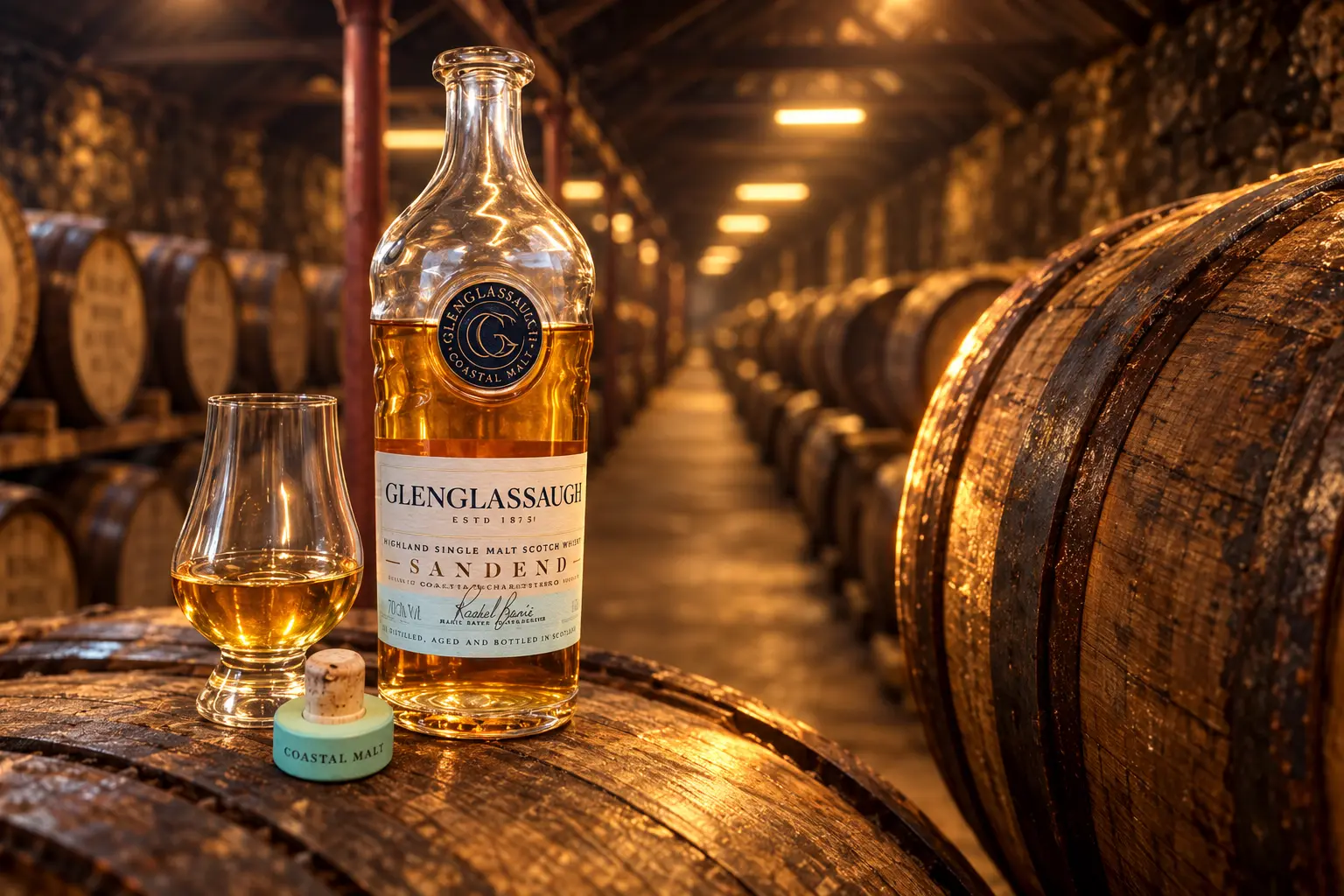
Some sites have already gone quiet. Glenglassaugh, a Highland malt, is mothballed, with its current core range still on shelves for now. That is how a loch starts to look on the ground: not a single collapse, a set of stills standing cold while the casks they filled keep ageing.
Why Younger Buyers Will Not Empty the Warehouses
Younger adults are not abstaining in the way the trade feared. They are also not drinking the way a warehouse full of 12-year malt needs them to. IWSR’s Bevtrac survey, published on 14 July 2026, found 74% of legal-age Gen Z consumers across 15 markets had drunk alcohol in the past six months, up from 66% three years earlier and close to the 76% rate for all adults. Millennials remain the heaviest participants at 81%, then Gen X at 77%. Boomers are now the lightest at 71%, and they average 2.6 drinks when they do drink.
WHO IS DRINKING NOW
| Group | Share who drink | What they do differently |
|---|---|---|
| Gen Z (legal age to 28) | 74% (was 66% three years ago) | 84% had a cocktail in six months; 49% follow official health advice |
| Millennials (29 to 44) | 81% | Highest participation of any generation |
| Gen X (45 to 60) | 77% | Second-highest participation |
| Boomers (61+) | 71% (down 2 points in three years) | Fewest occasions and 2.6 drinks per sitting |
The volume problem sits in the size of the round, not the headcount. Across those markets, drinkers averaged 3.9 drinks per occasion, down from 4.4 in both 2024 and 2025. Overall participation barely moved (76% against 75% three years earlier). Marten Lodewijks, IWSR’s president and managing director, said the idea of Gen Z as the moderation generation was “conclusively debunked,” then added that fewer drinks, more often for lifestyle and health reasons, looks structural.
The number of people drinking remains consistent, but the frequency with which we drink and the amount we drink per occasion is dropping.
Marten Lodewijks, President and Managing Director, IWSR
Gen Z already accounts for 17% of drinkers and is the cohort most likely to drink in a group of five or more. Fruitier malt, sweeter whisky and canned cocktails are the industry’s answer. That mix can move cases. It does not, on its own, pay for years of warehousing on a 1.4 billion litre book built for neat pours and age statements. In the United States, still the most valuable export market, overall drinking participation held at 70% and legal-age Gen Z rose only to 71%.
India Halved the Duty on 15 July
The UK-India trade deal took effect on 15 July 2026 and cut India’s customs duty on Scotch from 150% to 75%, with the rate due to fall to 40% by 2036. India was already the largest destination by volume in 2025, at 220 million bottles, up 15%, and third by value at £286m, also up 15%. That is about 5% of the £5.3bn export total. Scotch still makes up only about 3% of whisky drunk in India, so the unused share is large. The unused share is also not a sponge for whatever Scotland over-made.
INDIA TARIFF STEPS
| Point in the deal | Indian duty on UK-origin Scotch |
|---|---|
| Before 15 July 2026 | 150% |
| From 15 July 2026 | 75% |
| Year 10 (2036) | 40% |
Talk that every producer now depends on India to shift unsellable stock gets the arithmetic backwards. A market that takes 220 million bottles and 5% of the money is a volume outlet for blends, including bulk that Indian bottlers cut with local spirit. It is not a dump for expensive single malt. Cyclical oversupply is real. Treating India as a clearance aisle is not an analysis of that cycle.
The SWA itself told members, when the 2025 figures landed, that India’s growth would not be enough in the short run to offset weaker markets. A House of Lords report on the deal, cited in that release, called the pact a longer-term strategic investment for the UK rather than a quick win. Russell’s warning is blunter still: it is dangerous to lean on one big market, as the industry once did with the United States, and Indian drinkers may stick with Indian whisky, including malt now being made with investment from the same global groups that own Scottish stills.
Other doors moved in 2026. China halved its whisky tariff to 5% in January. Turkey took £255m of Scotch in 2025, up 43%. Those gains sit beside France at £404m, down 3.6%, Singapore at £274m, down 11.6%, and Taiwan at £233m, down 22%.
WHERE 2025 EXPORTS LANDED
| Market | Value | Value change | Volume (70cl bottles) |
|---|---|---|---|
| United States | £933m | -4% | 120m (-9.2%) |
| France | £404m | -3.6% | 152m (-14%) |
| India | £286m | +15% | 220m (+15%) |
| Singapore | £274m | -11.6% | – |
| Turkey | £255m | +43% | 53m (+13%) |
The European Union as a whole took £1.5bn, down 1.8%, and 444 million bottles, down 9%. More than 160 markets still buy Scotch, 43 bottles a second on the 2025 clock, for 1.34 billion bottles in all. The map is wide. The surplus is wider.
Single Malt Fell 6% While Blends Held the Line
The category split shows which liquid can still move. Bottled blend, 60% of export value, made £3.2bn, down 1.2%. Single malt made £1.6bn, down 6%, with sharper drops in China, France and Singapore. Bulk blended malt, the stuff that leaves Scotland in cask for bottling abroad, rose 16.9%. That is the loch finding a plughole at the cheap end, not at the visitor-centre end.
HOW THE 2025 CASES BROKE DOWN
- Bottled blend: £3.2bn, down 1.2%, still 60% of export value.
- Single malt: £1.6bn, down 6%, 29% of export value.
- Bulk blended malt: up 16.9%, a release valve for surplus malt.
- Bottled blended malt: up 23.1%, a smaller slice at 2.4% of exports.
Premium fatigue is already visible in the bottle shop. Sub-£100 age-stated malt is getting more attention than trophy releases. That helps drinkers. It does not help a distillery that spent the 2010s raising capacity for a richer mix. The seeds of this surplus were sown when producers added stills for cocktail culture, then added more when people drank at home during Covid, then met inflation, health campaigns and online socialising instead of a second boom.
The Next Sales Will Change Who Owns Scotch
In the 1980s the loch recut the industry. DCL disappeared into Guinness. Distilleries changed hands, some to Japanese and Caribbean owners, some to the bulldozer. The whisky that survived in warehouse became the scarce malt that funded the next 20 years. Russell notes that surplus dumping, cheaper warehouse prices and more bulk exports are already being tried again. The difference is the still count. Last time, closing Port Ellen created a finite pool. This time Port Ellen is a working distillery, and 152 sites are competing to fill a world that drinks 3.9 glasses a sitting instead of 4.4.
Big groups can idle a plant, blend away young malt, and wait for India to grow into the 40% tariff. Independent owners cannot finance three years of cover on visitor tickets and cask sales. BTG’s 69 distressed distillers, and the separate forecast that a large minority of sites could be offered for sale, describe that split. The buyers, if the sales come, will be the firms that already own the blending tanks, plus capital from markets that actually want the liquid.
Russell wrote in February that draining the present loch may take a few years, and that Scotch remains cyclical. The casks will keep ageing in bond. Ownership of the stills that filled them is the part still in play.

The BMW iX4 Undercuts Mercedes and Trails Its Twin

Scotland’s Ten Big Supermarkets Already Hold the Weekly Shop

Scotland EMS Faces a State Probe After a Wagram Death

Meritz Signs Ripple to Race Korea’s 2027 Token Rules

Pocognoli’s First Camp Leaves Scotland Third and Exposed

Volkswagen Sells the Osnabruck Plant to Clear a Board Fight

Saksham Gaur Finds He Is His Own Company’s Client

Tata Motors’ Iveco Tender Opens as Holders Still Decide

Onimusha Way of the Sword Preload Hits a Windows 11 Wall

Apple’s Foldable iPhone Hinges on Samsung Display Supply
-
 AUTO2 months ago
Volkswagen Sells the Osnabruck Plant to Clear a Board Fight
-
 AUTO2 months ago
Tata Motors’ Iveco Tender Opens as Holders Still Decide
-
 BUSINESS2 months ago
Saksham Gaur Finds He Is His Own Company’s Client
-
 GAMING2 months ago
Onimusha Way of the Sword Preload Hits a Windows 11 Wall
-
 NEWS2 months ago
Apple’s Foldable iPhone Hinges on Samsung Display Supply
-

 ENTERTAINMENT3 years ago
What is SD on Amazon Prime? – All You Need to Know
-

 NEWS2 months ago
iQOO 16 Locks 8,400 mAh While 100W Charging Holds
-

 AUTO2 months ago
Simple Wave Chases Range as Ather Konarc Cuts Price