
NEWS
Qualcomm Tests DirectX 12 PC Games on Snapdragon Android
Qualcomm ran DirectX 12 PC games on Snapdragon Android through its own driver, a move aimed at the Turnip stack rather than cloud gaming.

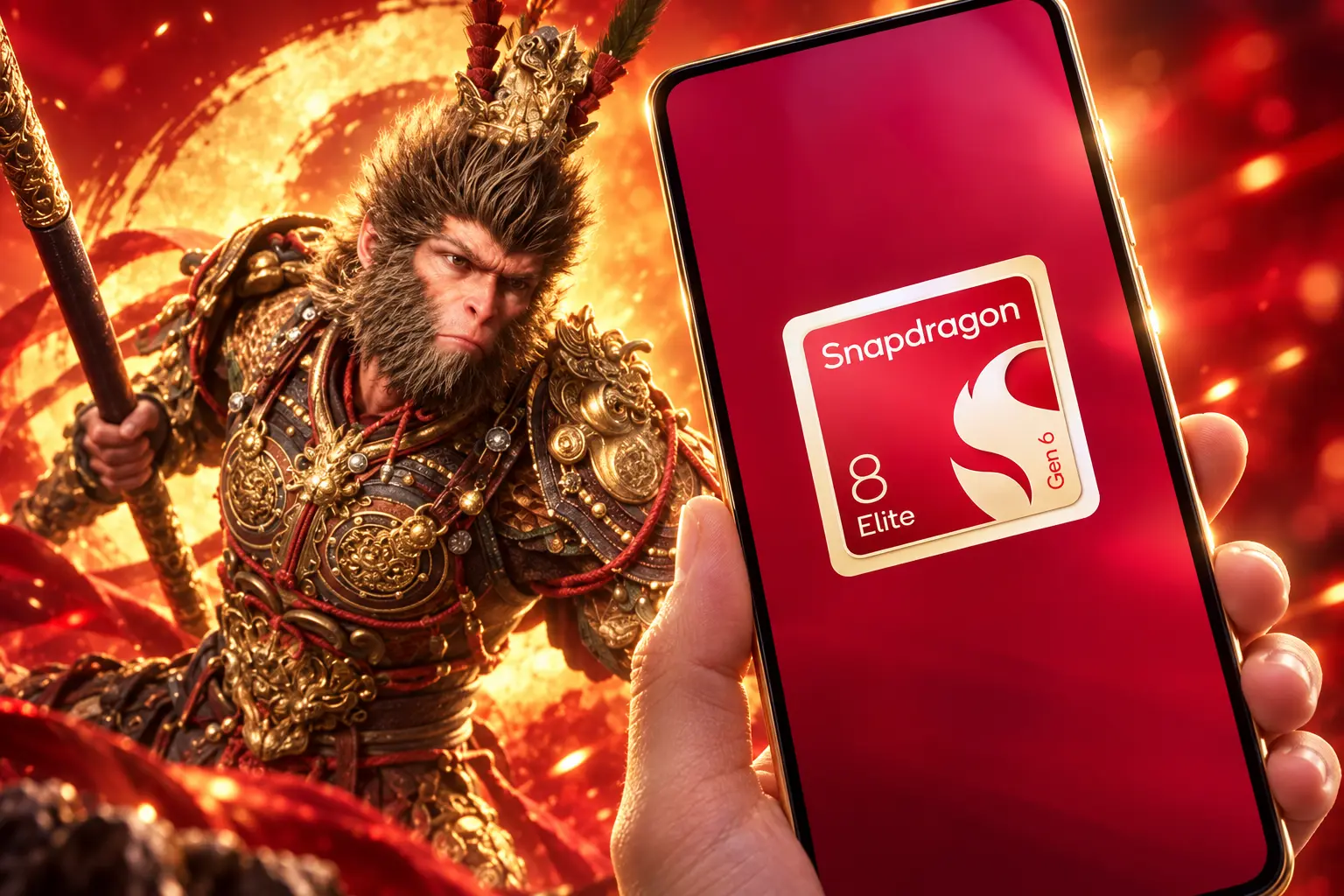
Qualcomm’s Snapdragon 8 Elite Extreme Gen 6 ran Cyberpunk 2077 and Black Myth: Wukong in DirectX 12 mode on an engineering phone. Chinese channel Geekerwan filmed both titles on a Qualcomm reference device after the Maui summit on 22 September 2026.
The games used a translation layer and a GPU driver Qualcomm built itself. Native DirectX 12 on Android is still only something the company said it would explore.
Geekerwan Ran Two AAA Games on Qualcomm’s Driver
Geekerwan’s hands-on, posted the same day as the chip launch, is the only public look at that driver. The channel said Qualcomm is now treating PC game translation as a first-party job, after years of leaving it to hobbyists.
Running PC games on Qualcomm GPUs used to rely mainly on the community’s open-source Mesa Turnip driver. Now Qualcomm itself has stepped in with its own driver support.
Geekerwan, Snapdragon 8 Elite Extreme Gen 6 hands-on
Cyberpunk 2077 and Black Myth: Wukong both booted in DirectX 12 mode through that translation layer. Geekerwan did not publish frame rates, settings, or resolution for either test, so those clips are a boot proof, not a performance card.
The same video is clearer on the next step. Qualcomm, the channel said, will also explore drivers with direct DirectX 12 support on Android for better efficiency. That sentence is the entire native-API claim. There is no chip list, no ship date, and no statement on Qualcomm’s own site.
Maui’s New Chip Lists Vulkan 1.4
What Qualcomm did put on paper is a phone chip, not a Windows graphics stack. The Snapdragon 8 Elite Extreme Gen 6, part SM8975, is a 2nm platform with two Oryon prime cores up to 5 GHz and six performance cores up to 4.0 GHz, plus 16 MB of Oryon Flex Cache.
EXTREME GEN 6, ON PAPER
- CPU lift: Qualcomm rates the chip 13 percent faster and 37 percent more efficient than Snapdragon 8 Elite Gen 5.
- GPU lift: The Adreno block is claimed at 44 percent higher GPU performance and 40 percent better GPU efficiency versus that same last-gen flagship.
- On-chip graphics RAM: 18 MB of Adreno High-Performance Memory, which Qualcomm ties to 12 percent more power savings.
- AI graphics: Adreno Neural Fusion, new matrix cores for super resolution, frame generation, and image reconstruction on native mobile games.
The product page lists Vulkan 1.4 as the listed graphics API, with OpenGL ES 3.2 and OpenCL 3.0 FP. DirectX does not appear. Memory support is LPDDR5x/6 up to 5300 MHz and 24 GB. Storage is UFS 5.0. Video capture goes to 8k60 and 4k240.
Adreno Neural Fusion is the gaming feature Qualcomm actually sold in Maui. Geekerwan tried it in Genshin Impact and said AI frame generation took the game from 60 to 120 fps with little extra lag. That path is for titles built on mobile engines. It does not touch Steam Windows binaries.
The Turnip Stack Qualcomm Wants to Replace
PC game emulation on Android is already a working, ugly pipeline. A wrapper such as Winlator, GameNative, or GameHub does not pretend to be a console. It translates a Windows game, live, onto Arm and Vulkan.
HOW A WINDOWS GAME REACHES ADRENO
| Layer | What it does | What changes if Qualcomm ships |
|---|---|---|
| Box64 | Turns x86-64 code into Arm64 | Still required; the GPU driver cannot do this |
| Wine or Proton | Presents Windows APIs to the game | Still required for file paths, input, and services |
| DXVK / VKD3D | Maps DirectX 9/11 or DirectX 12 onto Vulkan | Native DirectX 12 would skip this hop |
| Mesa Turnip | Open-source Vulkan driver for Adreno | Qualcomm’s own driver is meant to replace it |
Turnip exists because the stock Adreno driver has long been a poor fit for DXVK. The Mesa project’s Freedreno tree ships a Vulkan implementation that the emulation apps can load. Mesa 26.0.0 and later already include Freedreno Turnip support for Adreno 8xx, the GPU generation in current Elite chips.
Forks package those builds as zip files that Winlator-style launchers import through AdrenoTools. AdrenoTools-ready Turnip driver builds are how most Snapdragon owners get a Vulkan path that DXVK will even initialise. That is the “custom driver” step every setup guide still assumes.
Community testers have already run Black Myth: Wukong and Cyberpunk 2077 on last year’s Snapdragon 8 Elite through those wrappers, usually at 720p with upscalers and frame generation. The news from Geekerwan is not that the games can boot. It is that Qualcomm wants the GPU half of that stack to be its own code.
Native DirectX 12 Is an Efficiency Bet
Two different products are being mixed together. One is an official Adreno driver that behaves well enough for VKD3D and DXVK, so people stop sideloading Turnip. The other is a driver that speaks DirectX 12 on Android without going through Vulkan first.
WHAT WE KNOW
- The tests: Geekerwan ran Cyberpunk 2077 and Black Myth: Wukong in DirectX 12 mode through a translation layer on an Extreme Gen 6 reference phone.
- The driver: Qualcomm has begun its own GPU software for translated PC games, instead of leaving that job to Mesa Turnip.
- The public spec: The Extreme Gen 6 page still lists Vulkan 1.4, OpenGL ES 3.2, and OpenCL 3.0 FP, and it does not list DirectX.
WHAT IS UNCONFIRMED
- Native DirectX 12: No product brief, press note, or API table says it will ship.
- Which chips: Extreme Gen 6 only, the whole Gen 6 pair, or a driver drop for older Adreno 8-series parts.
- Microsoft’s role: DirectX 12 is Microsoft’s API; a true D3D12 driver on Android would need a license Qualcomm has not described.
Even a native path would not delete Box64 or Wine. The game is still an x86 Windows binary. What native DirectX 12 could cut is the VKD3D translation tax, which is why Geekerwan framed it as an efficiency project rather than a new library of titles.
Stock Adreno 8-series drivers have already started picking up Vulkan extensions that used to live only in Turnip. That is the boring half of the story, and it is the half that would reach GameNative and Winlator users first, without anyone waiting on Microsoft.
Who Gains If Official Drivers Ship?
The people who already fight Turnip zips on a phone are not the main prize. A signed Qualcomm driver would show up in OEM images, survive Play Integrity checks, and keep working after a system update. That is how this leaves hobby Discord servers and lands in shops.
WHO HAS SKIN IN THE GAME
- Fan-cooled handhelds: Android machines with vapour chambers and fans can hold a GPU load that a slim flagship will thermal-throttle. They are the form factor this driver actually fits.
- Qualcomm versus other phone silicon: Turnip is an Adreno project. A first-party path that just works is a reason to buy Snapdragon if you care about Steam libraries on a handheld.
- Wrapper apps: Winlator and GameNative stay necessary for CPU translation. They lose the driver-hunting support burden if stock Adreno is good enough.
- Turnip maintainers: The open driver remains the fallback on older phones and the reference when Qualcomm’s blob misbehaves. It stops being the only playable path on new Elite chips.
A phone in a jeans pocket is still a bad PC. Storage fills with 100 GB titles, batteries fall off a cliff, and a 6-inch panel is a miserable place to read subtitles in a 720p upscale. The second-order product is a $400-$600 Android handheld that already looks like a Steam Deck and currently depends on the same GitHub zips as a RedMagic.
Cloud Streams Still Hold the High Settings
Local translation and cloud streaming solve different failures. GeForce NOW and Xbox Cloud Gaming, the two names most people know, keep the heavy rendering on a remote GPU. They need a solid connection and they look like the PC settings you paid for. They also die in a tunnel.
A Winlator container keeps running in aeroplane mode. That is the whole local pitch. The image you get is whatever the phone can draw after Box64, Wine, and a Vulkan translation, often at 720p with an upscaler chewing the picture. Geekerwan’s Extreme Gen 6 clips do not overturn that trade. They never even stated a frame rate.
High-fidelity Cyberpunk 2077, with ray tracing and a locked 60 fps at a readable resolution, still lives on a Windows handheld, a laptop, or a stream. Qualcomm’s Adreno Neural Fusion will help native Android games first, because those titles can call it from the engine. A Windows DX12 binary does not know ANF exists unless someone wires it through the wrapper, which nobody has announced.
Borrowing the Windows Adreno Path
Qualcomm already exposes DirectX 12 on Snapdragon Windows PCs. The Adreno block in those laptops is not a toy renderer; it has to pass a Microsoft graphics stack. Putting pieces of that work onto Android looks less like a sudden love of emulation and more like one GPU team feeding two operating systems.
THE DRIVER TIMELINE
- 2024-2025: Winlator, GameHub, and later GameNative make Steam Windows games bootable on Snapdragon phones, if you import a Turnip build and lower every setting.
- Mesa 26.0.0: Upstream Turnip adds Adreno 8xx, covering the GPU in Elite-class chips without a Qualcomm blessing.
- 22 September 2026: Qualcomm announces the Extreme Gen 6 in Maui with Vulkan 1.4 and Adreno Neural Fusion, and does not mention DirectX 12 on Android.
- 22 September 2026: Geekerwan shows Cyberpunk 2077 and Black Myth: Wukong in DirectX 12 mode on a reference phone using Qualcomm’s own translation driver, and says native DirectX 12 is under study.
If that native driver appears, it will almost certainly be Snapdragon-only. DirectX 12 is not a Linux-kernel feature you sprinkle onto MediaTek. The useful near-term change is plainer: an official Adreno blob that DXVK can trust, so a GameNative install on a new Elite phone does not begin with a forum thread about which Turnip zip to flash.
Qualcomm has not said which devices would get that blob, or whether older Elite phones would see it in a driver update. Until a shipping handset runs those two games on stock graphics software, the Maui chip is still a Vulkan 1.4 phone SoC, and PC game emulation on Android still starts with someone else’s translation layer.

Edinburgh Opens a 2027 Tour Built for Time Trials

Korda Maps Auður From Meðalland to Irvine Bay

Apple Music Films Its New Logo in Mineral Oil

Oppo Prices the Pad Mini Above India’s iPad Mini

Austen Soaks Scotland Before Boelo Brings Weekend Gales

Volkswagen Sells the Osnabruck Plant to Clear a Board Fight

Apple’s Foldable iPhone Hinges on Samsung Display Supply

Saksham Gaur Finds He Is His Own Company’s Client

Tata Motors’ Iveco Tender Opens as Holders Still Decide

Onimusha Way of the Sword Preload Hits a Windows 11 Wall
-
 AUTO2 months ago
Volkswagen Sells the Osnabruck Plant to Clear a Board Fight
-
 NEWS2 months ago
Apple’s Foldable iPhone Hinges on Samsung Display Supply
-
 AUTO2 months ago
Tata Motors’ Iveco Tender Opens as Holders Still Decide
-
 BUSINESS2 months ago
Saksham Gaur Finds He Is His Own Company’s Client
-
 GAMING2 months ago
Onimusha Way of the Sword Preload Hits a Windows 11 Wall
-

 ENTERTAINMENT3 years ago
What is SD on Amazon Prime? – All You Need to Know
-

 BUSINESS2 months ago
Hyderabad 22-Carat Gold Jumps After a False Bargain
-

 NEWS2 months ago
iQOO 16 Locks 8,400 mAh While 100W Charging Holds