
BUSINESS
Aave Opens USDC Loans Against Coinbase Tokenized Stocks
Aave V4’s Equities Hub lets non-US users borrow USDC against seven Coinbase tokenized stocks, with 24/5 pricing and a $29.3 million cap.

Aave V4 opened an Equities Hub on Base on Sept. 25 that accepts seven Coinbase tokenized stocks as collateral for USDC loans. Eligible users outside the United States can keep the equity exposure and pull USDC without selling the tokens.
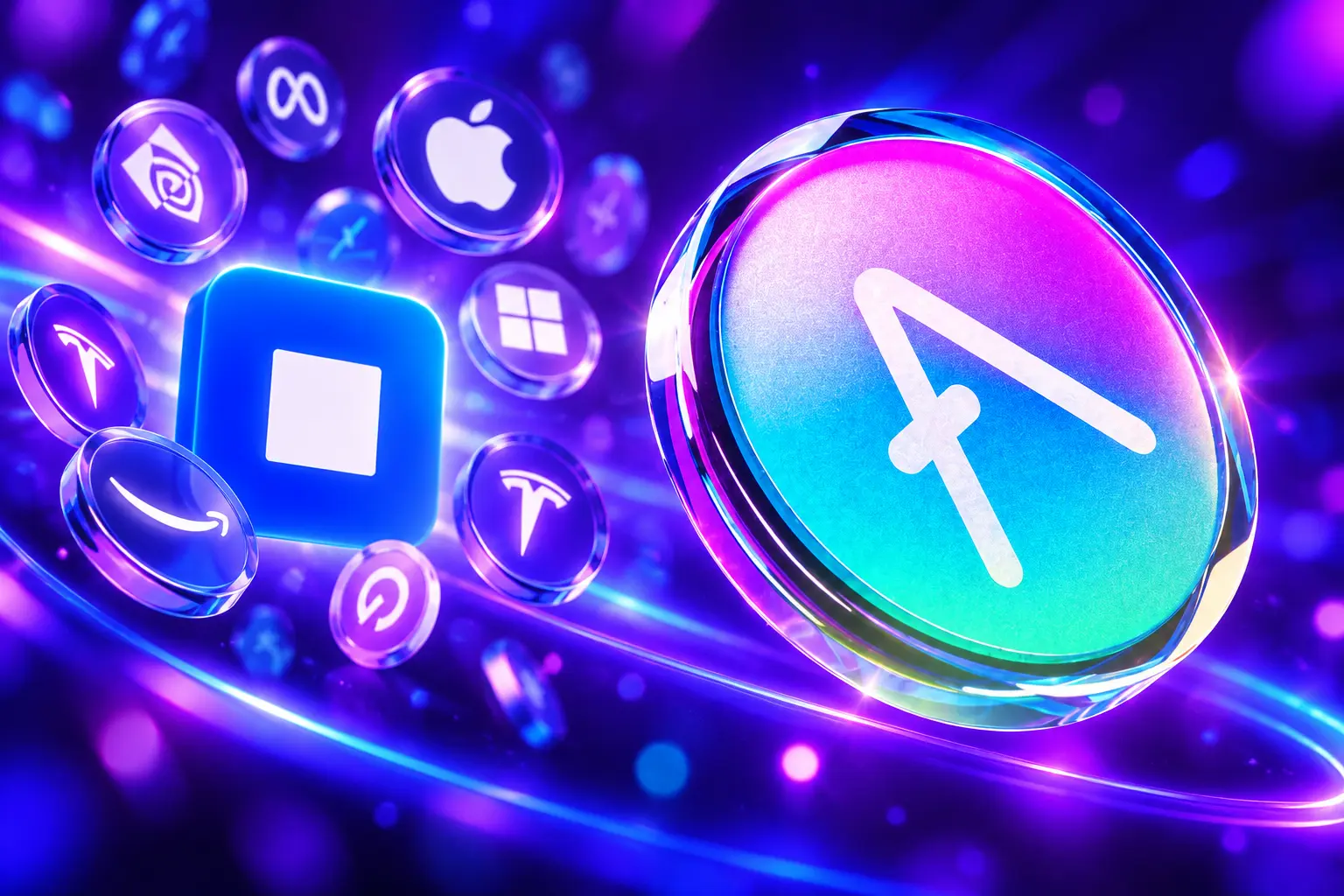
AAVE closed at $153.55 that day, per CoinGecko, and traded near $154 on Sept. 26. The hub itself is a $29.3 million credit market against Apple, Amazon, Alphabet, Meta, Microsoft, Nvidia and Tesla, priced on a 24/5 feed.
Aave V4 Turns Mag7 Tokens Into Loan Collateral
Aave Labs said seven tokenized US technology stocks can now be deposited to borrow USDC: AAPLc, AMZNc, GOOGLc, METAc, MSFTc, NVDAc and TSLAc. Chainlink supplies the prices as Coinbase’s official oracle. Aave Labs deployed the V4 instance on Base for Aave DAO, with LlamaRisk on the risk work.
The Equities Hub holds one USDC reserve and one lending spoke that pools those seven names. A user can post any mix of the tokens, each with its own collateral factor. The stocks are collateral only at launch. Borrowing the tokens, or using one equity token to borrow another, is switched off.
Stani Kulechov, founder and CEO of Aave Labs, put the shift in one line.
Until now a tokenized stock was something you could hold or trade. Today it becomes something you can borrow against.
Stani Kulechov, founder and CEO of Aave Labs
That is the product. It is also a small one. Caps, legal wrappers and a feed that still follows the US cash session decide how much credit this desk can actually write.
FROM TOKENS ON BASE TO LOANS ON AAVE
- August 24, 2026: Coinbase issues the first B20 stock tokens on Base, with underlying shares held 1:1 in regulated custody.
- September 17, 2026: LlamaRisk sizes add caps against perp open interest, mint limits and DEX depth, and puts the combined collateral book at $29.3 million.
- September 25, 2026: The Equities Hub goes live on Aave V4 on Base, with USDC as the only borrowable asset.
Aave’s own account posted the list and the non-US limit as the hub opened.
Coinbase Tokenized Stocks are live on Aave V4 on @base.
Tokenized stocks are only available in eligible jurisdictions outside of the U.S. pic.twitter.com/VOL363Ihd9
— Aave (@aave) September 25, 2026
The Seven-Stock Collateral Grid
LlamaRisk set a separate collateral factor on each name rather than one blanket ratio. Microsoft tokens sit at the top of the grid. Meta and Tesla sit at the bottom. The add caps are counted in tokens, with a dollar reading LlamaRisk published from prices on Sept. 17.
MAG-7 COLLATERAL FACTORS AND ADD CAPS
| Token | Collateral factor | Add cap (tokens) | Add cap (USD) | Borrowable |
|---|---|---|---|---|
| MSFTc | 79% | 5,200 | $2.56 million | No |
| AAPLc | 78% | 15,000 | $4.98 million | No |
| GOOGLc | 76% | 15,000 | $5.13 million | No |
| AMZNc | 73% | 10,500 | $2.58 million | No |
| NVDAc | 70% | 24,000 | $5.11 million | No |
| METAc | 65% | 5,800 | $3.93 million | No |
| TSLAc | 65% | 14,000 | $4.99 million | No |
Those dollar columns sum to $29.28 million, which LlamaRisk rounded to $29.3 million. Nvidia has the largest token cap, at 24,000. Microsoft has the smallest, at 5,200, and the highest collateral factor, at 79%. Every equity reserve has a draw cap of 0, which is how the market blocks borrowing of the stocks themselves.
The LlamaRisk initial market parameters also fix a 5.50% max liquidation bonus, a 10% liquidation fee, and a target health factor of 1.24. USDC is the only borrowable reserve. Its interest curve starts at a 0% base rate, rises 4% up to 90% optimal use, then 20% after that, with a 10% liquidity fee.
A 79% factor on Microsoft is more generous than a typical US brokerage Reg T debit. A 65% factor on Tesla and Meta is tighter. The spread is the risk desk saying the names do not gap the same way. Users who press the full factor on a Friday afternoon are borrowing against a mark that will not move again until Sunday evening.
The Feed Holds Friday’s Close All Weekend
The Aave market stays open around the clock. Supply, borrow, repay and withdraw still work on Saturday. The prices do not. Chainlink 24/5 tokenized equity feeds publish from Sunday 20:00 ET to Friday 20:00 ET. Over weekends and US market holidays they hold the last printed price.
Aave Labs said a position’s health factor can fall only through interest accrual in that window. LlamaRisk described the reopen as a single step, not a slide.
While the underlying market is closed, the collateral value of a position does not change, its health factor can fall only through interest accrual, and the price published at the reopen reflects, in a single step, any information that arrived during the closure.
LlamaRisk, Aave governance thread, Sept. 24, 2026
The tokens can still trade on Base AMMs while that feed is frozen. The loan is marked to Friday’s close, not to the pool. An 8% gap down at the reopen hits the loan as one print. There is no path of intermediate liquidations on Saturday night, because the oracle has nothing new to say.
That is the second-order risk the listing headlines skip. Always-on settlement against a part-time mark is a different product from crypto collateral that trades and prices all weekend. The first weekend after launch, which includes Sept. 26, is exactly that window.
HOW THE DESK RUNS WHEN CASH MARKETS ARE SHUT
- Frozen marks: Collateral value does not change from Friday 20:00 ET until the feed starts again Sunday 20:00 ET, and on US market holidays.
- Interest still ticks: Health factor can weaken only as USDC interest accrues, not as the stock moves on a DEX.
- Corporate actions pause: An affected reserve is halted until the new token multiplier is applied, so splits do not break the loan math.
- No equity borrow: Users cannot short the tokens through Aave or pair one stock against another.
- Caps can move: Supply and borrow caps go back through the risk steward process as token supply and venue depth grow.
Chainlink’s Coinbase feeds price a total return value, the underlying share price times an issuer multiplier that starts at 1.0 and moves on dividends and splits. Cash dividends are reinvested in more shares after fees and withholding tax, so the token can drift above the raw stock price over time. That is also why a pause is required when the multiplier changes. The loan has to wait for the new claim, not guess it.
Who Can Use Coinbase Tokenized Stocks on Aave?
Coinbase Tokenized Stocks are securities issued by Coinbase Onchain SPV Ltd. Each token is a certificate. Alpaca Securities LLC, an SEC-registered broker-dealer, holds the underlying shares in segregated custody accounts in the issuer’s name. Aave Labs said the custodian may not lend those shares, may not use them for its own account, and holds no lien over them. The issuer holds the shares as bare trustee for holders under a deed of trust.
That structure is the difference between a real share claim and a synthetic that only tracks a price. It is also why US persons are out. The tokens are offered under Regulation S to eligible non-US persons in permitted places, and they are not registered under the US Securities Act. Base does not issue, offer, sell, custody or make markets in the securities. The same limit applies to using them as collateral on Aave.
Coinbase first put Coinbase B20 stocks live on Base on Aug. 24. Base described them as standard tokens that can sit in a self-custody wallet, trade in AMM pools and plug into lending. The Equities Hub is the credit layer of that stack, one month later, and only for the Mag7 set. SpaceX, SanDisk and Strategy tokens that Coinbase has also issued on Base are not in this spoke.
USDC suppliers to the hub opt into equity risk on purpose. The book does not leak into other Aave markets on Base. Aave has run on Base since 2023, and the network was among its first deployments to pass $1 billion in deposits. V4’s hub-and-spoke design is what lets this equities book sit next to those older pools without sharing their collateral.
$29.3 Million Is the Whole Book at Launch
LlamaRisk was blunt about why the caps are small. Together they amount to $29.3 million of collateral. A loss-budget view of the same names would have allowed more at these factors, so liquidity is the binding constraint. DEX depth at a 2% impact was well under $1 million on several names in the Sept. 17 snapshot, with Tesla at $0.27 million and Nvidia the deepest at $1.08 million.
USDC has a 32,000,000 add cap and a 21,000,000 draw cap. LlamaRisk said the draw cap matches the debt those collateral caps can support at their factors, $21.1 million, rounded to $21 million. A second Tokenized USDC Spoke is supply only, with a 1,000,000 add cap, so vaults can take a composable USDC position without posting equity risk.
More Coinbase tokenized stocks are expected on this hub over time, and GHO may be added as a borrowable asset next to USDC. Each addition needs governance and another risk review. Until those votes land, the desk is seven names, one stablecoin, and a ceiling that is tiny against the equity market Aave described as worth more than $150 trillion.
The isolation is the point of V4 here. USDC lenders in the Equities Hub chose this collateral. Lenders in other Base markets did not. If a Mag7 token gaps through its bonus at Monday’s reopen, the loss is supposed to stay in this spoke.
AAVE Closed at $153.55 on the Launch Day
CoinGecko put AAVE’s Sept. 25 close at $153.55, up from $146.87 on Sept. 24, and showed a $2.37 billion market cap on Sept. 26 with the token near $154. That is the print the market gave the news. It is not a measure of how much USDC this hub can lend. The borrow cap is $21 million. The token’s float is a different book.
Kulechov also said public equities are one of the largest pools of capital in the world, and that tokenization is starting to bring that capital onchain. The Equities Hub is the first Aave market where that claim has a ticker list and a liquidation bonus. It is still a sandbox by design, and the sandbox follows the US equity calendar even when Base does not.
On a Saturday after launch, a Tesla token can trade on an AMM while Aave still values it at Friday’s close. The loan looks healthy until Sunday evening. Then the feed wakes up. That gap, not the 7-token press graphic, is what this credit market has to survive if the caps ever rise.
Frequently Asked Questions
Who issues Coinbase tokenized stocks and who holds the shares?
Coinbase Onchain SPV Ltd issues each token as a certificate. Alpaca Securities LLC holds the matching shares in segregated accounts in the issuer’s name and is barred from lending them, pledging them or using them for its own book. Holders get economic exposure through a deed of trust, not a vote at the listed company, and cash dividends buy more shares after fees and tax instead of landing as cash in the wallet.
Why are US persons excluded from the Equities Hub?
The tokens have not been registered under the Securities Act of 1933 or with any US state securities regulator, so Coinbase offers them offshore under Regulation S. The same ban covers using them as Aave collateral. US customers who want ordinary Apple or Nvidia shares still go through Coinbase Capital Markets, a separate FINRA-member brokerage that trades the listed stock, not the B20 token.
How do Aave prices work when US stock markets are closed?
Chainlink’s Coinbase feeds stay callable, including through latestRoundData(), but they have no heartbeats in off hours and simply hold the last close. Integrators are told that weekends, holidays and thin overnight windows work this way even though the contract still answers. Aave uses that held print for collateral value, so a DEX trade over the weekend does not move the loan until the feed publishes again.
Can users borrow the tokenized stocks on Aave V4?
No. Draw caps on all seven equity reserves are 0, and LlamaRisk wrote that borrowing of equities and equity-against-equity positions are not enabled. USDC is the only asset that can be drawn from the Mag-7 Spoke. A separate Tokenized USDC Spoke is supply-only, with a 1,000,000 USDC add cap, for vaults that want the stablecoin without taking stock collateral risk.
Disclaimer: This article is news reporting and analysis of Aave V4’s Equities Hub and Coinbase tokenized stocks. It is informational only and is not investment, trading, tax or legal advice, and it is not an offer or solicitation to buy, sell or borrow any token, share or stablecoin. Readers should consult a licensed financial adviser, tax professional and, where relevant, a securities lawyer in their own jurisdiction before depositing collateral or taking a USDC loan. Figures, caps, collateral factors and eligibility rules reflect the Aave Labs, LlamaRisk, Chainlink and Coinbase materials cited here as of Sept. 26, 2026 and can change through governance, risk reviews or regulation.

Edinburgh Opens a 2027 Tour Built for Time Trials

Korda Maps Auður From Meðalland to Irvine Bay

Apple Music Films Its New Logo in Mineral Oil

Oppo Prices the Pad Mini Above India’s iPad Mini

Austen Soaks Scotland Before Boelo Brings Weekend Gales

Volkswagen Sells the Osnabruck Plant to Clear a Board Fight

Apple’s Foldable iPhone Hinges on Samsung Display Supply

Saksham Gaur Finds He Is His Own Company’s Client

Tata Motors’ Iveco Tender Opens as Holders Still Decide

Onimusha Way of the Sword Preload Hits a Windows 11 Wall
-
 AUTO2 months ago
Volkswagen Sells the Osnabruck Plant to Clear a Board Fight
-
 NEWS2 months ago
Apple’s Foldable iPhone Hinges on Samsung Display Supply
-
 AUTO2 months ago
Tata Motors’ Iveco Tender Opens as Holders Still Decide
-
 BUSINESS2 months ago
Saksham Gaur Finds He Is His Own Company’s Client
-
 GAMING2 months ago
Onimusha Way of the Sword Preload Hits a Windows 11 Wall
-

 ENTERTAINMENT3 years ago
What is SD on Amazon Prime? – All You Need to Know
-

 BUSINESS2 months ago
Hyderabad 22-Carat Gold Jumps After a False Bargain
-

 NEWS2 months ago
iQOO 16 Locks 8,400 mAh While 100W Charging Holds