
NEWS
Rockstart Bets Again on Eevi’s €49 Voice Tutor
Rockstart is backing Eevi a second time, betting a €49 six-month voice tutor can win international staff that streak apps never taught to speak.

Eevi has raised a Rockstart-led pre-seed to sell a voice-first language tutor at €49 for six months. The cheque size was not disclosed. Filemon Schöffer and Jago Gazendam, the Amsterdam co-founders, want the first paying users to be international staff who already tried a streak app and still freeze when someone talks to them.
Rockstart backed Schöffer once before, at 3D Hubs. Other funds, he said, still ask B2C language startups to come back at €1 million in revenue. He raised anyway because speed, and that second relationship, matter more to him than keeping the cap table clean.
Rockstart Writes a Second Check for Schöffer
Schöffer is Eevi’s chief executive. He previously co-founded Hubs.com, the manufacturing marketplace sold to Proto Labs. On January 25, 2021, Protolabs said it had completed the buyout for a closing consideration of $280 million, paid as $130 million in cash and $150 million in stock, with up to $50 million more tied to 2021 and 2022 targets. Hubs had about $25 million of 2020 revenue, a network of about 240 manufacturing partners, and more than 6 million parts produced. Rockstart was on the cap table, among funds that had put in more than $30 million.
Schöffer later served as chief commercial officer at OpenUp, a European mental health platform, and co-wrote The 3D Printing Handbook. Gazendam, Eevi’s chief technology officer, started by putting technology into classrooms at NIST International School in Bangkok, then founded healthtech companies. Eevi is his return to education. The pair are childhood friends. Work on the product began in the summer of 2025, after Schöffer struggled with Japanese apps in Japan and Gazendam complained about Spanish apps in Spain.
They bootstrapped for almost 12 months and, Schöffer said, could have kept going on their own money. He still took the round. “The right investors bring things personal capital does not: they pressure-test your thinking, open their network for the hires ahead, and hold you accountable,” he said. “Rockstart backed us at 3D Hubs before anyone else did. Having them do it again is worth more than just the check.”
Eevi is building a new kind of language learning experience centred around conversation, confidence, and accessibility. We’re thrilled to back this exceptional team, which includes a founder with whom we’ve successfully partnered before.
Max ter Horst, Managing Partner, Rockstart
The money is meant to fund a public launch and a year of scaling. Schöffer is frank about the fundraising climate. He already knows many investors, he said, and they will take his call. Say you are building a consumer language app, and “the door can close pretty quickly.”
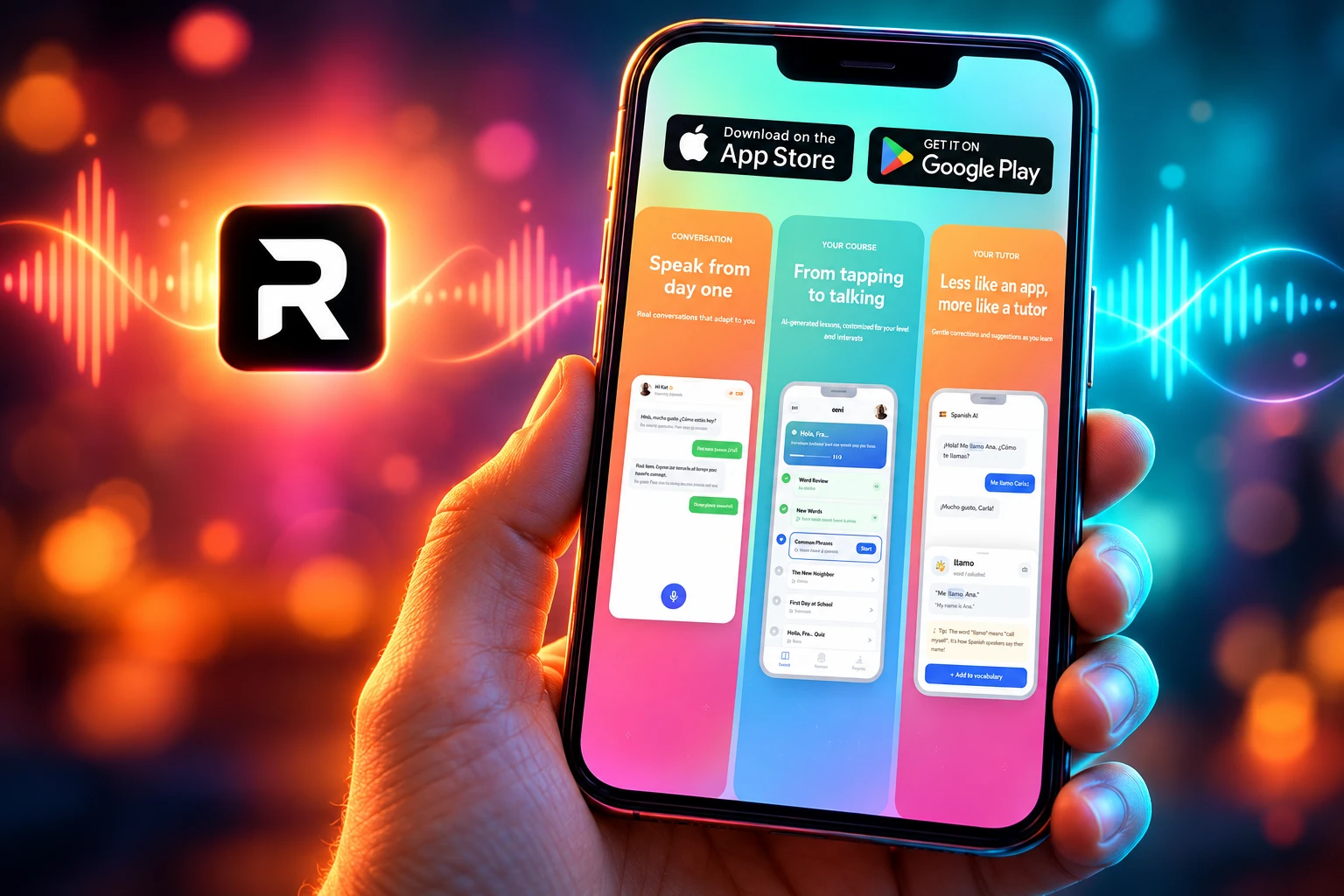
A Market Between Streaks and Language School
Eevi’s own marketing repeats a figure the company also put on its App Store page: over a billion people are learning a language, and fewer than 10% ever reach conversational fluency. That claim is the company’s, not a census. The customer it actually wants is smaller and more local.
Beta testers, Schöffer said, confirmed the first audience: migrants, or more broadly international professionals, who want to get past an app like Duolingo and will not sit in a language school because of cost or the calendar. “We’re a B2C app, so anyone can use Eevi, but initially we want to start small,” he said. “We’re positioning ourselves somewhere in the middle.”
That middle is a job, a visa, a team standup in Dutch. Schöffer already knows the Amsterdam startup circuit and plans to ask companies whether they will buy, as a trial, about 50 seats for foreign staff who need Dutch. Anyone can open the product. The sales motion in the first year is built around people who have to speak at work.
He has a blunt view of group class. Collective teaching is one-size-fits-all, he said, and he wants “a personal tutor in their pocket.” While you learn a language, Eevi stores what it taught you and how you answered. Onboarding today asks for a level, including the European CEFR scale or a simple beginner flag. The next step he describes is a spoken intake, with the tutor asking questions in the target language and scoring you on the fly. If a lesson feels slow, the product is supposed to skip modules. If it jumps too far, you step back.
A Six-Month Course Costs €49
The pack Eevi is pushing is six months at €49. Month to month is €18. Pay the monthly price for six months and you spend €108, which is €59 more than the pack. The company says six months of Eevi costs roughly the same as one hour with a human tutor, depending on the tutor. In Amsterdam, that comparison holds at language-school rates. It does not hold on the cheapest marketplace listings.
WHAT SIX MONTHS COSTS AGAINST A HUMAN HOUR
| Offer | Price | What you buy |
|---|---|---|
| Eevi six-month course | €49 | Voice tutor for half a year |
| Eevi monthly plan | €18 | Same product, billed each month |
| Language Corner, Amsterdam, Flex | €58 per hour | Private Dutch, 10-hour minimum |
| Language Corner Regular | €53 per hour | Private Dutch, 24-hour minimum |
| Dutch Ready, online 1-on-1 | €69 to €75 per hour | Private Dutch by video |
Language Corner, a Dutch school in the city, publishes private Dutch lessons from €58 an hour on its Flex pass, and €53 on Regular. Dutch Ready lists online private lessons at €69 to €75 an hour. Against those menus, €49 really is in the region of a single hour. Independent tutors on open marketplaces often charge less, which is why Eevi hedges with “depending on the tutor.”
The website says Eevi is free to start. The free plan keeps a practice tab. Live AI talk sits on the paid plan. Sessions on the marketing site are pitched at 5 to 10 minutes a day. The company also says about 500 words, learned in context, cover about 80% of daily conversation. That is Eevi’s curriculum claim, not an independent trial result.
Why Testers Asked Eevi to Hide the Transcript
The closed beta ran from January to June 2026 with about 100 advanced learners. LinkedIn posts from the company had already advertised that first six-month course as a discounted cohort of 100. The product lesson was about the screen, not the model.
The first build looked like a normal chatbot, with a transcript of what you said and what Eevi said. “We discovered that reading while you’re trying to speak isn’t actually a very good experience,” Schöffer said. They rebuilt around a blank canvas. The tutor can drop in an audio player or other media when it helps, instead of forcing the learner to follow a script. Figuring out how a voice-first lesson should feel, he said, was the biggest thing they learned.
On June 23, 2026, the company’s account posted that the product was on the App Store and Google Play. The iPhone listing is live under eevi B.V., free with in-app purchases, and still has too few ratings for Apple to show a score. The public website still tells people the product works in a modern browser. Both can be true at once: the apps are listed, and the web product is still the version the FAQ describes.
Now on the App Store and Google Play 📱
The hardest part of learning is showing up. Having your language tutor one tap away makes that part easier.
Try it for free 😊 #languagelearning
iPhone ➡️ https://t.co/TF2NpJEH5N
Google Play ➡️ https://t.co/Qn6HtsG18U pic.twitter.com/1fXKW1Ap3b— eevi_ai (@eevi_ai) June 23, 2026
FROM HUBS TO A VOICE TUTOR
- January 25, 2021: Protolabs completes the 3D Hubs buyout, with Rockstart among the early backers congratulating Schöffer and his co-founders.
- Summer 2025: Schöffer and Gazendam start building Eevi after hitting the limits of Japanese and Spanish consumer apps.
- January 2026: A closed beta opens, later described as about 100 advanced learners on a six-month course.
- June 23, 2026: @eevi_ai posts iPhone and Android store links and invites people to try the tutor for free.
- September 22, 2026: Eevi says Rockstart has led a pre-seed to fund a public launch and 12 months of scaling.
Nick Goddard, quoted on the company site, described months on Duolingo for Spanish with little gain in speaking or listening, then using Eevi to talk at his own level. That is a testimonial the company chose, not a controlled study. It is the job-to-be-done they are selling.
Duolingo Already Sells a Video Call
Schöffer splits the field in three: old language apps, the model labs, and new AI-native tutors. He is “not too concerned” about Duolingo, he said, because its core property is a curriculum it has spent years building, and it cannot simply walk away from that machine. He would also be surprised if Gemini or OpenAI built every vertical themselves. “They’re effectively in the token business.” Between those poles, he has seen more dedicated AI language startups in the United States than in Europe.
THREE SHELVES SCHÖFFER SAYS HE IS ON
- Streak apps: Duolingo and peers still make most of their money on recognition drills, even after adding some speaking.
- Model labs: Google and OpenAI sell the voice models; Schöffer doubts they will own every tutoring layer on top.
- Voice-native tutors: New companies, many of them American, already wrap real-time speech in a language product.
The middle shelf is less empty than that framing suggests. On January 14, 2026, Duolingo published Video Call with Falstaff, a spoken coaching session for Max subscribers learning English, Spanish, Portuguese, French, Japanese, German, Italian, Korean, and Chinese on iOS, with a plan to cover its nine busiest languages. Lily video calls and Roleplay were already the paid speaking features on that tier. A patient character who never judges you is no longer a science project. It is a line item on a public company’s upsell page.
Open the rest of the store and you find other voice tutors that already charge a monthly fee for conversation practice. Schöffer’s sharper point is not that nobody else ships speech. It is that speech without a course is a demo. He wrote as much on March 26, 2026, while Eevi was still in beta.
Open any new AI language app. You’ll get a chatbot that speaks your target language. You can have a conversation. It feels impressive for about 5 minutes. Then what?
Filemon Schöffer, co-founder and CEO, on X
That is the product bet hiding under the funding announcement. Real-time voice is cheap enough, he argues, that the scarce thing is a course that remembers you, decides which words come first, and maps a path from survival phrases to harder talk. Eevi’s site walks through a Spanish café unit with an intro, an audio story, a roleplay, and a quiz. The company says the course draws on more than 15 academic frameworks and more than 150 topics, from family life to grocery shopping. In an April 7, 2026 essay on the fluency illusion, it leaned on Merrill Swain’s output hypothesis, Paul Nation’s four strands, and Robert DeKeyser’s skill-acquisition work to argue that tap-to-translate never becomes speech.
Fourteen Languages and the Dialects Left Out
The English homepage currently has 14 languages listed on its site: Arabic, Chinese, Dutch, English, French, German, Indonesian, Italian, Japanese, Polish, Portuguese, Romanian, Spanish, and Turkish. It says the course runs from CEFR A1 through B1+ in those languages. Schöffer said Eevi is using Gemini as the voice model across about 14 languages, including Japanese, Indonesian, and Chinese, and that a recent Gemini update will take that to about 35. Those are two different counts: what the product sells now, and what he thinks the model will soon let them add.
Google’s own stack is wider still. The company documents 99 languages in Google’s Live API, and in mid-September it pointed developers at Gemini 3.8 Live for low-latency voice agents. Capacity in the model is not the same as a tutored course with memory, pronunciation judgment, and a dialect a grandmother actually speaks.
That last gap is the one Schöffer dwells on. Different models support different dialects, he said, and that has become a bigger problem than he expected. Major systems are mostly trained in the West, so they decide which ways of speaking count. “We’ve already had users saying, ‘My mother speaks this dialect, and I want to learn it,’ but the model doesn’t support it.” He talks about a later product, on the same stack, for dialects and endangered languages. He also does not want a European company to stay “permanently dependent on the major LLM providers.” First, he said, Eevi has to show it can sell mainstream language learning. Grammar and vocabulary errors in weaker languages are one reason some niches are off the menu today.
The homepage carries a Google Cloud badge. That is infrastructure, not a statement that Google is an investor.
What the Next Year Has to Prove
Schöffer is building this company unlike Hubs. He worked 60-plus-hour weeks then, and looking back thinks half of them went on work that did not matter. He has young children now. “I know the product needs to be right, and we’re deliberately not doing everything as quickly as possible,” he said. In the past he would have launched fast, pushed fast, and advertised fast.
The 12 months on the new money are still a clock. Eevi has to show that people who need Dutch, Japanese, or Spanish at work will pay €49, talk every day, and come back, in a market where Duolingo already sells a video call and a general chatbot can fake a conversation for a few minutes. Schöffer keeps returning to the same line: hundreds of millions of people try a second language, only a small share succeed, and that is “an enormous waste of human energy.” The waste he can actually bill for, in this round, is an employee who still cannot speak in the office.

Edinburgh Opens a 2027 Tour Built for Time Trials

Korda Maps Auður From Meðalland to Irvine Bay

Apple Music Films Its New Logo in Mineral Oil

Oppo Prices the Pad Mini Above India’s iPad Mini

Austen Soaks Scotland Before Boelo Brings Weekend Gales

Volkswagen Sells the Osnabruck Plant to Clear a Board Fight

Apple’s Foldable iPhone Hinges on Samsung Display Supply

Saksham Gaur Finds He Is His Own Company’s Client

Tata Motors’ Iveco Tender Opens as Holders Still Decide

Onimusha Way of the Sword Preload Hits a Windows 11 Wall
-
 AUTO2 months ago
Volkswagen Sells the Osnabruck Plant to Clear a Board Fight
-
 NEWS2 months ago
Apple’s Foldable iPhone Hinges on Samsung Display Supply
-
 AUTO2 months ago
Tata Motors’ Iveco Tender Opens as Holders Still Decide
-
 BUSINESS2 months ago
Saksham Gaur Finds He Is His Own Company’s Client
-
 GAMING2 months ago
Onimusha Way of the Sword Preload Hits a Windows 11 Wall
-

 ENTERTAINMENT3 years ago
What is SD on Amazon Prime? – All You Need to Know
-

 BUSINESS2 months ago
Hyderabad 22-Carat Gold Jumps After a False Bargain
-

 NEWS2 months ago
iQOO 16 Locks 8,400 mAh While 100W Charging Holds