
NEWS
Googlebook Parks ChromeOS and Sells Android at $899
Googlebook puts Android on $899 laptops from five makers while ChromeOS stays in schools, and Gmail still opens as a web tab.

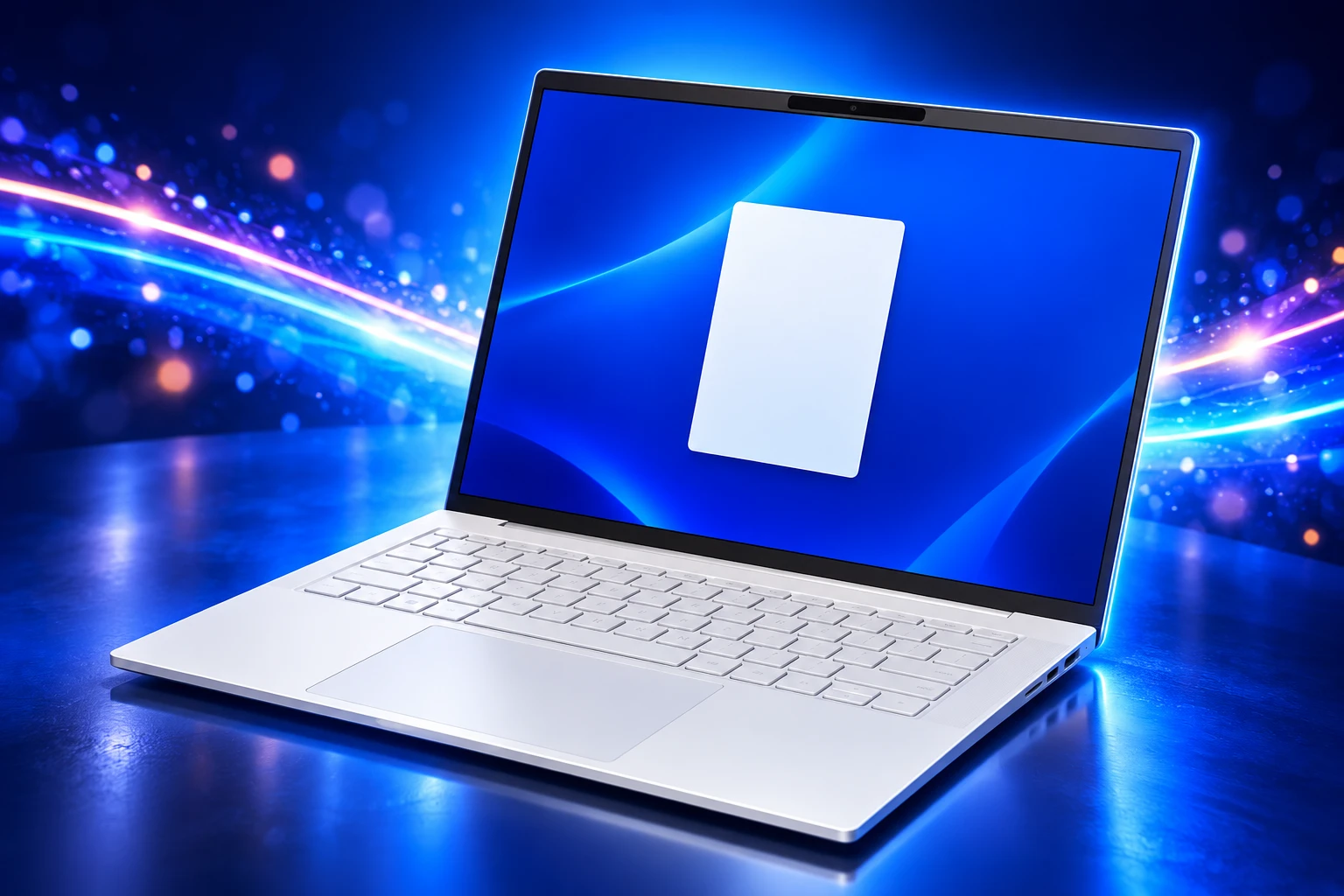
Google opened preorders on September 21 for Googlebook laptops that run Android, not ChromeOS, and start at $899. Five machines from Acer, ASUS, Dell, HP, and Lenovo ship as companions for an Android phone, with 16GB of RAM as the floor.
ChromeOS still gets new classroom hardware. Googlebook takes the paid consumer slot, and that split is the launch. John Solomon, vice president and general manager of laptops, tablets, and Android Enterprise, said the new category is built on the Android technology stack with desktop pieces taken from ChromeOS, then wired to a phone out of the box.
Five Flagships Share a Glowbar and a $899 Floor
Google mandated a short hardware list so the five lids look like one product line. Every Googlebook uses aluminum, magnesium alloy, or carbon fiber, a touchscreen that can reach 2.8K OLED, a backlit keyboard, and a haptic glass trackpad. The lid carries a Glowbar, a thin RGB strip that lights at power-on, sweeps to show charge, and can play animations when you talk to Gemini. Google opened that strip to third-party apps, which is a first for this kind of lid light.
THE HARDWARE FLOOR GOOGLE SET
- Memory: 16GB of high-speed RAM on every model, with 32GB configs on some.
- Storage: Several models start at 256GB; Google Store configs for Acer, the XPS, and Lenovo show 512GB.
- Battery claim: Up to 14 hours of video playback or 16 hours of web browsing across the line.
- Materials: Aluminum, magnesium alloy, or carbon fiber, with up to six Dolby Atmos speakers.
Acer has the only convertible, a 360-degree hinge. ASUS is the travel unit, feather-light at just 2.2 pounds. Lenovo brought the 15.3-inch work screen. Dell folded the machine into the XPS family. HP went all-aluminum. Retail listings put a $400 spread on top of the Acer, which is the Acer Googlebook at $899 with 16GB of RAM, 512GB of storage, and an Intel Core Ultra 5 chip.
| Model | Chip | Display | Price |
|---|---|---|---|
| Acer Googlebook 14 | Intel Core Ultra 5/7 Series 3 | 14-inch 2.8K OLED, convertible | $899 |
| Dell XPS Googlebook | Snapdragon X Elite | 13.4-inch 2.5K IPS | $1,199 |
| ASUS Googlebook 14 | Intel Core Ultra 5/7 Series 3 | 14-inch 2.8K OLED | $1,299 |
| HP Googlebook 14 | Snapdragon X Elite | 14-inch 2.8K OLED | $1,299 |
| Lenovo Googlebook 15 | Intel Core Ultra 5 Series 3 | 15.3-inch 2.8K OLED | $1,299 |
Those upper prices are the figures sitting on retailer cards next to the Google Store Acer. Preorders are live at the Google Store, Best Buy, and other shops. Units reach U.S. shelves on October 4, then Canada, the U.K., Ireland, France, Germany, and Australia on October 5. Every box includes 12 months of Google AI Pro with 5TB of cloud storage and Gemini Advanced, plus three months of YouTube Premium and Adobe Photoshop, and a year of GeForce NOW.
ChromeOS Keeps the Schools
A product manager at the briefing said the ChromeOS team had been playing catch-up on features such as Quick Share because the codebases diverged. Googlebook starts on Android so those phone features do not have to be rebuilt twice. ChromeOS is not being deleted. Google told the room that more than 35 new Chromebook and Chromebook Plus devices will still launch over the next 12 months, aimed at enterprise, education, and cheaper hardware.
Naveen Viswanatha, director of product management for ChromeOS, put the school and business case in writing in May, the day after Google first showed Googlebook.
Chromebooks remain a reliable, long-term investment, and you can continue to confidently purchase and deploy them to your businesses and schools.
Naveen Viswanatha, Director, Product Management, ChromeOS, Google Cloud Blog
The same letter promises 10 years of ChromeOS updates, the current Admin console with no new licenses, and “multiple pathways to transition over to the new experience.” That last line is the split in plain English. Google has put the school installed base around 50 million Chromebooks. Those fleets can keep buying the cheap machines. The $899 floor is for someone who already carries an Android phone and will pay for aluminum and a Glowbar.
HOW GOOGLE GOT TO TWO LAPTOP OS LINES
- 2024: Google starts moving ChromeOS onto Android’s underlying stack so the two products can share work.
- July 15, 2025: Sameer Samat, president of the Android side, says ChromeOS will keep going on laptops, including Chromebook Plus, while Android stays on phones and tablets.
- May 12, 2026: Google previews Googlebook, internally tracked as Aluminium, as a premium Android laptop.
- May 13, 2026: Viswanatha publishes the Chromebook reassurance, including Chromebooks remain a reliable, long-term investment for schools and businesses.
- September 21, 2026: Preorders open on five flagship Googlebooks.
John Maletis, vice president of laptops and tablets, said in June that Googlebook can “run truly native Android applications, not emulated.” Chromebooks still run Play apps through a virtual machine. That gap is the reason Google paid for a new name.
Your Phone Apps Land on the Taskbar
Pairing is the feature Google is selling. Sign into the same Google account, join the same Wi-Fi, and the laptop treats the phone as already known. Settings, saved passwords, Wi-Fi networks, and messages come across with end-to-end encryption. If you keep a work phone and a personal phone, a dropdown switches between them. You do not scan a QR code every time you change handsets, which is the weekly chore this product is meant to kill.
Continue On puts a document you were editing on the phone into the laptop taskbar so a click opens the same file. The Files app can search and open photos and documents that still live on the handset. Cast My Apps streams a phone app into a desktop window when you need a delivery order or a one-time code and do not want to install that app on the laptop. An iPhone can join for messaging and notifications. That is the whole iPhone list.
Google’s own launch post put the phone pitch in one clip.
Introducing Googlebook, a new category of laptop, available for preorder today.
💪 Crafted with 2.8K OLED touchscreen displays, 14 hour battery life and all the performance needed to power your ideas
📳 Engineered to sync effortlessly with your @Android phone, so you can jump… pic.twitter.com/13mV40KUDi— Google (@Google) September 21, 2026
Rick Osterloh, senior vice president of platforms and devices, wrote that Googlebook is for people who want a premium laptop that works next to an Android phone, mixing ChromeOS habits with the Android apps those people already know. Dieter Bohn, posting from inside Google, pointed at phone files in the Files app, Rambler, on-the-fly widgets, and Magic Pointer as the software that is supposed to make the hardware feel finished.
Why Gmail Still Opens in a Browser Tab
The desktop still looks like a Chromebook: a shelf of icons, overlapping windows, a full Chrome browser with extensions. Google says about 70% of time on laptops is spent in a browser, and that developers can ship either a large-screen Android app or a web app. The Play Store will badge desktop-class Android apps. Photoshop, Lightroom, and CapCut run as native creative tools. Netflix and HBO Max support offline downloads. About 20,000 mobile and PC titles are supposed to run with keyboard, mouse, and touch, with GeForce NOW covering the rest for a year.
At the briefing, Gmail and Drive on the Googlebook were web containers. That is a strange first impression for a company that just paid to rebuild the OS so Android apps could be first-class. If the everyday Google work suite still lives in Chrome, the native-app win is narrower than the keynote. Windowing has another hole. There is no 90/10 split, the uneven two-app layout a lot of Android phones already ship, which makes the desktop feel a step behind the pocket device it is supposed to extend.
People who live in Docs and Drive will still get the taskbar handoff, and that may be enough. People who expected a full native Google suite on day one will see a browser with better phone plumbing. Google is leaving the choice to developers. Until those developers ship, the new OS still leans on the old web.
Intel Took Three, Qualcomm Took Two
HP and Dell shipped Snapdragon X Elite, including Dell’s X1E-80-100. Acer, ASUS, and Lenovo shipped Intel Core Ultra Series 3, also called Panther Lake, with the Core Ultra 5 325 on the Google Store Acer and Lenovo cards. Googlebook OS is built for both ARM and x86. MediaTek chips are promised later, not in this first wave.
ON-DEVICE AI THE CHIPS ARE RATED FOR
- Google’s line rating: Dedicated NPUs capable of over 45 TOPS, so Gemini work can run without spinning up loud fans.
- Intel listings: Up to 47 TOPS on the Core Ultra 5 325 Google Store cards.
- Qualcomm’s own card: A Hexagon NPU rated at 45 TOPS on Snapdragon X Elite, including the X1E-80-100 Dell uses.
- RAM: 16GB LPDDR5X as the shared floor, 32GB on some ASUS, Dell, and HP configs.
The chip split is a bet on two supply lines and two app translation paths. Windows-on-ARM already taught vendors that ARM laptops need software patience. Googlebook claims Android apps run native on both chips, which dodges that old ARM tax if the apps are actually Android. Windows itself is not part of the pitch. On X, the recurring practical questions were whether the machines use UEFI, whether you can boot Windows, and whether Googlebook OS will install on a Framework. Google has not offered those answers, because this product is a sealed Google stack with a Titan root of trust, not a generic PC.
Gemini Now Lives Next to the Cursor
Alexander Kuscher, senior director of laptops and tablets, framed Googlebook as a Gemini machine first. Magic Pointer is a cursor wiggle that drops Gemini onto whatever is on screen, then waits until you ask. Kuscher’s examples are a marathon plan copied into Calendar, a suspicious email checked for spam, and a set of images combined without a download. It stays off until that wiggle.
WHAT GEMINI DOES ON THE DESKTOP
- Rambler: A key beside Quick Insert that turns a spoken ramble, including mid-sentence language switches, into headers, checklists, and cleaned-up notes.
- Create My Widget: Describe a widget in plain language and pin a sports score, a trip countdown, or a project tile to the desktop.
- Gemini Spark: Close the lid and let a long request keep running in the background.
- Antigravity: An on-device agent studio plus a full Linux terminal, with Claude Code and Antigravity CLI, sitting on a Level 5 security-certified pKVM hypervisor.
That Linux box is the sleeper for developers who bounced off Chromebooks. Isolated terminal access, code repos, and local agents are a different buyer than a school that wants a locked browser. It is also how Google answers the charge that a laptop OS still needs a real runtime besides Chrome. Security stays on the ChromeOS pattern: Titan hardware, defense in depth, on-device malware detection.
Ten Years of Updates on a Third OS
Googlebook OS is promised the same 10 years of updates Chromebooks already advertise, with quarterly feature drops in the Pixel style. That clock is the warranty on a third operating system from a company that has closed a long list of tools. On Google’s launch thread, the first joke was the graveyard. The branding does not help. Pixelbook already taught buyers that a Google laptop can be a one-generation object with a name that sounds like this one.
The stronger objection is simpler. High-end Chromebooks always had to answer why someone would skip Windows or a Mac at this price. Google’s answer is the phone: Continue On, Files, Cast My Apps, and a shared Android base so Quick Share does not land late. If you do not live on an Android handset, the $899-to-$1,299 spread buys OLED, 16GB, and Gemini tricks you can already get in a browser. If you do, this is the first Google laptop that treats that phone as the other half of the computer instead of a guest.
Preorders are open now. The machines go on U.S. shelves on October 4, with the other six countries a day later, and the Glowbar will be the first thing that tells you this lid is not a Chromebook.

Edinburgh Opens a 2027 Tour Built for Time Trials

Korda Maps Auður From Meðalland to Irvine Bay

Apple Music Films Its New Logo in Mineral Oil

Oppo Prices the Pad Mini Above India’s iPad Mini

Austen Soaks Scotland Before Boelo Brings Weekend Gales

Volkswagen Sells the Osnabruck Plant to Clear a Board Fight

Apple’s Foldable iPhone Hinges on Samsung Display Supply

Saksham Gaur Finds He Is His Own Company’s Client

Tata Motors’ Iveco Tender Opens as Holders Still Decide

Onimusha Way of the Sword Preload Hits a Windows 11 Wall
-
 AUTO2 months ago
Volkswagen Sells the Osnabruck Plant to Clear a Board Fight
-
 NEWS2 months ago
Apple’s Foldable iPhone Hinges on Samsung Display Supply
-
 AUTO2 months ago
Tata Motors’ Iveco Tender Opens as Holders Still Decide
-
 BUSINESS2 months ago
Saksham Gaur Finds He Is His Own Company’s Client
-
 GAMING2 months ago
Onimusha Way of the Sword Preload Hits a Windows 11 Wall
-

 ENTERTAINMENT3 years ago
What is SD on Amazon Prime? – All You Need to Know
-

 BUSINESS2 months ago
Hyderabad 22-Carat Gold Jumps After a False Bargain
-

 NEWS2 months ago
iQOO 16 Locks 8,400 mAh While 100W Charging Holds