
BUSINESS
South Korea Weighs Crypto Market Makers After JPYC’s 4x Spike
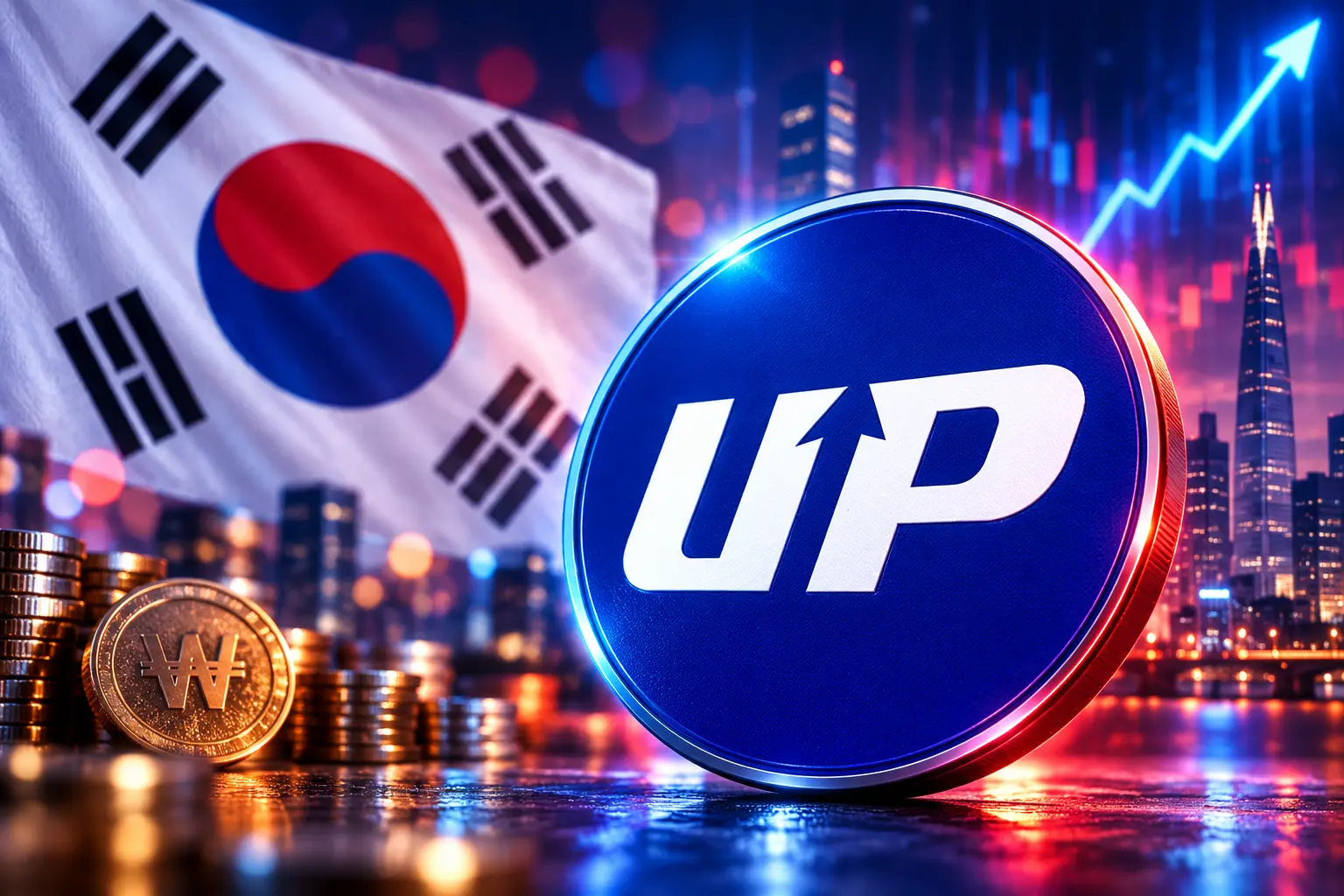
Seoul is reviewing crypto market makers after JPYC hit 37.60 won on Upbit, because the same thin books now sit in front of corporates and 2027 tokenized securities.

South Korea will review legalizing crypto market makers after JPYC printed 37.60 won on Upbit, more than four times the exchange’s 8.81-won reference. Yoo Young-joon, director general for digital finance policy at the Financial Services Commission, tied that September 17 listing to user losses at The Bridge Summit 2026 in Seoul on September 28.
The empty won book now sits in front of listed firms newly allowed to hold crypto, and in front of tokenized securities the FSC has already dated for February 4, 2027. Nothing in Yoo’s remarks approved a market maker. They admitted the current ban is already costing people money.
JPYC Printed 37.60 Won With No Ceiling
JPYC is issued by Tokyo-based JPYC Inc. as a yen electronic payment instrument, redeemable at 1 JPYC to ¥1. Upbit, South Korea’s largest crypto exchange, listed it against the won, bitcoin, and USDT on September 17, the first won market for a yen stablecoin. PayPal’s PYUSD went up the same morning. JPYC trading did not.
The listing notice went out at 09:48 KST. Trading was set for 12:00, then 15:00, then 18:00. When the won pair finally opened, Upbit’s public tape showed a first print of 12.00 won against a reference of 8.81 won. The only limit was a floor 10 percent below that reference. There was no ceiling.
THE SEPTEMBER 17 CLOCK ON UPBIT
| Time (KST) | What printed |
|---|---|
| 09:48 | Upbit announces JPYC and PYUSD listings |
| 18:00 | JPYC/KRW opens at 12.00 won; floor only, no ceiling |
| 18:44 | Exchange says Kaia and Polygon deposits are coming |
| 19:20 to 19:25 | High of 37.60 won, more than four times the 8.81-won reference |
| 19:23 | Kaia and Polygon deposits open; Ethereum had been the only rail |
| 20:34 | JPYC Inc. pauses Ethereum issuance reservations |
| 22:19 | Polygon issuance reservations pause; both windows later reopen |
The 37.60-won print was not an issuer default. Noritaka Okabe, JPYC’s chief executive, said the firm still takes in one yen at issuance and can redeem at that rate even when the secondary market trades far from the peg. In August the company had closed a Series B extension of 6 billion yen ($38 million). The coin’s backing was not the hole. The won book was.
At listing, Upbit took deposits only on Ethereum, which held about 7 percent of circulating JPYC. Korean users were told they face limits on using JPYC’s own mint and redeem window, which needs Japanese identity checks, while Upbit needs a Korean bank account. Very few people could mint at ¥1 and sell in Seoul in one pass. ChainAnalyzer, reading 55,293 executed DEX swaps, found the extreme prices lived in small clips; trades of 100,000 JPYC or more never printed the headline high.
WHY THE PEG COULD NOT CLOSE IN SEOUL
- Deposit rail: Only Ethereum was live at the open, and it held about 7 percent of supply.
- Mint cap: JPYC Inc. limits issuance to ¥1 million per request and blocks rapid-fire repeats.
- Identity split: Minting needs a Japanese My Number check; Upbit needs a Korean bank account.
- Tape design: A minus 10 percent floor sat under an 8.81-won reference, and no ceiling sat above it.
The issuer had not minted in 62 days. Then it minted 12.48 billion JPYC in seven transactions between 21:37 on September 17 and 03:23 on September 18, and 9.9 billion of that arrived after executed prices were already back near ¥1. Supply showed up. It showed up after the people who bought 37.60 won had already paid.
The User-Protection Law Still Treats Quotes as Manipulation
South Korea’s Act on the Protection of Virtual Asset Users took effect from July 19, 2024, after the National Assembly passed it on July 18, 2023. The statute copies equity-market bans on insider trading, price manipulation, and fraudulent dealing. It does not carve out two-sided quoting.
In Korean stocks, a designated market maker posts bids and offers under exchange rules so a new listing can trade without a vacuum. In Korean crypto, that same two-sided book can be read as an attempt to move or stabilize a price. A Seoul law-firm note on the Act prohibits matched orders and wash trades, plus trades meant to create a false appearance of activity or to move a virtual asset’s price. Liquidity provision is not named as a crime. It is also not named as a job.
That is why professional desks that would normally sit on a new listing in New York or London stay off a Korean book. The Kimchi premium, the old gap between local and global bitcoin prices, is the slow version of the same plumbing. JPYC was the fast version. A fully reserved yen coin can still fail as a trading product, because issuance and market structure are different jobs, and Seoul regulated only the first.
21,219 Investors Bought the Premium
Park Min-gyu, a Democratic Party lawmaker on the National Assembly’s Political Affairs Committee, released Upbit figures on September 27. They cover buyers who paid 10 percent or more above the won-yen reference between September 17 and September 21.
WHAT UPBIT HANDED THE ASSEMBLY
- Buyers above peg: 21,219 investors bought JPYC at least 10 percent over the won-yen rate.
- Cash put up: Those tickets came to about 259.9 billion won.
- Window: September 17 through September 21, five calendar days after the listing.
- Intraday high: 37.60 won against an 8.81-won reference, with no cap on the upside.
That is a lot of money to spend on a token sold as one yen. The people who bought the spike were not arbitraging a broken reserve. They were filling a one-sided book. Once Kaia and Polygon deposits opened and new coins were minted, the premium collapsed. The losses did not. Yoo later said criticism of those user losses was growing, and that demands for discipline were expanding with it.
Why the FSC Is Reviewing Market Makers
Yoo spoke at The Bridge Summit in Gangnam, not in a formal FSC rulemaking. He said the commission would review whether systems such as market-making are needed to make digital asset markets more efficient and stable. He also said core exchange functions, including matching, listings, and watches for abnormal trades, may need to move from self-regulation to public rules.
There were also criticisms that user losses occurred from the price surge after the JPYC listing, so demands for discipline in this area are expanding.
Yoo Young-joon, FSC director general for digital finance policy, The Bridge Summit 2026
The next crypto statute, the Digital Asset Basic Act, is the vehicle he pointed to. Yoo said it could move firms from today’s filing model to licensing and registration, tighten rules on major shareholders and executives, allow domestic token issuance with disclosure, and cover won-pegged stablecoins. Seo Na-yoon, head of the FSC’s virtual asset division, said on September 22 that a National Assembly subcommittee is expected to review that bill in November.
A review is not a license. Eligibility, capital, quoting duties, and surveillance still have to be written. Until they are, the people who would post a 8.81-won offer against a 12.00-won open remain on the wrong side of the manipulation clause. The review adds no sell orders.
Listed Firms Now Share the Same Thin Book
Seoul spent 2026 prying open a door it had shut in 2017. The FSC’s corporate trading guidelines let listed companies and registered professional investors put up to 5 percent of equity capital a year into the top 20 coins by market cap, on the country’s five main regulated exchanges. About 3,500 entities sit in that pool. The nine-year ban on corporate crypto investment is the thing those guidelines ended.
Chainalysis, in its 2026 Global Crypto Adoption Index, ranked South Korea second in the world for on-chain holdings after the United States, and fifth overall among 117 countries. Corporate desks have still not begun trading in earnest. That is the awkward part. Retail already built one of the deepest crypto piles on earth. The new 5 percent sleeve is supposed to sit on top of it. Without legal two-sided flow, a treasury order in size hits the same vacuum that turned a yen coin into a 37.60-won print.
Stablecoin listings in September made the pattern obvious even before Yoo spoke. Foreign-pegged coins gapped on Korean books when supply was thin and the buy side arrived first. Reserve quality never entered it. The tape did.
Tokenized Securities Start in February 2027
On September 4 the FSC published a three-phase roadmap for tokenized securities, built around an update to the Act on Electronic Registration of Stocks and Bonds. The amended Electronic Registration Act takes effect on February 4, 2027, which is also when Phase 1 is supposed to start. Brokers will not need a new license. They will need a book that can take institutional size.
WHAT FEBRUARY 4, 2027 IS MEANT TO OPEN
- Phase 1: Privately pooled money-market funds and bonds for institutions, unlisted stocks through a trust, and publicly offered fractional products.
- Phase 2: Tokenization of all publicly offered securities, timed only after Phase 1 is judged stable.
- Phase 3: On-chain payments linked to stablecoins, which still need a won-coin law that does not exist.
Retail sleeves in that plan are tight: a suggested subscription cap of 30 million won or 5 percent of an issue, whichever is smaller, and a 100 million won yearly net-purchase cap on each over-the-counter venue. Issuer account managers would need at least 4 billion won in equity. Those limits protect buyers from concentration. They do not put a bid under a new token when the first hour looks like JPYC.
Phase 3 is blocked by a separate fight. The Bank of Korea wants won stablecoins issued through bank-led groups, with banks holding at least 51 percent. The FSC has warned that a hard ownership floor would freeze out fintech issuers. Domestic won-coin issuance stays illegal until the Basic Act passes. An illiquid book on a tokenized fund in 2027 would recreate the JPYC hour at a larger ticket.
Samsung Already Paid for the Exchange Seat
Traditional finance has been buying the rails anyway. On May 28, Samsung Securities, Samsung SDS, and Samsung Card agreed to take a combined 4 percent of Dunamu, Upbit’s parent, for 612.8 billion won ($408 million), in an all-cash block from Kakao affiliates that was set to close June 19. Samsung Securities is taking 2 percent. The other two affiliates take 1 percent each. The price implied a Dunamu value of about 15.3 trillion won. Hana Bank had just bought 6.55 percent for about 1 trillion won.
Samsung Securities said it would work with Dunamu on issuing and distributing tokenized securities. Under Korean securities law, a crypto exchange cannot intermediate those products, so Dunamu needs a licensed broker beside it. A licensed crypto market-maker rule would make that franchise easier to run. It would also make the 5 percent corporate sleeve executable on something other than hope.
THE YEAR THAT RAN INTO THE JPYC TAPE
- January 2026: FSC guidelines open listed firms and professional investors to a 5 percent crypto sleeve.
- May 28, 2026: Samsung affiliates agree to buy 4 percent of Dunamu for 612.8 billion won.
- September 4, 2026: FSC dates Phase 1 tokenized securities for February 4, 2027.
- September 17, 2026: JPYC opens at 12.00 won on Upbit and prints 37.60 won with no ceiling.
- September 27, 2026: Park Min-gyu releases Upbit’s count of 21,219 premium buyers.
- September 28, 2026: Yoo Young-joon says the FSC will review market-making and public oversight of exchanges.
- November 2026: Digital Asset Basic Act is slated for a National Assembly subcommittee review.
- February 4, 2027: Tokenized private funds, bonds, and fractional products are due to go live.
Yoo’s review still has to become a statute, then a license, then an actual two-sided quote. Until then, a yen coin that redeems at ¥1 can print 37.60 won in Seoul, and the February books Seoul has already promised will open onto the same empty page.
Disclaimer: This article is news reporting and analysis of South Korean regulatory remarks and market events, and it is informational only. It does not constitute investment, legal, or trading advice, and it is not a recommendation to buy, sell, or hold JPYC, other cryptoassets, or securities of Dunamu or any Samsung affiliate. Readers should consult a licensed financial adviser and, where relevant, a Korean-qualified lawyer before acting on any allocation, listing, or market-making plan. Figures, listing statuses, and policy timelines reflect the official notices, on-chain tallies, and public remarks cited here as of the dates given in the piece and may change as the Digital Asset Basic Act and exchange rules move.

Edinburgh Opens a 2027 Tour Built for Time Trials

Korda Maps Auður From Meðalland to Irvine Bay

Apple Music Films Its New Logo in Mineral Oil

Oppo Prices the Pad Mini Above India’s iPad Mini

Austen Soaks Scotland Before Boelo Brings Weekend Gales

Volkswagen Sells the Osnabruck Plant to Clear a Board Fight

Apple’s Foldable iPhone Hinges on Samsung Display Supply

Saksham Gaur Finds He Is His Own Company’s Client

Tata Motors’ Iveco Tender Opens as Holders Still Decide

Onimusha Way of the Sword Preload Hits a Windows 11 Wall
-
 AUTO2 months ago
Volkswagen Sells the Osnabruck Plant to Clear a Board Fight
-
 NEWS2 months ago
Apple’s Foldable iPhone Hinges on Samsung Display Supply
-
 AUTO2 months ago
Tata Motors’ Iveco Tender Opens as Holders Still Decide
-
 BUSINESS2 months ago
Saksham Gaur Finds He Is His Own Company’s Client
-
 GAMING2 months ago
Onimusha Way of the Sword Preload Hits a Windows 11 Wall
-

 ENTERTAINMENT3 years ago
What is SD on Amazon Prime? – All You Need to Know
-

 BUSINESS2 months ago
Hyderabad 22-Carat Gold Jumps After a False Bargain
-

 NEWS2 months ago
iQOO 16 Locks 8,400 mAh While 100W Charging Holds