
BUSINESS
SEC Staff Clears Staking Receipts Without a Commission Vote
Staff FAQs treat some staking receipt tokens as digital tools, not securities, without a Commission vote and with Howey still in force.

SEC staff said on September 25 that some staking receipt tokens can be digital tools or digital commodities, not securities. The Division of Corporation Finance published the answers as FAQs. The Commission did not vote on them.
The document walks through receipts, buybacks, network upgrades, and marketing under the Howey test from the 1946 case SEC v. W.J. Howey Co. It creates no new duties. It also leaves any product that adds extra yield, or sells a buyback as a return on an unfinished chain, inside the same investment-contract analysis that produced years of staking cases.
Staff Answers Arrived Without a Commission Vote
The opening paragraph of the FAQs is the part most headlines skipped. The answers “represent the views of the staff of the Division of Corporation Finance.” They are “not a rule, regulation or statement of the Securities and Exchange Commission.” The Commission “has neither approved nor disapproved their content.”
Staff added that the FAQs “have no legal force or effect, do not alter or amend applicable law, and do not create any new or additional obligations for any person.” That is the legal status of the new answers on staking receipt tokens, not a side note.
The FAQs apply the Commission’s March 17, 2026 interpretive release, which sorted crypto assets into digital commodities, digital collectibles, digital tools, stablecoins, and digital securities. Chairman Paul S. Atkins described that release as an attempt to draw lines in plain terms and to accept that most crypto assets are not themselves securities.
After more than a decade of uncertainty, this interpretation will provide market participants with a clear understanding of how the Commission treats crypto assets under federal securities laws. This is what regulatory agencies are supposed to do: draw clear lines in clear terms.
Paul S. Atkins, Chairman, March 17, 2026 Commission press release
The September 25 FAQs are staff applying that taxonomy to products the market actually ships: liquid staking receipts, wrapped redeemable tokens, token buybacks, and the endless patch cycle on a live chain. They are not a Commission vote that staking is finished as a securities question.
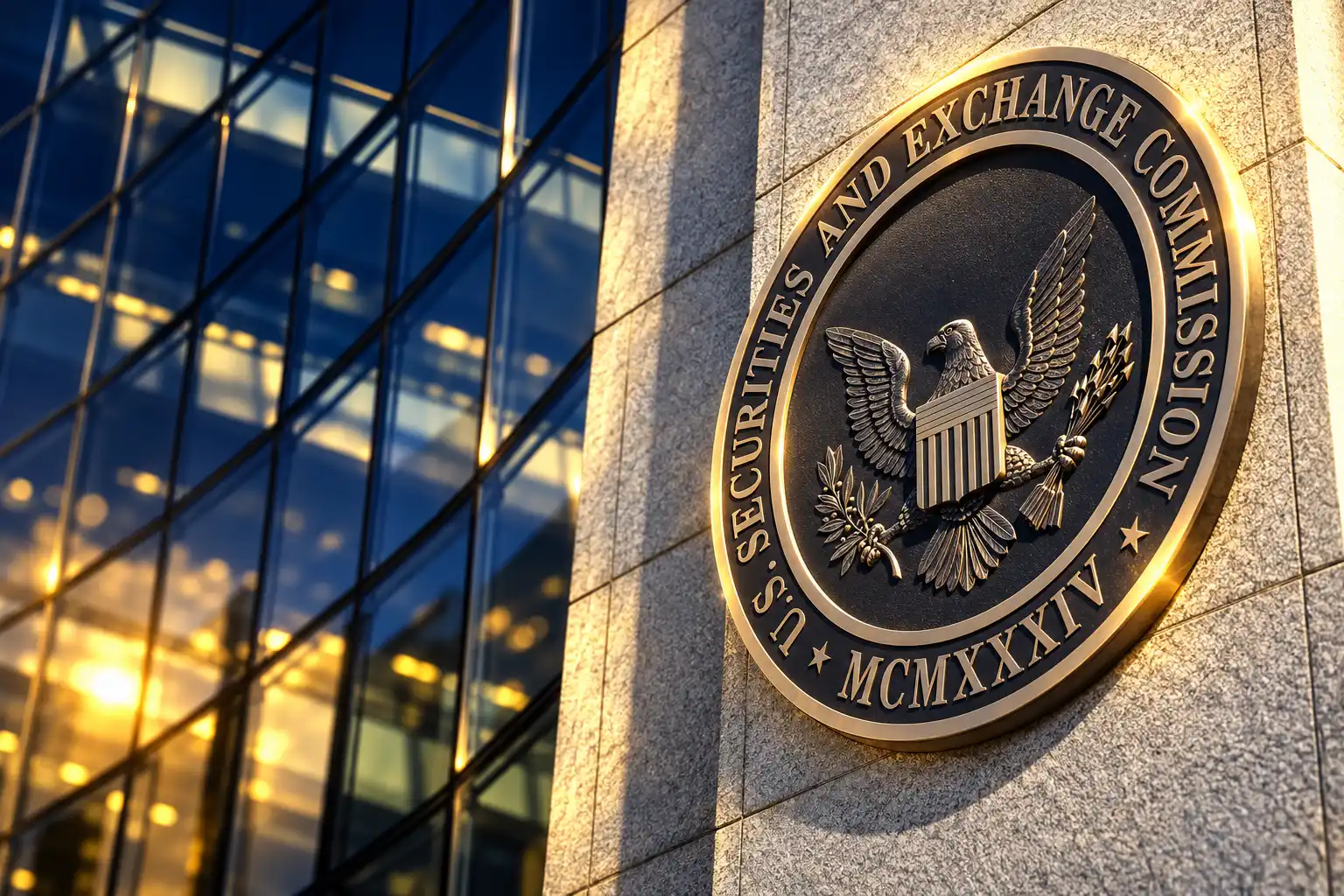
How Staking Receipt Tokens Get Classified
A staking receipt token is a digital tool when it is a receipt for a digital commodity that is not subject to an investment contract, staff said, because it only proves the holder owns the coin underneath. The same token may instead be a digital commodity if a protocol-based liquid staking provider issues it and its value comes from a functional crypto system plus supply and demand.
That split is the new mapping. The August 5, 2025 staff statement had already said covered liquid staking, and the offer of the receipt tokens themselves, did not involve securities when the deposited asset was not part of an investment contract. Friday’s FAQs place those receipts into the March taxonomy rather than reopen the Howey analysis from scratch.
STAFF CLASSIFICATION UNDER THE MARCH RELEASE
| Product | Staff classification when the facts match |
|---|---|
| Staking receipt for a digital commodity, not under an investment contract | Digital tool, as a receipt of ownership |
| Receipt issued by a protocol-based liquid staking provider on a functional system | May be a digital commodity |
| Buyback announced on a functional network | Not a promise of essential managerial efforts |
| Buyback on an unfinished network pitched as yield or return | Could be a promise of essential managerial efforts |
| Security work, upgrades, and funding on a functional network | Not essential managerial efforts under Howey |
A footnote in the FAQ states the receipt typically has no intrinsic economic rights of its own. The holder is entitled to rewards that accrue on the deposited commodity. The receipt does not create that entitlement, and it does not set or fix the amount.
A Receipt Cannot Be Lent, Pledged or Reused
The load-bearing definition is what staff will count as a receipt at all. Question 1.3 says a receipt certifies that a stated amount of an asset has been deposited and that the depositor still owns it. That is a narrower product than the staking programs exchanges sold as a yield service.
WHAT STAFF SAYS A RECEIPT CANNOT DO
- Change the asset: It does not alter the rights, duties, or benefits of the deposited coin.
- Add extra yield: It gives the holder no additional financial incentive or benefit beyond the deposit itself.
- Move control: It does not transfer ownership or control of the deposit to the issuer of the receipt.
- Reuse the coins: The issuer cannot transfer, lend, pledge, rehypothecate, or otherwise use the deposited asset, or put it in reach of third-party claims.
- Set the reward: The token does not generate, guarantee, or fix staking rewards; those come from the protocol activity underneath.
Those limits are why a liquid staking token that only tracks staked ether can fit, and why a program that advertises its own return figure does not. In the August 5, 2025 statement, staff also said the provider does not decide whether, when, or how much of a depositor’s coins to stake, and does not guarantee the reward, though it may take a fee.
Two bookkeeping methods still qualify. In one, each receipt comes to represent more of the underlying coin as rewards accrue. In the other, holders receive extra receipt tokens and the ratio stays one-to-one. Either way, the receipt is supposed to be redeemable for the deposit after any unbonding period. Once a provider starts promising a number, picking when to stake, or using the coins for something else, the FAQ’s receipt box no longer describes the product.
The $30 Million Lesson Still Hangs Over Staking
The staff path did not appear in a vacuum. In February 2023, Kraken paid $30 million and shut its U.S. staking service to settle Commission charges. The agency said the firm had advertised yearly returns as high as 21%. Later in 2023 the Commission sued Coinbase and called that firm’s staking program an unregistered securities offering. The Coinbase case was dropped in February 2025.
Then the Division started writing staking out of its own perimeter, still as staff views, still under Howey.
FROM ENFORCEMENT TO STAFF FAQS
- February 2023: Kraken pays $30 million and ends U.S. staking after the Commission says the product was an investment contract.
- February 2025: The Commission drops the Coinbase staking case.
- May 29, 2025: Staff says certain protocol staking, including some custodial and self-custodial setups, is not a securities offer.
- August 5, 2025: Staff extends that view to liquid staking and staking receipt tokens, unless the deposited asset is under an investment contract.
- March 17, 2026: The Commission issues the interpretive release that the new FAQs apply.
- August 18, 2026: The Commission proposes Regulation Crypto Assets, Release No. 33-11434.
- September 15, 2026: Senate cloture on the CLARITY Act fails 49-50.
- September 25, 2026: CorpFin issues the FAQs on receipts, buybacks, upgrades, and marketing.
Commissioner Caroline A. Crenshaw dissented from the May staking statement and from the August liquid staking follow-up. In the August reply, titled Caveat Liquid Staker, she wrote that staff had stacked assumption on assumption “without an anchor in industry reality,” and that the statement should give “little comfort” because it was staff, not the Commission.
Instead of clarifying the legal landscape, today’s statement, like other recent staff statements before it, only muddies the waters.
Caroline A. Crenshaw, Commissioner, Caveat Liquid Staker, August 5, 2025
Her closing line was the Caveat Liquid Staker warning in 2025: if a program differs in any respect from the facts staff assumed, “Caveat liquid staker.” Friday’s FAQs do not withdraw that dissent, and they do not convert the 2025 statements into a Commission rule.
When a Buyback Starts to Look Like Yield
On a functional crypto system, staff said, announcing a buyback of a non-security crypto asset is not a representation or promise to undertake essential managerial efforts. Treasury management, supply reduction, protocol-funded burns, and rebalancing are listed as ordinary reasons. On a system that is not yet functional, the same announcement “could constitute a representation or promise to undertake essential managerial efforts if the issuer presents the buyback as creating yield or return for token holders.”
That is the live line for teams that want to spend revenue on their own token. Ethena floated a buyback plan in late August. Other projects have been doing the same thing public companies do with stock, without a straight answer on whether the press release itself looks like a Howey promise. Staff’s answer is that the network has to be working, and the pitch cannot be “this buyback is your return.”
The upgrade question got a similar split. Once a system is functional, services to secure, maintain, improve, or enhance it, or to facilitate network effects, including funding development, “would not involve essential managerial efforts,” staff wrote, pointing to page 56 of the August Regulation Crypto Assets proposing release. Promising to keep shipping patches after that point does not, in staff’s view, satisfy Howey. Before the system works, the same work can still be the “efforts of others” that make an investment contract.
Functionality is a two-track word in the FAQ. For whether an issuer kept the promises it made to buyers, the issuer’s own definition controls, not a market idea of what “functional” means. For how the Commission classifies the asset in Section III of the March release, the release’s definitions control. A project can therefore tell buyers it has finished the work it described, even if outsiders would not call the chain done. That is a disclosure incentive as much as a legal one, and it runs through Question 1.1.
Marketing follows the same facts-and-circumstances test. Promoting current utility “likely would not, without more,” be a promise of essential managerial efforts. Indefinite talk about future features likely would not either, if it “contain[s] nothing promoting the potential for profit.” Tie the roadmap to expected investor returns, and staff says the outcome can differ. A trading platform is a promoter only if it meets the definition in Securities Act Rule 405. Listing a token is not enough on its own.
One more trap sits in Question 2.2. If another party assumes the issuer’s promises, the asset does not separate from the investment contract. Handing the roadmap to a foundation or a new operating company does not, in staff’s view, end the securities analysis.
Guidance Fills the Hole the Senate Left
Ten days before the FAQs, the Senate refused to take up the Digital Asset Market Clarity Act. The cloture vote that failed 49-50 on September 15 needed 60 votes to open debate, so it was 11 short. The bill, H.R. 3633, would have put digital-commodity spot markets at the CFTC and left investment-contract assets with the SEC. Without it, staff memos and a pending proposal are the working rulebook.
That proposal is the document with actual exemptions. Regulation Crypto Assets, issued August 18 and printed at 91 FR 54510 on August 21, would create two offering exemptions for investment contracts involving crypto assets: up to $5 million over four years, and up to $75 million in each 12-month period. It also proposes a conditional safe harbor from the term “investment contract.” Comments on File No. S7-2026-27 are due October 20, 2026, on the proposed offering rules for crypto contracts.
The September 25 FAQs will still be staff views the day that comment file closes. Protocol-based liquid staking that is only a receipt, on a network that already works, now has a staff map into digital tools or digital commodities. A return figure, a discretionary stake, a reused deposit, or a buyback sold as yield on a chain that is not up yet does not. Howey is still the test. The Commission still has not voted on the FAQ answers.
Disclaimer: This article is news reporting and analysis of SEC staff FAQs, prior staff statements, and public rulemaking documents. It is for information only and is not legal, investment, tax, or financial advice. It does not tell any reader whether a token, staking product, wrapped asset, or buyback is a security, or whether to buy, sell, stake, or hold any crypto asset. Consult a qualified securities lawyer and a licensed financial adviser before acting on staking, token sales, or buybacks. Figures, staff views, and proposal deadlines reflect the cited documents as of the dates printed on those documents and can change if the Commission votes, staff withdraws the FAQs, or a court rules.

Edinburgh Opens a 2027 Tour Built for Time Trials

Korda Maps Auður From Meðalland to Irvine Bay

Apple Music Films Its New Logo in Mineral Oil

Oppo Prices the Pad Mini Above India’s iPad Mini

Austen Soaks Scotland Before Boelo Brings Weekend Gales

Volkswagen Sells the Osnabruck Plant to Clear a Board Fight

Apple’s Foldable iPhone Hinges on Samsung Display Supply

Saksham Gaur Finds He Is His Own Company’s Client

Tata Motors’ Iveco Tender Opens as Holders Still Decide

Onimusha Way of the Sword Preload Hits a Windows 11 Wall
-
 AUTO2 months ago
Volkswagen Sells the Osnabruck Plant to Clear a Board Fight
-
 NEWS2 months ago
Apple’s Foldable iPhone Hinges on Samsung Display Supply
-
 AUTO2 months ago
Tata Motors’ Iveco Tender Opens as Holders Still Decide
-
 BUSINESS2 months ago
Saksham Gaur Finds He Is His Own Company’s Client
-
 GAMING2 months ago
Onimusha Way of the Sword Preload Hits a Windows 11 Wall
-

 ENTERTAINMENT3 years ago
What is SD on Amazon Prime? – All You Need to Know
-

 BUSINESS2 months ago
Hyderabad 22-Carat Gold Jumps After a False Bargain
-

 NEWS2 months ago
iQOO 16 Locks 8,400 mAh While 100W Charging Holds