
BUSINESS
PayPay Turns Its Binance Stake Into a Tourist Checkout
PayPay is routing overseas Binance Pay wallets onto yen rails it already owns, while Japanese residents stay locked out of the same tills.

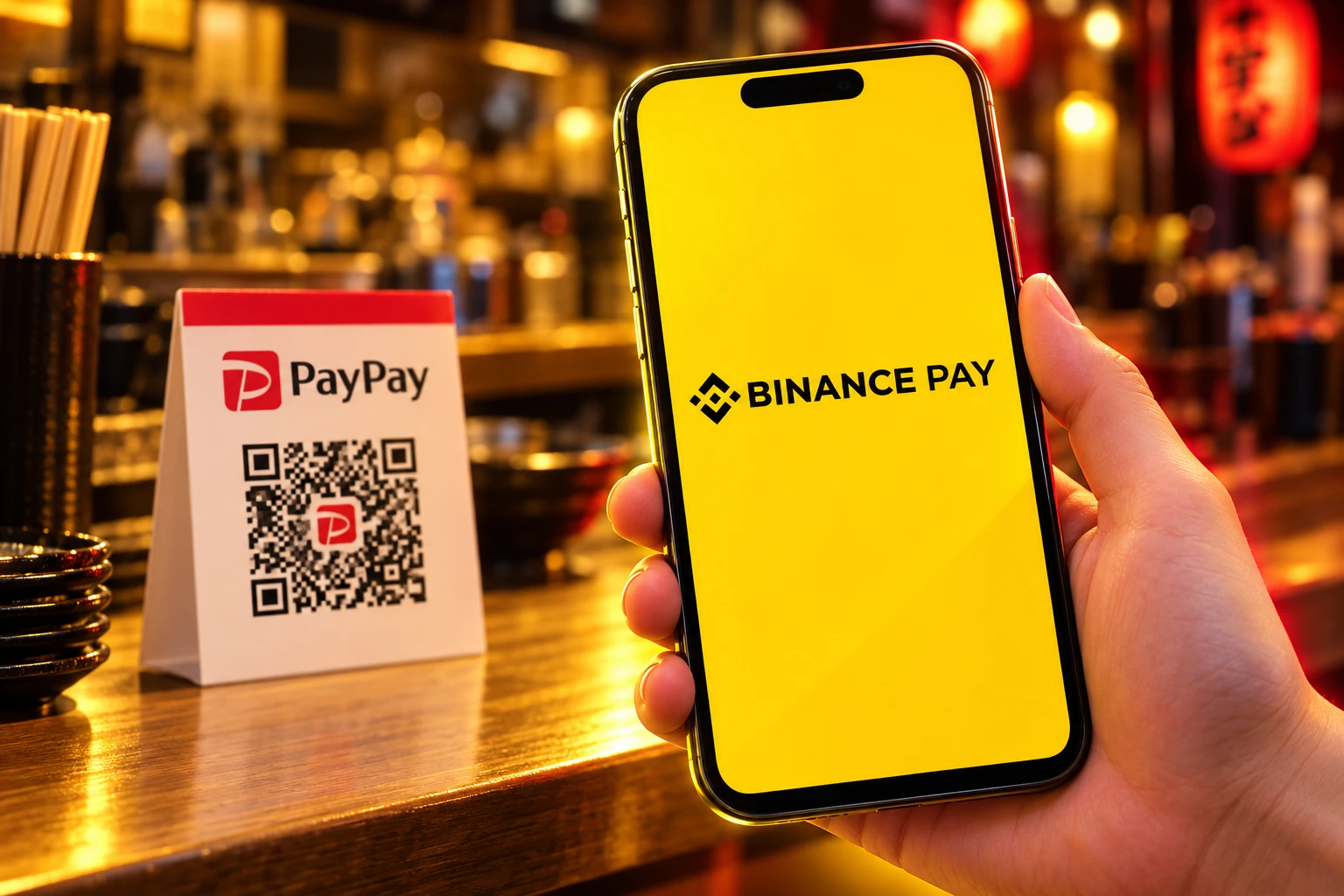
Binance Pay went live at PayPay merchants across Japan on September 30, 2026, converting overseas crypto into yen at the till. Eligible visitors scan a PayPay QR code or flash a code in the Binance app, and the shop is paid in Japanese yen. Japanese residents cannot use it.
PayPay already holds 40% of Binance Japan. The tourist button is the inbound half of that equity, running on a rail PayPay built for Chinese and Taiwanese QR wallets, not for a new crypto checkout product.
PayPay’s 40% Stake Comes Due at Checkout
On October 9, 2025, PayPay Corporation said it had taken a 40% ownership stake in Binance Japan Inc., and that the exchange had been an equity-method affiliate since September 2025. The stated plan was domestic: let Japanese users buy crypto with PayPay Money and cash out into PayPay Money. Takeshi Chino was general manager then.
A later Binance Japan notice, dated April 8, 2026, said PayPay Money could already be deposited straight into Binance Japan accounts. That is the outbound yen pipe, from a Japanese prepaid balance onto a licensed local exchange. September 30 is the reverse pipe, from global Binance.com balances onto the same PayPay merchant network, and it is closed to those local accounts.
PayPay’s own launch note does not dwell on the stake. It sells inbound demand. It points to approximately 48 million Binance Pay users across more than 100 countries and regions, counted as of June 1, 2026, with Japan-resident Binance Japan users stripped out of that pool. Merchants still receive sales proceeds in yen.
THE PAYPAY-BINANCE CALENDAR
- August 2023: Binance Japan, registered with the Financial Services Agency, starts spot and lending services for residents.
- October 9, 2025: PayPay announces its 40% stake and a plan to link PayPay Money to the Binance Japan app.
- April 8, 2026: Binance Japan says PayPay Money instant deposits into local accounts are live.
- September 17, 2026: Binance closes a private purchase of Circle stock, eight days before the PayPay till opens to tourists.
- September 30, 2026: HIVEX adds Binance Pay at PayPay shops nationwide, with Japan residents excluded.
Arisa Toyosaki, who became Binance Japan’s general manager in June 2026, posted that the tourist feature is live at more than 10 million PayPay locations and that eligible visitors get a limited-time 10% instant discount. Campaign dates, caps, and eligible coins were left to Binance’s global campaign page and the in-app notice, not the Japanese launch note.
How HIVEX Turns Crypto Into Yen
HIVEX is a federated payment rail built by TBCASoft, a US firm SoftBank has invested in. PayPay describes it as a way for overseas QR wallets to clear at Japanese PayPay shops while each party keeps its own rules, compliance, and contracts. The cashier sees a PayPay payment. The visitor sees a crypto debit. Yen hits the merchant account.
Binance says it is the first crypto payment service on that rail. Everything already on HIVEX was a conventional e-wallet. TBCASoft’s own 2025 note on Weixin Pay users at PayPay merchants is the template: a foreign app, a PayPay QR, no extra hardware, settlement in yen.
PayPay’s merchant help lists nine of those wallets by home market and start date. Binance Pay joined them on September 30, 2026. PayPay’s merchant notice maps Binance Pay as global, with Japan and the United States carved out of that geography, which is a different cut from the Japan-resident account ban in the consumer PR.
HIVEX WALLETS AT PAYPAY SHOPS
| Wallet | Home market | Live at PayPay |
|---|---|---|
| JKO PAY | Taiwan | October 2, 2023 |
| E.SUN Wallet | Taiwan | November 29, 2023 |
| PXPay Plus | Taiwan | February 29, 2024 |
| iPASS MONEY | Taiwan | October 29, 2024 |
| WeChat Pay | China | September 16, 2025 |
| Octopus | Hong Kong | September 25, 2025 |
| Plus Pay | Taiwan | February 3, 2026 |
| Taishin Pay + | Taiwan | February 3, 2026 |
| UnionPay App | China, including Hong Kong and Macau | September 3, 2026 |
| Binance Pay | Global, Japan and the US excluded on PayPay’s table | September 30, 2026 |
Taiwanese wallets filled the first two years. WeChat Pay and Octopus arrived in September 2025, the same month PayPay’s Binance Japan stake became an equity-method holding. UnionPay App went live on September 3, 2026, four weeks before Binance Pay. The crypto wallet is a new asset class on an old inbound QR stack, not a new merchant network.
Japanese Residents Cannot Use the Same Till
Both launch notes repeat the same ban. Binance Japan users who live in Japan are ineligible. The PayPay QR feature only appears for verified Binance.com users who are visiting. Binance Japan’s translated global release is blunt: this is not a Binance Japan product.
That split is the product. A resident who sold crypto to spend at a convenience store would create a Japanese tax event on the gain, with miscellaneous-income paperwork attached to a bowl of ramen. A non-resident visitor does not trigger that filing at the Japanese till. Keeping the feature off resident accounts avoids turning every PayPay tap into a gain-loss calculation.
WHO GETS THE QR, AND WHO DOES NOT
- Eligible visitors: A Binance.com account, completed identity checks, and a trip to Japan, with the PayPay function shown only while those tests pass.
- Blocked residents: Anyone living in Japan, including Binance Japan customers, cannot see or use the till feature.
- US geography: PayPay’s merchant table lists Binance Pay as global excluding Japan and the United States, a service map, not the same thing as the resident-account ban.
- Shop types left out: Money-only PayPay merchants and online PayPay checkouts are outside HIVEX, so the tourist QR does not follow someone into those tills.
Japanese users asking for the same button are asking for a tax product PayPay did not ship. The 10% instant discount is aimed at the inbound habit, not at opening the domestic exchange’s spend rail.
China’s 59% Drop Left a Hole in the QR Network
PayPay built HIVEX for Chinese and Taiwanese wallets because that was the inbound queue. The queue changed. The Japan National Tourism Organization’s August 2026 estimate is 3,098,900 inbound visitors in August, down 9.6% from 3,428,406 a year earlier. Mainland China accounted for most of the hole.
AUGUST 2026 VISITOR MIX
- Headline count: 3,098,900 arrivals, down 9.6% year on year, with 14 markets still at an August record.
- China: 418,000 visitors, down 59.0% from 1,018,747, the ninth straight month of decline.
- Korea and Taiwan: South Korea 850,500, up 28.7%; Taiwan 666,000, up 7.3%; Hong Kong 247,300, up 9.4%.
- Year to August: 27,626,300 arrivals, down 2.7% from 28,384,099 in the same stretch of 2025.
PayPay’s English release cites that August print and names South Korea, Malaysia, Italy, and Spain among the record markets. It then argues that traveler payment needs are spreading into cryptocurrencies and stablecoins. A 48 million-user global wallet is a hedge against a China QR flow that just halved. Korea, Taiwan, and Hong Kong still feed HIVEX’s older wallets. Binance Pay is the extra net for everyone else, including the 197,400 US visitors in August, even though PayPay’s merchant table does not list the United States as a Binance Pay home market.
Ten Million Stores, Zero New Hardware
Binance Japan puts the PayPay footprint at more than 10 million locations, from convenience stores and restaurants to supermarkets, malls, and transit. Both consumer-presented and merchant-presented QR modes work, so a visitor can scan the shop’s PayPay code or hold up a Binance code for the cashier. Network gas is zero at checkout, Binance says. The conversion to yen happens before the register closes.
Merchants do not apply. PayPay’s September 30 shop notice says there is no extra fee and no paperwork, and that Binance Pay is auto-applied where HIVEX already runs. HIVEX fees stay at the ordinary PayPay rate: 1.60% on the My Store light plan when every linked shop is on that plan, and 1.98% otherwise. A shop group can switch HIVEX off in PayPay for Business, at merchant level rather than till by till. Turning it back on needs an application. The default is on.
That is how crypto reaches a vending machine or a taxi without a new terminal and without the cashier holding a token. It is also how PayPay, not Binance, keeps the merchant contract, the fee, and the yen settlement file. Binance’s global account put it in slogan form the morning the feature opened.
Tourist by passport, local by payment method.
Binance Pay now works at PayPay merchants across Japan – spend crypto like you've lived there your whole life.
Discover → https://t.co/eMe2VNbopM pic.twitter.com/WyG6NYIx0Q
— Binance (@binance) September 30, 2026
“Tourist by passport, local by payment method.” Thomas Gregory, Binance’s vice president of payments and fiat, said the link reflects a shared aim to make visitor payments easier across borders and to give PayPay shops more ways to take overseas custom. The shop still books yen. The visitor still spends a Binance Pay balance, which the rollout has been used to clear in USDT and other supported assets.
The Circle Purchase Landed Eight Days Earlier
On September 22, 2026, Binance published a $100 million equity investment in Circle Internet Group and a new five-year pact to promote USDC. The stock sale closed on September 17: 1,237,011 Class A shares at $80.84, a 5% discount to the prior market price, with a lock-up of up to two years. Circle pays Binance a monthly incentive fee tied to USDC held through Circle’s wallet kit.
Our $100 million investment and five-year commitment represent long-duration conviction.
Richard Teng, co-CEO of Binance, on the Circle partnership
Eight days later the same group’s spend product is clearing tourist tickets in Japan on a yen rail, with USDT in the till conversation. Binance is a Circle shareholder and a USDC distributor on one clock, and a USDT spend channel into PayPay on the next. PayPay collects inbound volume on HIVEX either way, because the merchant never holds the dollar token, the yen, or the governance fight between the two stables.
The 10% instant discount is the only published sweetener, and its end date was not in the launch notes. Until that window closes, a verified overseas account can tap a PayPay code, spend crypto, and leave yen in a shop that never opted into a coin. The resident in the same line still pays with PayPay Money, or cash, on a rail that was supposed to be the point of the 40% stake.
Disclaimer: This article is news reporting and analysis of a payments launch and related company statements, and it is for information only. It is not investment advice, tax advice, or a recommendation to buy, sell, or spend any cryptocurrency, stablecoin, or equity, and it is not a guide to using Binance Pay or PayPay. Readers should consult a licensed financial adviser and, where Japanese tax on crypto gains may apply, a qualified tax professional before acting. User counts, visitor totals, fees, eligibility rules, and campaign terms are those published by the companies and by the Japan National Tourism Organization on the dates cited, and they can change.

Edinburgh Opens a 2027 Tour Built for Time Trials

Korda Maps Auður From Meðalland to Irvine Bay

Apple Music Films Its New Logo in Mineral Oil

Oppo Prices the Pad Mini Above India’s iPad Mini

Austen Soaks Scotland Before Boelo Brings Weekend Gales

Volkswagen Sells the Osnabruck Plant to Clear a Board Fight

Apple’s Foldable iPhone Hinges on Samsung Display Supply

Saksham Gaur Finds He Is His Own Company’s Client

Tata Motors’ Iveco Tender Opens as Holders Still Decide

Onimusha Way of the Sword Preload Hits a Windows 11 Wall
-
 AUTO2 months ago
Volkswagen Sells the Osnabruck Plant to Clear a Board Fight
-
 NEWS2 months ago
Apple’s Foldable iPhone Hinges on Samsung Display Supply
-
 AUTO2 months ago
Tata Motors’ Iveco Tender Opens as Holders Still Decide
-
 BUSINESS2 months ago
Saksham Gaur Finds He Is His Own Company’s Client
-
 GAMING2 months ago
Onimusha Way of the Sword Preload Hits a Windows 11 Wall
-

 ENTERTAINMENT3 years ago
What is SD on Amazon Prime? – All You Need to Know
-

 BUSINESS2 months ago
Hyderabad 22-Carat Gold Jumps After a False Bargain
-

 NEWS2 months ago
iQOO 16 Locks 8,400 mAh While 100W Charging Holds