
NEWS
Nothing Ear 3A Hits $79 and Repeats the Slide
Nothing Ear 3A earbuds are $79 eight weeks after a $99 launch, following the Ear (a) slide, while the 32MB recorder is the feature most deal posts skip.

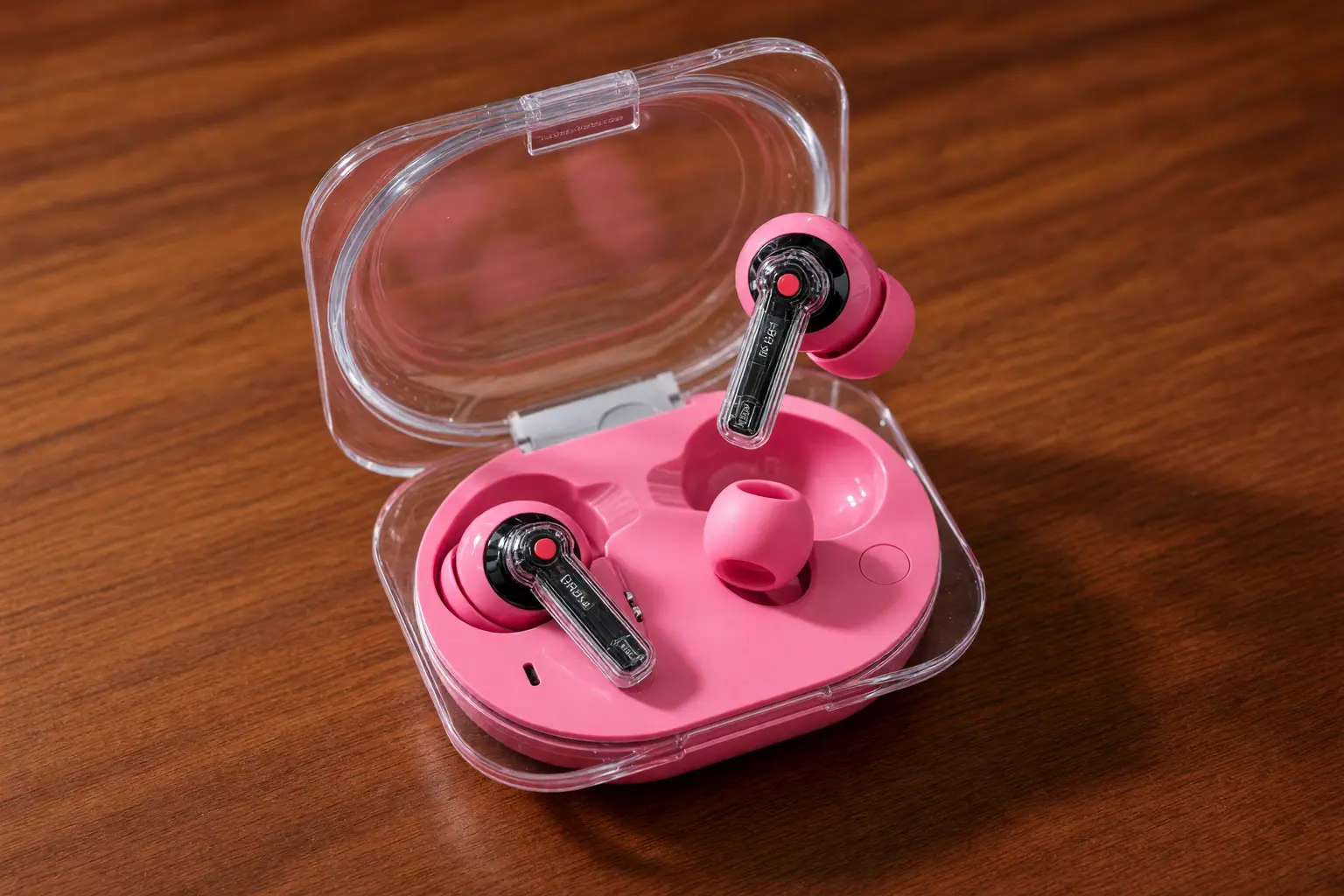
Nothing’s Ear (3a) earbuds are $79 this week, $20 below the $99 list they launched at on July 7. Amazon and Nothing’s own US store both show that price on all four colors, the first cut tracked since release.
Deal posts treat that sticker as the story. The more durable change is that Bluetooth 6.0, 45 dB noise canceling, and 32MB of onboard recording already live on a pair you can buy for less than $80, while Nothing’s flagship Ear (3) still ships an older radio and no recorder.
The Labor Day Sticker Is $20, Not a New Product
Nothing announced Ear (3a) on June 30 and put it on sale on July 7 at $99 in black, white, yellow, and a new pink. Trackers logged the first notable US discount on August 31, 55 days later, as Amazon’s Labor Day sale opened. Labor Day itself is Monday, September 7, so the window is still open as of September 2.
Nothing’s US store now lists the Ear (3a) at $79, with $99 struck through. That is a 20% cut on the launch list, and it matches the Amazon price in every color. Early Amazon ratings sit at 4.4 stars from 97 reviews, a small sample for a product that has been on sale for less than two months.
WHAT WE KNOW
- The price: $79, down $20 from the $99 launch list, at Amazon and on Nothing’s US store.
- The window: First tracked cut on August 31, with US Labor Day still ahead on September 7.
- The colors: Black, white, yellow, and pink are all included at the same figure.
- The launch: Announced June 30, sold from July 7 with Phone (4b).
WHAT IS UNCONFIRMED
- An end date: Neither storefront publishes a firm expiry for the $79 figure.
- A return to $99: There is no official word on whether list price comes back after the holiday.
A first 20% cut eight weeks after launch is ordinary retail behavior. What is not ordinary is which SKU Nothing chose to load with the newer radio and the only onboard recorder in the lineup.
Bluetooth 6.0 Landed on the Cheap Pair First
Ear (3a) connects over Bluetooth 6.0 and supports SBC, AAC, and LDAC. The 2024 Ear (a) used Bluetooth 5.3. The flagship Ear (3), launched in September 2025 at $179, still uses Bluetooth 5.4. Apple’s AirPods Pro 3, at $249, remain on Bluetooth 5.3. Samsung’s Galaxy Buds 4 Pro, also $249, already moved to Bluetooth 6.1, so the 3a is not first in the aisle. It is first inside Nothing’s own family.
The Bluetooth SIG’s Bluetooth 6.0 Channel Sounding overview is mostly about secure fine ranging, a way to measure distance between two devices with far more accuracy than old signal-strength guesses. Other 6.0 pieces trim latency in isochronous audio framing and let devices negotiate the 150 microsecond gap that used to sit between packets. Those are real radio changes. They are not, on this product, a new codec or a new sound profile.
Ear (3a) still does not ship LE Audio, LC3, or Auracast. High-res listening still depends on LDAC on a compatible Android phone, and iPhone users stay on AAC. Game Mode is rated under 120 ms only with a Nothing Phone. Dual-device connect is on the spec sheet, though handoff between a phone and a laptop can take a few seconds, and a PC still brings its own Bluetooth quirks, including the recent Windows 11 Bluetooth mute and pairing fixes.
The 6.0 badge is still worth having on a $79 cart, because it is the version most 2026 phones will keep adding features to. It is not why these buds sound the way they do.
Pinch Both Stems and the Buds Keep a Clip
The feature Nothing actually added, and the one last-gen Ear (a) and flagship Ear (3) both lack, is onboard capture. Each pair includes 32MB of flash. That pool stores short media grabs and longer call recordings, then syncs them to the Nothing X app over Bluetooth.
Audio Snapshot is like a Screenshot, but for Sound.
Nothing, Ear (3a) product support
Nothing’s Audio Snapshot and call recording notes spell out the gesture and the limits. Press both earbuds at once while audio is playing. Snapshot can keep a clip of about one minute and can include sound from before the pinch, depending on the capture mode you set in the app. It stops on its own. No tone plays, so a lecture or a podcast does not get a beep in the middle.
HOW THE RECORDER IS SET UP
- The gesture: Snapshot and call recording share a simultaneous press on both stems.
- The buffer: A Snapshot can store audio from before, after, or only after the pinch, set in Nothing X.
- Call capture: On an active call, including WhatsApp, Zoom, or Google Meet, the same pinch starts and stops a recording.
- The notice: A tone may play to the other party when call recording starts, and the feature is limited to selected regions.
- Two phones: If two devices are linked, the buds record from whichever one is currently outputting sound.
Call recordings can run much longer than a Snapshot. Testers have stored about two hours of speech on that 32MB pool before syncing to the phone. The app can transcribe locally with a downloaded language pack, or through Nothing X Pro in the cloud, which needs a network connection. Nothing bundled three months of Pro transcriptions at launch.
Owners who have lived with the pair for a week tend to talk about this recorder, not about the radio version. A pinch that grabs a meeting or a voicemail without unlocking a phone is the part of the product that does not exist on the $179 Ear (3).
How Ear (3a) Specs Compare at $79
Nothing kept the transparent stem and the pinch controls, then changed the bits that were cheap to change. The driver grew from 11 mm on Ear (a) to 12 mm, and the company claims up to 5 dB more bass. Frequency response is listed at 20 Hz to 40 kHz, which is the window LDAC needs. Both buds and the new rounder case are IP54, so the case finally matches the splash rating the buds already had. The old Ear (a) case was only IPX2.
Nothing rates battery life at 42 hours with the case when noise canceling is off, and 10 hours in the buds alone. Turn ANC on and those figures fall to 25 hours with the case and 6 hours in the buds. Each bud holds a 55 mAh cell. The case holds 500 mAh. A five-minute top-up is rated at about an hour of listening. There is no wireless charging, which is the obvious cut against Ear (3).
NOTHING’S CURRENT EARBUD LADDER
| Model | US price | Bluetooth | Driver | Case plus buds, ANC off | Onboard recording |
|---|---|---|---|---|---|
| Ear (a) | $59 now, $99 at 2024 launch | 5.3 | 11 mm | 42.5 hours | No |
| Ear (3a) | $79 now, $99 at July launch | 6.0 | 12 mm | 42 hours | 32MB Snapshot and calls |
| Ear (3) | $179 at launch | 5.4 | 12 mm | 38 hours | No |
| AirPods Pro 3 | $249 | 5.3 | Apple driver | 24 hours with ANC on | No |
Wideband ANC is still capped at 45 dB, the same peak Nothing printed on Ear (a) and Ear (3). The company says the 3a improves reduction by 17.1% over Ear (a), with more work between 400 Hz and 2,000 Hz, where street noise and voices sit. Independent lab averages have put overall noise cut near 81%, which is enough for a bus and not in the class of $249 flagships. Six microphones handle calls. There is an 8-band EQ, a fit test, an extra XS ear tip, static spatial audio, Google Fast Pair, and Transparency mode.
Stock Tuning Pushes Bass Until You Touch the EQ
The 12 mm driver can play cleanly. The default mix does not. Out of the box the low end is thick and warm, which some listeners want and others will call muddy. The hardware is not the limit. Dropping the lows and lifting mids and highs in Nothing X, or in a third-party EQ on Android, pulls vocals and cymbals forward and stops the bass from smearing. That 8-band EQ is the difference between a $79 party mix and a pair you can wear at a desk.
Noise canceling follows the same pattern. With music playing, outside noise mostly drops away. In quiet gaps, during a film or on a pause between tracks, voices still leak in. Transparency is usable for traffic and conversation, with the usual in-ear catch that your own voice can sound booming. Nothing offers low, medium, high, and adaptive ANC. None of those modes turns this into an AirPods Pro 3 or Galaxy Buds 4 Pro substitute, and testers who ran them in New York street noise have been clear that the seal does more work than the processors.
Fit is a strength. The umbrella-style tips and the new XS size help smaller ears, and the buds stay put for a run if the seal is right. Pinch maps are unusually granular in the app, with single, double, triple, hold, and dual-stem options. The pink and yellow shells look loud in a clear “party pill” case. Black and white look closer to the older Nothing kit. Comfort over a full day has not been the complaint. The complaint, when there is one, is that bass-first mix you have to undo yourself.
$59 Ear (a) Versus a $179 Flagship
The in-house math is now awkward, which is the point of an A-series cut. Ear (a), the 2024 budget pair, is $59 at Amazon after launching at $99. You give up the 12 mm driver, Bluetooth 6.0, the IP54 case, the extra XS tip, and every recording feature, and you keep 45 dB ANC, LDAC, dual connect, and a 42.5 hour total. If you only want noise canceling and a long case, the older pair is $20 cheaper than this sale.
Ear (3) is the other pole. It launched at $179 on September 25, 2025, with recycled aluminium in the stem, a Super Mic in the case for voice pickup, wireless charging, a personal sound profile, and Bluetooth 5.4. Nothing rates it at 10 hours in the buds with ANC off and 38 hours with the case, which is shorter than the 3a’s 42 hours. It has no Audio Snapshot and no onboard flash. Paying more than double the 3a’s sale price buys call hardware and a wireless pad, not a newer radio and not a recorder.
WHO THIS $79 CUT SQUEEZES
- Ear (a) at $59: Still the cheaper commute pair if you do not care about recording or Bluetooth 6.0.
- Ear (3) at $179: Harder to justify unless you want Super Mic and wireless charging.
- AirPods Pro 3 at $249: Still the iPhone ANC and hearing-feature product; it is about triple the 3a sale price and still on Bluetooth 5.3.
- Galaxy Buds 4 Pro at $249: Already on Bluetooth 6.1, with no multipoint, and aimed at Galaxy phones.
The $99-to-$149 band is where this sale does the most damage. If $79 holds after Labor Day, Nothing has trained shoppers to wait eight weeks and skip the flagship. If $79 is a holiday blip, the 3a still leaves the $179 pair looking short of features for the money.
Call Recording Works Only Where the Law Allows
Nothing’s own support text is blunt about the recorder. Call capture is meant for personal note-taking, learning, and review. Users must follow local law, tell the other people on the line, and stay inside the countries where the feature is even switched on. Do not grab copyrighted shows or private calls and ship them around. The Snapshot tool has the same copyright warning, which is why the clip is capped near one minute.
That legal fence is part of why the feature feels odd on a budget pair. A $79 bud that can store two hours of a Zoom call is useful for students and reporters, and it is a problem if someone treats the pinch as invisible. The in-call tone is the only built-in brake.
Bluetooth 6.0 will not get you out of that. Channel Sounding does not yet find these buds on a map. LE Audio is absent, so the version number on the box is ahead of the audio stack inside. What you are buying at $79 is a 12 mm driver, fine-not-flagship ANC, a clear case in four colors, and a recorder Nothing did not put on the expensive model. The Labor Day sticker just moved that bundle twenty dollars closer to the floor, on the same week the company is still asking $179 for last year’s flagship.

The BMW iX4 Undercuts Mercedes and Trails Its Twin

Scotland’s Ten Big Supermarkets Already Hold the Weekly Shop

Scotland EMS Faces a State Probe After a Wagram Death

Meritz Signs Ripple to Race Korea’s 2027 Token Rules

Pocognoli’s First Camp Leaves Scotland Third and Exposed

Volkswagen Sells the Osnabruck Plant to Clear a Board Fight

Tata Motors’ Iveco Tender Opens as Holders Still Decide

Saksham Gaur Finds He Is His Own Company’s Client

Onimusha Way of the Sword Preload Hits a Windows 11 Wall

Simple Wave Chases Range as Ather Konarc Cuts Price
-
 AUTO1 month ago
Volkswagen Sells the Osnabruck Plant to Clear a Board Fight
-
 AUTO1 month ago
Tata Motors’ Iveco Tender Opens as Holders Still Decide
-
 BUSINESS1 month ago
Saksham Gaur Finds He Is His Own Company’s Client
-
 GAMING1 month ago
Onimusha Way of the Sword Preload Hits a Windows 11 Wall
-
 AUTO1 month ago
Simple Wave Chases Range as Ather Konarc Cuts Price
-

 BUSINESS1 month ago
Hyderabad 22-Carat Gold Jumps After a False Bargain
-

 BUSINESS1 month ago
UltraTech Ultravolt Launch Splits Friday Stocks to Watch
-

 NEWS1 month ago
The Frame Pro’s $1,200 Labor Day Cut Needs a Soundbar