
BUSINESS
A £2.5m Algae Plant Is Grangemouth’s First New Factory
A £2.5 million algae plant is the first new factory on Grangemouth’s closed refinery, while a £200 million wealth-fund pledge remains unspent.

The Scottish National Investment Bank has put £2.5 million ($3.3 million) into MiAlgae’s Grangemouth plant, which turns whisky co-product into fish-free omega-3. The 6 October deal is meant to help the 2016 University of Edinburgh spinout scale output on the plot where Petroineos stopped refining crude in April 2025.
MiAlgae forecasts a rise from 60 staff to about 156 by the end of 2028. The refinery’s closure cost 430 jobs.
MiAlgae Is Building on the Old Refinery
The Bank said it had secured a £2.5 million investment from the Bank to support the company’s new commercial-scale plant in Grangemouth. MiAlgae makes an omega-3 powder from whisky distilling leftovers and sells it into pet nutrition and aquaculture feed, the two trades that still buy most marine fats.
Founder and chief executive Douglas Martin set the firm up in 2016 while studying synthetic biology and biotechnology at Edinburgh, which has stayed a backer. Board chair Lisa Bright joined him for the Bank photocall with Jane Reoch, the Bank’s executive director of innovation, investment director Ailsa Young, and chief investment officer Mark Munro.
The company was shortlisted for the Earthshot Prize in 2024 in the Revive our Oceans category. Reoch called it one of Scotland’s most promising biotech firms and said the cheque fitted the Bank’s three missions of innovation, net zero, and place.
This investment brings us closer to achieving our mission of protecting our oceans while meeting growing global demand for sustainable nutrition. By transforming whisky industry by-products into high-value Omega-3 ingredients, we are reducing pressure on marine ecosystems, preventing waste and creating a truly circular solution.
Douglas Martin, founder and CEO, Scottish National Investment Bank announcement
Martin also said the plant was a milestone that would let MiAlgae scale its impact and play a part in Grangemouth’s shift toward a lower-carbon industrial hub. The Bank’s note still talks about supporting a new plant, not about a finished 10-times ramp already in the bag.
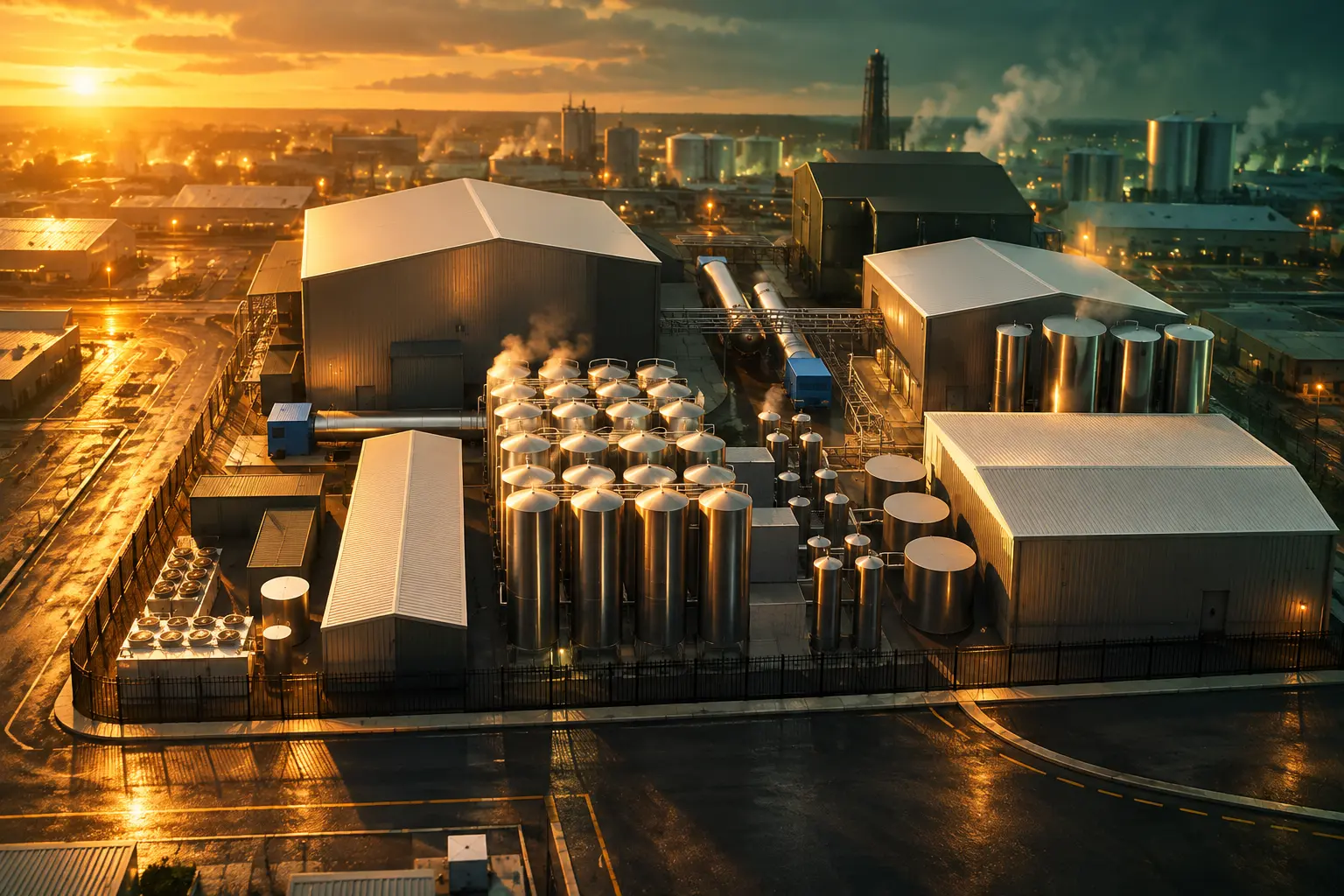
Whisky Leftovers Feed the Tanks
The process is closer to brewing than to a trawler. Nutrient-rich liquid from distilleries goes into steel fermentation vessels. Microalgae feed on it and pack on DHA, the omega-3 usually taken from wild fish. The biomass is dried or kept wet, tested, and packed for dry food, wet food, or supplements. Cleaned water is sent back to the watercourse.
UK energy minister Michael Shanks was at the site on 11 December 2025 as the company broke ground. The UK government put up to £1.5 million grant funding into that first allocation from the Grangemouth Investment Taskforce. MiAlgae described a joint UK and Scottish package of up to £3 million around the same pour, a figure that already includes the UK grant rather than sitting on top of it.
On its own groundbreaking note, the company said the large plant would go live in early Q2 2026 and would lift pet-nutrition Omega 3 output more than tenfold. It also said the expansion would recycle 33.1 million litres of whisky by-products through the circular process. The UK write-up estimated the method saves 30 tonnes of fish for every tonne of algae produced. Eligible Grangemouth workers were promised priority in hiring, including a guaranteed interview.
HOW THE ALGAE PROCESS RUNS
- Feedstock: Distilleries supply nutrient-rich co-product that would otherwise be a disposal cost.
- Fermentation: Algae cells grow in steel tanks on that liquid, the same way a brewery grows yeast.
- Harvest: The biomass is processed into a DHA-rich powder or wet ingredient.
- Formats: Customers take it dry, wet, or as a supplement for pets and farmed fish.
- Water: The platform cleans the leftover liquid and returns it to the watercourse.
Before Grangemouth, production sat at Balfron near Stirling, with the lab at Heriot-Watt University in Edinburgh. Microbiology lead Julian Pietrzyk told Zero Waste Scotland that moving from a demonstrator to full manufacturing was exciting and terrifying at the same time, and that Grangemouth was designed as a blueprint to copy near other distilleries, not as a one-off hall.
Fish Oil Has Rarely Been This Tight
Algal DHA has always had a science story. It now has a price story. IFFO, the marine ingredients body, said in early October that 2026 fish oil supply could fall to 1.15 million tonnes, the lowest since 2016, when the total was about 1.13 million tonnes. Fishmeal could come in below 4.6 million tonnes, against 4.53 million in 2016. Enrico Bachis, IFFO’s market research director, tied the year to weak Peruvian catch and said late-season fishing could still nudge the totals.
In the countries covered by IFFO member data, which IFFO puts at about half of world fish oil output, oil production was down 26 percent through August against 2025, and fishmeal was down 45 percent. Peru, in an average year, supplies about 20 percent of global meal and oil. Coastal warming under El Niño has kept the north-central anchovy season shut or thin, which is why buyers who used to treat fish oil as a seasonal commodity are now shopping for substitutes.
THE FISH OIL SQUEEZE
- Oil price: FAO’s May 2026 quarterly analysis put feed-grade fish oil at $4,100 a tonne FOB Peru, 64 percent above about $2,500 a year earlier.
- Meal price: The same note put super prime fishmeal at $2,500 a tonne FOB Peru, against $1,400 a year earlier.
- Year forecast: IFFO sees world fish oil at 1.15 million tonnes in 2026, the weakest since 2016.
- 2027 risk: Ross Norris of Aker BioMarine has said modelling points to omega-3 demand outstripping crude fish oil as early as 2027.
That squeeze is why a Scottish fermenter can find offtake even before it matches the volume of a reduction plant in Peru. Farmed salmon still need DHA. Pet-food brands will pay for a traceable vegan claim. Growing algae on refined sugar never beat cheap anchovy oil; growing it on distillery leftovers changes the carbon bill, which is the part of the design people who actually culture algae keep pointing at.
The Earthshot Prize, which shortlisted MiAlgae in 2024, put the catch limit in one line on its own account.
"You can't physically catch any more out of the seas."
Farmed salmon rely on wild fish for Omega-3. @MiAlgae, a 2024 Earthshot Prize Finalist, grows Omega-3 algae on Scotch whisky waste – a drop-in fish oil replacement.
Full story via @euronewsgreen: https://t.co/Pl4oJbo5a2 pic.twitter.com/mnu9np07Uk
— The Earthshot Prize (@EarthshotPrize) August 7, 2026
430 Refinery Jobs Left With the Crude
Petroineos confirmed in late April 2025 that Grangemouth was no longer processing crude. The plant had been Scotland’s last oil refinery. Falkirk East MSP Michelle Thomson told Holyrood on 30 April 2025 that 430 workers had been made redundant. Petroineos kept 65 people on as the site became an import terminal for finished fuels, after putting £50 million into that switch, according to Iain Hardie, its regional head of legal and external affairs.
UK and Scottish ministers had already wrapped the shutdown in Project Willow, a study of low-carbon uses for the cluster, and in a Grangemouth Just Transition Fund. Shanks called MiAlgae the first new project at the site and talked about hundreds of new jobs. The grant papers were more specific, and they do not match the Bank’s 2028 headcount, because they measure different things.
FROM REFINERY SHUTDOWN TO THE SNIB CHEQUE
- September 2024: Petroineos says refining will end in 2025 and the site will become an import terminal.
- February 2025: The UK government pledges £200 million from the National Wealth Fund for Grangemouth’s next industries.
- April 2025: Crude processing stops; Holyrood is told 430 jobs have gone, with 65 kept on the terminal.
- 11 December 2025: MiAlgae breaks ground. UK grant of up to £1.5 million is billed as the Taskforce’s first allocation, with 130 direct jobs over five years and 180 more across Scotland.
- 6 October 2026: The Scottish National Investment Bank adds £2.5 million. MiAlgae forecasts 60 staff growing to about 156 by the end of 2028.
The 310-job figure on the December grant is 130 roles at Grangemouth over five years plus 180 elsewhere, and the papers also claimed an extra £53 million in the Scottish economy. The Bank’s October number is a company forecast for its own payroll by the end of 2028. Both can be true. Neither comes close to 430 lost refinery posts, and a fermentation hall does not replace a refinery’s wages, local rates, or diesel output.
The £200 Million Still Waiting
The public money around the site is large on paper and lumpy in practice. The Chancellor’s budget set aside £14.5 million to help turn Grangemouth into a low-carbon tech hub. Holyrood created a £25 million Grangemouth Just Transition Fund to bring forward investable schemes. Scottish ministers have also pointed to the Falkirk and Grangemouth Growth Deal. Those pots are for the cluster, not a single algae line.
THE PUBLIC MONEY AROUND GRANGEMOUTH
| Pot | Amount | What it is for |
|---|---|---|
| Scottish National Investment Bank | £2.5 million | MiAlgae plant, announced 6 October 2026 |
| UK grant to MiAlgae | up to £1.5 million | First Taskforce allocation, 11 December 2025 |
| UK and Scottish package (company figure) | up to £3 million | Joint backing that includes the UK grant |
| UK budget pot for low-carbon projects | £14.5 million | Cluster-wide, not this plant alone |
| Grangemouth Just Transition Fund | £25 million | Cluster-wide, set up in 2025 |
| National Wealth Fund pledge | £200 million | None committed or spent as of a September 2026 DESNZ FOI |
The largest line is still the inert one. A Department for Energy Security and Net Zero freedom of information reply in September 2026 said no funding from the National Wealth Fund had been committed or spent on projects at Grangemouth. UK spokespeople keep saying the fund stands ready to invest alongside the £14.5 million grant pot. That is how the £200 million National Wealth Fund pledge has sat since February 2025: advertised as the bridge off oil, unused as a cash instrument.
MiAlgae is therefore doing two jobs at once in the official story. It is a biotech scale-up with a real feedstock and a real offtake. It is also the exhibit that regeneration has started, because ministers needed a first tenant after the crude units went cold. Those jobs are not the same size.
Pet Food Buys the First Tonnes
Pietrzyk has been blunt about where the orders are. Aquaculture is still the volume market for omega-3, because salmon farms cannot drop DHA without hurting fish performance. Pet food, he said, moves faster and grabs new ingredients. For now the company is leaning into that trade, while keeping fish feed as the long game.
Customers, he argued, buy a Scottish story that ties whisky to salmon, a carbon story, local manufacture, and a fat that does not swing with the weather the way reduction oil does. Traceability is easier when the tanks sit in the Central Belt than when the oil is blended from a Peruvian season that may not happen. Stable pricing is the quiet sales pitch in a year when FOB Peru quotes have jumped by more than half.
For every litre of whisky produced in Scotland, around 15 litres of co-product are created.
Julian Pietrzyk, microbiology expert, Zero Waste Scotland case study
That ratio, which Pietrzyk set out in the same around 15 litres of co-product briefing, is the industrial fact under the ocean slogans. Distillers already pay to handle pot ale and related streams. MiAlgae wants to be a buyer of a stream they treat as a problem. Development scientist Jake Wiseman said a large share of lab time goes to smoothing inconsistent co-products so the finished DHA stays the same when the malt recipe does not.
Distilleries Have Surplus Co-Product to Move
Scotland is not short of feedstock. Pietrzyk said the team deals distillery by distillery because each site handles leftovers differently, and that there is plenty to go around. Jess Atkinson, an R&D scientist, has said MiAlgae is still the only firm making omega-3 from algae on underused feedstocks, though others are looking. Pietrzyk welcomed that. The constraint he named was capital intensity and the pace of hiring, not a lack of draff.
Jan Robertson, director of Grangemouth transition at Scottish Enterprise, said the agency had worked with the company since 2016 and called Grangemouth the right place for a Scottish scale-up. Location is not romance. The Central Belt sits between maltings and the pet-food and feed plants that would otherwise import fish oil. The company says the site is built in modules so more halls can be dropped next to other distilleries if the first one holds.
That is the bet the Bank is underwriting with £2.5 million. It is a working circular process, with a named offtake path and a staff plan that more than doubles a 60-person firm by the end of 2028. It is also the first new factory on a refinery plot that shed 430 jobs, funded in slices while the £200 million wealth-fund line remains a pledge. Distillers still make 15 litres of co-product for every litre of whisky. The tanks will take some of it. They will not take all of it, and they will not put a refinery shift back on the clock.

Edinburgh Opens a 2027 Tour Built for Time Trials

Korda Maps Auður From Meðalland to Irvine Bay

Apple Music Films Its New Logo in Mineral Oil

Oppo Prices the Pad Mini Above India’s iPad Mini

Austen Soaks Scotland Before Boelo Brings Weekend Gales

Volkswagen Sells the Osnabruck Plant to Clear a Board Fight

Apple’s Foldable iPhone Hinges on Samsung Display Supply

Saksham Gaur Finds He Is His Own Company’s Client

Tata Motors’ Iveco Tender Opens as Holders Still Decide

Onimusha Way of the Sword Preload Hits a Windows 11 Wall
-
 AUTO2 months ago
Volkswagen Sells the Osnabruck Plant to Clear a Board Fight
-
 NEWS2 months ago
Apple’s Foldable iPhone Hinges on Samsung Display Supply
-
 BUSINESS2 months ago
Saksham Gaur Finds He Is His Own Company’s Client
-
 AUTO2 months ago
Tata Motors’ Iveco Tender Opens as Holders Still Decide
-
 GAMING2 months ago
Onimusha Way of the Sword Preload Hits a Windows 11 Wall
-

 ENTERTAINMENT3 years ago
What is SD on Amazon Prime? – All You Need to Know
-

 BUSINESS2 months ago
Hyderabad 22-Carat Gold Jumps After a False Bargain
-

 NEWS2 months ago
iQOO 16 Locks 8,400 mAh While 100W Charging Holds