
BUSINESS
Kashkari Warns Inflation Has Spread Beyond the Iran Oil Shock
Neel Kashkari says U.S. inflation has moved into services after the Iran oil shock, locking the Fed into hikes even if crude later falls.

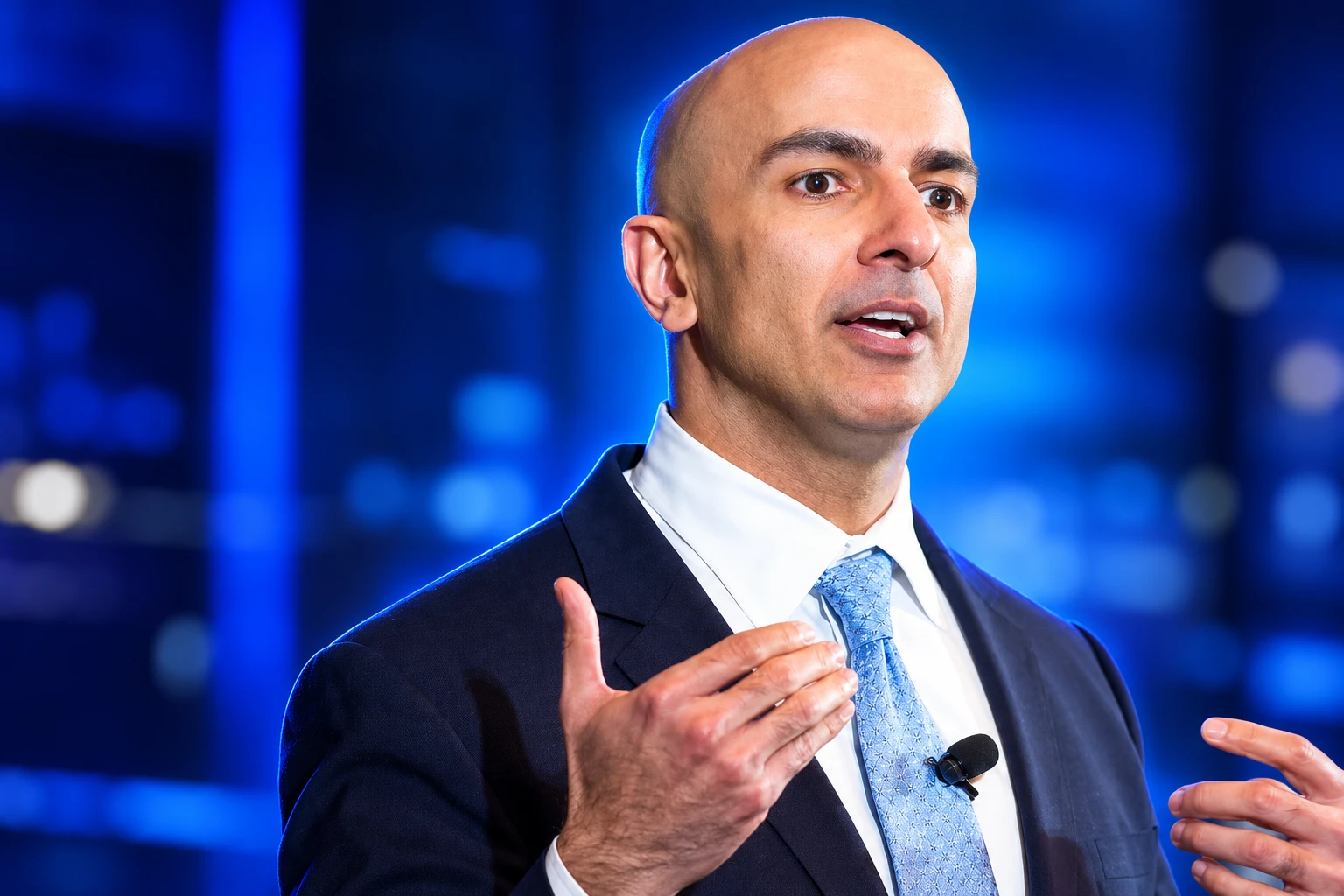
Minneapolis Fed President Neel Kashkari said on September 20 that U.S. inflation has moved into services and other prices, not only oil disrupted by the Iran war. He backed the Federal Reserve’s first rate increase since 2023, a move that took the funds rate to a 3.75% to 4% range, and said borrowing costs cannot reopen the Strait of Hormuz.
The comment lands four days after a 12-0 vote. It tells households and markets the same thing in plainer language: cheap oil, if it returns, would not by itself put cuts back on the table.
Kashkari Puts Services, Not Crude, on the Table
Kashkari spoke in a Sunday television interview, after sitting with the rest of the Federal Open Market Committee on September 15 and 16. He supported the unanimous quarter-point rate increase. In July he had been one of three officials who wanted a hike when the committee held at 3.50% to 3.75%.
He put core inflation, which strips out food and energy, at about 3.4% and said that was still too high. That figure sits near the Fed’s preferred core PCE path. July’s official core PCE rose 3.3%. Chair Kevin Warsh, on September 16, put August core PCE at about 3.2% and core CPI at 2.4%.
The inflation that the American people are feeling every day is much beyond just oil prices. It’s in all aspects of the economy. It’s in the services sector, for example, widely. So we have tools to bring that back down.
Neel Kashkari, president, Federal Reserve Bank of Minneapolis, on Sunday Morning Futures
He was as blunt on the war as on the data. Interest rates, he said, will not open the Strait of Hormuz or pull oil prices down. Tankers have been attacked and sunk there, and Saudi Arabia shut its East-West pipeline after aerial strikes. The Fed’s job, in his telling, is the inflation that remains after that shock is stripped out.
“So even if we strip out energy, which is really volatile, and strip out food, they matter a lot, but in terms of where the economy is going, inflation is still too high,” he said. He called the U.S. economy “very resilient,” even with tariffs and the wars in Ukraine and Iran, and said productivity is showing some signs of improving.
“My hope is, as some of those conflicts go to the background, that the growth can really take over and hopefully bring inflation down,” he said. “Hopefully, disinflation can take over, which will make the Fed’s job a lot easier.”
The August Split Between Energy and Core
The consumer price report the committee had in hand does not look like a uniform surge. The Bureau of Labor Statistics, on September 11, said the CPI-U rose 3.4% over the 12 months ending in August, the same annual rate as in July. Energy did the heavy lifting.
AUGUST 2026 CONSUMER PRICES
| Category | 12-month change | August monthly change |
|---|---|---|
| All items | 3.4% | 0.4% |
| Energy | 16.3% | 2.1% |
| Gasoline (all types) | 27.4% | 3.9% |
| Fuel oil | 52.0% | 10.1% |
| Food | 2.7% | 0.1% |
| All items less food and energy | 2.4% | 0.3% |
| Services less energy services | 3.0% | 0.3% |
| Shelter | 3.0% | 0.3% |
| Airline fares | 23.4% | 2.7% |
Gasoline rose 3.9% in August and, the bureau said, accounted for over one third of the monthly all-items increase. Over the year, gasoline prices jumped 27.4 percent. Fuel oil was up 52.0%. The energy index as a whole rose 16.3%.
Strip food and energy and the picture cools. Core CPI rose 2.4% over the year, down from 2.5% in July, and 0.3% on the month. Shelter, the largest services block, was up 3.0%. Services less energy services also rose 3.0%. Food was 2.7%, with groceries at 2.2% and meals out at 3.4%.
Airline fares sit in the middle of the argument. They are in core, not in the energy index, and they were up 23.4% over the year and 2.7% in August. That is the war showing up in tickets rather than at the pump, and it is the kind of bleed Kashkari is pointing at when he talks about services.
The 2.4% core CPI print is the number markets used to claim the Fed could look through oil. Kashkari is not looking through it. He is reading the hotter PCE gauge, the 3.0% services line, and a five-year miss on the 2% target, then treating those as the part of inflation a rate rise can still reach.
Warsh Already Closed the Hormuz Loophole
Kashkari’s Sunday answers tracked Chair Kevin Warsh’s press conference almost line for line. After the vote, a reporter noted that a quarter-point move does not reopen the strait. Warsh did not argue otherwise.
We cannot affect any individual price, whether it be oil prices, whether it be food stuffs at the grocery store. But what we can do, and will do, is ensure that any change in relative prices don’t broaden out. Don’t have second and third order effects in the economy.
Kevin Warsh, Chair, Federal Reserve, September 16 press conference
That is the policy the Sunday interview was selling. The Fed is not trying to set the price of Brent. It is trying to stop relative prices from broadening into wages, rents, and the rest of the basket. Once officials describe the problem that way, a ceasefire that knocks crude lower does not, on its own, reverse the hike.
Warsh said inflation “is too high and has been for too long,” running above target for more than five years. He estimated August total PCE inflation at about 3.6%, with core PCE about 3.2% and core CPI 2.4%. “Too many categories are still posting increases above 3 percent, on both a 6- and 12-month basis,” he said. August’s official PCE figures are due on September 30.
He also said he would be “hard-pressed to describe broad financial conditions as restrictive,” a view he said the committee shared, and that the hike “removed a dose of accommodation.” Asked what changed after the July hold, he listed three things: the economy had strengthened, summer inflation trends were not passing his test, and the geopolitical “hot spots” looked worse. He declined to discuss calls from the White House to cut rates.
The statement itself was short. Economic activity is expanding at a solid pace, it said, domestic spending has been resilient, productivity growth is strong, and inflation remains elevated. “Today’s policy action will support a timelier return to the Committee’s 2 percent goal. The Committee will deliver price stability.”
From a May Dissent to a Unanimous Hike
Kashkari did not arrive at this view on Sunday. In his May essay on the oil shock, written after the April meeting, he supported holding the funds rate but objected to statement language that markets read as a promise of more cuts. He wanted the next move described as a cut or a hike, depending on the data.
Before the war, he wrote, he had been fairly confident core inflation was headed back to 2%. Tariffs had lifted goods prices, housing services looked set to cool as new leases rolled in, and wage growth was slowing. His December 2025 and March 2026 projections still had one more 25 basis point cut in 2026. The last cut had been in December 2025. The Iran war, which began in late February, wrecked that path.
He compared the oil move with the shock after Russia’s invasion of Ukraine and said the 2026 rise was already as large, or larger by some measures, though it started from a lower price. If the strait reopened quickly, oil futures at the time pointed to about $88 by year-end, and Blue Chip forecasters still saw core PCE at 3% for the year, a third straight year near that rate. In that “benign” case he favored holding, then easing only slowly. If the strait stayed shut and infrastructure stayed damaged, he wrote, “federal funds rate increases, potentially a series of them, could be warranted, even at the risk of further weakness to the labor market.”
KASHKARI’S ROAD TO THE SEPTEMBER HIKE
- Late February 2026: The Iran war begins and oil shipping through the Strait of Hormuz is disrupted.
- May 1, 2026: Kashkari publishes “Why I Dissented,” warning that even a fast reopening could leave core PCE near 3% and that a long closure could require a series of hikes.
- July 2026: The committee holds at 3.50% to 3.75%. Kashkari, Cleveland Fed President Beth Hammack, and Dallas Fed President Lorie Logan dissent in favor of a hike.
- September 16, 2026: The committee raises rates 25 basis points to 3.75% to 4% on a 12-0 vote, the first increase since 2023.
- September 20, 2026: Kashkari says inflation is in services “widely” and that rates cannot reopen the strait.
In May he also relayed a conversation with the chief executive of a global firm based in Minnesota. Even if the strait reopened that day, the company had estimated, supply chains would take about six months to return to something like normal. That lag is why he treats the oil shock as more than a one-month spike in gasoline.
What a Quarter-Point Move Cannot Fix
Kashkari and Warsh are drawing a border around the instrument. The hike is not a convoy and it is not a repair crew. It is a demand tool aimed at the prices that would still be rising if tankers started moving tomorrow.
WHAT RATES WILL NOT DO
- The strait: Kashkari said there is nothing the Fed can do with interest rates that will open the Strait of Hormuz or bring oil prices down.
- The pipeline: A quarter point does not reverse aerial damage to Saudi Arabia’s East-West line or put sunk tankers back in service.
- The pump: Gasoline, up 27.4% over the year, will move with crude and refining, not with the funds rate this month.
- The bleed they can hit: Both men say the job is to stop a relative-price shock from spreading through services, wages, and expectations after more than five years above 2%.
That border is why the Sunday interview matters more than a recap of the vote. If the problem is oil, a reopening is the policy. If the problem is services that have already absorbed the shock, the policy stays tight even when crude falls. Traders still want the first version. Kashkari spent the interview closing it.
He was careful not to pre-commit to the next meeting. “We’re going to do our part, and then hopefully we will get some help from other sectors of the economy as things go back to normal,” he said. Help, in that sentence, is peace and a cooling in goods and energy, not a Fed put under the stock market.
Officials Now Pencil In 4.1 Percent Through Next Year
The forecasts released with the hike already assume inflation stays high through 2026 and that the funds rate does not come down next year. Warsh did not submit his own projection, as in June, but he read the medians aloud.
THE SEPTEMBER MEDIANS
- Growth: Real GDP rises 2.3% this year and 2.4% next year.
- Prices: Total PCE inflation runs at 3.7% this year and falls to 2.3% next year.
- Jobs: The unemployment rate holds near 4.1%, in line with the jobless rate Warsh cited as “around 4.1 percent.”
- The funds rate: The median appropriate rate is 4.1% at the end of this year and 4.1% next year, up from a June median of 3.8% for 2026.
Inflation risks, Warsh said, are to the upside, while labor risks are roughly balanced. A 4.1% year-end median, from a 3.75% to 4% target, is another quarter-point hike in the staff’s arithmetic. He would not say the committee had started a sequence. “I’m not in the forward guidance business,” he said.
Kashkari’s growth comments fit that forecast. He said the economy has been growing at a good clip and that the labor market has been resilient. That is the room the committee is using. A weak jobs market would have made a war-time hike harder to sell. A 4.1% jobless rate and solid spending made it unanimous.
The Economy Leaves Room for Another Hike
Households are already paying the war in the categories the bureau can see. Energy is up 16.3% over the year. Fares are up 23.4%. Shelter is still rising 3.0%. Core goods are quiet, with commodities less food and energy up only 0.7% over the year and used cars down 2.3%. The heat is in fuel, tickets, and services, which is why Kashkari can say the public is not only paying for oil and still be pointing at a 2.4% core CPI.
The next official readings are fixed. August PCE comes out on September 30. The September CPI is scheduled for October 14. Those prints will show whether the services line Kashkari flagged is still running near 3% or whether the energy spike is leaking further into core.
Until then, the committee has said what it will not wait for. It will not wait for the strait to reopen before treating broad inflation as its problem, and it will not describe a 3.75% to 4% funds rate as the end of the job while its own median sits at 4.1% through next year.
Disclaimer: This article is news reporting and analysis of Federal Reserve remarks, official inflation data, and related policy statements. It is for information only and is not investment, financial, or trading advice, and it is not a recommendation to buy, sell, or hold any security, bond, or other instrument. Readers who are making decisions about loans, deposits, or investments should consult a qualified financial adviser or licensed investment professional who can consider their own circumstances. Interest-rate settings, inflation prints, oil-market conditions, and Fed projections change, and the figures here reflect the cited official sources as of the dates of those releases.

Edinburgh Opens a 2027 Tour Built for Time Trials

Korda Maps Auður From Meðalland to Irvine Bay

Apple Music Films Its New Logo in Mineral Oil

Oppo Prices the Pad Mini Above India’s iPad Mini

Austen Soaks Scotland Before Boelo Brings Weekend Gales

Volkswagen Sells the Osnabruck Plant to Clear a Board Fight

Apple’s Foldable iPhone Hinges on Samsung Display Supply

Saksham Gaur Finds He Is His Own Company’s Client

Tata Motors’ Iveco Tender Opens as Holders Still Decide

Onimusha Way of the Sword Preload Hits a Windows 11 Wall
-
 AUTO2 months ago
Volkswagen Sells the Osnabruck Plant to Clear a Board Fight
-
 NEWS2 months ago
Apple’s Foldable iPhone Hinges on Samsung Display Supply
-
 AUTO2 months ago
Tata Motors’ Iveco Tender Opens as Holders Still Decide
-
 BUSINESS2 months ago
Saksham Gaur Finds He Is His Own Company’s Client
-
 GAMING2 months ago
Onimusha Way of the Sword Preload Hits a Windows 11 Wall
-

 ENTERTAINMENT3 years ago
What is SD on Amazon Prime? – All You Need to Know
-

 BUSINESS2 months ago
Hyderabad 22-Carat Gold Jumps After a False Bargain
-

 NEWS2 months ago
iQOO 16 Locks 8,400 mAh While 100W Charging Holds