
BUSINESS
Jimmy Tata Backs a Tata Sons Listing to Strip the Veto
Jimmy Tata backs a Tata Sons listing to force a rewrite of the Trusts chairman’s veto and asks the RBI to bar any break-up.

Jimmy N Tata has backed a stock-market listing of Tata Sons and asked the Reserve Bank of India to fix a hard deadline. The 86-year-old trustee of Sir Ratan Tata Trust, who holds a 0.81 per cent stake in the holding company, set out the case in a signed statement after speaking with Vijay Singh, a vice-chairman of Tata Trusts.
He said a listing would force a rewrite of Tata Sons’ Articles of Association and take away veto powers given to the Trusts chairman around 2013 and 2014. Two days earlier, Noel Tata had warned that a public float could put profit ahead of philanthropy.
The Oldest Trustee Breaks a Long Silence
Jimmy Naval Tata is the younger brother of the late Ratan Tata and a perpetual trustee of Sir Ratan Tata Trust, a post he has held since 1989. He lives in a modest flat in Pune, skips most Trusts meetings, and had not spoken in public on the present fight. He was in Mumbai for Ratan Tata’s funeral on October 10, 2024, and then went quiet again.
The statement followed a conversation with Singh, who has already asked the Maharashtra Charity Commissioner to look at the Sir Dorabji Tata Trust. Jimmy owns 3,262 shares in Tata Sons. Noel Tata, chairman of Tata Trusts and a nominee director on the Tata Sons board, owns 4,058 shares, or 1 per cent. Among family names on the register, Noel’s parcel is larger; Jimmy’s is next.
A listing would, for the first time, put a quoted price on those small personal holdings and on the unlisted company that sits above TCS, Tata Steel, Tata Motors and the rest of the group. That is a side effect Jimmy did not dwell on. He dwelt on secrecy, on the articles, and on who sits on the charitable trusts that vote the controlling block.
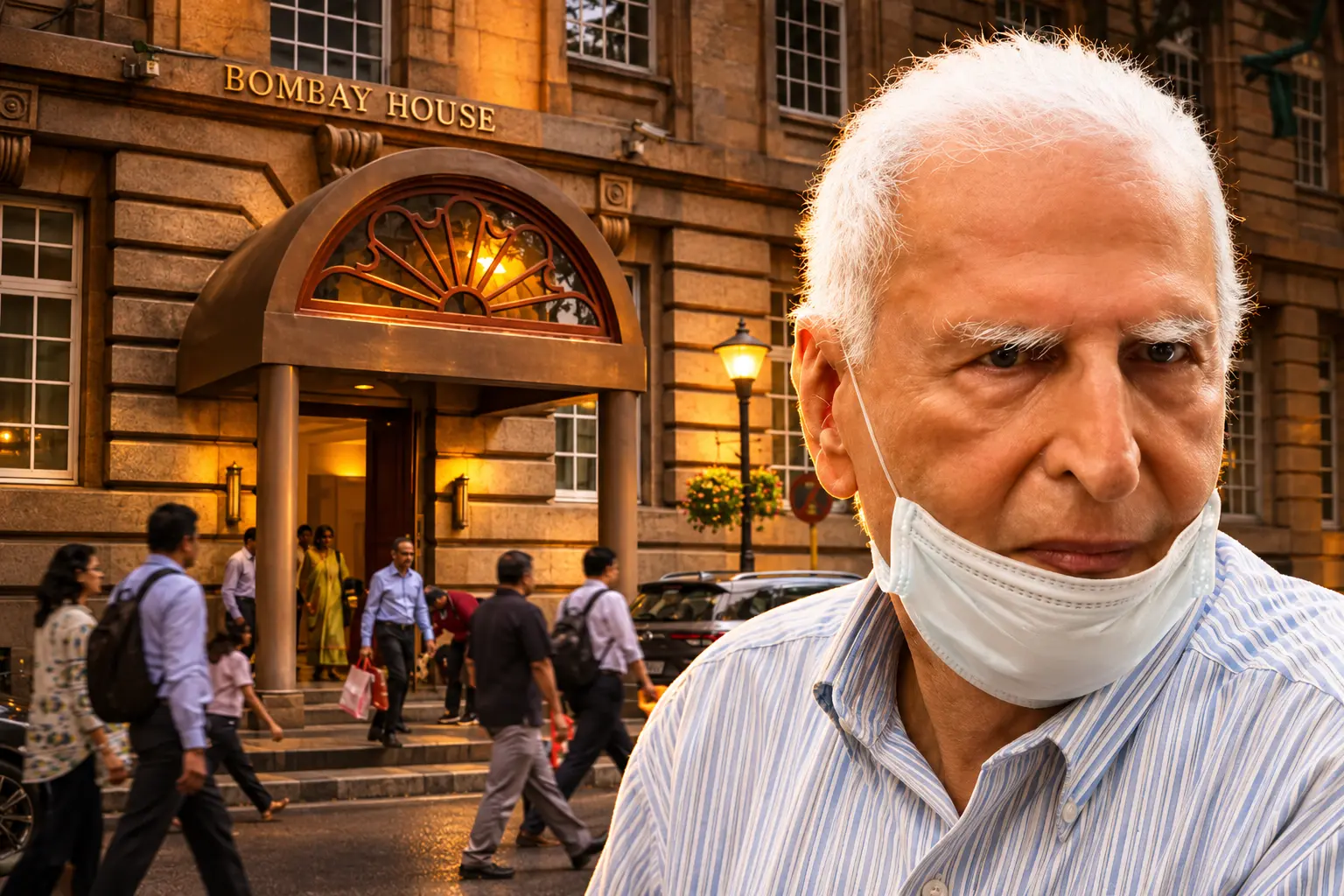
Jimmy Tata Wants the Listing to Rewrite the Articles
Tata Trusts together hold 66 per cent of Tata Sons. The two principal charities, Sir Dorabji Tata Trust and Sir Ratan Tata Trust, hold 27.98 per cent and 23.56 per cent. The Shapoorji Pallonji group holds 18.37 per cent and has long wanted a float so it can unlock that stake. Jimmy’s point was narrower than a minority exit. He said a listing would “necessitate rewriting the onerous Articles of Association” and restore the pre-1989 split between the welfare trusts and the commercial company.
WHO HOLDS TATA SONS
| Holder | Stake |
|---|---|
| Tata Trusts, combined | 66% |
| Sir Dorabji Tata Trust | 27.98% |
| Sir Ratan Tata Trust | 23.56% |
| Shapoorji Pallonji group | 18.37% |
| Noel Tata | 1% |
| Jimmy N Tata | 0.81% |
Under the older articles, he said, the trusts had no operating role in Tata Sons. Amendments around 2013 and 2014, in his telling, “fundamentally overturned this balance by granting the Tata Trust Chairman unnatural, dictatorial veto powers and the right to place directors.” Those are his words, not a court finding. The clauses themselves are not in dispute.
Article 104B lets Sir Dorabji Tata Trust and Sir Ratan Tata Trust, acting jointly, nominate one-third of the Tata Sons board so long as the trusts hold at least 40 per cent. Article 115 says a board meeting lacks quorum unless a majority of those nominees are in the room. Article 121 says matters that need a board majority also need the affirmative vote of a majority of the Trusts nominees present, and that the chairman has a casting vote if the votes are equal. The selection rules in Article 118 were recast on December 6, 2012, so that the Trusts name three of the five members of the committee that picks a Tata Sons chairman. On April 9, 2014, the affirmative-vote test was changed from all Trusts nominees to a majority of them.
Jimmy called those powers dictatorial. The 2021 Supreme Court ruling on the articles, in the Cyrus Mistry litigation, treated Article 121 as the way the Tata Sons board decides matters and upheld the Trusts’ special rights. Listing would not, by itself, delete those clauses. It would, as Jimmy argued, put Tata Sons under company-law and exchange rules that make a private veto much harder to keep in its present form, which is why he treats the float as the tool rather than the prize.
How a 4-1 Vote Still Left the Chair in Dispute
The veto ceased to be a paper clause on September 17, 2026. The six-member Tata Sons board met at Bombay House to decide whether N Chandrasekaran, 63, should get another five-year term when his present tenure ends on February 20, 2027. He had written on August 12 that he would not offer himself again. The Trusts say they accepted that the next day and told the company to form a selection committee under the articles. At the September meeting he agreed, after a board request, to reconsider.
The directors then voted. Four backed him. Noel Tata voted against. Fellow Trusts nominee Venu Srinivasan, chairman emeritus of TVS Motor, voted in favour, even after Sir Dorabji Tata Trust circulated a September 16 resolution that sought to bar him from voting on listing. Srinivasan called that circular illegal and said he would vote as a director of Tata Sons. Chandrasekaran recused himself from the chair for the item. Independent director Harish Manwani took the chair and used a casting vote. Saurabh Agrawal, the group chief financial officer, and independent director Anita Marangoly George were the other votes with the majority. The published tally was 4-1.
Tata Trusts called the resolution a legal nullity. Their reading of Article 121 is that a majority of the Trusts nominees must vote yes, and with Noel against there was no such majority. They also tabled a legal opinion from former Chief Justice of India D.Y. Chandrachud. Tata Sons has since refused Noel’s request for an audio-video recording of the in-person meeting, saying neither the law nor the articles require it. Jimmy sided with the board majority and with Chandrasekaran.
Despite Chandrasekaran receiving overwhelming support (including 4-1 in Tata Sons board and a unanimous resolution passed by Tata Trusts), Noel sought to block him arbitrarily by invoking the onerous veto provisions in the amended Articles of Association without providing any justification or accountability.
Jimmy N Tata, trustee, Sir Ratan Tata Trust, signed statement, November 16, 2026
He credited Chandrasekaran with pulling group companies out of heavy debt and with dividend payouts “exceeding 6,500 per cent” to shareholders, including Tata Sons. That figure is his, not a regulator’s. He also said JRD Tata backed operating managers such as Sumant Moolgaonkar, Darbari Seth, Xerxes Desai and Rusi Modi, and that the present Trusts leadership had failed to back its own “proven star performer.” Tata Sons, in a statement after the vote, said the board had resolved by a majority to reappoint Chandrasekaran for five years after the current term. The Trusts still say the chair is vacant as a matter of the articles.
From a May Freeze to a September RBI Letter
The board fight did not start in September. It arrived on top of a regulator’s listing order and a state freeze on one of the two trusts that must jointly appoint Tata Sons nominees. Jimmy said those facts made a listing “all the more critical.”
THE 2026 SQUEEZE ON TATA SONS
- March 28, 2024: Tata Sons applies to the Reserve Bank to surrender its core investment company registration after paying down debt.
- May 15, 2026: The Maharashtra Charity Commissioner bars Sir Ratan Tata Trust from holding meetings while an inspector looks at its board.
- June 24, 2026: The Reserve Bank sets the upper-layer NBFC test at an asset size of Rs 1 lakh crore on the latest audited standalone balance sheet.
- August 6, 2026: Tata Sons Private Limited appears as a core investment company on the Bank’s upper-layer list, with a footnote that a deregistration plea is still under review.
- September 11, 2026: The Bank refuses the surrender request and tells Tata Sons to comply with upper-layer rules, including listing.
- September 17, 2026: The Tata Sons board votes 4-1 to extend Chandrasekaran and to move toward a listing; Noel Tata dissents on both.
- November 14, 2026: Noel Tata tells a leadership summit in New Delhi that a listing could put profit ahead of philanthropy.
- November 16, 2026: Jimmy Tata, in a signed statement, asks the Bank to set a strict listing timetable and to block any break-up.
Sir Ratan Tata Trust has not been able to meet since May 15. The trust has told the charity office that the same order has “tied” its hands on other replies, and that grants of about Rs 400 crore are waiting for approval. Hearings are listed to resume on December 3, 2026. Because the two principal trusts must act jointly to appoint Tata Sons representatives, a frozen Sir Ratan Tata Trust is not a side show. It is a lock on the shareholder that holds 23.56 per cent.
Noel Tata’s Case Against a Public Float
Noel Tata, 70, has not shifted. At the New Delhi summit on November 14 he said Tata Trusts would talk to regulators and try to keep “the Tata way the way it is.” He split the Trusts’ work into two parts: direct giving through grants, hospitals and other institutions, and long-term bets made through Tata Sons on projects of national importance. A private holding company, in that telling, can nurse a weak operating firm without a public register of shareholders demanding a return each quarter.
My worry is that listing, which is what some people are proposing, will change the Tata way. And one day, if we have 30,000-40,000 shareholders, profit may take precedence over philanthropy. And I think that will fundamentally change the Tata way of working.
Noel Tata, chairman, Tata Trusts, leadership summit, New Delhi, November 14, 2026
He holds 1 per cent in his own name. The trusts he chairs hold 66 per cent for charity, and their dividends from Tata Sons pay for the hospitals, colleges and grants that Noel now wants judged by results rather than by the size of the cheque. Jimmy’s reply is that the same trusts are public charities, not family property, and that a private structure is being used to avoid scrutiny. Both men are describing the same 66 per cent block. They disagree on what that block is for.
Jimmy also pointed to Tata Consultancy Services, listed on August 25, 2004, when Ratan Tata ran the group. Tata Sons, he said, “benefited immensely” from that float. He did not argue that Tata Sons should become another TCS. He argued that the group has already lived through a public listing of its most valuable company and did not lose its character in the process, which is the fear Noel put on the record two days earlier.
Why a Break-Up Would Not Dodge the RBI Rule
Tata Sons was placed in the upper layer of non-bank lenders in September 2022, which started a three-year clock to list by September 30, 2025. The company did not list. It repaid more than Rs 21,000 crore of debt and, on March 28, 2024, asked to give up its core investment company certificate, on the view that a debt-free holding company that takes no public deposits should step off the register.
The Bank said no on September 11, 2026. Standalone assets were Rs 2.01 lakh crore as of March 31, 2026, more than twice the new upper-layer line. In June the Bank had replaced a scoring test with a hard asset size of Rs 1 lakh crore. On August 6 it named Tata Sons Private Limited on the upper-layer NBFC list for 2026-27, ninth of seventeen names, as a core investment company. A later Bank FAQ said “public funds” are not only deposits, and that money received indirectly through group firms still counts. That is the hole the debt repayment was meant to close, and did not.
THE LISTING ARITHMETIC
| Measure | Figure |
|---|---|
| Tata Sons assets, March 31, 2026 | Rs 2.01 lakh crore |
| Upper-layer asset line, June 24, 2026 | Rs 1 lakh crore |
| First placed in the upper layer | September 2022 |
| Listing deadline under the three-year rule | September 30, 2025 |
| Debt repaid before the surrender plea | More than Rs 21,000 crore |
| Surrender application | March 28, 2024 |
| Reserve Bank rejection letter | September 11, 2026 |
After the September 17 board meeting, Noel floated a restructuring so Tata Sons could stay private, by splitting it into smaller pieces that might fall below the threshold. Jimmy called any such move “deeply damaging and contrary to public and shareholder interests, undertaken solely to preserve secrecy, avoid scrutiny, and maintain unchecked personal power.” He asked the Bank to forbid a break-up and to “enforce strict timelines for listing without delay.”
Reserve Bank Governor Sanjay Malhotra, asked in New Delhi whether a reorganisation to avoid listing would be acceptable, said that as long as the firm is a core investment company in the Bank’s definition, with access to funds direct or indirect, it must stay registered, and that if it is in the upper layer it is required to list. The Governor declined to talk about one company. The rule he recited is the one now wrapped around Tata Sons.
More Than One Family Member on a Public Trust
Jimmy’s other target was the boards of the charities themselves. Trustees, he said, are custodians of public trusts that cannot be dissolved, unlike private family settlements. He named earlier trustees such as Nani Palkhivala, Gautam Sarabhai, Homi Sethna and Homi Bhabha, and said the present boards were being filled with relatives of the Trusts chairman.
WHAT JIMMY TATA ASKED THE REGULATORS TO STOP
- Family seats: He said it is “entirely inappropriate for more than one family member to serve on a given trust,” and that doing so “amounts to a back-door takeover of Tata Sons.”
- Perpetual seats: Sir Ratan Tata Trust still has three perpetual trustees, Noel Tata, Jimmy Tata and industrialist Jehangir H.C. Jehangir, against a statutory one-fourth cap on perpetual trustees that came into force on September 1, 2025.
- Uneven tenures: He said a four-year limit on some trustees, with others exempted, had “compromised trustee independence” and made it easier to sideline dissenters.
- Neville Tata: Noel’s son sits on Sir Dorabji Tata Trust. Jimmy said Venu Srinivasan was targeted because he opposed Neville’s induction into Sir Ratan Tata Trust. Noel’s daughters, Leah and Maya, sit on other trust boards. Venu Srinivasan’s term on Sir Ratan Tata Trust runs to December 2026 unless it is renewed.
The 2025 amendment to the Maharashtra Public Trusts Act draws a line between a tenure trustee and a perpetual trustee. Where a trust deed is silent, perpetual trustees may not exceed one-fourth of the board. Sir Ratan Tata Trust has argued that the change is prospective and does not touch appointments made before September 1, 2025. The Charity Commissioner’s May 15 order did not wait for that argument to be tried. It stopped the board from meeting while an inspector reports under Section 37.
Jimmy asked the government and the Charity Commissioner “to protect the original objects of the trusts for the people of India.” Singh and Srinivasan have already put complaints on that desk. Noel Tata and Neville Tata have filed caveats so they are heard before any court order. Seven Tata Trusts, not including Sir Dorabji Tata Trust, have filed dozens of caveats of their own. None of that decides the listing, the chair, or the freeze. It only shows where the next paper will land.
The oldest trustee has now put a signed view on the same pile. He wants the Bank’s listing order enforced, the articles rewritten, the veto dismantled, and the charities pulled back from family control. Noel Tata still holds the Trusts chair, still holds the 1 per cent, and still says a public Tata Sons would change the Tata way. The next dates on the calendar are the charity hearings on December 3, 2026, and the day Chandrasekaran’s present term ends, February 20, 2027.

Gold Prices Fall to a 14-Month Low Despite Strikes

SpiceJet Clears a Rs 5,500 Crore Raise After Mumbai Stalled

Honda Activa’s Record Month Came With a Share Loss

Sony Turns the GTA 6 Launch Into a Firmware Gate

Xiaomi 18 Leak Skips the Rear Screen for Battery

Volkswagen Sells the Osnabruck Plant to Clear a Board Fight

Apple’s Foldable iPhone Hinges on Samsung Display Supply

Saksham Gaur Finds He Is His Own Company’s Client

Tata Motors’ Iveco Tender Opens as Holders Still Decide

What Is SD on Amazon Prime?
-
 AUTO2 months ago
Volkswagen Sells the Osnabruck Plant to Clear a Board Fight
-
 NEWS3 months ago
Apple’s Foldable iPhone Hinges on Samsung Display Supply
-
 BUSINESS3 months ago
Saksham Gaur Finds He Is His Own Company’s Client
-
 AUTO3 months ago
Tata Motors’ Iveco Tender Opens as Holders Still Decide
-
 TECHNOLOGY3 years ago
What Is SD on Amazon Prime?
-

 BUSINESS3 months ago
Hyderabad 22-Carat Gold Jumps After a False Bargain
-

 GAMING3 months ago
Onimusha Way of the Sword Preload Hits a Windows 11 Wall
-
 BUSINESS3 months ago
UltraTech Ultravolt Launch Splits Friday Stocks to Watch