
NEWS
Qualcomm Puts Google’s Smart Glasses Back on the Calendar
Google’s Gemini glasses still lack a price and ship day after Qualcomm’s Maui keynote, while Meta listed $349 audio frames for October 13.

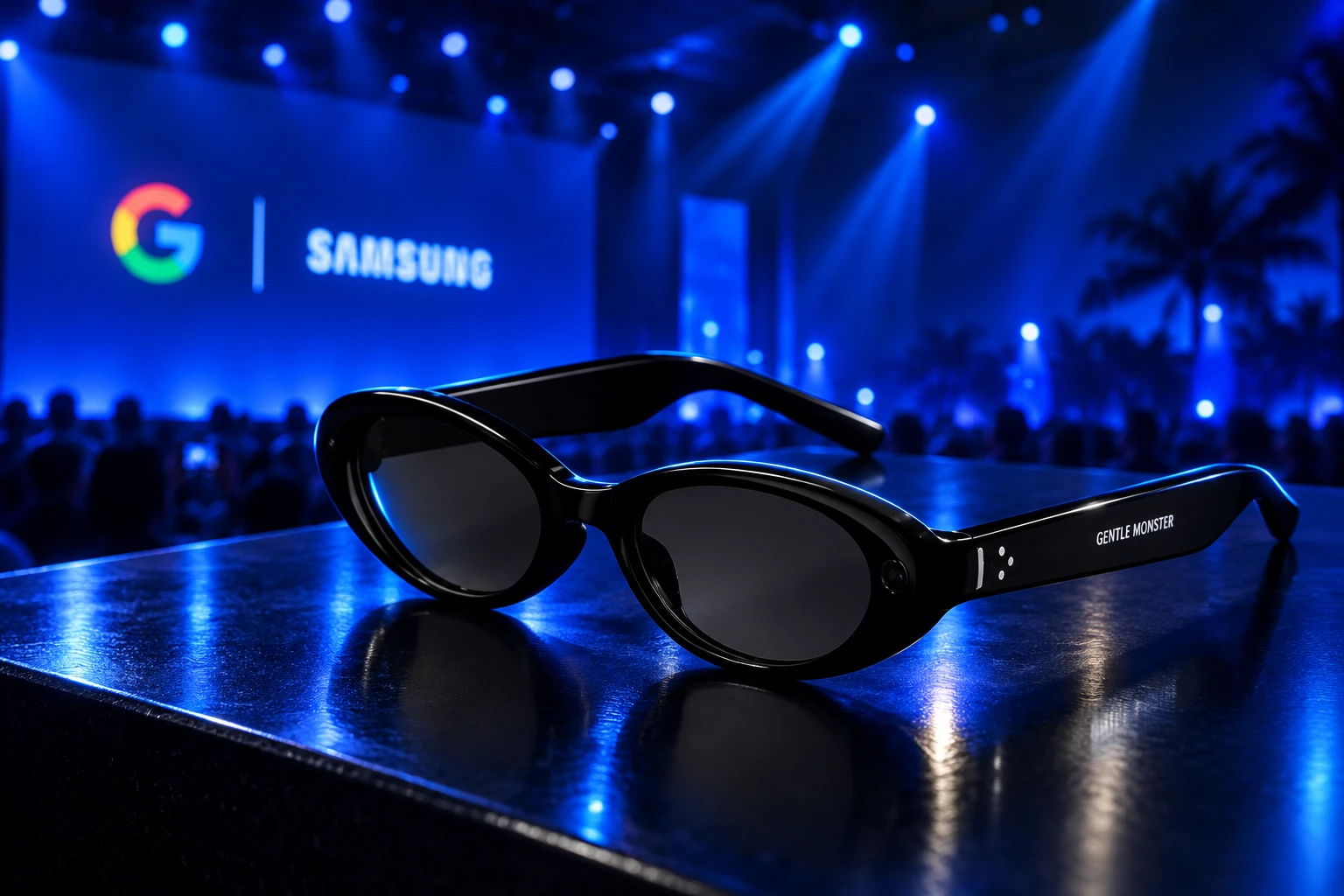
Google XR chief Shahram Izadi told Qualcomm’s Maui audience on September 23 that Gemini glasses from Gentle Monster and Warby Parker still arrive later this year on Snapdragon AR1. He gave no price and no ship day. Meta spent that same date opening pre-orders open at $349 for Ray-Ban Meta Audio glasses that ship October 13, and it put Ray-Ban Meta Gen 3 on sale from $449.
The Maui line was a partner reminder, not a product drop. Qualcomm still sits on both sides of the shelf that Meta is filling now.
Google’s Maui Keynote Repeats a Fall Window
Snapdragon Summit ran September 22 to 24 in Maui. Day 2’s Personal AI session belonged to Ziad Asghar, Qualcomm’s senior vice president for XR, wearables and personal AI. Izadi, Google’s vice president and general manager of the XR division, took a slot on that stage and kept the glasses in the 2026 window Samsung had already used in July.
Izadi’s examples were spoken help, not a heads-up display: live translation, turn-by-turn directions, answers about nearby objects, music, photos, calls, and phone apps without pulling a handset. He named Snapdragon AR1 as the platform. He did not walk through a full spec sheet or a retail date.
The session is on Qualcomm’s own Day 2 stream if you want the partner sequence in order, from wearables through sound chips and on to Google’s other devices.
Asghar’s setup was broader than one pair of frames. He said phones stay the hub, but wearables are on the body, so they see what you see and hear what you hear. Qualcomm showed a visual AI demo it said ran on the glasses in airplane mode, including a spoken answer about the colour of an apple with no phone in the loop. That was a stage demo, not a review of a finished retail product.
Izadi closed the glasses beat with a line that now has to cover the rest of 2026.
We will show you more in the coming months.
Shahram Izadi, vice president and GM of XR, Google, Snapdragon Summit, Maui
Mid-September is already behind that promise, and no pre-order window has appeared. The fall claim from July is thinner than it sounded when the frames first hit a stage in London.
$349 Audio Frames Landed the Same Afternoon
Meta Connect ran in Menlo Park on September 23, overlapping the Maui wearables keynote. Meta’s own post listed camera-free Ray-Ban Meta Audio glasses at 43 grams, with 12 hours on a charge and 48 more from the case, in Clubmaster and Burbank, across 23 colour and lens mixes, shipping October 13. Ray-Ban Meta Gen 3, on sale that day from $449, adds Aviator and Zena to Wayfarer across 27 mixes, a custom action button, a six-microphone array Meta says cuts more than 90% of background noise, a 12 MP camera, 3K video, and nine hours of battery, one hour more than Gen 2’s eight.
Meta also said it will offer more than 100 glasses options across Ray-Ban, Oakley, and Meta Glasses by the end of the year. A cheaper Meta Adventurer starts at $249 and goes on sale October 23. Meta VR Glasses, a separate tethered headset in glasses form, are priced at $1,299.99 for Spring 2027, at about 100 grams, which Meta says is five times lighter than Quest 3.
THE SAME-DAY GLASSES RACE
| Product | Battery claim | Price | Status on Sept 23 |
|---|---|---|---|
| Google / Samsung Gemini glasses | 9 hours, case adds 7 charges | Not announced | Later this year, no day |
| Ray-Ban Meta Audio | 12 hours, case adds 48 hours | $349 | Ships October 13 |
| Ray-Ban Meta Gen 3 | 9 hours | $449 | On sale September 23 |
| Meta VR Glasses | Not given as all-day wear | $1,299.99 | Spring 2027 |
Google is selling a season. Meta is selling SKUs. That gap is the whole afternoon.
Snapdragon AR1 Is the Shared Engine
Izadi’s AR1 line matches the silicon Samsung already printed in July. Samsung’s Unpacked note names the Snapdragon AR1 Gen 1 platform inside the Gentle Monster and Warby Parker frames. Qualcomm’s own AR1 page describes that chip as the first Snapdragon XR platform built for smart glasses, with dual image signal processors for 12 MP stills and 6 MP video, support for single or dual 1280 x 1280 displays at 60 fps, and a third-generation Hexagon NPU for on-glass AI such as visual search and live translation.
The Google pair shown so far has no display. AR1 can drive one, but Samsung and Google are shipping the audio-and-camera version first. That keeps weight and heat down. It also means the wow has to come from Gemini in the ear, not from arrows over the street.
WHAT SNAPDRAGON AR1 IS BUILT TO DO
- Capture: Dual ISPs for 12 MP photos and 6 MP video from the frames.
- Display headroom: Optional binocular panels at 1280 x 1280 per eye and 60 fps, unused on the first Google pair.
- On-glass AI: Hexagon NPU plus a visual engine for search and translation without a full phone round trip.
- Audio: Up to eight microphones and noise cancellation aimed at calls and voice commands in a slim temple.
Qualcomm also talked up AR1+ and tiny 1-bit models, including a PrismML Bonsai vision-language demo on AR1 Gen 1, as a way to run more of that work locally. Asghar described a low-power sensing hub that wakes only the parts of an image the model needs. That does not change the retail fact: Google still has not said which of those demos land in the Gentle Monster and Warby Parker pair you can buy.
Qualcomm has said on stage that it has worked with Meta since the original Ray-Ban Stories glasses and that it supplies Snapdragon to Snap’s AR glasses and to Samsung watches and XR devices. Meta’s September 23 Audio and Gen 3 posts do not name the chip in those two new frames, so that part stays off this scorecard.
What Samsung Already Promised in London
The Maui reminder did not add hardware. Almost every concrete number on the Google-aligned pair still comes from Galaxy Unpacked in London on July 22. Samsung said the frames are lightweight and slim, with a built-in camera, touch, and Gemini, and that they offer up to nine hours on a single charge plus up to seven full charges from the case. Gentle Monster showed a slim black frame with a straight upper rim. Warby Parker showed a brown pair with a slightly upswept brow. First looks at Google I/O in May had already teased two designs; London added more.
Won-Joon Choi, chief operating officer of Samsung’s mobile experience business, cast the glasses as a new place to talk to AI without starting on a phone screen. Sameer Samat, president of Android Ecosystem at Google, put the software claim in one sentence.
Built on the Android XR platform, the intelligent eyewear blends world-class designs with Gemini’s advanced assistance that naturally responds to what you see, delivering all-day, hands-free help. We’re excited to continue this momentum and bring this experience to people soon.
Sameer Samat, president of Android Ecosystem, Google, Samsung Unpacked, London
GEMINI ON THE FRAME
- Messages: Summarise long threads and read the useful bits aloud.
- Translation: Live help on talk and text, with results that vary by language and network.
- Notes: Grab a whiteboard or meeting view and drop it into Samsung Notes on a paired phone.
- Navigation: Ask for a route or what is around you without looking down.
- Sharing: Send a first-person view on a call, or record that view, subject to local consent rules.
Several of those jobs need a compatible Galaxy phone, a network, and permission. Gesture control is tied to Watch9 in Samsung’s footnotes. The glasses are a satellite, not a standalone computer. That is a fair engineering choice. It is also why a missing ship day still matters: the pitch only works when the phone, the watch, and the frames arrive together in a store.
Camera glasses also still carry a trust problem the chip does not fix. A recording LED and a software kill-switch if someone covers that LED are the current answers, the same cat-and-mouse Meta already fights. If that fight is not handled in the platform, demand hits a wall no fashion collab can walk around.
Wired Aura Glasses Carry a Different Chip
Izadi used the same Maui slot to keep XREAL Aura in view, and it is a different product. Aura is wired Android XR eyewear on Snapdragon Reality Elite, with the computer in a separate puck so the frames stay lighter. He described a portable spatial desk or a private cinema, including a laptop or handheld game screen pulled into a spatial window. Floor posts from the keynote said Aura is first in line for Reality Elite, with AR1 Gen 1 reserved for the slimmer AI glasses.
Samsung’s Galaxy XR headset is already the first shipping Android XR device, an immersive unit for virtual desks, big video, and 3D games, with Gemini able to talk about what is in front of you. Pixel Watch 5, also on Snapdragon, now runs Gemini Intelligence on Wear OS, including a pinch-to-send contact demo Izadi replayed in Maui.
That is a stack of form factors, each on a different Snapdragon part because battery and size are not the same problem in a headset, a puck-tethered display, a watch, and a display-free frame. Folding all of it into “Google glasses” hides the actual delay. The pair people keep asking about is the Gentle Monster and Warby Parker audio glasses. Aura and Galaxy XR do not fill that hole.
A Turnkey Kit for Frames That Need to Ship
The quieter Maui story is that Qualcomm is done waiting for one hero pair. In June it launched a Snapdragon START toolkit for smart glasses, hardware modules plus an AI-agnostic software stack and a manufacturing net, so brands can ship without building a silicon team. Inspecs, the eyewear group behind licensed lines such as Barbour and CAT, is the first named partner. Asghar put the pitch in plain words when START launched.
Personal AI devices, including smart glasses, help bring agentic AI to life, by seeing what you see and hearing what you hear. Snapdragon START establishes the foundation that makes it easier for brands and organizations to bring these devices to market.
Ziad Asghar, SVP and GM of XR, Wearables and Personal AI, Qualcomm Technologies
On September 23 the company also announced the Snapdragon Sound Elite Gen 2 platform for earbuds, headphones, audio glasses, and camera buds. Qualcomm says it offers up to twice the on-device AI of the prior sound chip, up to 128 GOPS of acceleration, up to 40% lower power use, and up to a 30% smaller platform footprint versus Snapdragon S7 Gen 1 Sound. Inspecs showed workplace safety frames, a camera-free everyday pair, and a hearing concept on that audio path. Cleer, Bose, and HP were named as early sound partners.
Google’s glasses are one design win on AR1. They are not Qualcomm’s only path to a face. If Gentle Monster and Warby Parker slip past the holidays, other frames can still land on the same silicon family, and Meta can keep selling the ones that already have a buy button.
Izadi Says More Is Coming in the Months Ahead
The year now has a public calendar. Google and Samsung still have a blank where a day should be.
THE 2026 EYEWEAR CALENDAR
- May 2026: Google I/O shows the first Gentle Monster and Warby Parker concepts on Android XR.
- June 16, 2026: Qualcomm launches Snapdragon START, with Inspecs as the first glasses partner.
- July 22, 2026: Samsung Unpacked in London adds frames, the nine-hour battery claim, and a fall launch line, still without a price.
- September 23, 2026: Izadi repeats later this year on Snapdragon AR1 in Maui, while Meta lists Audio at $349 and Gen 3 at $449.
- October 13, 2026: Ray-Ban Meta Audio is scheduled to ship.
- October 23, 2026: Meta’s $249 Adventurer is scheduled to go on sale.
- Spring 2027: Meta VR Glasses are scheduled at $1,299.99.
Izadi’s coming months are now the entire remaining pitch. October 13 will put camera-free Meta audio frames in the mail while Google’s pair is still a keynote sentence. Qualcomm already got paid for the reminder.

Edinburgh Opens a 2027 Tour Built for Time Trials

Korda Maps Auður From Meðalland to Irvine Bay

Apple Music Films Its New Logo in Mineral Oil

Oppo Prices the Pad Mini Above India’s iPad Mini

Austen Soaks Scotland Before Boelo Brings Weekend Gales

Volkswagen Sells the Osnabruck Plant to Clear a Board Fight

Apple’s Foldable iPhone Hinges on Samsung Display Supply

Saksham Gaur Finds He Is His Own Company’s Client

Tata Motors’ Iveco Tender Opens as Holders Still Decide

Onimusha Way of the Sword Preload Hits a Windows 11 Wall
-
 AUTO2 months ago
Volkswagen Sells the Osnabruck Plant to Clear a Board Fight
-
 NEWS2 months ago
Apple’s Foldable iPhone Hinges on Samsung Display Supply
-
 AUTO2 months ago
Tata Motors’ Iveco Tender Opens as Holders Still Decide
-
 BUSINESS2 months ago
Saksham Gaur Finds He Is His Own Company’s Client
-
 GAMING2 months ago
Onimusha Way of the Sword Preload Hits a Windows 11 Wall
-

 ENTERTAINMENT3 years ago
What is SD on Amazon Prime? – All You Need to Know
-

 BUSINESS2 months ago
Hyderabad 22-Carat Gold Jumps After a False Bargain
-

 NEWS2 months ago
iQOO 16 Locks 8,400 mAh While 100W Charging Holds