
NEWS
Circle Turns Bitcoin Collateral Into Captive USDC Demand
Circle’s new Bitcoin-backed USDC loans park BTC at its national trust, wrap it as cirBTC, and send Morpho the credit risk while the dollars return to Mint.

Circle opened Bitcoin-backed USDC borrowing for eligible Circle Mint customers on September 21, 2026, and left the credit decision with Morpho. Clients deposit bitcoin, mint Circle Wrapped Bitcoin (cirBTC), post it as collateral, and receive USDC back in the same Mint account without selling the BTC that backs the position.
The coins do not stay in a client vault. They move into Circle National Trust, come back as a Circle token, and the borrowed dollars land as USDC on Circle’s rails. Morpho, a third-party lending market, sets the rate, the collateral cap, and the liquidation line.
Circle Parks the Bitcoin and Hands the Loan to Morpho
Digital Asset-Backed Borrowing, which Circle shortens to DABB, is live for eligible Circle Mint LLC customers on Arc and Ethereum. Circle’s own write-up walks through a single path so a treasury team can deposit BTC, mint cirBTC, and borrow USDC without stitching custody, a wrapper, a DeFi app, and an institutional account by hand.
THE FIVE STEPS CIRCLE PUBLISHED
- Deposit and mint: Native BTC goes in and cirBTC comes out.
- Pick a market: The customer selects a supported third-party lending market.
- Post and borrow: cirBTC is supplied as collateral and USDC is borrowed.
- Settle in Mint: Borrowed USDC credits the customer’s Circle Mint balance.
- Repay to release: Repaying the USDC frees the cirBTC collateral.
Positions are overcollateralized, so access tracks collateral value and market rules rather than an unsecured credit file. Customers add collateral or repay on their own schedule, through a wallet they control that is tied to the Mint workflow. New York clients are excluded, and the offering is limited by jurisdiction and eligibility. Circle Mint itself is built for institutions, not for individuals.
Morpho is the first third-party protocol approved for the product. Circle says support for more markets, including Aave, will follow. Circle also discloses a commercial relationship with Morpho, which is the quiet line under the “neutral issuer” pitch: Circle is not the lender of record, but it is not a bystander in the distribution either.
The OCC Charter That Cannot Make a Loan
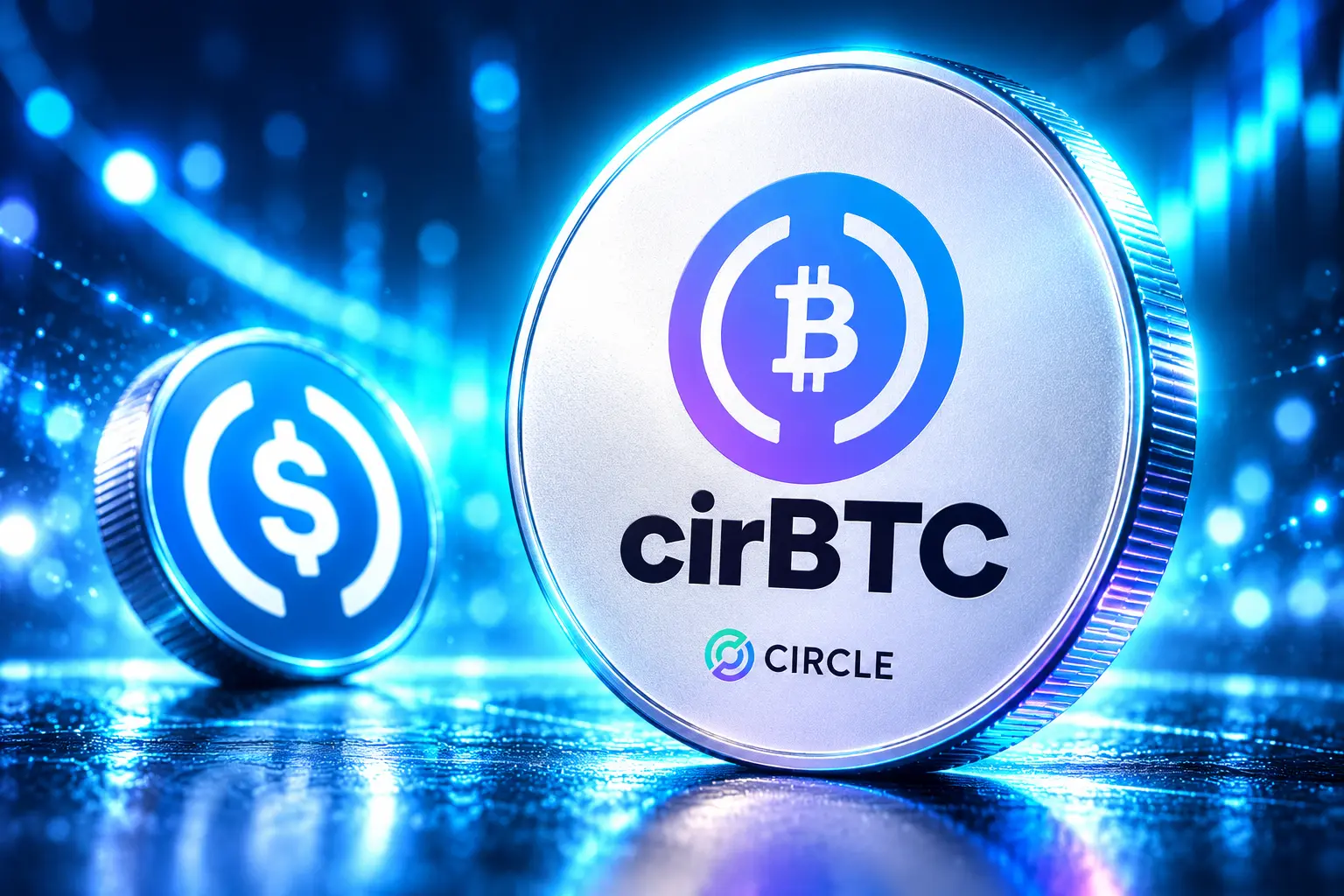
Every cirBTC is backed 1:1 by native BTC and is redeemable 1:1 for that coin. Circle describes cirBTC as a wrapped token, not a staked bitcoin product and not a derivative. The underlying BTC is held through a Circle affiliate and custodied on that affiliate’s behalf by Circle National Trust, a federally chartered national trust bank and qualified custodian under the U.S. Office of the Comptroller of the Currency.
Circle National Trust is the trade name of First National Digital Currency Bank, N.A. Circle received final OCC approval for a national trust bank on July 10, 2026, after filing on June 30, 2025 and taking a conditional approval in December 2025. At opening, the bank’s job is fiduciary digital-asset custody for Circle and its affiliates. Direct custody for a limited set of outside institutions, and management of the USDC reserve, are listed as later options, not as launch products.
THE CHARTER PATH BEHIND THE WRAPPER
- June 30, 2025: Circle files its OCC application for a national trust bank.
- December 2025: The OCC issues a conditional approval.
- July 10, 2026: Final approval lands for First National Digital Currency Bank, N.A., operating as Circle National Trust.
- September 4, 2026: Circle publishes the cirBTC reserve model, with the token already live on Ethereum.
- September 16, 2026: Arc’s public mainnet opens, with more than 100 institutional participants in the launch group cited by TD Cowen’s Bryan Bergin.
- September 21, 2026: cirBTC goes live on Arc and Digital Asset-Backed Borrowing opens on Arc and Ethereum.
The trust structure is the part of the “keep your bitcoin” pitch that most product notes skip. Native BTC backing cirBTC is held through Circle’s Bermuda affiliate and safeguarded by the trust on that affiliate’s behalf, in accounts Circle says are segregated from corporate assets and held for the exclusive benefit of cirBTC holders. The same disclosures say the trust does not accept deposits or make loans, and that digital assets there are not FDIC-insured deposits.
OCC approval to establish Circle National Trust marks a defining step in bringing blockchain technology and digital assets into the core of the U.S. financial system.
Jeremy Allaire, Co-Founder, Chairman, and CEO of Circle, July 10, 2026 OCC announcement
That sentence was about the charter, two months before DABB. The loan product is how the charter gets a bitcoin balance to guard. Circle still does not originate, underwrite, or fund the USDC credit. The Arc note on the product says so in plain language, which is why Morpho’s rulebook matters more than Circle’s brand on the wrapper.
Morpho’s Rules, Circle’s Wallet, the Customer’s Collateral
Circle coordinates the path. It does not set the price of the money. Borrowing rates, collateral requirements, liquidation thresholds, liquidity, and even whether a market is open are set by the selected third-party market and can change. Circle tells customers to read those terms before they borrow.
Morpho put the same workflow on its own account the day the product opened: deposit BTC, mint cirBTC, collateralize it, and borrow USDC on Arc or Ethereum inside the Mint platform institutions already use.
Digital Asset-Backed Borrow in @circle Mint, powered by Morpho
Circle Mint customers can now deposit BTC & mint cirBTC, collateralize cirBTC, and borrow USDC on @arc or @ethereum, all in an integrated flow on the same platform they already use and trust. pic.twitter.com/nQgciaFHkp
— Morpho 🦋 (@Morpho) September 21, 2026
WHO HOLDS WHICH PIECE
| Piece | Who runs it | What it actually does |
|---|---|---|
| Native BTC custody | Circle National Trust, for a Circle Bermuda affiliate | Holds the coins that back cirBTC; cannot take deposits or make loans |
| cirBTC token | Circle International Bermuda Limited | Issues the 1:1 wrapper used as onchain collateral |
| Account and dollars | Circle Mint | Takes the BTC deposit and credits borrowed USDC |
| Borrowing interface | Circle Technology Services, via a customer-controlled smart wallet | Connects Mint to the lending market |
| Credit terms | Morpho first; Aave planned | Sets rates, caps, liquidity, and liquidation |
The split is the product. Circle gets the coins, the wrapper, and the USDC balance. Morpho gets the interest-rate curve and the liquidation engine. The institution keeps bitcoin price exposure, and it also keeps the risk that a drop in BTC trips Morpho’s liquidation line with no Circle backstop.
That is a different bargain from the old centralized bitcoin desks that took coins in, wrote a loan, and sometimes rehypothecated the collateral. It is also a different bargain from “self-custody DeFi,” because the native BTC is not sitting in the client’s hardware wallet. It is sitting in a national trust that Circle owns, wrapped into a token Circle issues, then posted from a wallet Circle’s software helps drive.
Why Bitcoin Still Needs a Wrapper for Smart Contracts
Native bitcoin cannot talk to the smart contracts that run onchain lending. The coin lives on its own chain. Ethereum, Arc, and other programmable networks need a token that represents BTC while the real coins stay in custody. That is the entire wrapped-bitcoin category, and it was crowded before Circle named this product.
Market participants already choose among tokenized BTC products already in the market that differ on who holds the coins, whether those coins are segregated, how supply is controlled, and what a risk desk can see in real time. Circle’s pitch is that cirBTC is the “strategically neutral” version: Circle does not run a competing centralized exchange, decentralized exchange, or lending protocol, so its incentive is to make the token useful across venues rather than to steer flow into a Circle order book.
Neutrality on trading and lending is not neutrality on custody. The reserve model Circle published on September 4, 2026 ties three checks together: native BTC in disclosed reserve addresses, an onchain reserve value published through Chainlink Proof of Reserve feeds, and the cirBTC supply on supported chains. Circle also publishes a multi-address map so a counterparty can look at the bitcoin chain itself and compare holdings with tokens outstanding. When cirBTC is redeemed, tokens are burned and native BTC is released through the redemption path, with the control objective that circulating cirBTC should not exceed BTC in reserve.
For a Morpho market, that feed is not a brochure. It is an input a protocol can watch while it values collateral. For Circle, it is how a Bermuda-issued wrapper gets treated as something a federally chartered trust can stand behind without Circle having to write the loan.
A Small Arc Book Beside Coinbase’s Giant One
Circle launched the borrowing path on two networks on purpose. Arc is Circle-designed infrastructure for stablecoin finance, with USDC gas, deterministic finality, and a permissioned validator set run by Arc Network Services LLC. Ethereum is the older lending venue, where teams that already post collateral on Morpho can open a cirBTC position and settle USDC back into Mint. Circle’s Arc post said cirBTC is now live on Arc the same day DABB opened, and framed the token as collateral for credit, trading, settlement, and treasury, not as a retail ticker.
cirBTC is now live on Arc.
Circle Wrapped Bitcoin brings 1:1 BTC-backed liquidity into the Economic OS for internet-native financial markets, helping participants use BTC across lending, trading, collateral, settlement, and treasury workflows.https://t.co/jlYF6S7HWT pic.twitter.com/EJqR6ZlLh5
— Circle (@circle) September 21, 2026
USDC, which Circle said had $97 trillion in lifetime transaction volume as of August 24, 2026, is the borrow and settlement asset. cirBTC is the collateral leg. Together they close a loop in which bitcoin funds dollar liquidity without a sale. The loop only pays if someone actually borrows.
TWO WRAPPED-BTC BOOKS, SAME WEEK
- Arc cirBTC: On-chain tallies after launch showed more than $150 million of USDC and EURC liquidity against cirBTC, with only about $14 million borrowed.
- Base cbBTC: Morpho’s USDC market backed by Coinbase Wrapped BTC showed $1.44 billion borrowed, $172.6 million of spare liquidity, and an 86% liquidation loan-to-value limit.
- The gap: Arc opened with idle stablecoin cash waiting for borrowers. Base already had a working bitcoin-collateral book at institutional size.
- The test: cirBTC matters if it pulls that kind of volume onto Circle’s wrapper and Circle’s chain, not if it sits as a launch-day vault.
Idle liquidity is not a failure on day one, and a $1.44 billion Coinbase-wrapped book is not a verdict against Circle. It is the hurdle. Coinbase already issues a 1:1 BTC wrapper, and Morpho already treats that wrapper as collateral at scale. Circle is asking institutions to move native BTC into its trust, mint a newer token, and borrow on Arc or Ethereum because the Mint workflow is cleaner and the issuer does not run an exchange.
That pitch can win with compliance teams. It does not automatically win with people who already borrow against cbBTC. The sharper read inside the Arc conversation was not about branding. It was about whether cirBTC volume actually migrates, or whether the announcement leaves another wrapped-BTC ticker with a thin borrow side and a fat supply side.
TD Cowen Moved Its Target Before This Product Launched
Circle Internet Group (NYSE: CRCL) rose 2% to $93.69 after the borrowing news, with bitcoin back above $85,000. That print is a one-day move, not a thesis. The equity argument sitting next to it is older than DABB by four days.
On September 17, 2026, TD Cowen analyst Bryan Bergin kept a Buy rating and raised his price target to $92 from $87. He pointed to Arc’s public mainnet, a Federal Reserve 25-basis-point rate hike that lifts USDC reserve income, and a Senate failure to advance the CLARITY Act that, in his note, did not change the investment case. He treated Arc as non-reserve growth, a way to make money outside the interest Circle earns on USDC reserves, and listed other fee channels such as Circle Payments Network, CCTP, and StableFX beside it.
DABB is how that Arc bet gets a bitcoin collateral asset. It is not the event Bergin priced on September 17. If institutions park BTC at Circle National Trust and keep a standing USDC borrow in Mint, Circle earns the custody-and-wrapper relationship and the dollar float. Morpho earns the credit spread and carries the liquidation mechanics. Aave, when Circle adds it, would split that credit role further.
Until those books grow past a few million dollars borrowed, the product is a working pipe with a small flow. The pipe is real: eligible Mint customers can open a position now, on Arc or Ethereum, through Morpho. Aave is still a promise. New York is still outside the gate. And the bitcoin that “stays yours” sits, for the life of the wrapper, in Circle’s national trust.
Frequently Asked Questions
Can Individual Investors Use Circle’s Bitcoin-Backed USDC Loans?
No. Circle Mint is currently available only to institutions and is not available to individuals, so Digital Asset-Backed Borrowing has no retail path. Eligible Circle Mint LLC customers still have to clear Circle’s own onboarding, and the borrowing feature is further limited by jurisdiction.
Are Bitcoins Held at Circle National Trust FDIC-Insured?
No. Circle’s disclosures say digital assets at Circle National Trust are not deposits, are not insured by the Federal Deposit Insurance Corporation, and may be subject to investment and other risks. The bank is a national trust under OCC supervision, not an FDIC-insured commercial lender.
Which Circle Entity Issues cirBTC?
cirBTC is issued by Circle International Bermuda Limited, a Class F Digital Asset Business licensed and regulated by the Bermuda Monetary Authority. Circle Mint and related distribution sit with Circle Internet Financial, LLC, which carries NMLS number 1201441 and is a licensed money transmitter.
Which Circle Company Provides the Borrowing Tool?
Digital Asset-Backed Borrowing is provided by Circle Technology Services, LLC through a customer-controlled smart wallet. That software layer is what connects an eligible Mint account to Morpho; Circle Technology Services says it does not provide regulated financial or advisory services, and the lending itself is done by the third-party market.
How Do Institutions Redeem cirBTC Back Into Native Bitcoin?
Mint and redeem flows use the same Circle Mint API endpoints as USDC and EURC, with CIRBTC as the currency code. Each cirBTC is redeemable 1:1 for native BTC through that issuance workflow, after which the tokens are removed from circulation and the underlying bitcoin is released.
Disclaimer: This article is news reporting and analysis of a Circle product launch and related market figures, and it is for information only. It is not investment advice, a solicitation to buy or sell CRCL, USDC, bitcoin, cirBTC, or any loan, and it is not legal or tax advice on custody, wrapping, or onchain borrowing. Readers should consult a licensed financial adviser, and where needed a qualified attorney, before using collateralized crypto credit or acting on any price, rate, or product term mentioned here. Figures, eligibility rules, market rates, and protocol parameters reflect the cited Circle, Arc, Morpho, and OCC materials as published around the September 21, 2026 launch and can change.

Edinburgh Opens a 2027 Tour Built for Time Trials

Korda Maps Auður From Meðalland to Irvine Bay

Apple Music Films Its New Logo in Mineral Oil

Oppo Prices the Pad Mini Above India’s iPad Mini

Austen Soaks Scotland Before Boelo Brings Weekend Gales

Volkswagen Sells the Osnabruck Plant to Clear a Board Fight

Apple’s Foldable iPhone Hinges on Samsung Display Supply

Saksham Gaur Finds He Is His Own Company’s Client

Tata Motors’ Iveco Tender Opens as Holders Still Decide

Onimusha Way of the Sword Preload Hits a Windows 11 Wall
-
 AUTO2 months ago
Volkswagen Sells the Osnabruck Plant to Clear a Board Fight
-
 NEWS2 months ago
Apple’s Foldable iPhone Hinges on Samsung Display Supply
-
 AUTO2 months ago
Tata Motors’ Iveco Tender Opens as Holders Still Decide
-
 BUSINESS2 months ago
Saksham Gaur Finds He Is His Own Company’s Client
-
 GAMING2 months ago
Onimusha Way of the Sword Preload Hits a Windows 11 Wall
-

 ENTERTAINMENT3 years ago
What is SD on Amazon Prime? – All You Need to Know
-

 BUSINESS2 months ago
Hyderabad 22-Carat Gold Jumps After a False Bargain
-

 NEWS2 months ago
iQOO 16 Locks 8,400 mAh While 100W Charging Holds