
NEWS
Cairngorm Funicular Still Carries Significant Defects After Repair
October 2026 papers still flag significant defects on the Cairngorm funicular, a 2001 concrete viaduct whose repair bill is now a 30-year Holyrood problem.

Inspection papers disclosed in October 2026 still flag significant defects on the Cairngorm funicular, more than a year after passengers returned. The railway reopened on 27 February 2025 after a second long shutdown and a £25.4 million strengthening programme.
Highlands and Islands Enterprise told MSPs in 2025 that leftover work was about long-term durability, not an immediate safety stop. The new papers show that account is still open.
Inspection Papers Still Flag Significant Defects
The latest disclosure does not order the cars to stop. It does say the structure still needs work, which is the pattern that has defined this railway since 2018. Defects called manageable at Cairngorm have a habit of growing into months of scaffolding.
HIE, the public body that owns the 3,500-acre Cairngorm estate, handed the railway back on 19 February 2025 and said every safety-related defect from the second repair had been dealt with. In a 4 November 2025 note to Holyrood’s Public Audit Committee, it said talks with contractors and designers were still running on “a number of remaining minor items which relate to the long-term durability of the structure.”
October’s papers use harder language than minor. That gap is the news. Earlier inspections, already on the public record, had listed loose nuts, missing bolts, rust staining, cracks at scarf joints and beams, and concrete breaking away at beam corners. Those reports warned that moisture and air would speed corrosion if cracks were left unsealed.
WHAT WE KNOW
- Service status: The funicular is running and no new safety closure has been announced.
- HIE’s 2025 line: Safety-critical defects were cleared before the 27 February 2025 reopening, with leftover items described as durability work.
- Next booked stop: Cairngorm Mountain has set a closed period from 2 to 9 November 2026 for routine checks, with trains due back on 10 November.
- Holyrood file: The Public Audit Committee warned in February 2026 that watching and repairing the railway for 30 years may cost more than it returns.
WHAT IS UNCONFIRMED
- The new papers: The October 2026 documents have not been published in full, so the exact joints, bolts and cracks still in play are not listed in public.
- Who pays next: HIE said commercial talks with Balfour Beatty about the second repair were still live in late 2025.
- How minor is minor: It is not yet clear whether the leftover durability items stay inside a stable maintenance budget or become another major works package.
The distinction between a live railway and a finished railway is the whole problem. At Cairngorm, a train can carry people while the viaduct is still a worksite on paper.
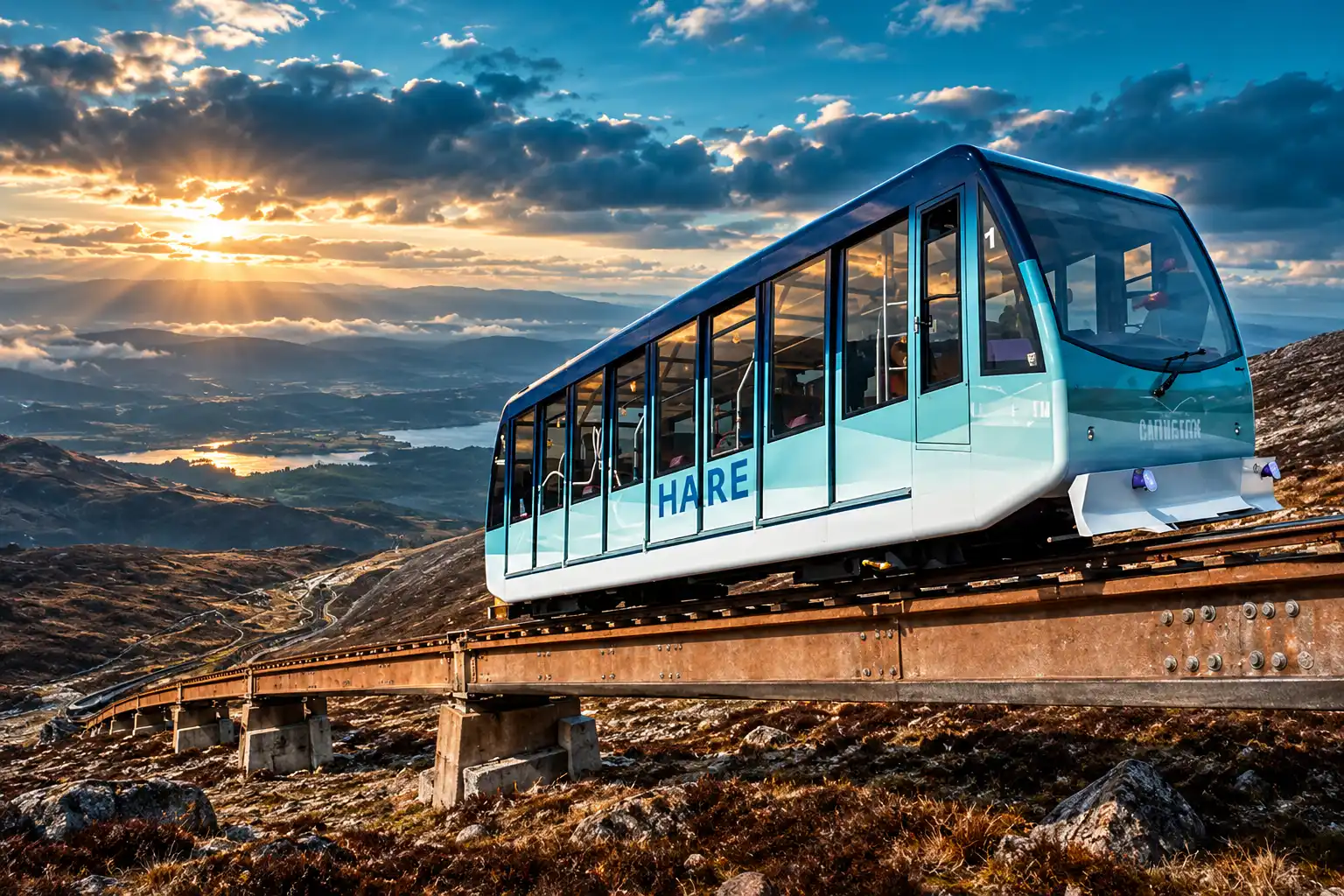
A 30-Year Bill Holyrood Cannot Close
The Public Audit Committee spent last winter on this asset because the public purse has already been through it twice as owner and several times as paymaster. The committee’s February 2026 report on the railway followed evidence from HIE, the operating company, local businesses and conservation campaigners, plus a visit to the mountain on 17 November 2025.
Opened in 2001 at a cost of £19.5 million, the funicular was shut in September 2018 after a routine inspection found safety concerns on the viaduct. It stayed closed for four years, ran again from 26 January 2023, then stopped in August 2023 when scarf joints, the assemblies that link beams and piers, failed to hold the specified tension. Public service resumed on 27 February 2025.
The committee’s fear is not last year’s invoice. It is the next three decades. MSPs said the costs of regular monitoring may become disproportionate to the railway’s local and national benefit over the 30-year life claimed in the repair business case. They also noted that the Scottish Government’s 2026 Infrastructure Delivery Pipeline does not list the funicular, and they asked ministers to say what that omission means.
It is safe to say that the Cairngorm Funicular has had a somewhat troubled history, with repeated and lengthy closures and requiring significant public investment. We have heard both optimism and scepticism about what comes next. And it presents a picture of concern for us that the future benefits are not as clear as they ought to be.
Richard Leonard MSP, Convener, Public Audit Committee, 24 February 2026
Leonard also called for a simpler, more open governance structure so the public can see how money and mountain plans are decided. HIE welcomed the committee’s scrutiny and said it was always conscious of value for money across the Highlands and Islands.
Stuart Black, HIE’s chief executive, told the committee the resort supports year-round jobs in a tourism economy that is otherwise seasonal: about 72 people in summer, around 100 in winter, and £1.8 million a year in gross wages. That is the benefit side of the ledger MSPs say still needs a clearer future.
The Original Beams Keep Generating New Work
The railway climbs nearly 2km of mountainside in weather that eats metal and concrete. Independent designers previously used a temperature range from minus 28C to plus 30C. Freeze-thaw, wind, snow load and that swing pull on brackets, bars and joints year after year.
The original build used precast concrete beams rather than steel. John Carson, the retired civil engineer who headed the firm that built the Skye Bridge and a former fellow of the Institution of Civil Engineers, has argued that choice still sits under every later repair. He has said he can see no way a designer could calculate an acceptable factor of safety for the original structure or the repaired one.
HIE and its contractors hold a narrower line: the safety-critical defects were cleared before the 2025 reopening, and what remains is upkeep of a mountain asset. Campaigners do not buy the 30-year promise attached to that upkeep.
WHERE ENGINEERS AND OWNERS SPLIT
- HIE and CMSL: Safety-related defects from the second repair were addressed before 27 February 2025, and Tim Hurst, then a CMSL board member and former interim chief executive, told MSPs the inspection regime can keep critical parts inside the original specification over a 30-year life.
- John Carson: Concrete was the wrong material on this hill, stainless brackets will keep expanding and contracting, and the mountain will keep exposing the system.
- Parkswatch Scotland: Gordon Bulloch told the committee the full business case was highly flawed and that claims the repairs would add 30 years were “preposterous.” He has also argued that steel struts fitted to fight pillar tilt slow the movement rather than stop it, because most of the 92 pillars sit on glacial till rather than bedrock.
That is not a dispute about whether the cars are running this autumn. It is a dispute about whether 2001’s specification can ever be maintained at a price Scotland will keep paying. Each new inspection that finds more than wear and tear lands on that original decision, not on a single bad winter.
The Second Shutdown Left HIE a £2.2 Million Bill
The first big repair was meant to draw a line. After a full business case, HIE contracted Balfour Beatty in October 2020 to strengthen the viaduct. The job was supposed to serve the 2021/22 snowsports season. It finished in January 2023. HIE told the committee the total cost of those strengthening works was £25.4 million, against an approved £20.51 million. Of that, £18 million went to Balfour Beatty. The rest was mostly design, professional fees and HIE staff time. The Scottish Government put £16 million toward the repair programme.
Then the scarf joints failed their tension check. The railway closed again in August 2023. Balfour Beatty came back under the existing contract. HIE says the contractor met its own remediation costs, except for a small HIE payment. Direct costs to HIE in that second period were £2.2 million, and only £70,000 of that was paid to Balfour Beatty. The rest was fees, design advice and staff. Commercial talks with the contractor were still open when HIE wrote to MSPs in November 2025.
THE PUBLIC MONEY ON THE RAILWAY
| Item | Amount | Date |
|---|---|---|
| Original construction | £19.5 million | 2001 |
| Strengthening works, total cost to HIE | £25.4 million | Completed January 2023 |
| Of which paid to Balfour Beatty | £18 million | 2020 to 2023 |
| Scottish Government contribution to repairs | £16 million | Repair programme |
| Legal settlement recovered by HIE | £11 million | August 2023 |
| HIE direct costs, second repair period | £2.2 million | 2023 to 2025 |
| Of which paid to Balfour Beatty | £70,000 | 2023 to 2025 |
HIE did claw money back from the original design-and-build era. In August 2023 it announced an £11 million out-of-court settlement with Galliford Try Infrastructure, designer A.F. Cruden Associates, and parties tied to the previous operator’s guarantees. That cash sits against a repair history that has already absorbed tens of millions of pounds of public money. It does not retire the viaduct.
Turnover Rose to £5.72 Million With the Cars Running
When the railway works, the hill makes money. Cairngorm Mountain (Scotland) Ltd, HIE’s operating company, said that for the year ended 31 March 2026 turnover rose to £5.72 million from £1.70 million. That is more than triple, on the back of a working funicular and a snow winter the company called one of the best for snowsports in six years. Revenue grant support from HIE fell from £2.55 million to £531,000, a cut of more than £2 million.
THE FIRST FULL YEAR BACK
- Passengers: The funicular carried 184,061 people in that financial year, its first full year after the 2025 reopening.
- Skier days: The resort recorded 53,158 skier days in the same year.
- Grant need: HIE support dropped to £531,000 from £2.55 million the year before, when the railway was out for most of the winter.
- The chair’s line: Mark Tate, appointed CMSL chairman on 1 January 2026, said the figures showed real progress toward a financially sustainable mountain, with more work still to do.
Tate put the turnover at “£5.7 million” when he spoke. The company’s year-end highlights give the fuller £5.72 million. Either way, the recovery is real, and it is tied to reliability. The Ptarmigan top station, the beginner snow in the high bowl, and a large share of sightseer income all sit at the far end of this track. When the cars stop, that trade stops with them.
A May 2025 closure already showed how quickly “non-urgent” work becomes a three-week hole in the calendar. CMSL shut the railway from 12 May to 2 June 2025 for annual maintenance while Balfour Beatty finished leftover durability jobs, then took evenings for another two weeks and a further three days in September. Those were planned stops. They still took the hill’s main lift offline in the first summer of the comeback.
Chairlifts Are in the Masterplan, Not on the Hill
Campaigners have spent years saying the funicular is the wrong tool for a ski hill. Nick Kempe of Parkswatch Scotland told MSPs that design limits stop the resort making best use of the railway and that this caps income. Evidence to the committee put the funicular’s carrying rate at about 500 people an hour, against estimates of up to 3,500 an hour for a chairlift. Parkswatch has called for as many as four new chairs.
A gondola or chair system has always been the cheaper high-capacity alternative on paper, and that comparison now sits in the parliamentary file rather than only in resort argument. Graham Garfoot, in written evidence, said he had put Doppelmayr and Leitner Poma quotes to government that came in well below the funicular repair bill, and he cited an older Doppelmayr figure for a gondola or chair hybrid with more than twice the funicular’s design capacity. Some people at the committee’s 18 November 2025 stakeholder meeting also said taking the railway down might cost more than £10 million, which is why “just scrap it” is not a free option either.
HIE’s answer is that a 2020 business case tested removal, a gondola replacement and reinstatement, and that ministers approved reinstatement plus extra capital and revenue support. New chairs are written into the 2021 Cairngorm Masterplan, but HIE has said they would need substantial investment. They are still a line in a plan, not steel on the hill. Until they exist, almost every visitor who needs the high mountain still needs this railway to behave.
November’s Routine Closure Will Not Settle the File
Cairngorm Mountain has posted two planned maintenance periods for 2026. The first has already happened: a short stop from 18 to 20 May 2026, with HIE contractors on site for minor viaduct works, and trains back on 21 May. The second runs from Monday 2 November to Monday 9 November 2026, reopening on Tuesday 10 November. Specialist staff from Garaventa, Frey AG and Bosch Rexroth are due in with the in-house team to test mechanical, hydraulic and electrical systems before winter.
That November window is a train-systems check, not a published plan to reopen the viaduct as a building site. After October’s papers, it will still be read as a test of whether “routine” at Cairngorm stays routine. Base-station trade is due to continue. The top of the mountain will not.
THE SHUTDOWNS THAT SHAPED THE ASSET
- September 2018: Railway withdrawn after a routine inspection raises safety concerns on the viaduct.
- 26 January 2023: Service returns after strengthening works costing HIE £25.4 million.
- August 2023: Service withdrawn again after scarf-joint tension fails the specified level.
- 27 February 2025: Public service resumes after the second repair; HIE says safety-related defects are cleared.
- 12 May to 2 June 2025: Three-week closure for annual maintenance and leftover durability work, plus later evening and September stops.
- 18 to 20 May 2026: Short planned stop with minor viaduct works by HIE contractors.
- 2 to 9 November 2026: Planned mechanical and compliance shutdown, with trains due back on 10 November.
HIE’s test is whether leftover defects can live inside a steady maintenance budget instead of becoming the next multi-year contract. Holyrood’s test is whether Scotland keeps paying for a high-altitude railway whose original beams, and the steel clamped onto them, still generate inspection papers 25 years after opening. The cars are due to run into the snow season. The 2001 viaduct remains on the books as an unfinished repair.

Edinburgh Opens a 2027 Tour Built for Time Trials

Korda Maps Auður From Meðalland to Irvine Bay

Apple Music Films Its New Logo in Mineral Oil

Oppo Prices the Pad Mini Above India’s iPad Mini

Austen Soaks Scotland Before Boelo Brings Weekend Gales

Volkswagen Sells the Osnabruck Plant to Clear a Board Fight

Apple’s Foldable iPhone Hinges on Samsung Display Supply

Tata Motors’ Iveco Tender Opens as Holders Still Decide

Saksham Gaur Finds He Is His Own Company’s Client

Onimusha Way of the Sword Preload Hits a Windows 11 Wall
-
 AUTO2 months ago
Volkswagen Sells the Osnabruck Plant to Clear a Board Fight
-
 NEWS2 months ago
Apple’s Foldable iPhone Hinges on Samsung Display Supply
-
 AUTO2 months ago
Tata Motors’ Iveco Tender Opens as Holders Still Decide
-
 BUSINESS2 months ago
Saksham Gaur Finds He Is His Own Company’s Client
-
 GAMING2 months ago
Onimusha Way of the Sword Preload Hits a Windows 11 Wall
-

 BUSINESS2 months ago
Hyderabad 22-Carat Gold Jumps After a False Bargain
-

 ENTERTAINMENT3 years ago
What is SD on Amazon Prime? – All You Need to Know
-

 NEWS2 months ago
iQOO 16 Locks 8,400 mAh While 100W Charging Holds