
BUSINESS
Belarus Registers Two Crypto Banks That Cannot Yet Open
Two unnamed High-Tech Park residents cleared the first crypto-bank gate on 28 September. They still need the National Bank register, a capital floor.

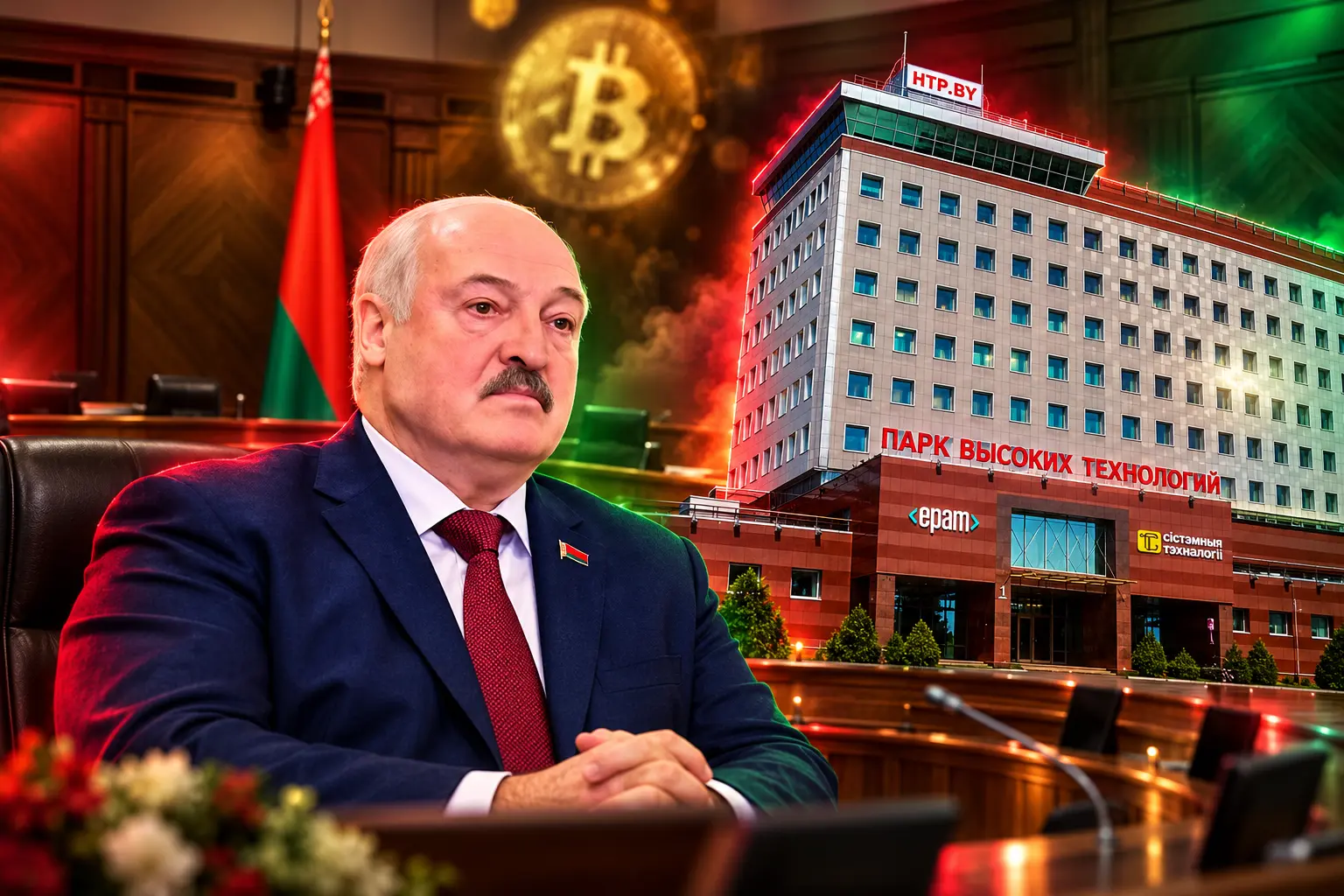
Belarus registered two unnamed firms as High-Tech Park crypto-bank residents on 28 September, but neither can open until the National Bank lists them. The High-Tech Park (HTP) Supervisory Board, chaired by Prime Minister Aleksandr Turchin, took that first vote after President Aleksandr Lukashenko’s Decree No. 19 of 16 January 2026. The decree’s main rules have been in force since 18 July 2026.
The firms already work in the park’s crypto market. They still need a second decision, a joint-stock form, and a capital floor before they may lawfully mix tokens with banking operations.
Two Park Residents Still Need the Central Bank
The HTP said its board approved the first two organisations that plan to run as crypto banks. Anna Ryabova, head of the Supervisory Board Secretariat, told the meeting that two crypto residents with crypto-bank status were appearing in the park after more than half a year of joint work with the National Bank.
Dmitry Kalechits, first deputy head of that secretariat, said the applicants had built teams and IT systems and had passed technical and legal audits. He also said they are already known inside the park.
The organizations currently planning to become crypto banks are well-known players in both Hi-Tech Park and the broader crypto market, possessing significant practical experience in the crypto sphere.
Dmitry Kalechits, First Deputy Head, HTP Supervisory Board Secretariat
That is the conversion, not a debut. The next step, the park said, is inclusion in the National Bank’s register of crypto banks. Until that listing, the firms are not crypto banks under Decree No. 19 and may not combine token activity with the listed banking operations.
Joint-Stock Firms Get a Special Legal Category
The presidential press service defined a crypto bank as a joint-stock company that may combine token activity with banking operations, payments, and related financial work. Market entry needs two conditions at once: HTP residency and a place on the National Bank register. In operation the firm must follow the law that applies to non-bank credit and financial organisations, and it must follow HTP Supervisory Board decisions.
Minsk lawyers at Revera, in an analysis of the edict by Gleb Yakushev, Stanislav Osmolovsky, and Polina Filipcova, set out a harder edge. An applicant has to be a joint-stock company, an HTP resident for “other activities using tokens,” a payment-service provider, and a name on the National Bank register. Until that last listing, the company may not conduct crypto-bank activity or use the word cryptobank in its name. It also may not call itself a bank.
THE TWO KEYS BEFORE A FIRM MAY OPEN
| Test | Rule under Decree No. 19 |
|---|---|
| Corporate form | Open or closed joint-stock company; an LLC does not qualify |
| Park status | HTP resident, with the crypto-bank activity declared |
| Central bank listing | Included in the National Bank register of crypto banks |
| Day-to-day law | Rules for non-bank credit and financial organisations, plus HTP board decisions |
| Name | May use cryptobank; may not use bank |
Revera’s reading also cuts against a simple upgrade of an existing exchange. Crypto platform operators, brokers, exchanges, and ICO organisers already in the park are not allowed to bolt this status onto their present legal entity. They would have to stop that model or form a separate joint-stock company and apply again. The two residents from 28 September are therefore new legal shells, even if the people behind them already trade tokens in the park.
What a Belarus Crypto Bank Is Allowed to Do
Aleksandr Yegorov, first deputy chairman of the National Bank board, described the product at the Digital Banking 2026 conference on 23 April 2026. A joint HTP session had already set which tokens the new firms may handle, which deals they may book, and how those deals will be accounted for, because those choices feed stability ratios.
He named crypto deposits, crypto loans, crypto collateral, staking, transfers between people and companies, issuance of a firm’s own tokens, exchange, and storage among 11 main types of transactions, and he said that list is not closed. On the banking side, Revera’s note lists account opening for residents and non-residents, foreign-exchange operations, settlement, credit-history files, and correspondent accounts tied to the crypto-bank activity, without a separate full banking licence.
THE 11 OPERATION TYPES YEGOROV NAMED
- Deposits: Crypto deposits sit on the same books as other client balances once the register is live.
- Credit: Crypto loans and token collateral are both on the permitted list.
- Yield: Staking is listed as a separate operation type.
- Transfers: Tokens may move between individuals and legal entities through the institution.
- Issuance: The crypto bank may issue its own tokens.
- Exchange and storage: Buying, selling, and holding client crypto are included, with the list still open to later additions.
Yegorov also said self-employed clients would, under the decree, be able to take pay in tokens through a crypto bank, and that legal entities would get a limited path for foreign-trade settlement in tokens once the Council of Ministers and the National Bank approve the cases. Those paths are the policy pitch. They do not start on HTP residency day.
A 20 Million Ruble Door and 26 Tokens
The money bar is high enough to keep hobby projects out. Founders must form charter capital of BYN 20 million (about $6.9 million) before they even file for the National Bank register. After listing, the firm must place an irrevocable deposit of BYN 10 million with the National Bank within 10 business days. The regulations also let the National Bank cap how many crypto banks exist, in the name of financial stability.
THE MONEY AND THE TOKEN LIST
- Charter capital: BYN 20 million must be in place before the register application.
- Central-bank deposit: BYN 10 million, irrevocable, within 10 business days of listing.
- Tax: Corporate income tax at 9%, plus 1% of gross revenue to the HTP Secretariat.
- Tokens: About 26 currencies, with Bitcoin, Ethereum, TON, Solana, and stablecoins named by Yegorov on 23 April 2026.
Yegorov said about 26 currencies had been chosen and that the most used names on the list were Bitcoin, Ethereum, TON (Toncoin), and SOL (Solana), with stablecoins included. He called the document a living one that would be topped up as investors brought new ideas. That whitelist is a park-and-central-bank product, not an open crypto balance sheet.
The Park Has Run Crypto Rules Since 2018
The 28 September vote sits on an older park regime, not a sudden conversion to Swiss-style bank licences. Decree No. 8 of 21 December 2017, in force from 28 March 2018, made token issuance, exchange, and mining lawful for HTP residents. Decree No. 367 of 17 September 2024 then forced individuals to buy and sell tokens for money only through park residents. Crypto banks are the next legal object in that same park, with the National Bank now holding a second key.
HOW THE PARK GOT TO CRYPTO BANKS
- 21 December 2017: Lukashenko signs Decree No. 8 on the digital economy, tying lawful token business to HTP residency.
- 28 March 2018: Decree No. 8 takes effect, and park residents begin running exchanges, brokers, and token deals under that special regime.
- 17 September 2024: Decree No. 367 requires cash-for-token deals by individuals to go through HTP residents.
- 16 January 2026: Decree No. 19 creates the crypto-bank category as a joint-stock HTP resident on a National Bank register.
- 18 July 2026: The decree’s main provisions take effect after the six-month wait for supporting rules.
- 28 September 2026: The HTP board registers the first two organisations that plan to become crypto banks.
Kalechits said in early July that the park then had 26 crypto residents: 10 exchanges, 13 brokers, two ICO operators, and one crypto exchange office. That headcount is the pool the new category was built for. Switzerland has put crypto banks under ordinary banking law. Belarus wrote a special category, kept it inside the park, and left the National Bank a veto.
Brussels Closed the EU Door in May
Roman Golovchenko, chairman of the National Bank board, said in April 2026 that a number of major foreign financial institutions were interested in setting up crypto banks in Belarus. HTP officials said in July that investors from Belarus, Eurasian Economic Union states, and outside the region had shown interest. Those comments describe demand for a charter. They do not describe EU market access.
Council Decision (CFSP) 2026/512 prohibits transactions with crypto-asset service providers established in Belarus, with that ban applying from 25 May 2026. The recitals say Belarus is building close state oversight of crypto firms and that naming a few providers would not stop circumvention if the state could switch to others. From 25 August 2026, a later Council decision also bars Belarusian nationals and residents from owning, controlling, or sitting on the boards of EU firms that provide crypto-asset services under MiCA, widening an older custody-only limit.
A Belarus crypto-bank charter is a jurisdiction product. Capital and rails go where the charter exists. Western desks will treat those entities as a sanctions and AML perimeter problem long before they treat them as rivals for euro deposits. The louder social posts on 28 September sold a finished launch. The National Bank register still had no operating entries.
Officials Left the Applicants Unnamed
Officials have not released the two names. The National Bank register still empty for crypto banks is the live fact that sits under every victory line from the park. One Belarusian exchange, WhiteBird, said earlier in 2026 that it wanted to launch the first crypto bank and formed a vehicle for that plan. Whether WhiteBird is one of the two HTP residents from 28 September has not been confirmed.
WHAT WE KNOW
- The vote: Two organisations became HTP residents with a crypto-bank profile on 28 September 2026.
- The second key: National Bank accreditation and a register listing are still required before operations.
- The operators: Kalechits said both already have practical crypto experience inside the park.
WHAT IS UNCONFIRMED
- The names: The two residents have not been identified in the park’s notice or by the National Bank.
- WhiteBird: Public preparation of a crypto-bank vehicle is not proof of a place in the 28 September pair.
- Opening date: No National Bank timetable for the first register entries has been published.
Until the National Bank writes those two names onto its register, Belarus has a legal category, a capital floor, a token whitelist, and two park residents. It does not yet have a crypto bank that may take a deposit.
Disclaimer: This article is news reporting and analysis of Belarusian legal acts, official statements, and related European Union decisions. It is informational only and is not investment, legal, tax, or banking advice. It does not recommend buying, selling, or holding any token, opening an account, or applying for any licence. Readers who are considering a product, a licence, or a cross-border payment should consult a qualified lawyer and a licensed financial adviser in their own jurisdiction before acting. Figures, register statuses, sanctions texts, and the unnamed applicants reflect the official and legal sources cited as of 28 September 2026 and may change when the National Bank updates its register or when further rules are issued.

Edinburgh Opens a 2027 Tour Built for Time Trials

Korda Maps Auður From Meðalland to Irvine Bay

Apple Music Films Its New Logo in Mineral Oil

Oppo Prices the Pad Mini Above India’s iPad Mini

Austen Soaks Scotland Before Boelo Brings Weekend Gales

Volkswagen Sells the Osnabruck Plant to Clear a Board Fight

Apple’s Foldable iPhone Hinges on Samsung Display Supply

Saksham Gaur Finds He Is His Own Company’s Client

Tata Motors’ Iveco Tender Opens as Holders Still Decide

Onimusha Way of the Sword Preload Hits a Windows 11 Wall
-
 AUTO2 months ago
Volkswagen Sells the Osnabruck Plant to Clear a Board Fight
-
 NEWS2 months ago
Apple’s Foldable iPhone Hinges on Samsung Display Supply
-
 AUTO2 months ago
Tata Motors’ Iveco Tender Opens as Holders Still Decide
-
 BUSINESS2 months ago
Saksham Gaur Finds He Is His Own Company’s Client
-
 GAMING2 months ago
Onimusha Way of the Sword Preload Hits a Windows 11 Wall
-

 ENTERTAINMENT3 years ago
What is SD on Amazon Prime? – All You Need to Know
-

 BUSINESS2 months ago
Hyderabad 22-Carat Gold Jumps After a False Bargain
-

 NEWS2 months ago
iQOO 16 Locks 8,400 mAh While 100W Charging Holds