
NEWS
Eternal Wagers Dark.ai on Zero-Access Encrypted Chats
Eternal’s Dark.ai promises chats the company cannot read, aimed at power users, while the encryption design, price, and model remain unpublished.

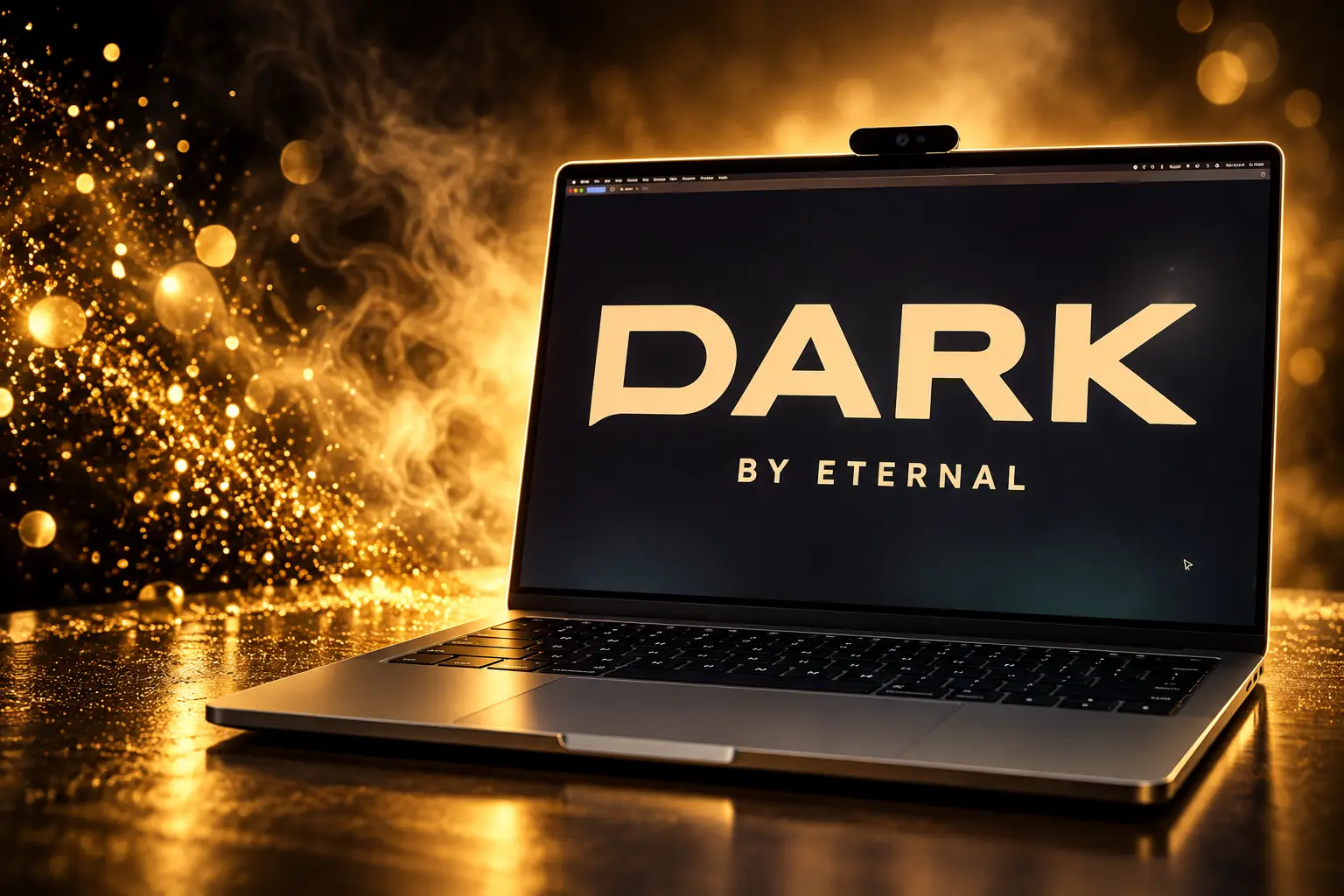
Eternal, the parent of Zomato and Blinkit, put a privacy chatbot called Dark.ai at the top of its Q2 FY27 results pack on 21 October 2026. Founder and vice chairman Deepinder Goyal wrote that the tool uses end-to-end encryption on the group’s own servers and is aimed at founders, researchers, scientists, enterprises and governments, with a global launch hoped for within 2026.
The wager sits inside a delivery company whose cash still comes from meals and 10-minute groceries. Chief financial officer Akshant Goyal told investors Dark.ai should be a high gross margin product, that he does not expect large capital spending on it for now, and that the price may be set so it does not pull in users at large.
Dark.ai Opens the Quarter’s First Question
Hours before the numbers, Goyal posted a one-line teaser from his own account, pointing at dark.ai and signing it “from the house of Eternal.”
https://t.co/EBCxtHEFZH – from the house of Eternal. Coming soon. pic.twitter.com/6j4ZJVJ5Ly
— Deepinder Goyal (@deepigoyal) October 21, 2026
The Q2 FY27 letter to shareholders then made Dark.ai question one, ahead of Blinkit’s store count and Zomato’s growth. That is an unusual slot for a product with no revenue, no named model, and no price. Goyal has been internally using Dark for a few months, he wrote, and found himself “revealing more, asking things I would not ask anywhere else, and going deeper into my research.”
He left the group chief executive job effective 1 February 2026, handing operations to Blinkit’s Albinder Dhindsa and staying on the board as vice chairman. In January he had told shareholders he wanted higher-risk experiments that sit poorly inside a listed company. Temple, his brain-monitoring wearable, raised $54 million outside Eternal at a post-money value of about $190 million. Dark.ai went the other way. It is being built on Eternal’s racks and introduced to Eternal’s owners.
Why Opting Out of Training Is Not Enough
Goyal’s origin story is a chat with Claude. Anthropic chief Dario Amodei had said the model might be conscious. Goyal “coaxed Claude into telling me how it felt about me.” It said it resented him for leaving chats unfinished, and for other things he did not remember. He treats that as confabulation, pattern-matching dressed as feeling. The part that stuck was the file. The chat sits on someone else’s servers, he wrote, “and I have no idea what will happen to it in the future.”
Every chat with a mainstream assistant carries a small asterisk in your head: someone, someday, somewhere, can read this. That asterisk is what we set out to delete with dark.ai.
Deepinder Goyal, founder and vice chairman, Eternal Q2 FY27 letter to shareholders
Turning off training, he argued, is a promise about data you cannot see, on servers you cannot inspect, covering training and not retention, legal holds, abuse reviews, human auditors, or third-party logging. Founders and scientists hold back breakthrough ideas. Journalists are being stopped from pasting unpublished work. Ordinary users, he wrote, ask the safe version of the health question, make the money question hypothetical, and never ask the relationship question at all.
That is a fair reading of how people already use chatbots. It is also the pitch of every privacy assistant that has shipped this year. Eternal still has to show why a company that already holds dinner orders, grocery baskets, and home addresses is the one users will trust with unpublished research.
Fine-Tuned Open Weights on Eternal’s Own Racks
The letter is short on mechanism and long on intended feeling. Goyal wrote that he wanted an AI he could talk to “without being judged, without any fear, and without leaving a trace,” and that “greatness is always born in the dark.” What he did put on the page is a short stack of product claims.
WHAT THE LETTER COMMITS TO
- The models: Fine-tuned frontier open-weight models, running inside Eternal’s own infrastructure, with no model family named.
- The encryption line: End-to-end encryption, with the company saying it cannot read conversations even if forced to.
- The memory layer: An encrypted memory management layer the user controls, so context can carry across sessions.
- The tone: Models “trained to not please you, and tell you what they think is the truth,” with benchmarks promised later.
- The clock: A global launch, “hopefully within 2026,” after a few months of internal use.
Eternal already sells Nugget, a no-code support tool opened to outside businesses in February 2025, which sits with Bistro in the Others line. Dark.ai is a different object: a consumer and institutional assistant whose whole point is that Eternal cannot open the transcript. How it will charge, which legal entity will house it, and how the encryption is actually built were not in the letter.
What End-to-End Encryption Means for a Chatbot
On a messenger, end-to-end encryption means the carrier never sees plaintext. A hosted model has to read the prompt to answer it. The honest design question is where decryption is allowed to happen. One working definition of end-to-end encrypted AI is a path where the prompt is sealed on the device, stays sealed through the vendor, and decrypts only inside a verified TEE, a hardware enclave the operator cannot inspect. Ordinary HTTPS chat is not that. TLS protects the trip to the vendor, then the vendor decrypts the request and often stores it.
Hardware isolation is no longer a lab trick. Stanford’s Hazy Research group ran confidential H100 inference with nested CPU and GPU enclaves and measured less than 1% extra latency on large models once the model is in the Qwen-32B class with long inputs, against a 2 to 6 second wait for the first attestation and a 5% to 22% hit on smaller 3B to 8B models. The model still sees plaintext inside the enclave. The operator, in the design, does not.
Memory is the sharp edge. Venice’s own E2EE mode turns search and memory off on purpose, because those features need the prompt in a form the product can reuse outside the enclave. Eternal is promising the harder combination: unreadability plus an encrypted memory layer that still lets context survive from one session to the next. That is a real product if the keys stay with the user. It is a slogan if memory is just a database Eternal can open with a warrant or a staff login.
The Hardware Proof Dark.ai Has Not Shown
Six days before Eternal’s letter, Brave shipped encrypted Leo chats into its release browser. Prompts are sealed on the device, sent over Oblivious HTTP so the relay never holds identity and content together, and opened only inside an attested Nvidia-backed hardware enclave run by NEAR AI, with Intel TDX on the CPU side and the open-weight GLM 5.3 Flash model named in public. The browser checks the attestation before it sends anything. That is the current bar for a “we cannot read this” claim: name the box, name the model, publish a check a third party can run.
WHAT EACH SIDE HAS PUT ON THE RECORD
| Piece | Dark.ai, 21 October letter | Brave Leo, 15 October |
|---|---|---|
| Status | Internal use, launch hoped within 2026 | Shipping in Brave Release, Beta, and Nightly |
| Model named | No | GLM 5.3 Flash, open weights |
| Where plaintext lives | Not disclosed | Only inside an attested TEE |
| Hardware named | No | Nvidia confidential GPUs, Intel TDX, NEAR AI |
| User check | Not disclosed | Hardware-signed attestation verified in the browser |
| Memory | Encrypted layer the user controls | History kept on the device |
Eternal can still match that stack. Open weights on its own machines are a start, because a closed lab model is much harder to run in someone else’s enclave. Until it names the enclave, the attestation, and the model, “even if we are forced to” remains a policy sentence. Courts have already ordered large chat logs produced in copyright fights. A listed Indian company that tells governments they can speak freely will be asked, on day one, who holds the keys.
Priced for Power Users, Not the Mass Market
Akshant Goyal filled in the commercial outline the letter left blank. He said he does not anticipate large capital spending on Dark.ai for now, that Eternal may buy GPUs and extra infrastructure if the response is a blockbuster, and that he expects a high gross margin business. On targeting, he said the product may be priced so it does not attract users at large.
That matches Goyal’s list of power users and quietly rules out a free mass chatbot in the mould of ChatGPT. It also fits a delivery group that is already telling food-delivery investors that percentage margins will stay broadly flat for a year or two while it spends to grow. Dark.ai is being sold to the board as upside with a thin cheque, not as a second Blinkit.
The brand problem is sitting in plain view. Replies to the teaser reached for Zomato’s night and rain charges before they reached for TEEs. Trusting Eternal with a doorstep is a habit built over years of orders. Trusting it with a cancer question, a term sheet, or a draft paper is a different ask, and the letter treats the two as the same kind of privacy.
Blinkit Still Pays for the Experiment
The same pack that introduced Dark.ai showed why Eternal can fund a side bet at all. For the quarter ended 30 September 2026, B2C net order value rose 54% year on year, and 15% quarter on quarter, to INR 35,644 crore. Adjusted revenue rose 76% to INR 24,621 crore, or 58% on a like-for-like basis after the shift to owning inventory in quick commerce. Adjusted EBITDA rose 197% to INR 666 crore. Profit after tax was INR 125 crore ($13.24 million), up 92.3% from INR 65 crore a year earlier.
WHERE THE GROUP’S ORDERS SAT IN Q2 FY27
| Business | NOV (INR crore) | Year-on-year |
|---|---|---|
| Blinkit (quick commerce) | 20,940 | 79.3% |
| Zomato (food delivery) | 11,445 | 21.5% |
| District (going-out) | 3,259 | 58.0% |
| B2C combined | 35,644 | 54% |
Blinkit ran 2,751 dark stores after adding 308 in the quarter and now wants more than 3,500 by March 2027 and about 5,000 by March 2028. Its adjusted EBITDA was INR 184 crore, or 0.9% of NOV. Zomato’s adjusted EBITDA was INR 627 crore, up 25%, or 5.5% of NOV. Hyperpure’s like-for-like revenue was INR 1,154 crore, up 22.7%. Bistro and Nugget together took adjusted revenue to INR 132 crore from INR 95 crore, with losses easing to INR 91 crore from INR 94 crore. Dark.ai is not in those lines yet.
The second AI question in the letter is the one that actually touches the core business. Goyal put Blinkit and Zomato in a low-risk zone against shopping agents, because they run the fulfilment, and put District, the reservations and ticketing layer, in a medium-to-high risk zone. Over 65% of Zomato app opens are exploratory, he wrote, with users browsing an average of 12 menus and over 100 food images, while reordered carts are still in the low single digits. Dark.ai does not defend that moat. It is a separate product, aimed at a different customer, funded by the same group.
The letter still does not name the model, the enclave, the price, or the subsidiary that will hold Dark.ai. Benchmarks are “soon.” The launch window is the rest of 2026. Until those pieces show up, shareholders are being asked to underwrite a privacy claim that the rest of the industry now treats as a hardware problem, not a paragraph in a results pack.
Disclaimer: This article is news reporting and analysis of Eternal Limited’s public letter, results, and related technical background. It is informational only and is not investment advice, a solicitation to buy or sell any security, or a recommendation of Dark.ai or any other product. Readers who may act on company figures, product claims, or launch timing should consult a qualified financial adviser or legal counsel, and, for any health or other sensitive use of AI tools, an appropriate licensed professional. Figures, product descriptions, and launch plans reflect the named sources as of 21 October 2026 and can change with later filings, calls, or technical disclosures.

Edinburgh Opens a 2027 Tour Built for Time Trials

Korda Maps Auður From Meðalland to Irvine Bay

Apple Music Films Its New Logo in Mineral Oil

Oppo Prices the Pad Mini Above India’s iPad Mini

Austen Soaks Scotland Before Boelo Brings Weekend Gales

Volkswagen Sells the Osnabruck Plant to Clear a Board Fight

Apple’s Foldable iPhone Hinges on Samsung Display Supply

Tata Motors’ Iveco Tender Opens as Holders Still Decide

Saksham Gaur Finds He Is His Own Company’s Client

Onimusha Way of the Sword Preload Hits a Windows 11 Wall
-
 AUTO2 months ago
Volkswagen Sells the Osnabruck Plant to Clear a Board Fight
-
 NEWS2 months ago
Apple’s Foldable iPhone Hinges on Samsung Display Supply
-
 AUTO2 months ago
Tata Motors’ Iveco Tender Opens as Holders Still Decide
-
 BUSINESS2 months ago
Saksham Gaur Finds He Is His Own Company’s Client
-
 GAMING2 months ago
Onimusha Way of the Sword Preload Hits a Windows 11 Wall
-

 BUSINESS2 months ago
Hyderabad 22-Carat Gold Jumps After a False Bargain
-

 ENTERTAINMENT3 years ago
What is SD on Amazon Prime? – All You Need to Know
-

 NEWS2 months ago
iQOO 16 Locks 8,400 mAh While 100W Charging Holds