
NEWS
Bilt.me’s $700K Wager Puts Native Apps Over Websites
Tallinn’s bilt.me raised €614.9k to bet that native iOS and Android apps, not AI websites, are where the next small businesses get built.

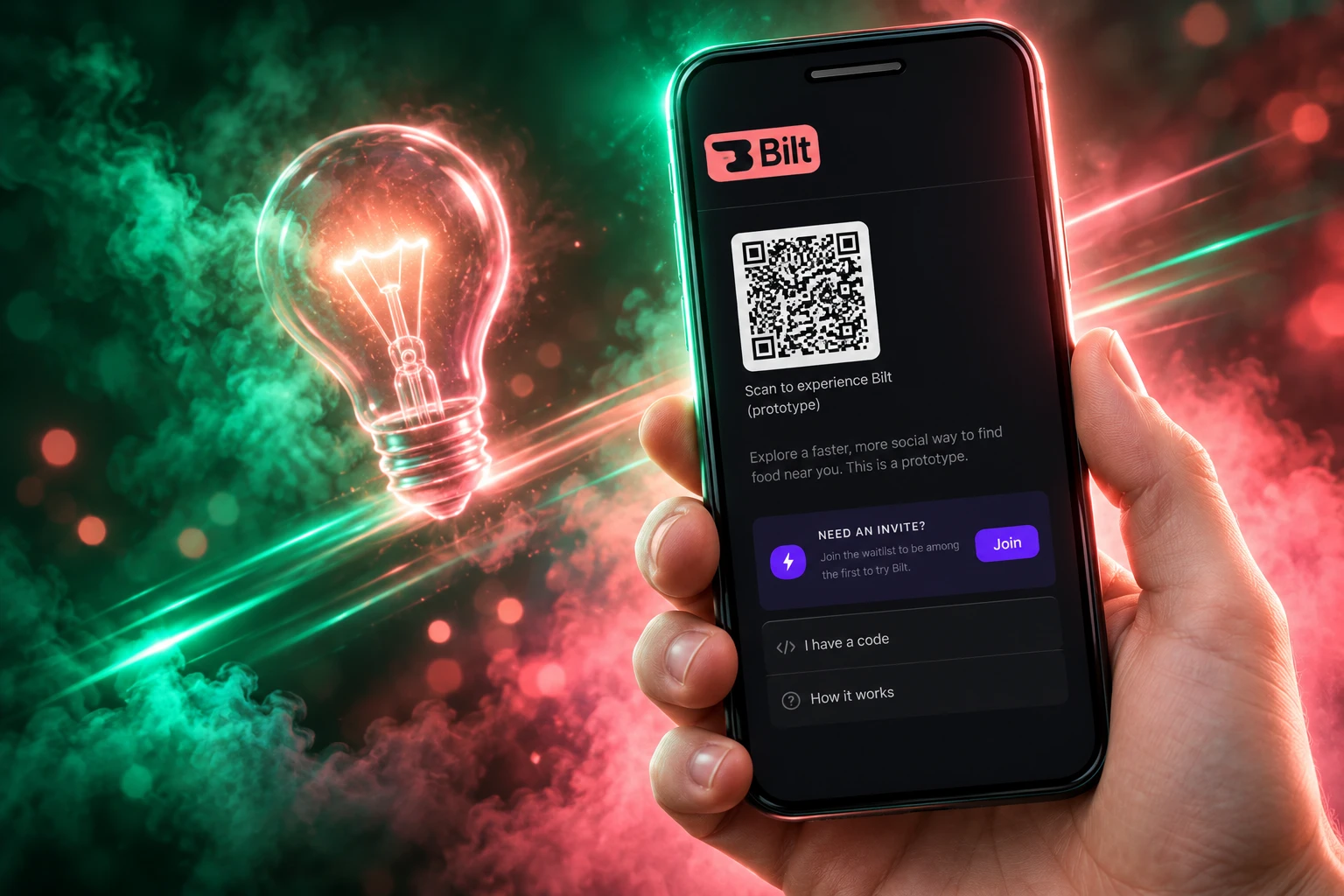
Tallinn’s bilt.me has raised €614.9k ($700,000) in pre-seed funding to turn plain-language ideas into native iOS and Android apps. Superhero Capital led the round, with Bolt founder Markus Villig and Lightyear founder Martin Sokk writing cheques beside the Helsinki seed firm.
The founders’ own line is the wager. “Our bet is that apps, not websites, are where the next generation of businesses gets built,” said co-founder and chief executive Uku Joost Annus.
Superhero Capital Bets €614.9k on Native Apps
On 28 September 2026 the company closed a pre-seed round that looks small next to the AI-builder money sloshing around web tools, and that is part of the point. Superhero Capital is a Helsinki seed firm, founded in 2015, that writes first cheques of €50,000 to €1 million into software teams in Finland and the Baltics from its 2024 fund. Its own site counts 60 startups and 218 “superheroes” in that network, and the software startups Superhero Capital already backs sit in that New Nordics lane rather than on Sand Hill Road.
Villig built Bolt. Sokk built Lightyear after years in the Wise orbit. Annus also thanked Laur Läänemets, Henrik Bohman and Kair Käsper, plus Superhero partner Gytenis Galkis, in his own funding note. The syndicate is Estonian and Baltic on purpose.
WHO WROTE THE CHEQUE
- Lead fund: Superhero Capital, a Helsinki seed firm that backs software companies across Finland, Estonia, Latvia and Lithuania.
- Bolt seat: Markus Villig, founder and chief executive of the ride-hailing and delivery group.
- Lightyear seat: Martin Sokk, co-founder and chief executive of the European investing platform, who called bilt.me “probably the most exciting thing to come out of Estonia lately.”
- Named angels: Laur Läänemets, Henrik Bohman and Kair Käsper, thanked by Annus when the round went out.
Villig’s reason for signing is personal and blunt. He started Bolt young, and he still talks about the wall that used to sit between an idea and a live app.
When I was 19, building an app was one of the biggest barriers to turning my idea into a company. Bilt.me is removing that barrier for the next generation of entrepreneurs. If anyone with an idea can build and launch a real product, we unlock far more people to start companies, solve problems, and create something valuable.
Markus Villig, founder and chief executive, Bolt
A Billion Websites and Only a Few Million Apps
Annus puts the market gap in one sentence. There are more than a billion websites and only a few million apps, he said, because apps are harder to build, so fewer people make them. Superhero’s own note on the deal used the same split. The firm’s version of the pitch is that almost nobody ships apps, which is why a tool that actually lands on a phone is scarce.
That scarcity is the opposite of what happened on the web. Prompt-to-site tools such as Lovable, Bolt.new, v0 and Replit already spit out React pages a person can host in a browser. Several of those products start near $20 to $25 a month. Getting the same idea onto the App Store or Google Play still means a rebuild, a wrapper, or a different product family such as FlutterFlow or Adalo.
bilt.me is aiming at the store path, not another hosted site. The company sells that as the next Shopify-style surface for small businesses, with the phone as the shop floor. Whether that holds depends on whether a generated native app can take payments, keep data and get past Apple and Google, which is a longer list than a Vercel deploy.
How a Prompt Becomes an App Store Listing
Users describe an app in plain language, drop in screenshots or docs, and watch an agent build it. The product site walks that as three beats: start with an idea, preview the app on a phone while it takes shape, then tweak it and publish to the App Store when it is ready. The same agent is meant to help with Google Play. Users can export the React Native code behind what they built, so the output is a mobile project, not a web page in a phone shell.
Kelly Lilles, chief executive at Alpakids, left a note on the company site that is as close as a stranger gets to watching a session. “Built a functioning mobile prototype in one session that would’ve taken our team two weeks. The code quality is production-ready enough that developers are about to ship it with minimal modifications,” Lilles wrote. Roland Kriibi, chief technology officer at Buildwill, put the same motion in fewer words: prompt goes in, native app comes out.
The meter is tokens, not seats. A free account includes 3 million monthly weighted tokens. Paid rungs add more tokens and higher Bilt Cloud limits. The listed Professional plan at €25 a month includes 10 million tokens, or €19 a month if the bill is annual.
BILT.ME PLAN PRICES
| Plan | Monthly tokens | Monthly price | Annual price |
|---|---|---|---|
| Free | 3,000,000 | €0 | €0 |
| Professional | 10,000,000 | €25/mo | €19/mo |
| Professional Plus | 20,000,000 | €50/mo | €39/mo |
| Professional Max | 45,000,000 | €100/mo | €79/mo |
| Professional Ultra | 115,000,000 | €250/mo | €195/mo |
The first month on a monthly plan is discounted. People who gather around the product already meet in Tallinn, Helsinki, Stockholm, Berlin, Amsterdam, London, Warsaw, San Francisco and Toronto, according to the company site, which treats those rooms as a builder circuit rather than a marketing map.
Payments, Cloud and Link Had to Be Built In
A website generator can lean on Stripe, a hosted database and a shareable URL. A native app that is supposed to become a business still needs payments, a backend and a way to hand the build to someone else. Annus’s team says those tools were missing for the kind of apps it wanted to ship, so it wrote its own layers instead of waiting for a mobile equivalent of that web stack.
THE THREE LAYERS THEY ADDED
- Bilt Payments: A payments layer built for apps generated on the platform, so a live product can charge without a separate billing rebuild.
- Bilt Cloud: Cloud, auth, database and storage tied to the plan, including how many projects get a backend and how much traffic they can take.
- Bilt Link: A sharing layer so a build can move off one phone and into someone else’s hands before a store listing exists.
That stack is the unglamorous half of the bet. If the agent only drew screens, bilt.me would be another prompt toy. If payments, cloud and sharing actually sit under a store binary, a non-developer can take an idea to a first paying user without hiring a mobile team. The company even sells that timeline on its homepage: from idea to a first paying customer in a week.
Subscription apps are a brutal place to test that claim. $8,880 after the first year is what the top 5 percent of newly launched apps made in RevenueCat’s 2025 set, against $19 for the bottom 25 percent, a gap the report calls more than 400 times. The same study tracked more than $10 billion in revenue across some 75,000 apps. Hard-paywall apps in that set converted 12.11 percent of downloads to paying users at the median, against 2.18 percent for freemium. Most generated apps will land in the $19 bucket. The product is a wager that more people will even get a listing, and that a few of them will climb.
Six Figures of Recurring Revenue, Then the Round
bilt.me says it has already passed six figures in annual recurring revenue, with that revenue doubling month over month for three consecutive months. Thousands of people are building on it. About 75% of those projects are consumer apps and 25% are private or in-house tools. Paying apps built on the platform are live on the App Store and Google Play.
TRACTION AT THE RAISE
- Revenue: Six figures of annual recurring revenue, doubled in each of the past three months, per the company.
- Builders: Thousands of people on the platform, with paid store listings already live on both iOS and Android.
- Mix: Roughly 75% consumer apps and 25% private or in-house tools.
- Team: Six engineers, still in their early 20s at the founding table, streaming some of their own app-building live on Twitch.
€614.9k is not a war chest against a well-funded web builder. It is closer to fuel on a company that says the revenue line is already moving. For a pre-seed in Tallinn, doubling three times in a row matters more than the headline on the round. It also raises the bar: if growth cools, the story becomes a small cheque on a crowded AI-builder shelf.
They Went to San Francisco and Came Home
Annus, Akkermann and Kiilaspää founded the company in August 2025. Annus is 24, born on 1 November 2001, and the three of them are still in their early 20s. The first version was a hackathon project aimed at Apple’s app-testing restrictions, the kind of closed loop that makes it painful to try a build on real phones. They then won the inaugural cohort of ruum, a hacker space in Tallinn’s Krulli Quarter, and grew the agent into a full path from prompt to store.
FROM KRULLI TO THE ROUND
- August 2025: Annus, Kevin Akkermann and Karl Kiilaspää found bilt.me in Tallinn as a hackathon project aimed at Apple’s app-testing restrictions.
- December 2025: The team wins ruum’s inaugural cohort in the Krulli Quarter, with the product already shipping weekly as a prompt-to-native builder.
- 2026: Revenue passes six figures and doubles for three months; thousands of builders arrive; paid apps go live on both stores.
- 28 September 2026: Superhero Capital leads the €614.9k ($700,000) pre-seed, with Villig and Sokk in the round.
The West Coast trip is now part of the founding myth, and Annus tells it without romance. Everyone told them the magic was in San Francisco. They went, and they came home more sure that the builders they needed were already in Europe. The public conversation around this round barely showed up on X; the cheque still reads as a founder-to-founder Baltic bet, which is the same conclusion they brought back from California.
We should be honest with ourselves. Europe is behind on energy, behind on chips, behind on AI infrastructure, behind on the frontier models. Those races may already be decided elsewhere. But there’s one layer where Europe is still world-class: the application layer, turning AI into things real people use and pay for. That layer runs on builders, and we don’t have nearly enough of them.
Uku Joost Annus, co-founder and chief executive, bilt.me
The New Money Is for a Wider Map
bilt.me says it will spend the new capital on global expansion and on the agent itself. The longer aim, in the company’s words, is to become the place anyone uses to become an entrepreneur through mobile apps. Terms filed for the product list a registered office at Laulupeo tn 3-2 in Tallinn. Annus’s own recap of the raise went further than the press line: a year ago they were six people in a small room he had bargained for free, and this is his first funding announcement. He has already helped thousands start a mobile app business, he wrote, and he is aiming at a million more.
The next test is not another quote about Europe. It is whether those store listings keep converting, and whether Bilt Payments, Bilt Cloud and Bilt Link hold up when the builders are no longer in the same room in Krulli.
Frequently Asked Questions
How does the free plan meter AI usage?
The free plan does not dump 3 million tokens on day one. It drips 500,000 tokens granted each day until it hits a 3 million monthly cap, and that allowance covers prompting, a backend with authentication, a database and storage. Paid plans grant their monthly limit up front instead of by the day.
What does a bilt.me enterprise plan add?
The enterprise offering adds single sign-on, SCIM provisioning and zero data retention, which is the package aimed at companies that will not put internal tools on a consumer token meter. Custom sign-in email design on the product is gated at Professional Plus and above, so the extra controls sit on a different rung from the €25 Professional tier.
Where is bilt.me registered in Estonia?
The company’s terms list a registered address at Laulupeo tn 3-2, Tallinn, 10121, Estonia, and the product is run from bilt.me and app.bilt.me. That is a central Tallinn office line, not a Krulli forwarding address, even though the team’s public origin story still sits in the ruum hacker space.
Can you buy extra tokens without changing plan?
Yes. One-off packs add 5 million tokens for €25, 10 million for €50, or 20 million for €100, and any paid plan takes 40% off those packs (€15, €30 and €60). Top-ups apply at once, stack on the monthly grant, and unused purchased tokens stay available for 30 days.

Edinburgh Opens a 2027 Tour Built for Time Trials

Korda Maps Auður From Meðalland to Irvine Bay

Apple Music Films Its New Logo in Mineral Oil

Oppo Prices the Pad Mini Above India’s iPad Mini

Austen Soaks Scotland Before Boelo Brings Weekend Gales

Volkswagen Sells the Osnabruck Plant to Clear a Board Fight

Apple’s Foldable iPhone Hinges on Samsung Display Supply

Saksham Gaur Finds He Is His Own Company’s Client

Tata Motors’ Iveco Tender Opens as Holders Still Decide

Onimusha Way of the Sword Preload Hits a Windows 11 Wall
-
 AUTO2 months ago
Volkswagen Sells the Osnabruck Plant to Clear a Board Fight
-
 NEWS2 months ago
Apple’s Foldable iPhone Hinges on Samsung Display Supply
-
 AUTO2 months ago
Tata Motors’ Iveco Tender Opens as Holders Still Decide
-
 BUSINESS2 months ago
Saksham Gaur Finds He Is His Own Company’s Client
-
 GAMING2 months ago
Onimusha Way of the Sword Preload Hits a Windows 11 Wall
-

 ENTERTAINMENT3 years ago
What is SD on Amazon Prime? – All You Need to Know
-

 BUSINESS2 months ago
Hyderabad 22-Carat Gold Jumps After a False Bargain
-

 NEWS2 months ago
iQOO 16 Locks 8,400 mAh While 100W Charging Holds