
NEWS
F13 Raises $5 Million for Vector Graphics That Stay True
F13 exits stealth with $5 million to make editable vector charts and diagrams that match data, a bet against pretty but wrong image models.

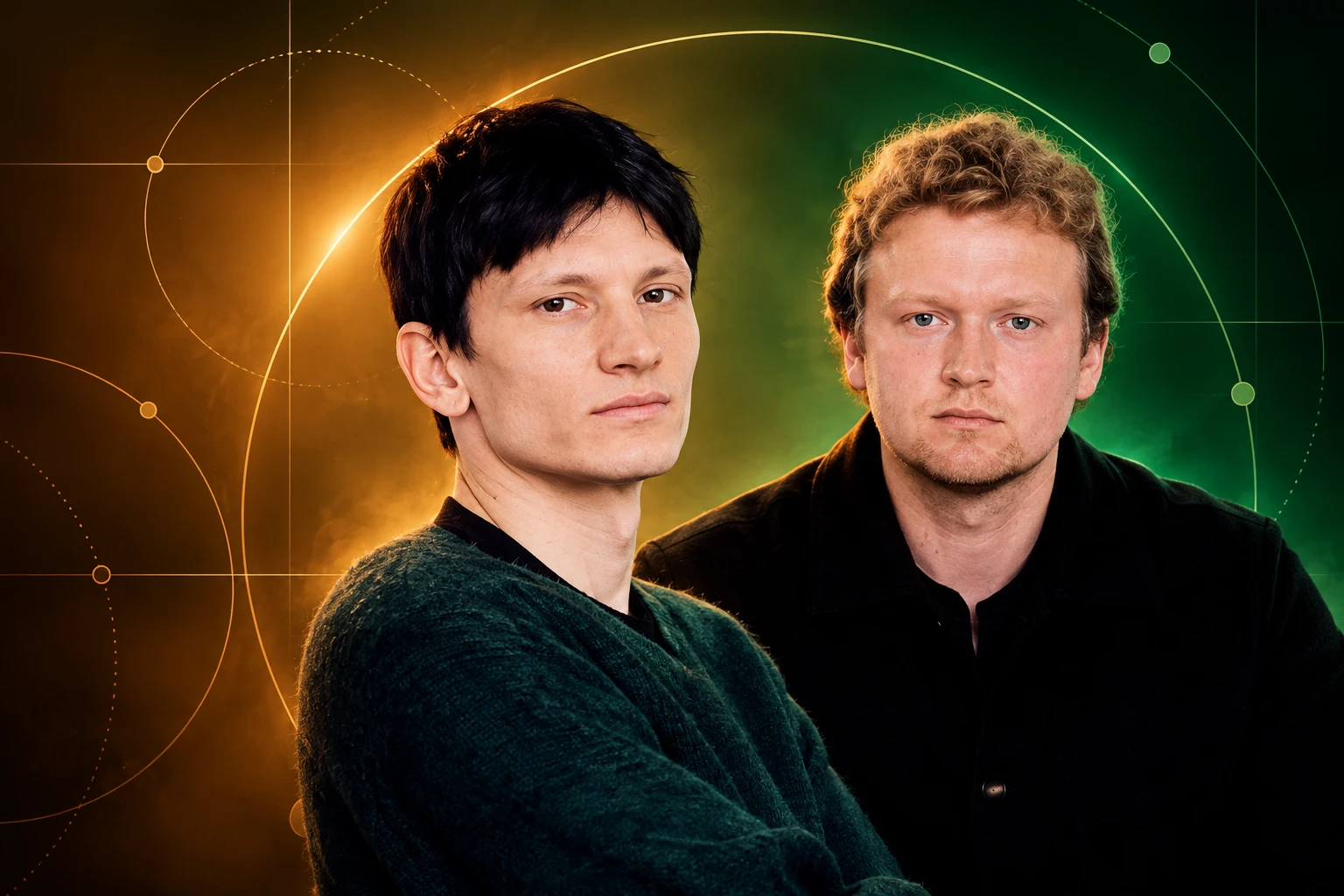
F13 has left stealth with $5 million in pre-seed funding to train models that draw editable vector graphics instead of pixel pictures. Credo Ventures and Point Nine Capital led the round, with angels Carles Reina of Baobab Ventures and Jack Richardson of Mainframe. Co-founder and chief executive Gregory Janik said the team did not want another model that looks impressive and is quietly wrong.
We didn’t want to build another model that’s impressively expressive and quietly wrong. We create visuals that are not only beautiful to look at, but are true to the brief, with the correct proportions, accurate data, and precise layouts. That’s the only version of this technology that’s genuinely useful to discerning professionals who know what good looks like and are doing high-stakes design work.
Gregory Janik, co-founder and CEO, F13
The Job Designers Still Do by Hand
Software teams already hand large parts of coding to agents. Design teams still draw the chart, the map and the diagram themselves, because a picture that merely looks like the brief can still be wrong. Pawel Chudzinski, a partner at Point Nine, put the gap in those terms when the round closed: companies sit on a pile of graphic design, charts, diagrams and marketing assets, and this is what today’s AI still gets wrong.
Janik is blunter. Accurate visuals are a real problem, he said, because you cannot generate them with the tools people already have. In his telling, AI is the antagonist of accurate visuals; people dislike the images and do not want them, because they are always misleading. A student looking at a human skeleton does not need a plausible skeleton. The student needs the correct one.
That complaint is not abstract. Infographics that circulate as “data” still lose countries, warp scale and draw bars that do not match the table beside them. Picture models can spend minutes on a single frame and still miss the proportion a specialist checks first. F13 is selling the unpaid half of that job: output a designer can open, correct and reuse, rather than a JPEG to prompt again.
F13 Builds Models for Charts That Match Data
Vector graphics are shapes and coordinates, not a grid of pixels, so they stay sharp at any size and let someone move a line without redrawing the whole file. Designers and engineers already use the format for charts, diagrams, maps and brand marks when the proportions have to hold. F13 is training foundation models that take text, images or existing graphics and return that kind of file, still editable after the first pass.
The company says its models are built to understand two-dimensional space, and that in its own tests they beat general-purpose image and code models from large labs. That claim is F13’s, not an independent bake-off. The first jobs on the list are the ones raster tools keep fumbling.
FIRST JOBS ON THE LIST
- Data charts: Visualisations that have to match the figures in the brief, not a guess that looks statistical.
- Editorial graphics: Infographics a publication can open and correct without tracing pixels.
- Teaching diagrams: Scientific and educational figures whose proportions have to be right, including the skeleton Janik uses as his test.
- Maps and space: Spatial graphics that keep scale when someone zooms or reprints them.
- Brand layouts: Presentation and marketing pages that follow a design system rather than a mood.
Early-access customers can use an API and a web app to generate, edit, manage and share work. The pre-seed cash is meant to get the first model out, then buy more compute, data and people for harder design tasks.
Recraft, Firefly and Quiver Already Ship SVG
The category is not empty. Recraft has raised $42 million, from a $12 million Series A in January 2024 and a $30 million Series B on May 5, 2025, and sells native SVG with a canvas where a designer can edit every point and colour. Adobe already puts Text to Vector Graphic tools inside Illustrator, with SVG files that open as editable objects. QuiverAI, which announced an $8.3 million seed round led by a16z on February 25, 2026, launched Arrow 1.0 in public beta the same day and lists logos, icons, floorplans and technical drawings among the jobs it wants.
WHO ALREADY SELLS VECTOR AI
| Company | Capital disclosed | What it ships | Stated job |
|---|---|---|---|
| F13 | $5 million pre-seed | Vector graphics via API and web app, early access | Charts, diagrams, maps, brand layouts that follow a brief |
| QuiverAI | $8.3 million seed | Arrow 1.0 SVG from text and images, public beta | Logos, icons, illustrations, plus technical drawings |
| Recraft | $42 million total | Native SVG and an in-tool vector editor | Brand assets, icons, illustrations |
| Adobe Firefly | Product inside Creative Cloud | Text to Vector Graphic, SVG into Illustrator | Scenes, subjects, icons, patterns |
Janik does not treat those startups as the fight. He describes Quiver as a shop for expressive, artistically rich work aimed at illustrators, and puts Recraft in a neighbouring lane rather than a head-to-head. In his view the real contest is with OpenAI and Google, which train general models at a high cost. Quiver’s own seed post still names technical drawings, so the overlap is larger than that framing. The open question is whether F13 can make a chart that matches a spreadsheet, not whether anyone can emit an SVG logo.
$5 Million, Three Weeks, No Pitch Deck
Janik dropped mathematics and physics degrees after he was already working full time, then wrote flight-control software for a drone company later bought by Helsing. He ran credit-risk models at a bank regulated by the FCA, tried an earlier machine-learning infrastructure company and a licensed bank, and later became director of engineering at the edtech firm Knownunity. There he met Ingimar Tomasson, F13’s co-founder, a machine-learning researcher who trained as a mathematician at UCL. They started on the product’s visuals and ended with a company.
Janik, who left Poland as a teenager, lived in London and Milan and has been in Berlin for more than ten years. He says he has two exits, including the drone work. The seven-person team includes researchers who previously worked at Meta and Porsche, and designers who have worked for Versace, Gucci and Nike. Most of the seven hold PhDs. Janik does not plan a big hiring spree; the money is for training and launching the first model.
The raise itself was short. From a first conversation with an angel in San Francisco to a closed round took about three weeks, and the company never built a pitch deck. “That’s something which fundamentally doesn’t occur in Europe. You just talk to a stranger, and he says, ‘That’s very cool, here’s a check,’” Janik said. He also said the first cheque came from a chance conversation when F13 was still only an idea.
THE VECTOR AI CALENDAR
- January 2024: Recraft raises $12 million in Series A funding for brand-consistent design tools.
- May 5, 2025: Recraft raises $30 million in Series B funding, taking its total to $42 million.
- February 25, 2026: QuiverAI raises an $8.3 million seed round led by a16z and puts Arrow 1.0 into public beta.
- September 23, 2026: F13 leaves stealth with $5 million from Credo Ventures and Point Nine Capital and opens early access.
Matěj Míček, tech partner at Credo Ventures, said Gregory and Ingimar have a strong record on hard technical problems, and that taste is what sets them apart, mixing current machine-learning research with roots in fashion and design and a history of starting companies. Credo, based in Prague and Kraków, writes first cheques for Central and Eastern European founders, typically $1 million to $5 million, and led the early money into ElevenLabs, now valued at $11 billion at its last round, after co-leading the pre-seed for UiPath, which listed at a $35 billion IPO. The firm lists five funds, 17 years and more than 100 companies. Point Nine, the Berlin software firm that invests $1 million to $10 million a company, led Loom’s seed round in 2017 before Atlassian bought it for close to $1 billion.
Why a Skeleton Diagram Cannot Be Merely Plausible
F13 is aiming at work where a wrong line is a failed brief: a chart that must match the data, a scientific diagram whose lengths have to be right, a layout that has to follow a brand system. Janik’s running example is ordinary and strict. Labels on water bottles, icons in a browser toolbar and graphics in a phone’s operating system stay clear at any zoom because they are numbers, not pixels, and a teaching diagram of a skeleton has to be accurate, not merely plausible, which is why designers still draw those figures by hand.
That is a different product promise from a pretty icon. Recraft and Firefly already help a designer explore a mark and tidy the paths. Quiver already talks about structure, grouping and SVGs that can be edited, animated and reused. F13 is betting those tools still will not be trusted with the figure that goes in the textbook, the earnings pack or the map. If that bet is right, the buyer is not the person making moodboards. It is the person who currently refuses to ask a model for the diagram.
F13 Wants Graphics at a Cent a Shot
Janik argues the team did not need a $100 million round to buy a compute edge. Frontier labs, he said, charge between $60 and $70 per million tokens, while F13 wants graphics generation at a cent, or even less. A seven-person lab cannot outspend OpenAI or Google. It can try to make one narrow file format cheap enough that a team generates the chart instead of drawing it.
THE PRE-SEED IN FIGURES
- $5 million: Pre-seed round led by Credo Ventures and Point Nine Capital, closed in about three weeks with no pitch deck.
- Seven people: Headcount now, most of them with PhDs, including researchers from Meta and Porsche and designers from Versace, Gucci and Nike.
- $60 to $70: What Janik says frontier labs charge per million tokens, against F13’s target of a cent or even less per graphic.
- Later in 2026: Planned public launch, with early access already open through an API and a web app.
He still describes the whole field as the dial-up internet era, and says the iPhone moment for AI has not arrived. The seven-person team is trying to find out whether a specialised method can beat the labs’ budget, or whether vision models will swallow the job once they get as cheap and common as text. That is the wager Credo and Point Nine just made, not a result.
A Waitlist, an API and a Later Launch
F13 has opened early access and put a waitlist on the company site. Teams that get in can generate and edit through the API or the web app and share the files. A public launch is planned later in 2026. Until then the product is a private test of whether a chart can be both handsome and true to the numbers.
WHAT WE KNOW
- The round: $5 million pre-seed, led by Credo Ventures and Point Nine Capital, with Reina and Richardson as angels.
- The product shape: Foundation models for editable vector graphics from text, images or existing graphics, offered through an API and a web app.
- The timing: Early access is open; a public launch is planned later in 2026.
- The headcount: Seven people, with no plan for a large hire wave while the first model is trained.
WHAT IS UNCONFIRMED
- Independent quality: F13 says its tests beat general image and code models; there is no public bake-off against Recraft, Firefly or Arrow 1.0 on charts.
- The cent price: A cent or less is Janik’s target, not a published rate card.
- The launch date: “Later in 2026” is the company’s window, not a day.
The money now goes into training and launching that first model. Whether a seven-person Berlin lab can make a diagram a teacher will trust, at a cent a shot, is the test the round actually bought.

Edinburgh Opens a 2027 Tour Built for Time Trials

Korda Maps Auður From Meðalland to Irvine Bay

Apple Music Films Its New Logo in Mineral Oil

Oppo Prices the Pad Mini Above India’s iPad Mini

Austen Soaks Scotland Before Boelo Brings Weekend Gales

Volkswagen Sells the Osnabruck Plant to Clear a Board Fight

Apple’s Foldable iPhone Hinges on Samsung Display Supply

Saksham Gaur Finds He Is His Own Company’s Client

Tata Motors’ Iveco Tender Opens as Holders Still Decide

Onimusha Way of the Sword Preload Hits a Windows 11 Wall
-
 AUTO2 months ago
Volkswagen Sells the Osnabruck Plant to Clear a Board Fight
-
 NEWS2 months ago
Apple’s Foldable iPhone Hinges on Samsung Display Supply
-
 AUTO2 months ago
Tata Motors’ Iveco Tender Opens as Holders Still Decide
-
 BUSINESS2 months ago
Saksham Gaur Finds He Is His Own Company’s Client
-
 GAMING2 months ago
Onimusha Way of the Sword Preload Hits a Windows 11 Wall
-

 ENTERTAINMENT3 years ago
What is SD on Amazon Prime? – All You Need to Know
-

 BUSINESS2 months ago
Hyderabad 22-Carat Gold Jumps After a False Bargain
-

 NEWS2 months ago
iQOO 16 Locks 8,400 mAh While 100W Charging Holds