
AUTO
Gas Prices Set a September Record After the Blend Switch
AAA’s $4.48 national gas average is the highest ever for late September, even after EPA moved winter-blend fuel up to Sept. 1.

The U.S. average for regular gasoline stood at $4.48 a gallon on Sept. 24, the highest AAA has recorded for late September.
Autumn usually trims the pump as summer fuel leaves the system. This year the national average kept climbing, and a federal waiver that moved winter gasoline up to Sept. 1 has not broken the rally.
Autumn Was Supposed to Cheapen the Gallon
AAA said the $4.48 reading is the highest the national average has ever been for this time of year, up nearly 5 cents from the prior week. The club’s national figure on Sept. 28 was $4.4768, still $4.48 when rounded the way AAA publishes it.
A month earlier the same series sat at $4.10. A year earlier it was $3.16, so the pump is about $1.32 higher than last September. The month-to-date average is $4.30, which already tops the previous September record of $3.83, set in 2023.
Typically, the start of autumn brings lower gas prices, but lingering volatility in the Strait of Hormuz and the high cost of crude oil are driving up pump prices.
AAA, Sept. 24, 2026 fuel report
Labor Day travelers already paid a record for that weekend, $4.14 on Sept. 3. The next two AAA weekly notes were $4.27 and $4.43. The autumn fade that drivers count on never showed up in those prints.
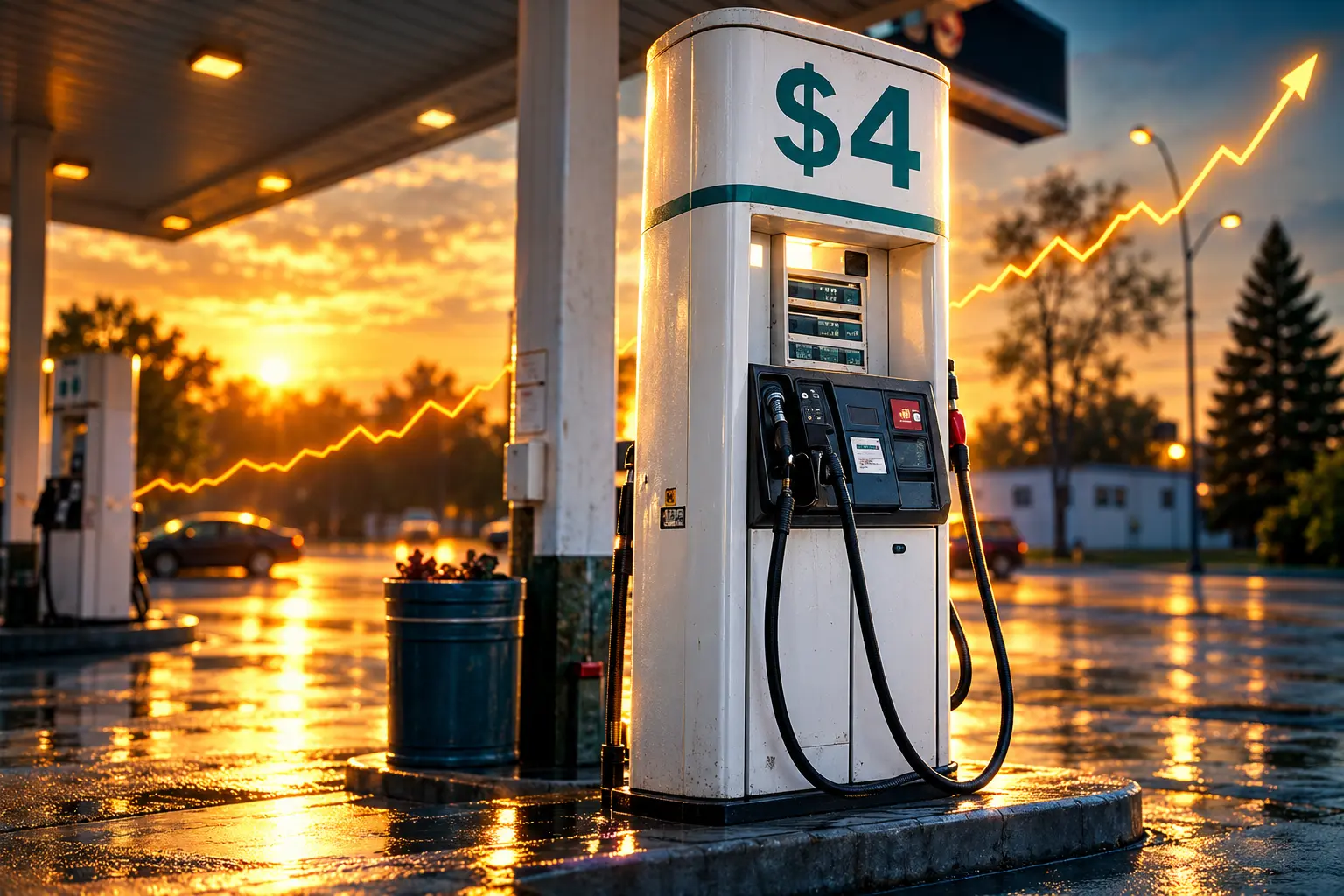
The Waiver That Ended Summer Fuel Early
Summer gasoline is the expensive blend. It is made to a lower vapor-pressure spec so it evaporates less in heat, and it costs more to produce than winter fuel, which takes cheaper butane. Retailers normally run the summer spec into mid-September. Refiners and terminals start even earlier, in May.
On Aug. 20, the Environmental Protection Agency, with the Energy Department, issued an emergency fuel waiver that ended the summer-blend requirement early. The agency said the change would add hundreds of thousands of barrels a day by letting winter gasoline flow from Sept. 1 rather than Sept. 16. EPA Administrator Lee Zeldin framed the move as pump relief.
Stations in Texas, Arizona, and California got extra days beyond the federal date because those states keep summer rules later. On Sept. 8 the waiver for boutique state fuels was renewed through early October in Texas and for the 20 days the Clean Air Act allows in Arizona and California. California then ordered winter-blend fuel into the market in late September after a refinery problem, a last local pull on the same lever.
HOW 2026 GOT STUCK ABOVE $4
- Feb. 28, 2026: Fighting around Iran and the Strait of Hormuz begins to reprice crude, after a winter when U.S. regular had been near $2.80.
- Spring 2026: The national average clears $4 as travel demand rises and refiners are still on summer fuel.
- Aug. 20, 2026: EPA issues the waiver that starts winter gasoline on Sept. 1.
- Sept. 3, 2026: AAA’s Labor Day average is $4.14, already a record for that weekend.
- Sept. 21, 2026: EIA’s weekly survey prints $4.478 nationwide.
- Sept. 24, 2026: AAA calls $4.48 the highest national average ever for this point in the year.
The waiver did what it was built to do on paper. It opened a cheaper recipe and a bigger pool. It did not restore the September discount that used to follow Labor Day when crude was calm.
Why Gas Prices Are Still Above $4 in September
Crude is still the bulk of the gallon, and it has stayed expensive. AAA said on Sept. 17 that oil was averaging $100 a barrel. In its Sept. 24 note, West Texas Intermediate settled at $92.16. That is the floor under a $4.48 national average, and it is why an early blend switch could not replay the usual autumn slide.
When EIA last published its pump breakdown for a $4.48 gallon, in May, crude oil was 52% of the price, refining 22%, distribution and marketing 15%, and taxes 12%. Those shares move week to week, but the order does not: oil first, then the refinery, then the truck, then the tax man.
Gasoline demand in the EIA week AAA cited rose to 8.84 million barrels a day from 8.79 million. Total domestic gasoline supply slipped from 207.7 million barrels to 206 million, and production eased from 9.64 million barrels a day to 9.59 million. Crude inventories rose 3 million barrels to 426.4 million, 2% above the five-year average, so this is not a U.S. tank-farm panic. It is a product price chasing a still-high crude marker.
WHAT WE KNOW
- The national print: AAA’s regular average was $4.48 on Sept. 24 and $4.4768 on Sept. 28, a September record for this point in the year.
- The survey: EIA’s week of Sept. 21 put U.S. regular at $4.478, up 15.9 cents from the week before.
- The policy lever: Winter gasoline was legal from Sept. 1 under the EPA waiver, 15 days earlier than the usual Sept. 16 changeover.
WHAT IS UNCONFIRMED
- Hormuz talks: Mediation aimed at reopening the strait is still in motion, and no pump-price path is locked to a deal that does not exist yet.
- California’s late switch: Patrick De Haan, GasBuddy’s head of petroleum analysis, said the state’s winter-blend move could start to cut prices there in the coming days after a refinery problem, not that it already has.
Motorists have heard the expensive-blend story in both seasons, which is why this waiver was supposed to matter. When the cheaper recipe is already in the system and the sign still reads $4.48, the remaining driver is the barrel, not the calendar.
California Averaged $6.23 When Texas Sat at $3.95
The $4.48 national mean is a blend of very different pumps. On Sept. 24, AAA’s dearest state average was California at $6.23. Texas was the cheapest at $3.95. That is a $2.28 gap on the same day, wide enough to change a road-trip budget at the state line.
AAA REGULAR AVERAGES ON SEPT. 24
| Market | Regular average | Place on the list |
|---|---|---|
| United States | $4.48 | National mean |
| California | $6.23 | Highest state |
| Hawaii | $5.57 | 2nd highest |
| Washington | $5.54 | 3rd highest |
| Texas | $3.95 | Lowest state |
| Indiana | $3.96 | 2nd lowest |
| Mississippi | $3.99 | 3rd lowest |
Illinois, at $4.85, sat 89 cents above Indiana. That is the border gap commuters can actually hunt. Hawaii and Washington show the other pattern: isolation and West Coast fuel rules keep the sign high even when a state is not the tax champion.
EIA’s weekly U.S. regular gasoline average for the week of Sept. 21 tells the same regional story in a different survey. The Gulf Coast was $3.972. The West Coast was $5.600, a $1.63 spread. The Midwest jumped 29.5 cents in one week to $4.386. Ohio rose 33.1 cents to $4.478. Chicago jumped 45.9 cents to $4.879, the sharpest city move on that table.
Diesel is a separate squeeze. EIA put on-highway diesel at $6.529 for the week of Sept. 21. Public EV charging, AAA said, held at 42 cents a kilowatt hour, unchanged that week, which is little comfort to the households still buying liquid fuel.
The 2022 Spike Unwound by Fall
The last time the country lived with $4 gas as a national event was 2022. EIA’s weekly regular average peaked at $5.01 in the week of June 13, 2022, then receded as the year aged. By the following Septembers, AAA’s monthly record was $3.83 in 2023, not another climb through the fall.
2026 followed a different path. Prices cleared $4 in spring, eased some in midsummer, then rose into September against the seasonal grain. The early winter-blend waiver was the tool that, in a quiet crude market, would have helped the second half of that path look like 2022. Crude near $100 took that option off the table.
The all-time weekly high is still that $5.01 print from 2022. The new mark is narrower and, for drivers, ruder: the highest September average on the books, posted after the government had already spent its blend waiver.
State Taxes Add as Much as 73.6 Cents
Taxes do not set the $4.48 mean. They decide how far a state sits above or below it. The federal gasoline tax is 18.4 cents a gallon everywhere. On top of that, states pile excise taxes, fees, and, in some places, sales taxes on fuel.
The California Department of Tax and Fee Administration lists a California gasoline excise tax of 63.4 cents a gallon from July 1, 2026, up 2.2 cents from 61.2 cents. That is the statutory excise line only. The Tax Foundation’s 2026 tally, which folds in other state fuel charges, says California levies the highest tax on gasoline at 73.6 cents per gallon, then Illinois at 70.4 cents and Indiana at 63.1 cents. Alaska is lowest at 8.95 cents.
WHAT THE TAX LINE DOES NOT FIX
- Indiana: A 63.1-cent state burden still produced a $3.96 AAA average on Sept. 24, because Midwest supply and a cheaper wholesale barrel offset the levy.
- Alaska: An 8.95-cent tax did not prevent a $5.06 AAA average, because fuel has to travel.
- Hawaii: An 18.5-cent tax sat beside a $5.57 average, another island-freight story.
- Illinois vs. Indiana: The 89-cent pump gap on Sept. 24 is the kind of border tax-and-market spread a detour can actually capture.
Spring explainers treated a 30-cent state-line jump as the prize. The Sept. 24 snapshot makes that look small. The prize now is a full dollar in places like the Illinois-Indiana line, and more than $2 if the comparison is California against Texas, a gap no reasonable commute can close.
Border Stops Still Cut the Cost of a Tank
The useful moves are the same ones drivers used when $4 first printed in the spring, and they pay more now because the gaps are wider. Mapping a fill-up before a long trip still beats guessing at the next exit. Timing a stop on the cheap side of a state line still beats a loyalty app that shaves a few cents in a $6.23 market.
THE LEVERS THAT STILL MOVE A TANK
- State lines: A tank bought in Indiana instead of Illinois, on AAA’s Sept. 24 averages, is an 89-cent-per-gallon cut, not a rounding error.
- Week timing: Station prices often settle earlier in the week; chasing a Sunday holiday print is how Labor Day’s $4.14 became a record.
- The car, not the sign: Proper tire pressure, a clear roof, and 65 instead of 75 miles an hour still save fuel when every gallon is $4.48.
- Apps and club discounts: They trim a few dollars a week. They do not rewrite a $2.28 California-to-Texas spread.
De Haan said California’s early winter fuel could start to cut prices there in the coming days, after a refinery problem. The national figure AAA posted on Sept. 28 was still $4.4768.

Edinburgh Opens a 2027 Tour Built for Time Trials

Korda Maps Auður From Meðalland to Irvine Bay

Apple Music Films Its New Logo in Mineral Oil

Oppo Prices the Pad Mini Above India’s iPad Mini

Austen Soaks Scotland Before Boelo Brings Weekend Gales

Volkswagen Sells the Osnabruck Plant to Clear a Board Fight

Apple’s Foldable iPhone Hinges on Samsung Display Supply

Saksham Gaur Finds He Is His Own Company’s Client

Tata Motors’ Iveco Tender Opens as Holders Still Decide

Onimusha Way of the Sword Preload Hits a Windows 11 Wall
-
 AUTO2 months ago
Volkswagen Sells the Osnabruck Plant to Clear a Board Fight
-
 NEWS2 months ago
Apple’s Foldable iPhone Hinges on Samsung Display Supply
-
 AUTO2 months ago
Tata Motors’ Iveco Tender Opens as Holders Still Decide
-
 BUSINESS2 months ago
Saksham Gaur Finds He Is His Own Company’s Client
-
 GAMING2 months ago
Onimusha Way of the Sword Preload Hits a Windows 11 Wall
-

 ENTERTAINMENT3 years ago
What is SD on Amazon Prime? – All You Need to Know
-

 BUSINESS2 months ago
Hyderabad 22-Carat Gold Jumps After a False Bargain
-

 NEWS2 months ago
iQOO 16 Locks 8,400 mAh While 100W Charging Holds