
NEWS
Scotland Flags a £10 Million Microbira Case in Mumbai
Edinburgh’s Microbira already has a rapid AMR test in Agilus’s Mumbai lab, but the £10 million India export case still has no signed Agilus deal.

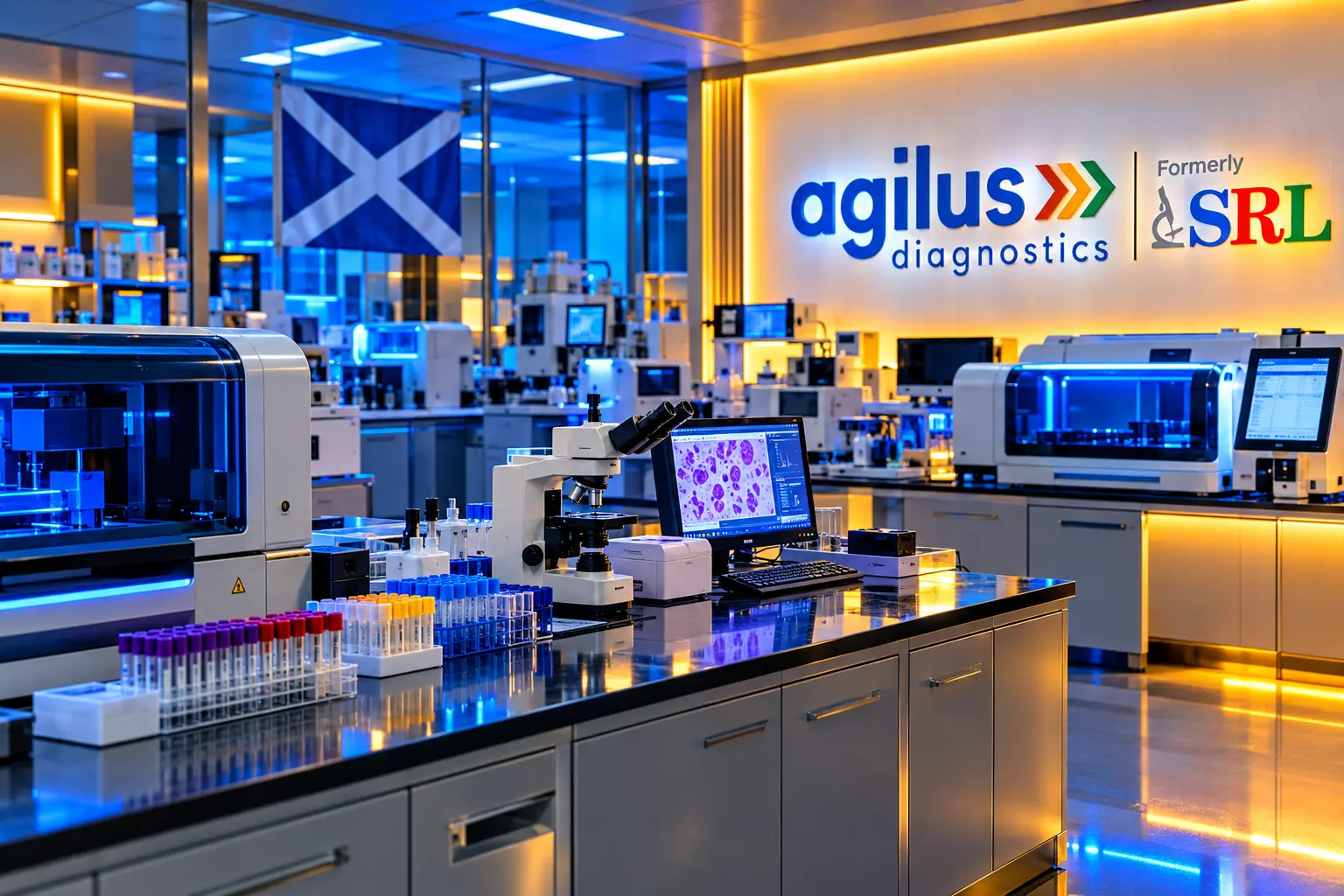
Agilus Diagnostics said on 29 October that Douglas Alexander, the UK’s Secretary of State for Scotland, had toured a rapid microbial test from Edinburgh’s Microbira at its Goregaon laboratory in Mumbai.
The Scotland Office had already announced that visit on 14 October and attached a £10 million export opportunity to the kit. Agilus said the commercial terms of any collaboration, including investment, have not been finalised.
Microbira’s Kit Is Already in the Goregaon Lab
The political headline is a Scottish secretary in an Indian lab. The company with something to lose is smaller, younger and already on the floor.
Microbira was founded in 2019 and based in the UK. It builds software that reads infrared spectra of microbes. Chief executive Marianne Ismail, who holds a master’s in clinical microbiology and infectious diseases from the University of Edinburgh, leads strategy and fundraising. The product the minister was shown is MAAP-IR, short for Microbira Advanced Analytical Platform, Infrared.
Agilus said the programme in Goregaon included a walk through its microbiology department, where that technology is installed. That is not a slide deck. It is a box, or a spectrometer plus a login, sitting inside India’s largest diagnostic chain by geographic reach.
MICROBIRA’S PATH TO INDIA
- 2019: The company is founded in the UK around AI and Fourier transform infrared spectroscopy.
- Late 2021: MAAP-IR, a web application, receives UKCA Class 1 certification as software as a medical device.
- 2024: After NHS and international validation, a performance upgrade goes commercial in the UK. Microbira and Hyderabad’s SCIINV Biosciences announce a joint venture with an initial investment of £1 million, aimed at faster identification of drug-resistant bugs.
- 2025: The firm says it is ISO 13485 certified and registers Microbira India Private Limited. It now says it is present in three major Indian cities and growing.
- October 2026: The Scotland Office says Alexander viewed the kit at Agilus. Agilus, in its 29 October note, confirms the install in Goregaon microbiology and says no commercial package has been closed.
India is not a new idea for Ismail’s team. The Hyderabad joint venture and the 2025 subsidiary came before any ministerial walk-through. Goregaon is the first time that expansion has been walked through by a UK cabinet minister on an Agilus site, with a published export figure attached.
How Fast Does the Test Name a Pathogen?
Classic microbiology waits on culture, then on biochemical panels or mass spectrometry. MAAP-IR sits after a colony is already growing. An ATR-FTIR instrument takes a spectrum. Cloud software matches it against a library. Microbira’s own site says the platform gives identification in under three minutes from a pure culture, with no reagents.
MAAP-IR AT A GLANCE
- Species library: More than 35 clinically relevant bacteria and yeasts, a list the company says it is still expanding.
- Turnaround: Under three minutes from pure culture to an identification, compared with a day or two for many culture work-ups.
- Consumables: Zero reagents, which the firm sells as a low ongoing cost for labs that already have, or can host, an FTIR instrument.
- Priority bugs: Validated against all ESKAPE pathogens and more than 80% of the WHO Bacterial Priority Pathogens, plus clinical yeasts including Candida auris.
The clinical pitch is narrow and specific. If a lab can name Staphylococcus aureus or Klebsiella pneumoniae in minutes after culture, a doctor has a tighter window in which to drop a broad-spectrum drug. The same library includes Candida auris, a yeast India’s AMR plan flags in intensive-care units. Strain typing and resistance screening are listed as further uses, including veterinary, food and environmental work.
That still leaves a hard limit. The clock starts after a pure culture exists. It is not a bedside cartridge that reads a swab in an emergency bay. Agilus’s own language was careful: the visit was a chance to evaluate whether the method meets clinical need at the quality and volume a national chain has to hold.
Carbapenem-Resistant Infections Kill More Patients in India
The reason a three-minute ID has a market in Mumbai is not a trade mission. It is the failure of last-line antibiotics in Indian hospitals.
An Indian Council of Medical Research analysis, published in The Lancet Regional Health, Southeast Asia, reviewed records from 20 tertiary hospitals between April 2022 and April 2025. Among 26,213 patients infected with four major Gram-negative bacteria, 61.1% of those infections were resistant to carbapenems, the drugs kept for the worst cases.
ICMR MORTALITY, CARBAPENEM-RESISTANT VS SUSCEPTIBLE
| Pathogen | Resistant mortality | Susceptible mortality |
|---|---|---|
| E. coli | 24.4% | 17.3% |
| K. pneumoniae | 31.2% | 23.5% |
| A. baumannii | 37.9% | 32.8% |
| P. aeruginosa | 28.9% | 20.2% |
The study put the extra death risk at 41% for carbapenem-resistant E. coli, 33% for K. pneumoniae, 16% for A. baumannii and 43% for P. aeruginosa. In bloodstream infections the toll was higher still, from 39.3% mortality for resistant E. coli to 50.8% for resistant A. baumannii.
India’s National Action Plan on Antimicrobial Resistance, version 2.0 covering 2025 to 2029, cites a 2021 Global Burden of Disease estimate of 1.14 million deaths worldwide directly attributable to bacterial AMR, with 4.71 million associated deaths. The same plan says resistance to third-generation cephalosporins exceeds 65% in E. coli and K. pneumoniae, that Acinetobacter shows 66% carbapenem resistance in blood isolates, and that Candida auris in ICUs is linked to mortality of 46 to 75%.
Alexander used that frame, not a sales one, when he spoke at the lab.
India and Scotland have an opportunity to work together on antimicrobial resistance through research and innovation. The visit to Agilus Diagnostics showcased the potential of rapid microbial testing technology and the scope for collaboration to help tackle infections faster.
Rt Hon Douglas Alexander, Secretary of State for Scotland, at Agilus Diagnostics, Mumbai
Faster naming of a bug does not, on its own, reverse those percentages. It only helps if the result is trusted, reported into the ward, and used to stop the wrong drug. That is an operations problem as much as a spectroscopy problem, which is why Agilus’s scale is the other half of the visit.
Agilus Can Put a New Assay Across 413 Labs
Agilus, formerly SRL Diagnostics, is a Fortis Healthcare subsidiary founded in 1995. Its public about page describes a network of 413 laboratories across India, including one global reference laboratory in Mumbai and regional reference labs in Gurugram, Bengaluru, Chennai, Kolkata and Cochin. Goregaon is that Mumbai reference site.
Vijender Singh is managing director and chief executive, a diagnostics veteran with 30 years in the sector who took the job in July 2026. Dr Deepak Sanghavi, senior vice president for operations and chief of the Mumbai reference lab, hosted the science side of the walk-through.
WHAT AGILUS PUTS ON THE TABLE
- Volume: In FY26 the company says it ran 39 million tests and served 16.3 million patients.
- Accreditation: As of March 2025 it listed 42 NABL-accredited labs, one lab with both NABL and CAP, and one CAP-accredited lab.
- Reach: It calls itself India’s only pan-India diagnostics chain, serving 1,000-plus towns and cities.
- Role in this visit: Host, evaluator and the only named Indian chain with Microbira’s kit already in its microbiology department.
Singh’s published comment stayed inside that evaluator role. “India’s diagnostics sector presents significant opportunities for growth and innovation,” he said. “Engagements with international technology companies can help bring advanced capabilities to India and assess their relevance to local healthcare needs. This visit was an opportunity to showcase Agilus’s capabilities and explore potential areas of collaboration.”
Sanghavi was blunter about the filter. Collaboration, he said, can help evaluate tools that meet clinical need “while maintaining the quality and operational rigour required for diagnostic testing at scale.” A reagent-free three-minute ID is interesting in Goregaon. It only becomes a Scottish export if Agilus, or a peer chain, decides the spectra, the software and the workflow survive a 39-million-test year.
Nine UK Diagnostics Companies Walked In on 26 October
The Alexander tour sits inside a thicker pipeline. Health Innovation Yorkshire and Humber, working with the UK Department for Business and Trade and DBT India, ran a UK-India Diagnostics Cohort into Delhi, Mumbai and Hyderabad from 26 to 30 October. The brief offered curated meetings with Dr Lal PathLabs, Agilus, Metropolis Healthcare, Thyrocare and Neuberg Diagnostics.
The same brief put India’s diagnostics sector projected to reach £4.5 billion by 2027, and said over 80% of medical devices used in the country are imported. Places on the trip were capped at 10 export-ready firms in medtech, diagnostics and digital health.
Agilus said that on 26 October it hosted nine UK diagnostics companies at Goregaon under that cohort. Three days later the British Deputy High Commission in Mumbai was still posting about UK diagnostics firms in the city on the same mission. Alexander’s own lab visit, announced on 14 October, was the ministerial version of a door already being used by a trade unit.
On 29 October, Agilus’s public feed was running World Stroke Day films, not the Scottish secretary. The live diplomatic channel that morning was the cohort, not a second cabinet tour. Microbira had already been through an earlier UK-India medtech grouping in 2025. The pattern is repetition: briefings, lab walk-throughs, named chains, no published purchase order.
The £10 Million Export Case Has No Signed Contract
The Scotland Office put the visit on the record first, and it put a number on it.
India & the UK are working together to tackle antimicrobial resistance.@D_G_Alexander visited @agilusDx to see Edinburgh-based Microbira’s rapid microbial testing in action.
A new research partnership will help tackle infections faster, with a £10m export opportunity for 🏴 pic.twitter.com/57Y8xJfPbv
— Scotland Office (@UKGovScotland) October 14, 2026
That post, dated 14 October, said Alexander had seen Microbira’s rapid microbial testing at Agilus, called the work a new research partnership, and attached a £10 million export opportunity for Scotland. Agilus, 15 days later, agreed the export figure and then drew a harder line: the commercial scope of any collaboration involving Agilus, including investment commitments, has not been finalised.
Those two statements can both stand. A research partnership is not a reagent contract, a software licence, or a roll-out across 413 labs. The £10 million is an official estimate of what Microbira might sell into Indian diagnostics, not a booked order from Goregaon.
WHAT WE KNOW
- The install: Agilus says Microbira’s rapid microbial testing technology is in its Goregaon microbiology department.
- The figure: The Scotland Office and Agilus both cite a potential £10 million export opportunity for Microbira in India.
- The politics: The visit was facilitated by the British Deputy High Commission in Mumbai and sat inside a wider UK trade push after the India deal.
WHAT IS UNCONFIRMED
- The contract: No public price, volume, exclusive rights or go-live date for an Agilus roll-out.
- The partnership: “Research partnership” is the Scotland Office’s phrase; Agilus has not described a signed joint venture of its own.
- The £10 million: It is framed as potential, not as revenue already earned.
Alexander later described the India trip as a chance to argue for Scottish firms from whisky and salmon through to life sciences. The UK government has said the India trade deal is expected to increase UK GDP by £4.8 billion a year in the long run. Microbira is the life-sciences exhibit that can be photographed next to a culture plate. Food and drink still dominate the mission’s public list.
The few public replies to the Scotland Office post did not argue about spectra, carbapenems or whether Agilus will buy. They treated the announcement as a point about Scotland’s capacity to sell. That leaves the practical question where it was on 14 October: on a bench in Goregaon, in a company that already has an Indian subsidiary in three cities, waiting on a chain that has not named a price.
The UK-India Diagnostics Cohort is due to finish on 30 October. Microbira India, registered in 2025, says it is already present in three cities. Agilus has not put a volume or a go-live date on the kit its microbiology department has already installed.
Disclaimer: This article is news reporting on a ministerial visit, a diagnostics product and published health studies. It is for information only and is not medical advice, a clinical recommendation, or investment advice. Readers should consult a qualified doctor or clinical microbiologist before changing any test or treatment decision, and a regulated financial or trade adviser before acting on any export or partnership claim. Mortality figures, market estimates and the status of any Agilus-Microbira arrangement reflect the cited studies and company or government statements and may change.

Gold Prices Fall to a 14-Month Low Despite Strikes

SpiceJet Clears a Rs 5,500 Crore Raise After Mumbai Stalled

Honda Activa’s Record Month Came With a Share Loss

Sony Turns the GTA 6 Launch Into a Firmware Gate

Xiaomi 18 Leak Skips the Rear Screen for Battery

Volkswagen Sells the Osnabruck Plant to Clear a Board Fight

Apple’s Foldable iPhone Hinges on Samsung Display Supply

Saksham Gaur Finds He Is His Own Company’s Client

Tata Motors’ Iveco Tender Opens as Holders Still Decide

What Is SD on Amazon Prime?
-
 AUTO2 months ago
Volkswagen Sells the Osnabruck Plant to Clear a Board Fight
-
 NEWS3 months ago
Apple’s Foldable iPhone Hinges on Samsung Display Supply
-
 BUSINESS3 months ago
Saksham Gaur Finds He Is His Own Company’s Client
-
 AUTO3 months ago
Tata Motors’ Iveco Tender Opens as Holders Still Decide
-
 TECHNOLOGY3 years ago
What Is SD on Amazon Prime?
-

 BUSINESS3 months ago
Hyderabad 22-Carat Gold Jumps After a False Bargain
-

 GAMING3 months ago
Onimusha Way of the Sword Preload Hits a Windows 11 Wall
-
 BUSINESS3 months ago
UltraTech Ultravolt Launch Splits Friday Stocks to Watch