
AUTO
Kia Bets Anantapur Can Build 630,000 Vehicles by 2030
Kia signed a $2 billion Anantapur MoU for 630,000 units by 2030, a plant that outruns its 410,000 India sales target and waits more than three years to start.

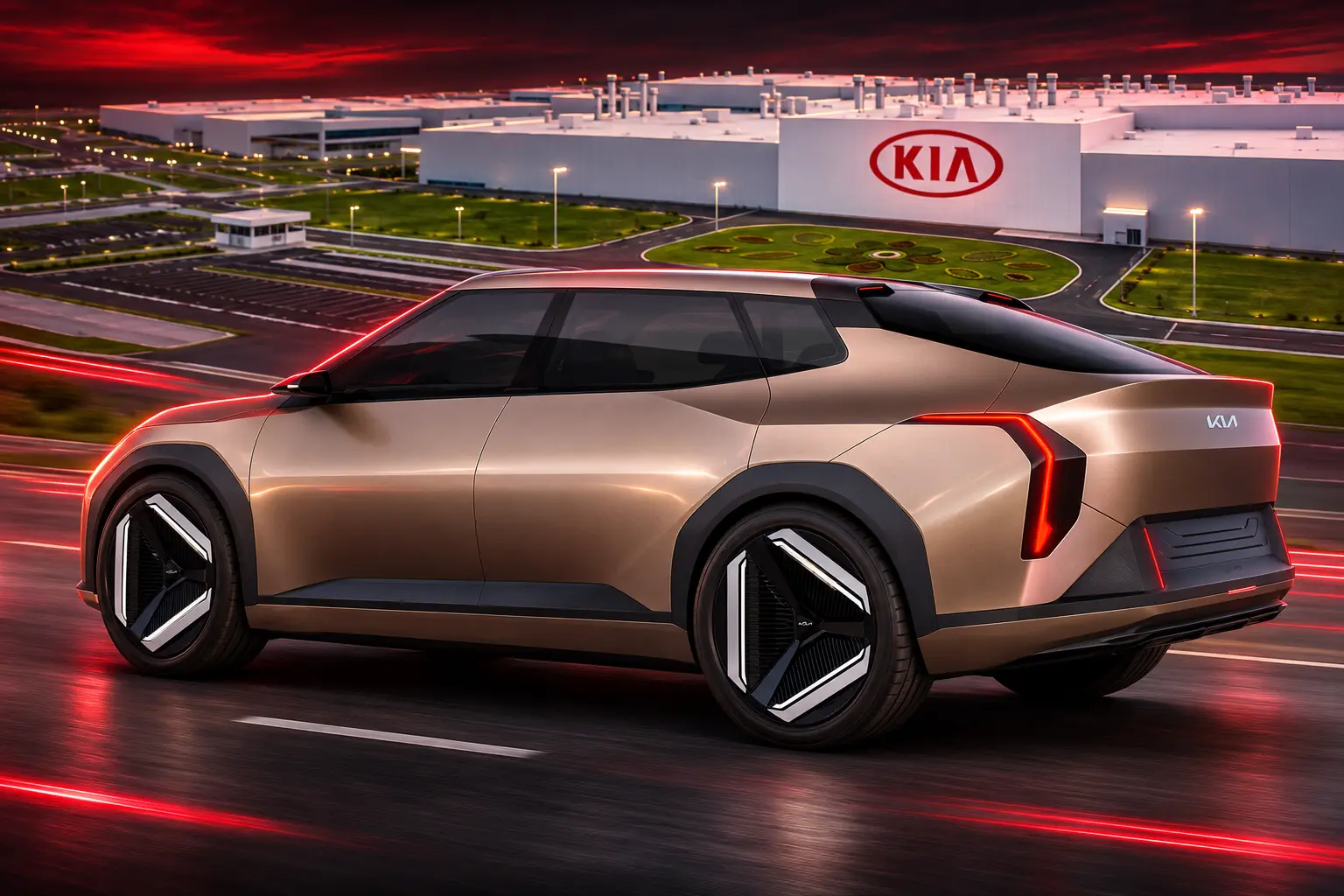
Kia India signed a $2 billion memorandum of understanding with Andhra Pradesh on November 12, 2026 for a second Anantapur plant of 200,000 vehicles a year. Production is due in early 2030, and the two plants together would be rated at 630,000 units.
Gwanggu Lee, managing director and chief executive of Kia India, made the pledge at the 31st CII Partnership Summit in Visakhapatnam. The money covers Kia and its supplier partners. The new hall is meant to stamp, weld, paint and assemble both petrol cars and electric ones for India and for export.
The Anantapur Line Is Already Full
The first Anantapur complex is rated at 430,000 vehicles a year. That is the figure Lee used on November 12, 2026. Supplier estimates from September put calendar 2026 output at 365,000 to 370,000 vehicles, with monthly runs that had already climbed from about 24,000 to 27,000 toward 35,500.
Held for a full year, 35,500 a month would be 426,000 vehicles, a shade under the 430,000 nameplate. Kia did not confirm those run-rate figures. A company spokesperson said only that 2026 had brought “strong and sustained momentum” and several record months.
Kia’s own October 2026 wholesale number was 33,462 vehicles, up 13.22% from a year earlier. Dispatches from January through October reached 286,470, already above the 280,286 vehicles it sent out in all of 2025. The first plant is no longer a greenfield with spare hours on the clock.
THE TWO ANANTAPUR PLANTS
| Item | First plant | Second plant |
|---|---|---|
| Location | Anantapur | Anantapur |
| Start of production | August 2019 | Early 2030 |
| Annual capacity | 430,000 | 200,000 |
| Land, with suppliers | 945 acres | 465 acres |
| Investment | $2.9 billion | $2 billion |
| Jobs, direct and indirect | 24,237 | About 12,000 |
| Powertrains named | Petrol, diesel, CNG, hybrid, EV | ICE and EV |
Together the two sites would cover 1,410 acres and a little under $5 billion, with jobs that would pass 36,000 if the new headcount lands as billed. The second hall is not a third shift on the old paint shop. It is another 465 acres of stamping, welding, paint and final assembly.
Why 630,000 Units If India Sales Are 410,000?
Atul Sood, Kia India’s senior vice president for marketing and sales, said earlier in 2026 that the company is aiming for 410,000 domestic sales and a 7.6% share by 2030. He also said capacity had to serve exports, not only Indian showrooms.
Subtract 410,000 from 630,000 and 220,000 units of rated capacity sit spare if the India target is hit on the nose. That slack is the wager. Lee told the Visakhapatnam hall that Anantapur had already shipped more than 410,000 vehicles and kits to nearly 100 countries, and that India should become a global manufacturing hub for the brand.
People tracking the plant put 2026 exports in a much smaller band, about 35,000 to 40,000 vehicles. The second factory is how those overseas numbers are supposed to grow once the domestic line is no longer the bottleneck. Lee put the bet in one sentence at the summit.
Today, I’m so delighted to announce the expansion of key operations in Andhra Pradesh through the establishment of an additional manufacturing plant with an investment of approximately 2 billion US dollars. This project is expected to create around twelve thousand jobs and increase India’s annual production capacity to six hundred thirty thousand vehicles.
Gwanggu Lee, Managing Director and CEO, Kia India, 31st CII Partnership Summit, Visakhapatnam
He also said the second plant would help Kia answer demand with greater speed and flexibility. The calendar attached to that claim is early 2030.
The 2030 Plant Still Builds Petrol Cars
Lee said the new hall will take new models on internal combustion and electric powertrains. That mix is the product plan, not a hedge slipped into a press note. Sood has already said Kia will keep petrol cars in India while it electrifies, and that the 2030 range should run to 10 models, eight of them electrified.
India’s next round of fuel consumption standards for passenger cars runs from April 1, 2027 through March 31, 2032. Battery-electric cars count as three vehicles in the fleet math. Strong hybrids count as 1.6. Petrol and diesel cars still go on sale; they simply drag the corporate average unless they are offset by cleaner ones.
So a 2030 plant that still stamps ICE bodies is not a bet against electric cars. It is a bet that Indian buyers, and some export markets, will still want petrol, CNG and hybrid metal in volume after the new rules bite. The cars that have to arrive before that hall exists will land on the first line.
WHAT HAS TO FIT ON PLANT ONE
- The present mix: Anantapur already builds the Seltos, Sonet, Syros, Carens, Carens Clavis, Carnival and Sorento, including EV, CNG and hybrid variants.
- The 2030 range: Sood’s plan is 10 models for India, eight of them electrified, years before the second factory is due to run.
- The paint-shop limit: Supplier estimates already have Seltos and Carens near 10,000 units a month each, with Sonet, Sorento and Syros EV sharing the rest of a 33,000 to 35,500 monthly band.
Until early 2030, every extra hybrid and every extra electric variant has to steal hours from that band. The second plant does not help the 2027 or 2028 launches.
Fourteen Months Then, More Than Three Years Now
Kia’s first Indian factory began with a memorandum of understanding in April 2017. Mass production started in August 2019. Lee said the first plant “came up within 14 months,” a commissioning claim he repeated while crediting Chief Minister N. Chandrababu Naidu.
The second MoU to first car is a longer walk. Early 2030 is more than three years from November 12, 2026. Kia has not given a construction start, a foundation date, or a year-by-year spend. The 14-month story is what Andhra is being asked to remember. The 2030 date is what the production calendar actually holds.
KIA’S ANDHRA CLOCK
- April 2017: Kia signs its first Andhra Pradesh manufacturing MoU for Anantapur.
- August 2019: Mass production begins at the first plant.
- Four years in: Lee says output crosses 1 million vehicles, then 2 million within seven years.
- October 13, 2026: Hyundai Motor Group, Kia’s parent, commits a seven-year India package after Executive Chair Euisun Chung meets Prime Minister Narendra Modi.
- November 12, 2026: Lee signs the second Anantapur MoU and dates production to early 2030.
Lee’s other scoreboard line on November 12 was speed to volume: 1 million vehicles in four years, 2 million in seven, which he called the fastest such climb by an OEM in India. That climb used one plant. The next 200,000 units of rated capacity are dated after the decade turns.
Hyundai’s $15.5 Billion India Envelope
Four weeks before the Visakhapatnam speech, Hyundai Motor Group said it would invest USD 15.5 billion from 2026 through 2032 across Hyundai Motor India and Kia India, plus research, suppliers and new mobility work. Vice Chair Chang Jae-hoon later said 60% of that package is for manufacturing capacity.
Hyundai’s own next block of metal is in Maharashtra. The group has said it will expand annual capacity to 320,000 units at the Pune plant, from 170,000. Group capacity in India already sits above 1.4 million vehicles a year across Chennai, Pune and Anantapur.
Kia’s $2 billion second hall sits inside that envelope rather than beside it. Chang has said affiliates such as Hyundai Transys and Hyundai Glovis would put more money into India as Hyundai raises Pune and as Kia considers more capacity. The Anantapur MoU is that Kia step, priced and dated.
Lee’s prepared line on the second plant was that India is central to Kia’s long-term growth and that Anantapur customer trust since the first plant opened had “been instrumental in our journey.” The state is being locked in as the brand’s only Indian manufacturing map. There is no second state on the sheet.
No Construction Date, No Named Models
The MoU is signed. The spend is a combined figure with unnamed suppliers. The start of production is a season, not a month. Models for the second hall have not been listed. Construction has not been dated.
WHAT WE KNOW
- The rating: 200,000 extra units a year, taking the India total to 630,000, for ICE and EV, with stamping, welding, paint and assembly on 465 acres.
- The jobs claim: About 12,000 direct and indirect roles, on top of 24,237 already tied to the first complex.
- The clock: Early 2030 for first vehicles, announced November 12, 2026 at the CII summit alongside the state MoU.
WHAT IS UNCONFIRMED
- The build start: No groundbreaking date, no year-one capex, no split between Kia’s cheque and the suppliers’.
- The model list: No names for the second hall; Sportage or Telluride talk is speculation, not a company line.
- The export split: No 2030 target for how many of the 630,000 units leave India.
Until those three items move, the 630,000 figure is a rating on a drawing. The first plant is the one that has to carry Sood’s 410,000 India plan, the eight electrified models, and whatever export growth arrives before 2030.
Lee’s first Anantapur factory filled a 430,000-unit board and a 100-country kit list from a single district. The second hall asks the same district to hold another 200,000 units that will not exist until early 2030, and to treat the unused 220,000 of combined capacity as an export order that has not yet been written.

Gold Prices Fall to a 14-Month Low Despite Strikes

SpiceJet Clears a Rs 5,500 Crore Raise After Mumbai Stalled

Honda Activa’s Record Month Came With a Share Loss

Sony Turns the GTA 6 Launch Into a Firmware Gate

Xiaomi 18 Leak Skips the Rear Screen for Battery

Volkswagen Sells the Osnabruck Plant to Clear a Board Fight

Apple’s Foldable iPhone Hinges on Samsung Display Supply

Saksham Gaur Finds He Is His Own Company’s Client

Tata Motors’ Iveco Tender Opens as Holders Still Decide

What Is SD on Amazon Prime?
-
 AUTO2 months ago
Volkswagen Sells the Osnabruck Plant to Clear a Board Fight
-
 NEWS3 months ago
Apple’s Foldable iPhone Hinges on Samsung Display Supply
-
 BUSINESS3 months ago
Saksham Gaur Finds He Is His Own Company’s Client
-
 AUTO3 months ago
Tata Motors’ Iveco Tender Opens as Holders Still Decide
-
 TECHNOLOGY3 years ago
What Is SD on Amazon Prime?
-

 BUSINESS3 months ago
Hyderabad 22-Carat Gold Jumps After a False Bargain
-

 GAMING3 months ago
Onimusha Way of the Sword Preload Hits a Windows 11 Wall
-
 BUSINESS3 months ago
UltraTech Ultravolt Launch Splits Friday Stocks to Watch