
NEWS
Instagram Turns a Bullying Hotline Into After-Hours Campus Social
Instagram expanded its School Partnership Program with student-only Stories, Notes, and a classmate directory, 34 days after a $17.1 billion teen-safety deal.

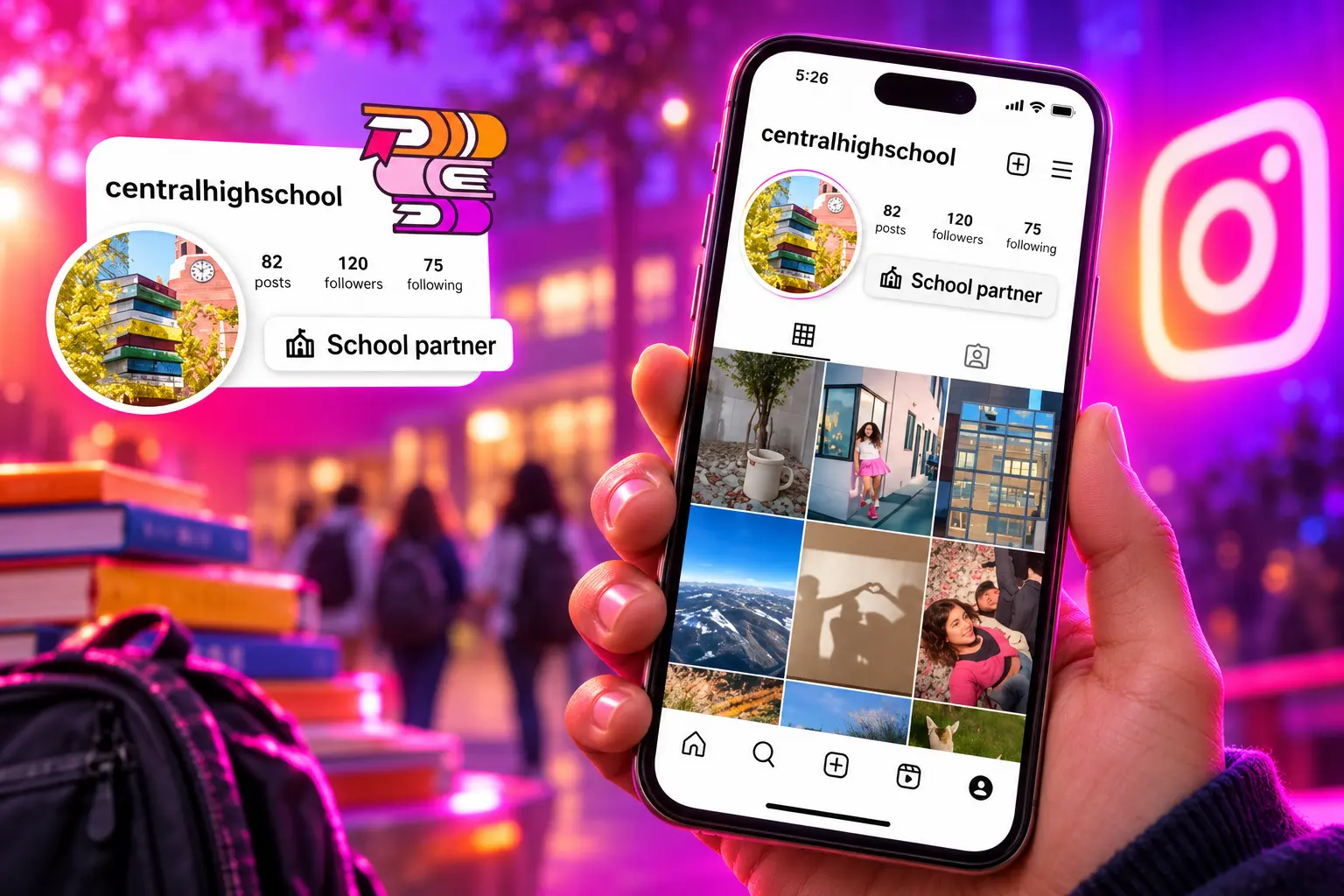
Instagram expanded its School Partnership Program on September 29, 2026, with Stories and Notes only verified students can see. Partner schools also get Channels, Clubs and Teams, and a classmate directory. Meta says nearly 17,000 US middle and high schools are already in.
The same post points to a fresh deal with 52 state attorneys general that adds new teen limits. Those limits mute the school day. The new school tools are built for the hours after the bell.
We're expanding our School Partnership Program to give verified school partners, verified students, and parents new features to stay connected and informed. https://t.co/9LWqOi4CVQ
— Meta Newsroom (@MetaNewsroom) September 29, 2026
Instagram Shipped the After-Hours Campus Feed
Meta is expanding the School Partnership Program into a hub for school-related accounts, after administrators, teachers, and parents said it was hard to keep students informed. Channels let school administrators post quick updates to followers, including parents and the wider community. Nobody else can publish there.
School Stories and Notes are narrower. They are visible to all verified students at that school, and school administrators can monitor and remove them. On the student side, only club and team account admins and School Partnership Program admins can post the announcements, game results, and event reminders Meta lists as examples.
Prioritized reporting stays in the bundle. Reports from school partners that may violate Instagram’s Community Standards still move up the review queue, and schools get status updates plus a notice when Instagram takes action. Educational resources for educators, parents, guardians, and students remain part of the offer.
WHO POSTS, WHO SEES, WHO CAN PULL IT
| Feature | Who can post or create | Who can see it | Who can take it down |
|---|---|---|---|
| Channels | School administrators only | Followers, including parents | The school account that posts |
| School Stories and Notes | Club and team admins, plus program admins | Verified students at that school | School administrators can monitor and remove |
| Clubs and Teams | Verified students or academic staff can create | The school community using the hub | Schools can remove the account or its content |
| Student banner and directory | The student, after UNiDAYS checks enrollment | Other students, and teen followers they follow back | The student controls banner visibility |
That split is the product. Parents can be on a Channel. They are not in the Stories tray with the verified student body.
Nearly 17,000 Schools, and Counting
Meta says it has partnered with nearly 17,000 schools so far. The program is open to eligible US middle and high schools, which sign up through Instagram under Account type and tools or Business tools and controls, using an official school or district account run by an administrator, not a student’s personal login.
THE PROGRAM IN FIGURES
- Partner schools: Nearly 17,000 US middle and high schools, according to Meta’s September 29, 2026 note.
- Early test: Instagram and ISTE+ASCD tried the reporting tools with 60 schools before the March 25, 2025 launch.
- Public baseline: The National Center for Education Statistics counted 15,825 regular public middle schools and 17,640 regular public high schools in 2024-25.
- Reporting gap: Sameer Hinduja, co-director of the Cyberbullying Research Center, said only 13% of targeted youth told the school they were cyberbullied.
The federal school counts are public campuses only, and Meta’s nearly 17,000 figure is not broken out by public and private, so the two ledgers should not be mashed into a share. They still show the program is no longer a 60-school experiment. A school can attach more than one official account if several administrator-run profiles represent the same campus.
UNiDAYS Holds the Door
High school students do not wander into this community by typing a school name. Meta partnered with UNiDAYS, a third-party validator, to confirm they are current students before they can join. If they are not verified, they do not get the new student features.
Once they pass, they can add a school banner on the profile and open a directory of other verified students at that school. Banner and directory are visible only to other students and to teen followers they follow back. Students pick that visibility at sign-up and can change it later. Their student email is used for the check and is never shown on Instagram.
Instagram’s educator FAQ is blunt about who can create clubs and teams: verified students or academic staff, with the school able to review and remove them at any time. Schools get in-app notices and emails when a new club or team lands in the directory. The program does not give the school control over a student’s personal Instagram account. It can only cut the link between the school and a club, a team, or that group’s Stories and Notes.
What Parents Can See on a School Channel
Channels are the parent-facing layer. Only the school account can send, while students and parents can vote and react, and the updates go to inboxes. That is the feed a household can actually watch together.
School Stories and Notes sit on the other side of the wall. They are built for verified students. Family Center, Meta’s parent tools, does not put those posts on a guardian’s screen. Parents can get insights into school participation, including a notice if a teen joins or leaves a school on the platform. Join and leave are not the same as reading the tryout Story.
THE PARENT VIEW, FEATURE BY FEATURE
- Channels: Administrators post; parents who follow can read, vote, and react.
- Stories and Notes: Written for verified students; administrators can remove posts, parents are not the audience.
- Directory and banner: Limited to other students and teen followers the student follows back.
- Family Center: Alerts if a teen joins or leaves a school, not a live copy of student-only posts.
Teen Accounts still let a parent block Instagram during school hours. Meta repeats that it does not want social media as a distraction from class, and it says these features are meant to keep teens informed outside classroom time. The catch in the design is simpler than a slogan. After the block lifts, the school’s own clubs are waiting inside the same app.
Two Hours, Then a Forced Pause
On August 26, 2026, Washington Attorney General Nick Brown announced $17.1 billion youth-safety settlement terms with Meta, joined by dozens of other states and territories. The deal is the largest state consumer protection settlement on record outside the tobacco cases of the 1990s, his office said, and it resolves claims that Facebook and Instagram were designed with addictive features that harmed young users.
Let me say to the young people of Washington state: This agreement shows that your health and safety is more important than Meta’s profits.
Nick Brown, Washington Attorney General, August 26, 2026 announcement
The product rules in that judgment are specific. Instagram and Facebook share a combined two-hour daily cap for children, with mandatory pauses after 15 minutes of continuous use and again at 60 and 90 minutes. Nighttime blocks run from 12 a.m. to 6 a.m. Push notifications are cut on weekdays from 8 a.m. to 3 p.m. during the school year. Those time limits stay in force for five years, and they drop to 60 minutes for 10 years if Snapchat, TikTok, and YouTube take comparable terms.
Meta’s September 29 school note cites that attorneys general agreement in the same breath as Teen Accounts. Then it hands schools a reason to open Instagram once the 3 p.m. mute lifts: scores, reminders, club hubs, a directory of classmates who already passed UNiDAYS. The settlement emptied the school day. The partnership filled the evening.
HOW A REPORTING PILOT BECAME A CAMPUS HUB
- March 25, 2025: Instagram opens the School Partnership Program after a 60-school test with ISTE+ASCD, promising prioritized bullying reports and a partner banner on the school profile.
- August 26, 2025: Instagram launches a US college Schools experience, with UNiDAYS checks, a profile banner, and a directory of confirmed classmates.
- September 25, 2025: The K-12 partnership is opened to all US middle and high schools, with a stated aim of faster review of educator reports.
- August 26, 2026: The multistate settlement adds the two-hour cap, night lockout, and school-hour notification mute.
- September 29, 2026: The partnership gains Channels, student-only Stories and Notes, Clubs and Teams, and the high school directory, 34 days after the judgment.
Brown’s office also listed stronger parental controls, limits on some beauty filters and visible like counts, and an independent auditor. None of those clauses stop a school from putting the basketball tryout on School Stories at 4 p.m.
Tryouts, Game Results, and the Mathletes Hub
Clubs and Teams are the piece that makes the app feel official. School administrators, educators, and students can add groups inside a participating school, and Meta’s own example is “Central High School Mathletes,” used as a hub for upcoming events and information. Club and team admins, along with program admins, are the ones who can post the Stories and Notes students then watch.
That is how a reporting channel turns into a roster. A student who wants the score, the rehearsal time, or the club meeting has a reason to keep the app installed after the two-hour clock starts. Schools can still yank a club account or its content. They cannot yank the underlying personal profiles, and they cannot make the directory appear in a parent’s Family Center feed.
Our nationally-representative research involving US middle and high schoolers has identified that only 13% of targeted youth report being cyberbullied to the school. A reason frequently cited is that educators are not in a position to do anything about it. Instagram’s new School Partnership program changes that.
Sameer Hinduja, PhD, Co-director, Cyberbullying Research Center, on the 2025 launch
Hinduja was talking about the original bullying-report program, not about Mathletes hubs. Richard Culatta, CEO of ISTE+ASCD, backed that first version because education leaders wanted reports heard in a timely way. D.J. Ashford, a studio art and media teacher at Muwekma Ohlone Middle School, said harassing posts and profiles came down within the first week of that partnership. The September 2026 tools sit on top of that history. They still fast-track reports. They also give the school a private Stories tray.
How the College Version Moved Down a Grade
US college and university students already got a quieter version of this graph. On August 26, 2025, Instagram let them add a school banner after a UNiDAYS check and browse a directory of confirmed classmates, with filters by year. Student email went to UNiDAYS so it could re-check enrollment and follow a switch to a new campus. Leave, switch, or graduate, and the name drops off that school’s list.
The high school package copies the banner and the directory, then adds Clubs and Teams and school-gated Stories and Notes inside the partnership. Verification is the same vendor. The audience is younger. The school, not just the student, now has an admin seat with removal rights over the club layer.
Middle and high schools that want in still enroll through Instagram settings or the educator pages. Students who want the banner still have to clear UNiDAYS. Parents who want a say still have Teen Account time blocks and a join-or-leave ping. The Stories that carry the tryout stay with the verified student body, on the same app the settlement already told to go dark from 8 a.m. to 3 p.m.

Edinburgh Opens a 2027 Tour Built for Time Trials

Korda Maps Auður From Meðalland to Irvine Bay

Apple Music Films Its New Logo in Mineral Oil

Oppo Prices the Pad Mini Above India’s iPad Mini

Austen Soaks Scotland Before Boelo Brings Weekend Gales

Volkswagen Sells the Osnabruck Plant to Clear a Board Fight

Apple’s Foldable iPhone Hinges on Samsung Display Supply

Saksham Gaur Finds He Is His Own Company’s Client

Tata Motors’ Iveco Tender Opens as Holders Still Decide

Onimusha Way of the Sword Preload Hits a Windows 11 Wall
-
 AUTO2 months ago
Volkswagen Sells the Osnabruck Plant to Clear a Board Fight
-
 NEWS2 months ago
Apple’s Foldable iPhone Hinges on Samsung Display Supply
-
 AUTO2 months ago
Tata Motors’ Iveco Tender Opens as Holders Still Decide
-
 BUSINESS2 months ago
Saksham Gaur Finds He Is His Own Company’s Client
-
 GAMING2 months ago
Onimusha Way of the Sword Preload Hits a Windows 11 Wall
-

 ENTERTAINMENT3 years ago
What is SD on Amazon Prime? – All You Need to Know
-

 BUSINESS2 months ago
Hyderabad 22-Carat Gold Jumps After a False Bargain
-

 NEWS2 months ago
iQOO 16 Locks 8,400 mAh While 100W Charging Holds