
NEWS
Google’s Orbital TPUs Will Run in 15-Minute Bursts
Google’s Project Suncatcher flies four TPUs on October 1, but vacuum cooling caps the first orbital cluster at 15-minute bursts.

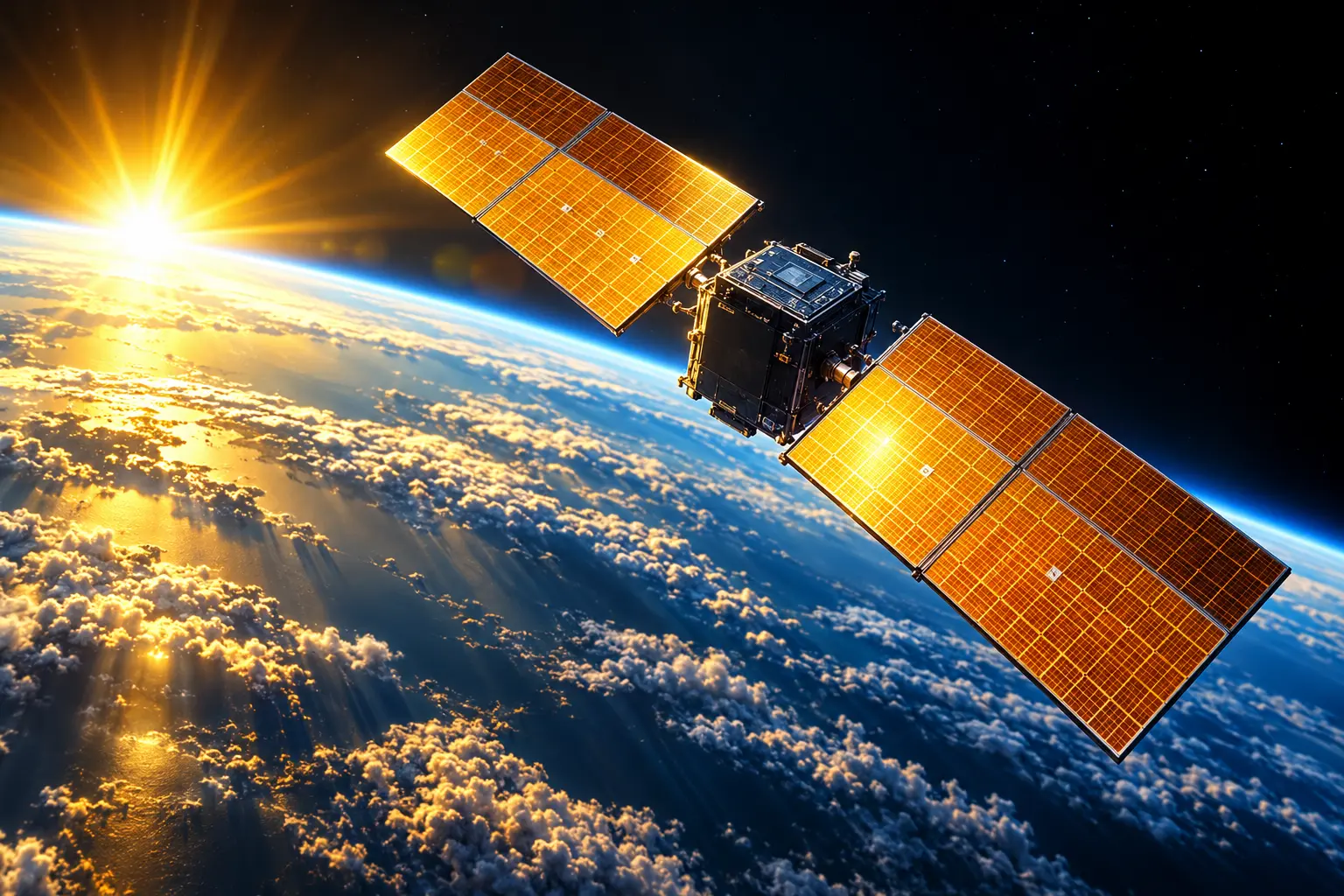
Google will fly four TPUs into orbit on October 1, on a satellite that can run them for about 15 minutes at a time. Project Suncatcher is hitching that box to SpaceX’s Transporter-18 Falcon 9 rideshare, in a Planet Labs craft roughly the size of a fridge.
The pitch is sunlight. Low Earth orbit can feed solar panels nearly all the time, and Google says that can yield up to eight times the power of the same panels on the ground. The limit is heat. With no air to carry it away, the chips have to stop so the radiators can catch up.
Four Chips, One Fridge, Fifteen Minutes
The spacecraft is called MVP. Google did not build the bus. Planet, the Earth-imaging company, already had a satellite; Google fitted its own accelerators into it so the first chips could fly this year instead of waiting for two custom craft in 2027. On September 24, Travis Beals, senior director of Paradigms of Intelligence, said the company would send a prototype satellite to evaluate TPU survival under launch stress, radiation, and the thermal extremes of space.
WHAT IS FLYING ON OCTOBER 1
- The chips: Four Google TPUs, with Trillium parts already run under a proton beam at UC Davis’s Crocker Nuclear Laboratory.
- The power: Solar panels that supply about one kilowatt, enough for a microwave or a hair dryer.
- The work: Gemini models in short bursts of about 15 minutes, then a shutdown so the radiators can dump heat.
- The ride: A few months on orbit as a passenger on Transporter-18, not a dedicated Google rocket.
On Earth, a Google data hall runs thousands of these chips. MVP is closer to a lab bench that happens to be leaving the atmosphere. Google will still try to learn whether the same silicon it racks in servers can take a rocket and then keep counting in vacuum.
Why Google Is Sending TPUs Into Orbit
Ground sites are the bottleneck the project is trying to walk around. New halls need megawatts, water, and a local yes. A Gallup survey found that 70 percent oppose local AI data centers, and that fight is now part of siting math in the United States. Orbit has no zoning board and, in the right sun-synchronous path, almost no night.
Beals wrote that the long goal is scalable machine learning off the planet, with later clusters talking over lasers. Elon Musk and Jeff Bezos have backed the wider idea of putting compute in space. Analysts at Gartner have pointed the other way, at launch bills, cooling, and the delay in getting bits home. Google’s own paper does not pretend the first flight is a product. It is a way to watch chips fail, or not, where a thermal-vacuum chamber cannot stand in.
The quieter driver is watts on Earth. When a campus cannot get power on the timetable the models need, a 1 kW bird looks less like a stunt and more like a probe. Sunlight is abundant on the ground too. What orbit sells is continuous light and a way around the queue, if the hardware lives.
The Vacuum Gives Power and Takes Cooling
A Falcon 9 trip to low Earth orbit lasts about 10 minutes. Google says the spacecraft sees sustained loads up to 10 times gravity, and that individual parts, including the TPUs, can see 50 to 100 g. The team shook the satellite on three axes to mimic those frequencies and said it was pleasantly surprised the hardware held. Radiation is the second screen. Solar particles and cosmic rays flip bits. In the Crocker beam, Trillium TPUs took a total ionizing dose greater than a five-year mission would deliver, while AI jobs ran and the team watched for errors.
THE THREE STRESSES MVP IS BUILT TO LOG
- Launch loads: Ten minutes of vibration and 10 g on the bus, with 50 to 100 g on the chips.
- Radiation: Proton-beam work at UC Davis already, and now a real cosmic-ray mix no chamber fully copies.
- Heat: No airflow, so energy that arrives as sunlight has to leave as infrared from radiators, or the TPUs shut down.
Those three are not equal. Launch is over in minutes. Radiation is a slow grind Google thinks Trillium can take. Heat is the gate on every useful second after the fairing opens.
Heat Pipes Have to Do the Job of Air
TPUs dump a lot of heat in a small footprint. Fans do that job in a hall. In vacuum they do nothing. Google’s stack uses a malleable thermal interface on the chips, then aluminum and copper heat pipes that carry the load to an external radiator. The company has run that layout in a thermal vacuum chamber. October 1 is the first time it will run in orbit, on Gemini, in those 15-minute bursts. After each burst the accelerators have to sit dark so the radiator can emit what the pipes just delivered.
Beals called cooling a core research problem and said the team is trying more than one approach. The 15-minute cap is the honest size of the first answer. A data center that works in sprints is still a test article.
This first launch is about seeing what works, identifying points of failure, and applying those findings to future missions.
Travis Beals, Senior Director, Paradigms of Intelligence, Google Research blog
That sentence is the mission. It is also an admission that the interesting data is failure data.
A One-Megawatt Array Would Need a Hockey Rink
Scale makes the same physics rude. Starcloud’s white paper, cited in a June analysis by Tony Pan, founder of Borrowing Arrows, puts a two-sided radiator near 20 C at about 633 watts per square meter, more than 1,000 times slower than water cooling on Earth. At that rate a 1-megawatt orbital hall, tiny next to a gigawatt campus, would need about 1,600 square meters of radiator, Pan wrote, roughly a hockey rink.
HEAT REJECTION AT TWO SCALES
| System | Heat to dump | Radiator mass or area | Compute mass (order of) |
|---|---|---|---|
| ISS external cooling | 70 kilowatts of waste heat | About 7 metric tons of radiator wings | Not an AI hall |
| 1 MW orbital hall, ISS-style scaling | 1,000 kW | About 100 metric tons of radiators | About 10 tons of AI racks |
| 1 MW at Starcloud’s 633 W/m² | 1,000 kW | About 1,600 m², a hockey rink | Still waiting on light radiators |
| Suncatcher MVP | Four TPUs, about 1 kW solar | Heat pipes plus a small radiator | 15-minute Gemini bursts |
Pan’s scaling of ISS hardware is the knife edge: radiators can weigh on the order of ten times the compute they serve, and launch price tracks mass. Running chips hotter would shrink the panels, because radiated power rises with the fourth power of temperature, but leakage and errors climb fast. Future silicon may take that. Present TPUs will not. Google’s first answer is to run them in bursts and measure how wrong the chamber was.
Planet Labs Lent a Satellite That Was Already Built
When Google unveiled Suncatcher on November 4, 2025, the stated next step was two Planet prototypes in early 2027, flying in tandem to try high-bandwidth, short-range lasers. That pair is still on the books. MVP is the extra bird. Google wanted chips on orbit this year, so it accepted a ready Planet bus instead of waiting for a clean-sheet pair. Planet chief executive Will Marshall wrote on September 24 that the first TPUs go up on October 1, and called it fast work by the teams.
Planet’s interest is not charity. The company already flies large imaging fleets. Onboard inference would let a bird send down answers instead of raw scenes, which is a bandwidth gift if the chips stay alive. Marshall has said only a few firms have scaled constellations, and that this work sits close to Planet’s next imaging line. For Google, Planet is the factory that already knew how to shake, thermal-cycle, and ride a Falcon 9 secondary payload.
THE PROGRAM CLOCK
- November 4, 2025: Google announces Project Suncatcher and publishes a paper on solar-powered TPU clusters linked by lasers.
- 2025 to 2026: Trillium TPUs take proton-beam doses at UC Davis while the team shakes a three-axis launch profile and runs a thermal vacuum chamber.
- September 24, 2026: Beals says the first TPUs go to orbit; Sundar Pichai and Marshall name Transporter-18 and October 1.
- October 1, 2026: MVP is scheduled to ride a Falcon 9 as a Transporter-18 passenger.
- 2027: Two satellites are still planned, this time to test the short-range laser links a cluster would need.
- Mid-2030s: Google’s paper says launch could fall below $200 per kilogram, the point at which a space hall’s costs could roughly match terrestrial energy costs per kilowatt-year.
The 2027 flight is the one that starts to look like a network. MVP does not. It is a passenger with a notebook.
An 81-Satellite Cluster Still Lives on Paper
The research note behind the name is still the map. It sketches an 81-satellite cluster at 650 km, packed inside a 1 km radius, with neighbors only hundreds of meters apart in a dawn-dusk sun-synchronous orbit. Future buses, Google says, would each carry dozens of TPUs. Lasers would have to hold a lock like hitting a coin-size target from miles away while both ends move. Most space optical links today are built for long range and modest rate. Suncatcher wants the opposite: very high rate over very short range.
THREE STEPS ON THE SAME ROADMAP
| Step | When | Hardware | What it is for |
|---|---|---|---|
| MVP | October 1, 2026 | Fridge-sized Planet bus, four TPUs, about 1 kW | Launch, radiation, and 15-minute thermal runs on Gemini |
| Two-sat learning flight | 2027 | Custom Planet pair, TPU count not disclosed | Short-range laser cross-links between neighbors |
| Paper cluster | Design only | 81 satellites, 1 km radius, 650 km altitude, dozens of TPUs each | A full optical fabric, if launch hits $200 per kilogram in the mid-2030s |
That last row is a drawing. Google’s learning-curve case says launch to low Earth orbit may fall below $200 per kilogram by the mid-2030s if the rate of cheaper flights holds, a path that would need a heavy-lift cadence the paper itself treats as a condition, not a promise. Until that price exists, Suncatcher is a research account, and MVP is a $1 kW instrument on a shared rocket.
Starcloud Already Ran a Model in Space
Google is first with its own TPUs off the planet. It is not first with a modern AI accelerator. Starcloud launched a satellite with an Nvidia H100 in November 2025 and says it later ran a Gemini variant and trained a small language model on orbit. The startup has since talked up larger buses and a huge filed constellation. Google’s October flight is still the first time Trillium silicon will see the real sky. Those are different firsts, and mixing them is how a survival test gets sold as a data center.
Skeptics have been blunt. Sam Altman called orbital data centers ridiculous and said they will not matter at scale this decade. SoftBank’s Masayoshi Son has questioned whether they cut cost at all. Pan’s cooling math is the hard version of the same doubt: sunlight is the easy slide in the pitch deck; infrared is the bill. Google has not claimed MVP refutes any of that. It has claimed some things only orbit can teach.
WHERE THE BETS DIVERGE
- Google’s bet: Trillium can live through launch and a five-year-class radiation dose, and a tight laser cluster can one day look like a TPU pod if launch hits $200 per kilogram.
- The thermal camp: Tony Pan and others argue radiators, not solar wings, set the mass, and that a 1 MW hall already looks like a rink plus a 10-to-1 cooling penalty.
- The product camp: Starcloud says a single H100 already trained in orbit, so the open question is cost and heat at scale, not whether a chip can count in vacuum.
Gartner’s list (launch cost, cooling, downlink delay) still describes MVP. The fridge does not beat those three. It measures them on Google’s silicon, on Google’s cooling stack, for a few months, in 15-minute bites.
What October 1 Will Measure
Sundar Pichai, Google’s chief executive, put the flight as a question. “Can our TPUs survive and operate in space? Well, we’re going to find out,” he wrote, adding that Suncatcher is hitching a ride on Transporter-18 with a prototype built with Planet. “One small step for TPUs….”
Can our TPUs survive and operate in space? Well, we're going to find out.
Project Suncatcher is hitching a ride aboard @SpaceX's Transporter-18 mission, testing a prototype satellite built in partnership with @planet
One small step for TPUs…. pic.twitter.com/FuZoj7c0Hl
— Sundar Pichai (@sundarpichai) September 24, 2026
What the rocket will measure is narrower than a space data center and harsher than a blog demo. It will log whether four TPUs still train and serve after 10 g, whether bit flips in the real belt match the Crocker beam, and how long the heat pipes and radiator can hold a Gemini job before the only safe move is to power down. If the 15-minute window holds, the first Google cluster in orbit will be a pulsed instrument, rich in sun and poor in air. That is the result the October 1 passenger is built to return.

Edinburgh Opens a 2027 Tour Built for Time Trials

Korda Maps Auður From Meðalland to Irvine Bay

Apple Music Films Its New Logo in Mineral Oil

Oppo Prices the Pad Mini Above India’s iPad Mini

Austen Soaks Scotland Before Boelo Brings Weekend Gales

Volkswagen Sells the Osnabruck Plant to Clear a Board Fight

Apple’s Foldable iPhone Hinges on Samsung Display Supply

Saksham Gaur Finds He Is His Own Company’s Client

Tata Motors’ Iveco Tender Opens as Holders Still Decide

Onimusha Way of the Sword Preload Hits a Windows 11 Wall
-
 AUTO2 months ago
Volkswagen Sells the Osnabruck Plant to Clear a Board Fight
-
 NEWS2 months ago
Apple’s Foldable iPhone Hinges on Samsung Display Supply
-
 AUTO2 months ago
Tata Motors’ Iveco Tender Opens as Holders Still Decide
-
 BUSINESS2 months ago
Saksham Gaur Finds He Is His Own Company’s Client
-
 GAMING2 months ago
Onimusha Way of the Sword Preload Hits a Windows 11 Wall
-

 ENTERTAINMENT3 years ago
What is SD on Amazon Prime? – All You Need to Know
-

 BUSINESS2 months ago
Hyderabad 22-Carat Gold Jumps After a False Bargain
-

 NEWS2 months ago
iQOO 16 Locks 8,400 mAh While 100W Charging Holds