
NEWS
Qualcomm’s Eight-Year Kernels Open a Wider Update Race
Qualcomm is feeding Snapdragon 8 Elite phones eight years of kernels, so Motorola and Honor can copy Pixel’s seven-year pitch while most other models still skip it.

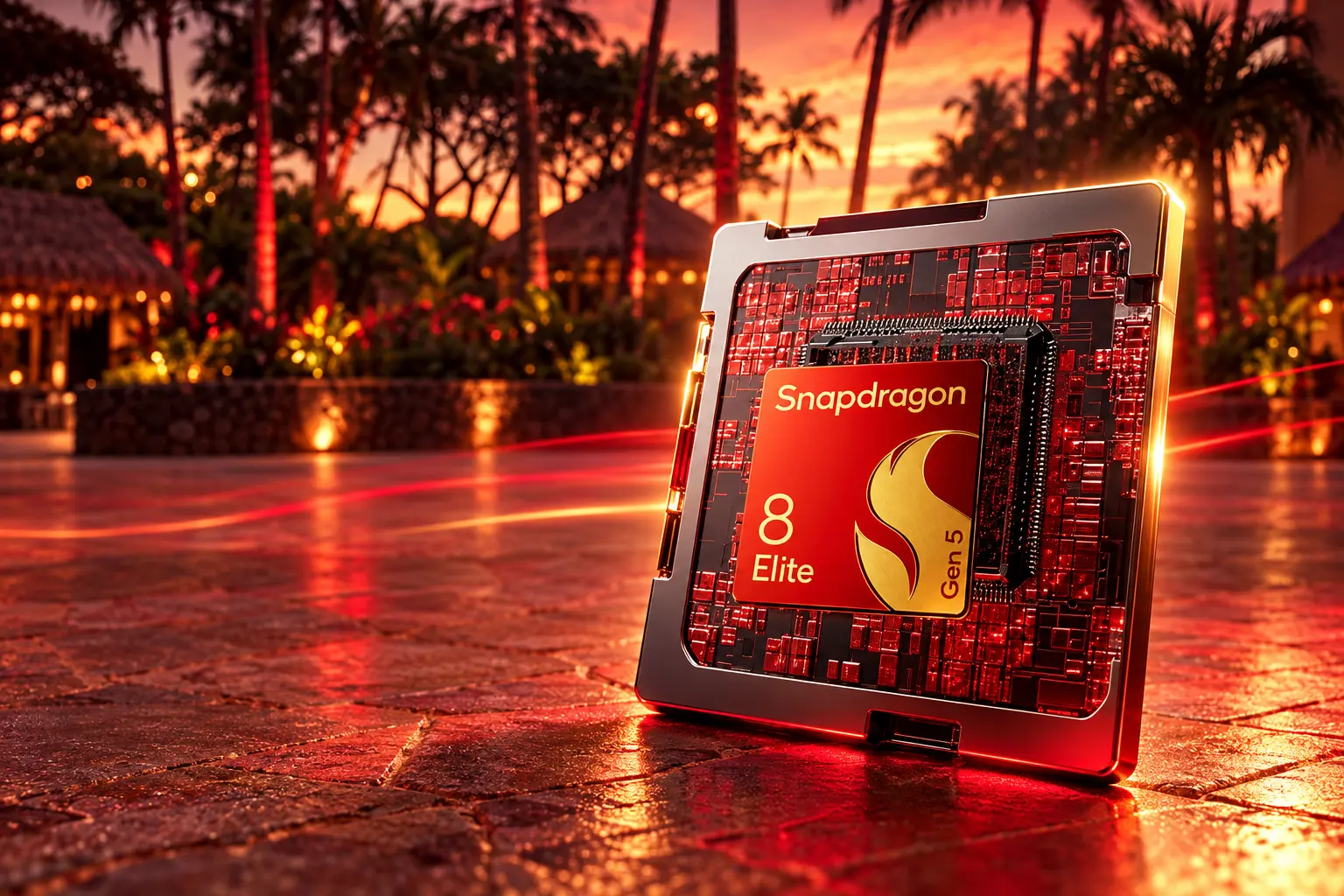
Qualcomm is feeding phone makers eight years of kernel updates on Snapdragon 8 Elite chips, enough cover for a seven-year Android promise. The chipmaker restated that premium-tier support at Snapdragon Summit in Maui on September 22, 2026, as Motorola previewed a Signature 27 with exactly that pledge.
The kernels go to the manufacturer. The years printed on the box are still the manufacturer’s call, which is why Pixel and Galaxy still look special in shops even as Motorola and Honor copy the number on a few flagships.
The Eight-Year Kernel Pledge Dates to 2025
Qualcomm Technologies did not invent this window on the Maui stage. Mike Genewich, senior director of Android product management, eight consecutive years of Android software and security updates in an OnQ post dated February 24, 2025, written with Google. Phones on the Snapdragon 8 Elite Mobile Platform that launched with Android 15 were first in line. Newer Snapdragon 8-series and 7-series platforms became eligible later that year.
The program covers platform software for eight years, including Android OS upgrades and kernel upgrades, without forcing a big rewrite of the vendor code on the phone. Qualcomm also committed to two upgrades of the Android Common Kernel, the shared Linux kernel branch Android uses, so security work can continue as the base kernel ages. The company said that mix lines up with cybersecurity pushes in the United States and the European Union.
ANDROID COMMON KERNEL:
- The kernel: It is the core of the operating system, the layer that talks to the modem, GPU, and cameras.
- The catch for OEMs: Kernel-mode drivers still have to move when the kernel moves, even if the rest of the vendor image can sit still under Project Treble.
- The eight-year math: Qualcomm said two ACK upgrades are what make the eight-year window hold.
Chris Patrick, senior vice president and general manager of mobile handsets, tied the 2025 program to OEM flexibility, not a factory-set consumer guarantee.
With this advancement, we are raising the bar, providing more flexibility for our OEMs and ultimately enhancing user experiences. We’re excited to see more OEM devices that support Android OS longevity soon.
Chris Patrick, SVP and GM of mobile handsets, Qualcomm OnQ post, February 24, 2025
Seang Chau, vice president and general manager of Android Platform at Google, said the same collaboration lets manufacturers update software and security more cleanly. Qualcomm was explicit about the limit that still matters in stores: whether an eligible phone uses the full window “will fall to the OEM.” Legacy platforms cannot join. The 2025 note also said the deal would cover the next five generations of Qualcomm ASICs.
At the 2026 Summit, Patrick put the consumer case in shorter words, saying it is important to Qualcomm that these devices stay useful “for many, many years to come.” The new silicon on that stage was the Snapdragon 8 Elite Extreme Gen 6 and Snapdragon 8 Elite Gen 6, both on a 2nm node. Honor, iQOO, Motorola, OnePlus, OPPO, REDMI, RedMagic, vivo, and Xiaomi are on the first-phone list.
Who Ships Seven Years of Updates?
Eight years is the chip vendor’s ceiling. Seven years is the number buyers actually see on a handful of boxes, and it is still not the Android default.
OEM UPDATE PROMISES ON CURRENT FLAGSHIPS
| Brand | Silicon window | What buyers are promised | Where it applies |
|---|---|---|---|
| Qualcomm to OEMs | 8 years of OS, security, and kernel support | OEM choice | Snapdragon 8 Elite, then newer 8-series and 7-series chips |
| MediaTek to OEMs | 8 years of OS and security support | OEM choice | Dimensity 9400, Dimensity 8400, future flagship and premium chips |
| Tensor, set by Google | 7 years of OS and security updates | Pixel 8 and later, from the US Google Store launch date | |
| Samsung | Snapdragon or Exynos, by model | 7 OS generations and 7 years of security updates | Galaxy S24, S25, and S26 flagships (S26 support runs through 2033) |
| Honor | Snapdragon and other chips | 7 years of OS and security updates | Magic series in EU markets, starting with Magic7 Pro |
| Motorola | Snapdragon 8 Elite class | 7 years of OS upgrades and 7 years of security updates | Signature, Razr Fold, and Signature 27 |
Google’s own help page is blunt. Pixel 8 and later phones get seven years of OS and security updates, and those years can include Pixel Drop features. Pixel 6, Pixel 7, and the original Pixel Fold stay on five years. That is why a Pixel A-series phone can match the flagship clock: it uses the same Tensor generation as the bigger Pixel from that year.
Samsung first put seven years on the Galaxy S24 family and kept it on S25 and S26. The S26, S26+, and S26 Ultra are eligible for seven generations of Android and seven years of security patches, with One UI updates in between. Older foldables show the previous era. Galaxy Z Fold 3 and Z Flip 3 reached the end of a five-year clock in 2026.
Motorola Spends That Window on Two Flagships
Motorola is the cleanest picture of the split. The company used Snapdragon Summit to show Signature 27, the first phone announced on Extreme Gen 6. It is set to ship with Android 17. Motorola is promising seven major OS upgrades and seven years of security updates, and it said the phone is expected in markets worldwide in 2026. Price, a firm on-sale date, and a confirmed US listing were not attached to that preview.
The first Signature, launched in January 2026, was Motorola’s first seven-year phone. Razr Fold became the second. Razr Fold launched on Android 16 with seven years of Android OS updates and seven years of security patches from March 2026. Razr 70 Ultra, sold beside it, gets three years of OS updates and four years of security patches.
MOTOROLA’S 2026 UPDATE SPLIT
- Seven-year tier: Signature, Signature 27, and Razr Fold get seven OS upgrades and seven years of security patches.
- Foldables below that: Razr (2026), Razr+, Razr Ultra (2026), and Razr 70 Ultra get three OS upgrades and four years of security patches.
- Slab phones: Edge (2026) gets two major OS updates and three years of security patches, and the Moto G line sits on the same short clock.
That catalog is the argument. Qualcomm can hand Motorola eight years of kernels on the premium chip. Motorola then prints seven years on Signature 27 and two OS upgrades on Edge (2026). Buyers who treat “Motorola” as one software policy are reading a brand name, not a SKU line.
WHAT WE KNOW
- The chip: Signature 27 is the first announced phone on Snapdragon 8 Elite Extreme Gen 6.
- The pledge: Motorola attached seven OS upgrades and seven years of security updates to that model.
- The pattern: Only Signature and Razr Fold already carried that seven-year clock inside Motorola’s 2026 lineup.
WHAT IS UNCONFIRMED
- US availability: Motorola has not confirmed a US listing or a price for Signature 27.
- An eight-year box: No OEM at the Summit published an eight-year consumer OS promise to match Qualcomm’s kernel window.
- The rest of the guest list: OnePlus, OPPO, vivo, Xiaomi, iQOO, REDMI, and RedMagic have not matched Signature 27’s seven-year badge on their next flagships.
GrapheneOS, the hardened Android project, has already treated Motorola’s Snapdragon flagships as a seven-year platform rather than a one-year launch toy. In an August 22, 2026 post, the @GrapheneOS account said devices in that Motorola partnership will include 7 years of proper updates, starting on Linux 6.18 LTS, with Motorola doing a large share of the firmware and driver work alongside Qualcomm. That is a security ROM shopping for the same window Signature 27 is advertising, not a review of the phone itself.
Pixel and Galaxy Still Ship What Others Only Promise
Google and Samsung lose the claim that nobody else can last seven years. They keep the more useful claim, which is that the policy sits on the whole current flagship line, not on one halo SKU.
A Pixel 8, Pixel 9, or Pixel 10 buyer can read the Google Store date and count seven years of OS and security updates without checking a sub-model footnote. Samsung’s recent Galaxy S phones work the same way across S, S+, and Ultra. Honor joined that club on paper on March 2, 2025, when CEO James Li said the company would offer seven years of updates for Magic series phones, starting with Magic7 Pro in EU markets. Honor later said the Magic series pledge covers EU and UK firmware. It has not published the same seven-year clock for every region, and cheaper Honor number-series phones have been described with a shorter six-year window.
So the losers on the spec sheet are Google and Samsung’s uniqueness. The losers in a shop are still the people who buy the other model in the same brand’s lineup. Honor’s Magic policy is regional. Motorola’s seven-year policy is a product tier. Qualcomm’s eight-year feed does not flatten those choices. It removes the last easy excuse that the chip ran out.
MediaTek Posted the Same Offer in May 2025
The Maui clarification also does not leave MediaTek as the short-support chipmaker. On May 27, 2025, MediaTek said it had worked with Google so devices on Dimensity 9400, Dimensity 8400, and future chips in its flagship and premium portfolio could support up to eight years of Android OS and security updates. The write-up leans on Project Treble the same way Qualcomm’s does: core Android can move while maker-specific code stays put, at least in theory.
That matching pledge is why a Snapdragon logo on a box is no longer a unique longevity argument. Both silicon vendors now say OEMs can hold a phone for eight years. Both still leave the years-on-the-box decision with the OEM. Budget and mid-range Dimensity phones were never the subject of that May 2025 note, just as Qualcomm carved legacy Snapdragon platforms out of its own program.
Google’s Tensor line sits outside this vendor-feed fight. Google sets Tensor’s kernel and OS clock itself, which is how Pixel 8 became the first Pixel with a seven-year promise and why Pixel A phones that share the chip can follow the same calendar.
Legacy Snapdragon Chips Stay Outside the Window
Qualcomm’s February 2025 FAQ is the line older phones keep running into. “Legacy platforms cannot take advantage of the extended support.” A 2026 flagship on 8 Elite can be patched for eight years if the OEM pays the software team. A 2023 flagship on an older Snapdragon still dies when Qualcomm stops shipping a board support package that matches the next Android kernel.
That BSP is the unglamorous file set: kernel, GPU and modem drivers, camera stacks, and the other binaries only the chip vendor can legally refresh. When it stops, the OEM can keep shipping monthly security scraps for a while, but a new Android version has nothing stable to land on. People who keep a three-year-old Snapdragon phone then watch the major OS train leave, even if the battery and screen are fine.
The 8 Elite program is Qualcomm’s answer to that wall for new premium silicon, including two ACK moves so the kernel itself does not freeze. It does not rewind support for chips already frozen. Patrick’s 2025 line about OEM flexibility is doing real work here. Flexibility includes the choice not to staff a seven-year software team for a mid-range phone that will be replaced on a carrier deal in three.
Four-Year Upgrade Habits Meet Eight-Year Software
People are already holding phones longer than the old two-year contract story. Assurant, the device-protection firm, found US Android ownership at 3.96 years and iPhone ownership at 3.80 years. That is the “pushing four years” clock. An eight-year kernel feed and a seven-year OS badge now outlast the typical American upgrade by about four years, which is where used-phone prices, carrier trade-in tables, and repair shops pick up the slack if the OEM actually ships the updates.
HOW LONG THE PROMISE TOOK TO SPREAD
- 2023: Google starts a seven-year OS and security clock with Pixel 8.
- 2024: Samsung puts seven OS generations and seven years of security on Galaxy S24.
- February 24, 2025: Qualcomm opens an eight-year OS, security, and kernel window for Snapdragon 8 Elite OEMs.
- March 2, 2025: Honor pledges seven years on Magic-series phones in the EU, starting with Magic7 Pro.
- May 27, 2025: MediaTek matches eight years of OS and security support on Dimensity 9400, Dimensity 8400, and later flagship chips.
- January 2026: Motorola’s first Signature ships with a seven-year promise.
- September 22, 2026: Qualcomm restates eight-year kernel support on the premium 8 Elite line, and Motorola hangs a seven-year badge on Signature 27.
The winners of that sequence are the SKUs that spend the silicon window: Pixel 8 and newer, recent Galaxy S flagships, Honor Magic phones in the EU, and Motorola’s Signature and Razr Fold tier. Qualcomm wins too, because a Snapdragon 8 Elite phone can now be sold as a seven-year computer without Google having to own the chip. The losers are Google and Samsung’s exclusive hold on that pitch, and anyone buying the other phone in a catalog that still stops at two or three OS versions.
Signature 27 is already wearing the seven-year badge on Extreme Gen 6. Xiaomi, OPPO, OnePlus, vivo, and iQOO are on the same Summit guest list. The kernels will be there if those brands want them. The years on the box remain their choice, not Qualcomm’s.

Edinburgh Opens a 2027 Tour Built for Time Trials

Korda Maps Auður From Meðalland to Irvine Bay

Apple Music Films Its New Logo in Mineral Oil

Oppo Prices the Pad Mini Above India’s iPad Mini

Austen Soaks Scotland Before Boelo Brings Weekend Gales

Volkswagen Sells the Osnabruck Plant to Clear a Board Fight

Apple’s Foldable iPhone Hinges on Samsung Display Supply

Saksham Gaur Finds He Is His Own Company’s Client

Tata Motors’ Iveco Tender Opens as Holders Still Decide

Onimusha Way of the Sword Preload Hits a Windows 11 Wall
-
 AUTO2 months ago
Volkswagen Sells the Osnabruck Plant to Clear a Board Fight
-
 NEWS2 months ago
Apple’s Foldable iPhone Hinges on Samsung Display Supply
-
 AUTO2 months ago
Tata Motors’ Iveco Tender Opens as Holders Still Decide
-
 BUSINESS2 months ago
Saksham Gaur Finds He Is His Own Company’s Client
-
 GAMING2 months ago
Onimusha Way of the Sword Preload Hits a Windows 11 Wall
-

 ENTERTAINMENT3 years ago
What is SD on Amazon Prime? – All You Need to Know
-

 BUSINESS2 months ago
Hyderabad 22-Carat Gold Jumps After a False Bargain
-

 NEWS2 months ago
iQOO 16 Locks 8,400 mAh While 100W Charging Holds