
AUTO
Leno’s Law Hands Classic Cars a Delayed Smog Break
Jay Leno’s Law delays California’s classic-car smog break until 2028 and walls it off to insured or 1,000-mile collector cars through 1985.

Gov. Gavin Newsom signed Jay Leno’s Law on Sept. 16, a delayed smog-check exemption for qualifying 1976 to 1985 collector cars in California. The waiver is Senate Bill 1392, Chapter 245, jointly written by Sen. Dave Cortese, D-San Jose, and Sen. Shannon Grove, R-Bakersfield, and it does not touch a car until January 1, 2028.
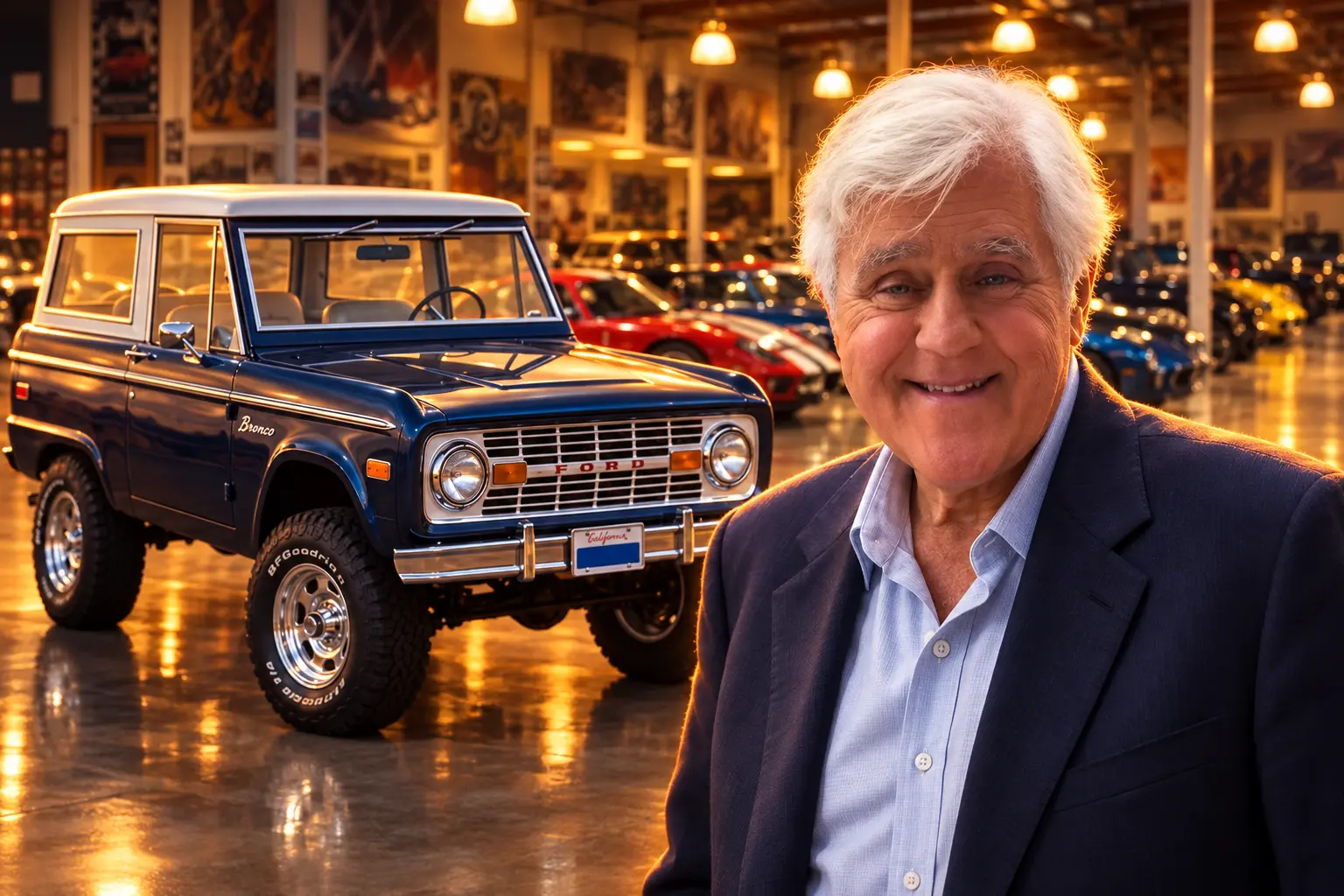
Newsom signed both bills at Leno’s garage in Burbank, with the former late-night host in the room. The first cars out are 1976 to 1980 models that already live as collectors. A 1982 sedan that still goes to work still takes the test.
The Exemption Waits Until January 2028
California already excuses every gasoline car built before the 1976 model year from smog check, with no insurance test and no mileage cap. Everything from 1976 on still needs a certificate every two years, at sale, and at first California registration, unless it fits a narrow collector path. SB 1392 adds a full certificate waiver for a slice of that 1976-to-1985 group, then stops.
The chaptered text of Jay Leno’s Law spells the dates in Health and Safety Code section 44011. On and after January 1, 2028, a qualifying collector built before the 1981 model year is excused from the certificate at first registration, every two years, and at transfer. Each January 1 after that adds one model year. The last step, on and after January 1, 2033, reaches cars built before the 1986 model year, which is the 1985 model year, and the clock does not keep rolling.
THE PHASE-IN THROUGH 2033
| Date the door opens | Built before this model year | Model years that join |
|---|---|---|
| January 1, 2028 | 1981 | 1976 to 1980 |
| January 1, 2029 | 1982 | 1981 |
| January 1, 2030 | 1983 | 1982 |
| January 1, 2031 | 1984 | 1983 |
| January 1, 2032 | 1985 | 1984 |
| January 1, 2033 | 1986 | 1985 |
Until a model year hits its date, it still needs whatever test current law requires. A 1984 Camaro does not get a pass in 2028 because a 1979 Trans Am does. Cortese told the signing that the bill is a carefully limited exemption for cars that are preserved, driven sparingly, and kept as heritage, and the statute matches that pitch: it never becomes a permanent rolling cutoff.
What a Qualifying Collector Car Must Prove
Age alone does not open the door. Vehicle Code section 259 now says a collector motor vehicle on this path must be at least 35 model years old, used mainly in shows, parades, charitable functions, and historical exhibitions, and not used as the owner’s primary mode of transportation. It also has to satisfy Bureau of Automotive Repair rules that demand collector insurance, with proof sent to the bureau, or a bureau process showing the car is driven fewer than 1,000 miles in a calendar year.
THE COLLECTOR TESTS
- Age floor: The car must be at least 35 model years old, so a 1990 daily driver is not in this window even if it rarely moves.
- Hobby use: The statute still requires show, parade, charity, and exhibition use, plus a bar on using the car as the owner’s main transport.
- Insurance or miles: Collector insurance can unlock the waiver from January 1, 2028; the 1,000-mile path does not open until January 1, 2030, and BAR still has to write how that mileage is proved.
- The old Referee test: Until a model year is in, 1976 and newer collector cars still take an abbreviated Referee inspection for collector cars, which is a tailpipe test, a fuel-cap check, and a look for liquid fuel leaks, not a visit to a corner smog station.
That last point is the part a lot of owners will miss. The Bureau of Automotive Repair already lets a collector-insured car that is 35 model years old skip the underhood hunt for catalytic converters and other add-on gear, because those older systems are easy to strip for power. The car still has to pass the tailpipe, the cap, and the leak check at a state Referee. Leno’s Law replaces that shorter test with a full skip, but only inside the 1976-to-1985 band, and only once the phase-in date arrives.
Jay Leno said at the garage that these cars get driven not even a thousand miles, that most people go to a car event, park, and drive home, and that the idea is to help collectors and the lowrider community. Restoration shops in Southern California are already selling 1976-to-1980 build slots against the 2028 date, which is a clearer tell than the signing photos: the money is in cars that will sit under a cover, not in cars that still commute.
California Froze the Rolling Cutoff in 2004
The celebrity name on the door hides a 20-year argument about a line the state drew and then refused to move. Senate Bill 42, Chapter 801, Statutes of 1997, created a 30-year rolling smog-check exemption, so a car would age out as it hit 30. The Department of Consumer Affairs and the California Air Resources Board fought that bill at the time, saying a modest number of old cars produced a large share of test failures and made federal ozone targets harder in the South Coast. Assembly Bill 2683, Chapter 704, Statutes of 2004, repealed the rolling cutoff and froze the exemption at vehicles built before the 1976 model year.
HOW THE 1975 LINE GOT FROZEN
- 1997: Senate Bill 42 creates a 30-year rolling smog-check exemption.
- 2004: Assembly Bill 2683 repeals the rolling cutoff and locks the full exemption to cars built before the 1976 model year.
- August 2025: Senate Bill 712, the first Leno’s Law, dies in the Assembly Appropriations Committee after seeking a 35-year rolling exemption.
- February 20, 2026: Senate Bill 1392 is introduced as the narrower second try.
- May 19, 2026: The Senate passes the bill 29-5.
- August 31, 2026: The Assembly passes it 55-4, with 20 members absent, and the Senate concurs 31-4.
- September 16, 2026: Newsom signs Chapter 245 at the Burbank garage.
Grove’s office, selling the first bill, said the California DMV estimates cars older than 35 years are about 1 percent of registered vehicles, and that even fewer of those would be insured as collectors. SB 712 still died on the Assembly suspense file. The second bill kept the 35-year definition, capped the model years at 1985, added the 1,000-mile door, and wrote the phase-in so it ends. Cortese’s committee analysis is blunt that the measure does not create a permanent rolling exemption or rewrite the broader smog program.
A 1976 car is 52 years old in 2028 and only then, if it qualifies as a collector, leaves the Referee lane. A 1986 car will be 47 years old in 2033 and will still need a smog check. That is the distance between Leno’s name and the statute.
Insurance Opens in 2028, Mileage in 2030
The two doors do not open together. From January 1, 2028, a car that meets the collector definition can skip the certificate if it is insured as a collector motor vehicle and proof of that policy is submitted to BAR. The mileage door is written for January 1, 2030, and even then it is only as real as the process BAR still has to adopt, including forms and a fee that cannot exceed twice the annual smog abatement fee.
Collector policies are the faster paperwork because they already exist. They also come with their own mileage ceilings, which is where the air fight got ugly. Hagerty, a large collector insurer, writes policies that can allow as many as 7,500 miles a year, far above the 1,000-mile statutory alternative. California Air Pollution Control Officers Association staff told the Assembly Transportation Committee that a 1982 passenger car driven to that 7,500-mile ceiling, at CARB’s 123-times NOx factor versus a new 2025 car, is the nitrogen-oxide equivalent of a 2025 car driven 922,500 miles in a year. At 3,000 miles the same math is 369,000 miles of a new car.
The 1,000-mile path is supposed to be the tighter gate, and analog odometers on these cars are easy to roll back, which makes that gate only as honest as the bureau’s still-unwritten audit. Owners who actually commute in a 1982 car will not get help either way, because the definition still bars using the vehicle as primary transportation. The visual inspection those commuters hate, the one that flags missing converters and aftermarket parts, stays in place for anyone who is not on the collector path.
Air Officers Put a 1982 Car at 123 Times the NOx
BAR’s 2024 smog-check summary, as cited in the Assembly analysis, logged 935,694 initial test failures, 8.6 percent of initial tests. Vehicles 35 years or older made up 5.6 percent of those failures. Over a two-year window, BAR data in the Senate Appropriations analysis counted about 108,000 tests on 1976-to-1985 vehicles, and about 23,000 of them, 21 percent, failed. Those are the cars the new waiver will eventually stop bringing in, if they qualify as collectors.
THE AIR MATH LAWMAKERS HEARD
- NOx gap: CARB’s 2025 figure, used by both sides, is that a 1982 car with 43 years of wear, even in compliance, emits 123 times the nitrogen oxides of a new 2025 car.
- Failure share: 935,694 initial failures in 2024, 8.6 percent of initial tests, with 35-year-and-older cars 5.6 percent of the failures.
- This decade’s cohort: About 108,000 tests on 1976-to-1985 cars across two years, and about 23,000 failures, 21 percent.
- Ozone map: The Assembly analysis says more than 21 million of over 39 million Californians live in areas that exceed federal ozone standards, with mobile sources about 80 percent of smog-forming NOx.
CAPCOA, speaking for the state’s 35 local air districts, opposed the bill. The group wrote that most Californians already breathe air that misses federal and state health standards, that smog check is how the state cuts that pollution at low cost, and that CARB staff had just told its board a 165-ton-per-day NOx hole had opened because of federal rollbacks. Passing SB 1392, the letter said, would add a self-inflicted impediment. CAPCOA also argued that widening the collector definition, so a 35-year-old car with collector insurance no longer has to be unaltered from original spec, lets tampered cars skip the visual review.
The Specialty Equipment Market Association sponsored the bill and answered with shops, not smog maps. SEMA told the committee California’s specialty aftermarket generates $40.44 billion in economic activity, 149,325 jobs, $13.47 billion in wages and benefits, and $6.16 billion in taxes. The trade group said owners of older cars struggle to find stations that still keep BAR-97 tailpipe gear, because that equipment is costly and rarely used, and that the bill lowers the cost of keeping those cars instead of parking them.
Jay presented better arguments, better evidence, that these are not commute cars. That’s what we’re trying regulate, appropriately, is 99% of those cars that are out there on the roads 24/7. And if we start to over-regulate, we’re going to lose people.
Gavin Newsom, Governor of California, at Jay Leno’s Garage in Burbank
Leno, for his part, thanked the governor for sticking with the legislation through the last couple of years and said the car community notices when someone follows through. The political bargain is in those two sentences: the state keeps the test for the cars that rack up commute miles, and it writes a hobby exception with a long fuse.
A Specialty Plate for Lowrider Heritage
The same Burbank visit produced a second chapter, and it is not a smog rule. Assembly Bill 2541 by Assemblymember Mark González, D-Los Angeles, Chapter 243, creates the Lowrider specialized license plate program. The California Arts Council has to apply to the DMV to sponsor “The Lowrider” plate, the design has to reflect lowrider culture and heritage, and the California Highway Patrol has to confirm the art does not hide the plate number. DMV still needs 7,500 paid applications before it stamps metal, the same threshold the state’s specialized-plate program already uses.
Revenue after DMV costs goes, upon appropriation, to Arts Council projects for lowrider arts, cultural preservation, youth programs, exhibitions, and community events. González said lowriding is cultura, art, and family, and a powerful expression of Chicano and Latino pride, and that too often lowriders were treated as a problem to be policed instead of a culture to be celebrated. The plate sits on top of Assembly Bill 436, which Newsom signed in 2023 to knock out statewide hooks that had let cities ban cruising and restrict lowered bodies.
A lowrider from 1976 to 1985 still has to qualify as a collector to skip smog check. The plate does not replace insurance, mileage, or the 2028 clock. Newsom also signed Senate Bill 1069 the same day, a faster state review for aftermarket parts makers, which is the SEMA half of the garage photo. The three bills together are a culture package with one hard emissions exception in the middle, and that exception is smaller, later, and more conditional than the rolling 35-year cutoff Leno first took to Sacramento.
Frequently Asked Questions
Does Leno’s Law change smog checks outside California?
No. SB 1392 amends California’s Health and Safety Code and Vehicle Code only, so a 1979 Camaro registered in Nevada or Arizona follows that state’s inspection rules. A car moving into California for registration still hits California’s tests until its model year is inside the exemption window and the car qualifies as a collector under Vehicle Code section 259.
Can a kit car or a grey-market import use the new exemption?
The Bureau of Automotive Repair already bars specially constructed kit cars and grey-market direct-import vehicles from collector-car status, and SB 1392 does not lift those bars. Those vehicles stay on the ordinary smog path even if they are 35 model years old and rarely driven.
How is Leno’s Law different from California historical plates?
Historical plates can go on a car manufactured after 1922 that is at least 25 model years old and of historic interest. If that car is 1976 or newer, it still takes the abbreviated Referee smog test unless it also meets the 35-year collector definition and falls inside the 1976-to-1985 phase-in. Leno’s Law is a full certificate waiver, not a shorter test, and the 25-year historical plate by itself does not get you there.
Do diesel classics from 1976 to 1985 get the same waiver?
California already exempts diesel-powered vehicles built before the 1998 model year from the smog-check program, so most diesel collectors in this age band were not waiting on Leno’s Law. The new waiver is written around the gasoline collector path and the Referee test those cars still take until their phase-in date.
What extra fee can BAR charge for the new collector process?
The law lets the Bureau of Automotive Repair collect an administrative fee to cover its costs, capped at twice the annual smog abatement fee already on the books. That charge is for BAR’s paperwork on insurance proof and the future 1,000-mile process, not a substitute tailpipe test, and the bureau still has to adopt the regulations before anyone pays it.
The next date that actually changes a registration is January 1, 2028, and only for a 1976-to-1980 car that already lives as a collector. Until BAR writes the mileage rules, insurance is the paperwork that matters, and a 1986 car will still be on the dynamometer in 2033.

Edinburgh Opens a 2027 Tour Built for Time Trials

Korda Maps Auður From Meðalland to Irvine Bay

Apple Music Films Its New Logo in Mineral Oil

Oppo Prices the Pad Mini Above India’s iPad Mini

Austen Soaks Scotland Before Boelo Brings Weekend Gales

Volkswagen Sells the Osnabruck Plant to Clear a Board Fight

Apple’s Foldable iPhone Hinges on Samsung Display Supply

Saksham Gaur Finds He Is His Own Company’s Client

Tata Motors’ Iveco Tender Opens as Holders Still Decide

Onimusha Way of the Sword Preload Hits a Windows 11 Wall
-
 AUTO2 months ago
Volkswagen Sells the Osnabruck Plant to Clear a Board Fight
-
 NEWS2 months ago
Apple’s Foldable iPhone Hinges on Samsung Display Supply
-
 AUTO2 months ago
Tata Motors’ Iveco Tender Opens as Holders Still Decide
-
 BUSINESS2 months ago
Saksham Gaur Finds He Is His Own Company’s Client
-
 GAMING2 months ago
Onimusha Way of the Sword Preload Hits a Windows 11 Wall
-

 ENTERTAINMENT3 years ago
What is SD on Amazon Prime? – All You Need to Know
-

 BUSINESS2 months ago
Hyderabad 22-Carat Gold Jumps After a False Bargain
-

 NEWS2 months ago
iQOO 16 Locks 8,400 mAh While 100W Charging Holds