
BUSINESS
Tariffs, Diesel and Rate Hikes Split Corporate America
Iowa factories hoard parts and auto suppliers scrap plants, while airlines lift fares and Home Depot offsets fuel with tariff refunds.

A motor bracket for Allen Eden’s Iowa saw plant jumped to $87 from $42 this summer, and he is stockpiling parts against the next price shock.
Tariffs on metal and components, record diesel, and the Federal Reserve’s first rate increase since 2023 are hitting the same firms at once. The S&P 500 still prints fat margins. The factories that cut steel and ship pallets do not.
A Motor Bracket That Jumped From $42 to $87
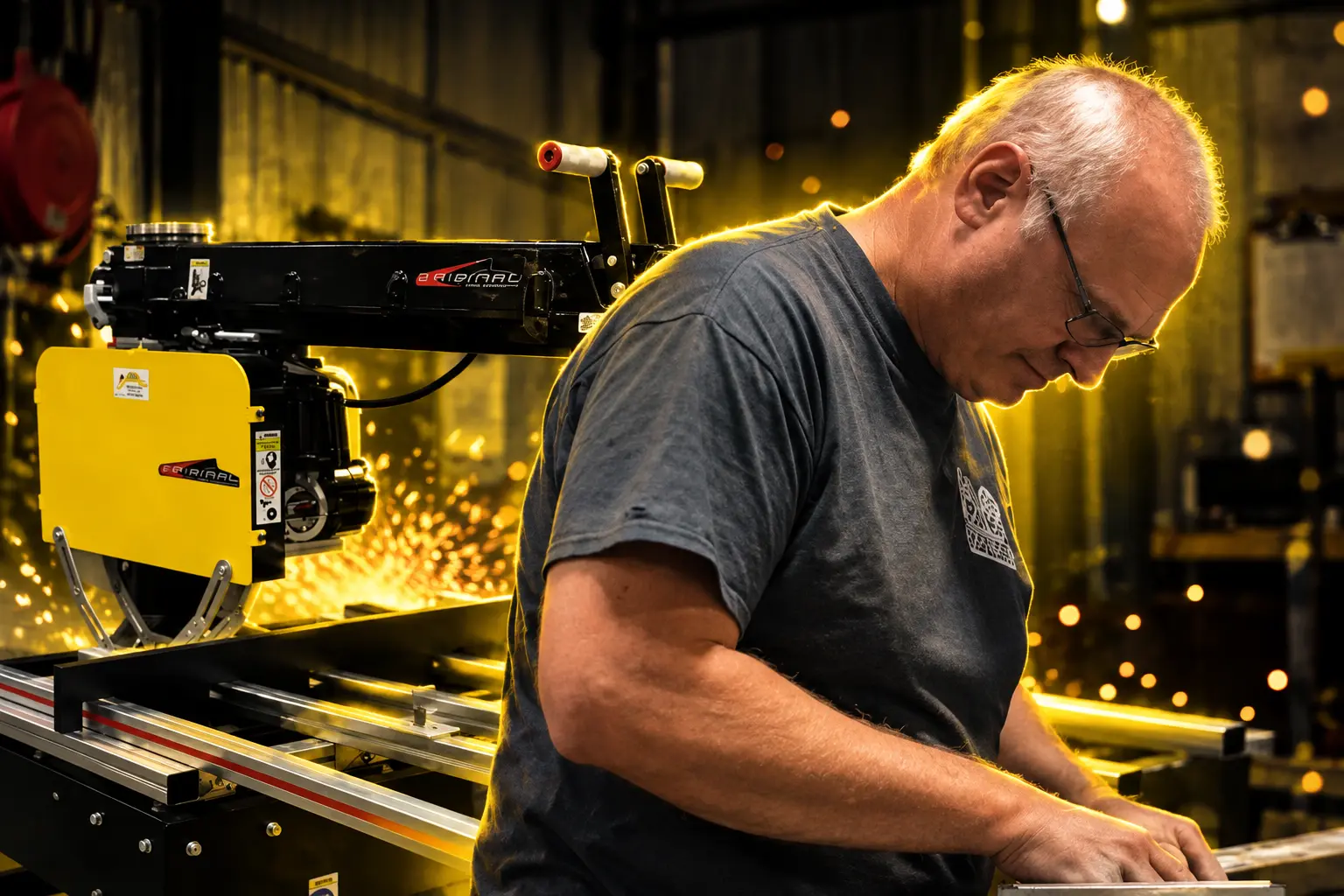
Eden, 56, owns Original Saw Co., a 25-person shop in Britt, Iowa, that builds American-made radial arm and beam saws for Home Depot and for smaller plants. The motor bracket is a small piece. The new invoice is not.
“It’s awful,” he said. He is holding extra stock because he cannot tell whether the next crate will show up, or at what price.
I’m just trying to keep more of the stuff around because I don’t know if we can get it down the road.
Allen Eden, owner and president, Original Saw Co.
The company started in Britt in 1990 after Eden’s father, Robert, bought the old DeWalt radial-arm line and moved it to northern Iowa. It now lists 24 models, from 12-inch to 22.5-inch saws, plus beam saws and measuring tables. Price increases on the finished machines look inevitable, Eden said, because aluminum, steel and bought-in parts have all moved.
THE THREE-WAY COST STACK
- Metals and parts: Tariffs and mill prices have doubled some of the small hardware a 25-person plant cannot make in-house.
- Diesel inbound: Trucking is how saws leave Britt and how steel arrives, and the national pump print is at a record.
- Working capital: A short-term loan that finances a fatter parts cage now resets against a higher federal funds rate.
That stack is why a shop that still has orders is behaving like a shop that expects a shortage. Eden is not waiting for a perfect forecast. He is buying the bracket while he can still find it.
A $50 Million Michigan Plant Never Broke Ground
Mary Buchzeiger, chief executive of Lucerne International, an Auburn Hills auto-parts firm that supplies Stellantis and Rivian, had a $50 million hot-aluminum forging plant drawn up for Detroit, with about 325 jobs attached. The equipment she needed is made in China. Tariffs on that kit alone added about $2 million, she said, on top of higher metal and a backlog of delayed vehicle programs.
“The onset of the Trump tariffs 2.0 has just really torn holes in our global supply chains and increased costs significantly,” Buchzeiger said. Lucerne stopped U.S. manufacturing and shifted the American operation toward warehousing, distribution and tariff-mitigation work, which she said pays better. The forging hall that was supposed to bring China work home never opened.
Paul McCarthy, chief executive of supplier group MEMA, said some of the extra cost is absorbed and some is passed on. Consulting firm Berylls by AlixPartners put earnings before interest and taxes for the top 100 auto suppliers at 4.2 percent last year, down from more than 6 percent in 2021. For the top 10 automakers, that figure is 5.2 percent, down from nearly 8 percent in 2022.
Spanish interior supplier Grupo Antolin, which sells to Ford, General Motors, Volkswagen and Stellantis, took the legal step. It employs about 20,000 people, including about 2,100 in the United States, and posted 2025 sales of €3.73 billion ($4.25 billion) from 111 plants in 23 countries. U.S. units on the docket include operations in Alabama, Michigan, Kentucky and Missouri.
THE COURT AND PLANT CALENDAR
- 2025: Lucerne International scraps the Detroit forging plan after tariffs lift equipment and aluminum costs.
- July 10, 2026: Antolin files a Spanish restructuring plan in Burgos; the court accepts it on July 17.
- July 20, 2026: The group files Chapter 15 petitions in New York to protect U.S. assets while Spain works the plan.
- Sept. 30, 2026: A New York bankruptcy court is set to hear recognition of that Spanish proceeding.
Chief Executive Cristina Blanco cited weaker demand, tariffs, the wars in Ukraine and Iran, commodity prices and a slower shift to electric vehicles. Chapter 15 is not a U.S. liquidation. It is a shield so U.S. creditors cannot pick the company apart while Burgos decides the debt.
Airline Fares Climbed 23.4 Percent as Carriers Cut Routes
Jet fuel is the same energy shock in a different uniform, and the carriers have a tool the Iowa saw plant does not. They can print a higher fare, then drop the thin routes that no longer cover the burn.
The Bureau of Labor Statistics said airline fares rose 23.4 percent in the 12 months through August, and 2.7 percent in August alone. Headline consumer prices were up 3.4 percent over the year and 0.4 percent on the month. Gasoline, which accounted for more than a third of that monthly rise, was up 27.4 percent from a year earlier. Energy as a whole was up 16.3 percent.
United Chief Financial Officer Mike Leskinen, speaking at a Morgan Stanley conference in Laguna Beach, California, called the consumer “incredibly, incredibly resilient.” He also said some marginal routes do not make sense in a higher-fuel environment, so United cut them, and will keep doing so. Spirit Airlines collapsed earlier in 2026. Fewer seats is a fare increase by another name.
That is pricing power. A passenger still books the trip. A cabinet shop that needs a radial arm saw can wait, or buy used, or not expand the line.
Home Depot Used Tariff Refunds to Cover Fuel
Big-box retail sat on the other side of the same ledger. After the Supreme Court voided a round of emergency-power tariffs, refunds moved. Home Depot collected $730 million in IEEPA repayments in its fiscal second quarter, a lump sum near the end of June.
THE REFUND VERSUS THE FUEL BILL
- $730 million: Tariff refunds booked in the quarter, which CFO Richard McPhail called the vast majority of what the retailer expects.
- $685 million: The share tied to goods already sold, taken straight through cost of goods; $45 million remains in inventory.
- 145 basis points: The gross-margin lift from the refund, before 60 basis points of unplanned fuel, energy and input costs.
- 25 basis points: The net year-over-year margin gain after those costs and a 60-basis-point drag from acquisitions, to 33.7 percent.
Sales were $47.86 billion, up 5.7 percent. McPhail told analysts the refunds are being used to offset unplanned and rising cost pressures through the year, not as a reason to cut shelf prices. Billy Bastek, the merchandising chief, pointed to resin, metals, fuel and energy that were not in the original 2026 plan.
A national chain can take a court refund in one quarter and park it against diesel. A 25-person plant in Britt does not get a $730 million wire.
Warsh’s First Rate Hike Raises the Cost of Inventory
On Sept. 16 the Federal Open Market Committee voted unanimously for a quarter-point rise in the federal funds rate, to a range of 3.75 to 4 percent, the first increase since 2023. Chair Kevin Warsh, who did not submit his own projection, said the economy had strengthened, inflation had not slowed enough, and geopolitics had worsened in the seven weeks since the July meeting.
The plain fact is that inflation is too high and has been for too long. We cannot affect any individual price, whether it be oil prices, whether it be food stuffs at the grocery store. But what we can do, and will do, is ensure that any change in relative prices don’t broaden out.
Kevin Warsh, Federal Reserve chair, Sept. 16 press conference
He said the committee had “removed a dose of accommodation” because he was “hard-pressed to describe broad financial conditions as restrictive.” Median projections put real GDP at 2.3 percent this year and 2.4 percent next, PCE inflation at 3.7 percent then 2.3 percent, and unemployment near 4.1 percent. The median official wants the funds rate at 4.1 percent by year-end. Sixteen of the 18 officials who submitted dots expect at least one more quarter-point move in 2026; four of those see two.
Warsh put August total PCE near 3.6 percent over 12 months, with core PCE near 3.2 percent and core CPI at 2.4 percent. A quarter point does not reopen the Strait of Hormuz, a point a reporter put to him directly. It does reprice the credit line that pays for Eden’s extra cage of brackets.
Dubravko Lakos-Bujas, global strategy head at JPMorgan Chase, wrote in a Sept. 14 note that smaller firms lean on shorter-term lending, so a hike shows up in their costs faster. Capital-heavy trades such as manufacturing, trucking fleets and commercial property take more pain in a rising-rate tape. He put the real jolt for large balance sheets at a 6 percent 10-year Treasury yield. That yield was 5 percent on Sept. 20, one point short of his mark and up from 4.13 percent a year earlier.
Record Diesel Is Now the Freight Bill
AAA’s pump page on Sept. 20 printed a record diesel average of $6.5050 a gallon, the highest reading in the club’s series, beating the June 2022 peak. Regular gasoline averaged $4.4761. The Iran war that began Feb. 28 has pinched distillate flows through Hormuz, and Russian refinery hits have cut another source of diesel exports.
AAA NATIONAL DIESEL
| Reading | Price per gallon |
|---|---|
| Sept. 20, 2026 | $6.5050 (series record) |
| Week earlier | $6.2040 |
| Month earlier | $5.5477 |
| Year earlier | $3.7002 |
That is a 30-cent jump in a week, about 5 percent, and a 76 percent increase from a year earlier. Gregory Daco, chief economist at EY-Parthenon, said sectors with heavy exposure to both rates and fuel stand first in line, and that any kind of manufacturing is disproportionately exposed to higher fuel. Mark Costa, chief executive of Eastman Chemical, said in May that his industry had “no room to absorb these increases” and was raising prices “faster than I’ve ever seen in 20 years.”
Not every hauler is in Eden’s vise. FreightWaves founder Craig Fuller argued that trucking conditions are better than a year ago because linehaul rates, net of fuel, are up.
Trucking conditions are much better this year than last, even with record diesel prices.
Trucking spot rates, net of fuel (linehaul only), are up 27% year over year. pic.twitter.com/ZxSiSTYgQn
— Craig Fuller 🛩🚛🚂⚓️ (@FreightAlley) September 19, 2026
A fleet owner answering him said he had raised driver base pay 10 to 15 percent, that new trucks cost 5 to 10 percent more, and that new trailers were up 10 to 18 percent, mainly from tariffs. Fuel-card margins, another driver wrote, were more than 80 cents. Those are businesses that can put a surcharge on the invoice. A saw crate leaving Britt is more often a cost the buyer tries to push back.
J.B. Hunt finance chief Brad Delco, at the same Laguna Beach conference, called the fuel swings some of the most abnormal he had seen. Rate hikes do not mint a gallon of diesel. They make it more expensive to finance the inventory a factory holds while it waits for the pump to cool.
Who Can Raise Prices Without Losing the Order?
The split inside corporate America is not mysterious. It is who can send the invoice higher without losing the work.
WHO EATS THE BILL
| Firm type | What moved | What they did |
|---|---|---|
| Iowa and other middle-market factories | Doubled hardware, diesel on inbound steel, short-term credit | Hoard parts, prepare list-price increases |
| Auto suppliers | Aluminum, imported tooling, delayed vehicle programs | Scrap U.S. plants, shift to warehousing, file abroad |
| Airlines | Jet fuel | Lift fares, cut thin routes |
| Home Depot-scale retail | Fuel, resin, metals | Park tariff refunds against the extra cost |
| Cash-rich S&P 500 names | Long-term debt, AI-driven demand | Hold margins near historic highs unless the 10-year yield reaches 6 percent |
Daco’s warning sits on that table. The economy can look fine in an index and still be “exposed to growing pockets of risk,” with a shock that “could materialize faster than we all think.” Warsh’s hike is aimed at keeping a relative-price jump in fuel from spreading. It does that, if it works, by cooling the borrowers who already cannot wait out $6.5050 diesel.
In Britt, Jim Nielsen is still putting the last cuts on a radial arm saw. The extra brackets sit on the shelf. Eden still does not know what the next crate will cost.

Edinburgh Opens a 2027 Tour Built for Time Trials

Korda Maps Auður From Meðalland to Irvine Bay

Apple Music Films Its New Logo in Mineral Oil

Oppo Prices the Pad Mini Above India’s iPad Mini

Austen Soaks Scotland Before Boelo Brings Weekend Gales

Volkswagen Sells the Osnabruck Plant to Clear a Board Fight

Apple’s Foldable iPhone Hinges on Samsung Display Supply

Saksham Gaur Finds He Is His Own Company’s Client

Tata Motors’ Iveco Tender Opens as Holders Still Decide

Onimusha Way of the Sword Preload Hits a Windows 11 Wall
-
 AUTO2 months ago
Volkswagen Sells the Osnabruck Plant to Clear a Board Fight
-
 NEWS2 months ago
Apple’s Foldable iPhone Hinges on Samsung Display Supply
-
 AUTO2 months ago
Tata Motors’ Iveco Tender Opens as Holders Still Decide
-
 BUSINESS2 months ago
Saksham Gaur Finds He Is His Own Company’s Client
-
 GAMING2 months ago
Onimusha Way of the Sword Preload Hits a Windows 11 Wall
-

 ENTERTAINMENT3 years ago
What is SD on Amazon Prime? – All You Need to Know
-

 BUSINESS2 months ago
Hyderabad 22-Carat Gold Jumps After a False Bargain
-

 NEWS2 months ago
iQOO 16 Locks 8,400 mAh While 100W Charging Holds