
ENTERTAINMENT
Billy and Molly’s Otter Film Outgrew a Shetland Jetty
A starving Shetland cub became a Disney film with Emmys and RTS prizes, while Billy Mail worked to keep Molly and her pup wild.

Billy and Molly: An Otter Love Story has added two Emmys, a BAFTA craft directing prize and three RTS craft awards to a Shetland rescue that began in March 2021. The film follows Billy Mail, his wife Susan and a starving cub they named Molly on the West Mainland.
National Geographic was still selling that cub, on 27 September 2026, as a tour guide under the waves. The harder fact in the footage is that Molly had to go back to being an animal people should not own.
Starving on a Shetland Jetty
The Mails live by the sea. Billy looked out one day and watched an otter haul crabs onto the floating jetty in front of the house, eat, and go back for more. He sat down where she was coming ashore. She ate a crab in front of him, looked him in the eye, and did not run, which is not how a healthy wild otter behaves.
“I could see she was really thin. Her bones were showing through her skin so she must have been hungry,” Billy later said. He left fish. It vanished. The next time he put more out, she surfaced in front of him, and he thought that was the moment she worked out where the food was coming from.
He rang Hillswick Wildlife Sanctuary, explained what he was doing, and was told to carry on, to avoid turning her into a pet, and never to let her inside the house. Susan and their sheepdog Jade were already in the picture. Billy has said he recognised the cub’s aloneness from a feeling in his own childhood, and that the work of keeping her alive pulled him out of a life that had grown tangled after family grief.
Shetland is already otter country. The Shetland Community Wildlife Group puts the local population at about 1,000 animals, from a Scottish total of 8,000, living on peat holts, fresh water for washing salt off their coats, and kelp beds offshore. Guides on the islands have spent years telling visitors to stay downwind, keep quiet, and not grind the same shoreline day after day. Molly was one thin cub who had stopped following that script.
FROM THE JETTY TO CHANNEL 4
- March 2021: Billy finds a starving otter on the family jetty and starts leaving fish, after advice from Hillswick Wildlife Sanctuary.
- March 2024: Billy and Molly: An Otter Love Story premieres at South by Southwest in Texas.
- 6 May 2024: National Geographic airs the film in the United States, with Disney+ and Hulu streaming it there.
- 14 November 2024: UK viewers get the film on Disney+, with a National Geographic slot the next night.
- 26 January 2026: Mareel in Lerwick starts a home-island cinema run, with proceeds directed to otter rescue.
- 21 June 2026: Channel 4 plays the film in a Sunday slot, more than a year after the UK streaming launch.
By the time the Channel 4 slot arrived, Molly had already been a mother, and Billy had already had to change what the fish on the pontoon meant.
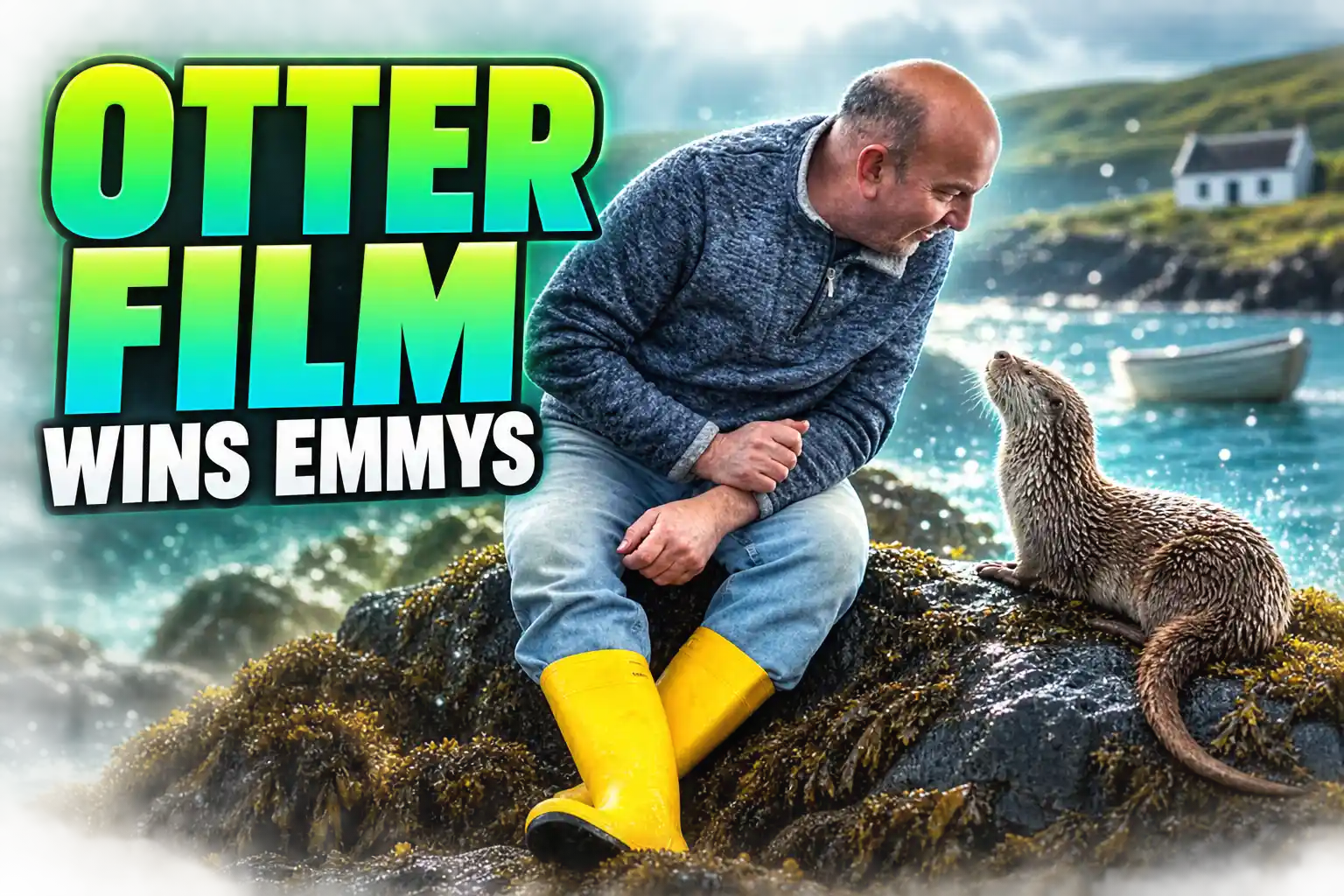
Charlie Hamilton James Moved In With Them
The film was never a planned pitch from the house. A man doing groundwork on the Mails’ extension saw Molly, knew a friend who filmed otters, and passed the story on. Charlie Hamilton James came up from Bristol, spent long stretches in a wetsuit in the voe, and only later did Billy realise he was looking at a National Geographic photographer who had been chasing Shetland otters since he was a teenager.
When Hamilton James asked to make a film, Billy’s first answer was no. “When Charlie phoned and says, ‘Can we make a film?’ I just said, ‘No way, no chance,’” he recalled. Shetland is small. He did not want to be on the wrong side of a camera. He and Susan talked it out, decided life was too short, and let a crew into a private patch of shore.
Silverback Films produced the documentary for National Geographic, with Jeff Wilson producing and Hamilton James directing. Johnny Rolt and Bertie Gregory shared the camera. Sam Rogers cut it. Erland Cooper wrote the score. Susan, who had been terrified of a microphone, ended up narrating after Hamilton James asked her to try a few lines in the spare room. Wilson has said he first sold the idea as a Mary Poppins story, an otter who walks into a man’s life and leaves it better.
The ethics argument started early, because feeding a wild predator is exactly the sort of thing wildlife films usually warn against.
Hey, look, you saved this animal’s life. Without you, she would be dead. You live in a very remote location. You’re not going to create a monster here.
Charlie Hamilton James, director, speaking at SXSW
He also said, in the same run of interviews, that otters make terrible pets and that the pet trade in Asia was already a problem. Wilson put it another way: they kept checking what they were doing, and by the end even a cynic had to look at a wild mother and admit some good had come of the fish. The RTS craft jury later noticed the cost of that closeness. Their citation said Hamilton James had moved to live on location with the couple, and that the film stayed with them after the pretty pictures faded.
Two Emmys, a BAFTA Craft Prize and Three RTS Wins
Festival audiences got there first. The film opened South by Southwest in March 2024, then moved through Copenhagen’s CPH:DOX, the DC Environmental Film Festival, SFFILM and Hot Docs. It took the Audience Award for Best International Feature at NorthwestFest, the Best of Festival prize at ECOador, and the Audience Choice Award at Mendocino. In September 2024 Jackson Wild named it Best People and Nature Film, from a field the organisers put at more than 500 titles from 74 countries.
Wildscreen in Bristol followed in October 2024. A unanimous jury gave Billy and Molly the Golden Panda for best overall production, plus the Producer/Director award for Hamilton James and Wilson and the Scripted Narrative award for Hamilton James. The jury talked about emotion and about what wildlife films might do next. Six Critics Choice Documentary nominations arrived the same season, including Best Documentary Feature, and then the broadcast prizes started to stack.
THE PRIZES AFTER A SHETLAND RESCUE
| Honour | Date | What it recognised |
|---|---|---|
| Jackson Wild Media Awards | 5 September 2024 | Best People and Nature Film |
| Wildscreen Panda Awards | October 2024 | Golden Panda, Producer/Director, Scripted Narrative |
| BAFTA Television Craft Awards | 27 April 2025 | Director: Factual, Charlie Hamilton James |
| News and Documentary Emmys | 26 June 2025 | Outstanding Writing; Outstanding Promotional Announcement |
| RTS Craft and Design Awards | 8 December 2025 | Director, photography and sound, all non-scripted |
Hamilton James collected the BAFTA craft directing prize at The Brewery in London on 27 April 2025. On stage he said he had not expected it, and that he had borrowed the suit from three different people. He thanked Wilson, Rogers, Rolt, Gregory, and National Geographic’s Janet Vissering and Tom McDonald, and he singled out McDonald for telling the executives, late in the edit, to let them be filmmakers.
Silverback announced two News and Documentary Emmys the day after the 46th ceremony on 26 June 2025, for Hamilton James’s writing and for the trailer. On 8 December 2025, at the London Hilton on Park Lane, the film won three of its four RTS Craft and Design nominations: director for Hamilton James; photography for Hamilton James, Rolt and Gregory; and sound for Kate Hopkins, Graham Wild, Renzo Spiteri, Paul Ackerman and Ellie Bowler. Cooper’s score was nominated and lost. The photography jury said the cameras had tied Shetland’s weather to the relationships on screen. The sound jury called the track “magical” and hard-won.
UK audiences had already had their first proper look. Silverback’s own release note put the film on Disney+ from 14 November 2024, with National Geographic at 8pm on 15 November. Billy and Susan did the studio round after that, including a live hit from Shetland. The prizes kept arriving after the novelty of the otter had, on paper, worn off.
What the Film Asks Viewers Not to Copy
Hamilton James’s remote-island defence was a production argument, not a legal one. In Scotland, Eurasian otters are classed as European Protected Species under the Conservation (Natural Habitats, &c.) Regulations 1994. NatureScot’s standing advice is blunt about what that means on the ground.
THE RULES AROUND A WILD OTTER
- The sanctuary line: Hillswick told Billy to keep feeding a starving cub, and also to refuse the house, the pet voice, and anything that would make her dependent.
- The criminal list: It is an offence to kill, injure, capture or harass an otter, to disturb one in a holt or with young, or to damage a breeding site, whether the harm was reckless or planned.
- The Asia warning: Hamilton James said otters make terrible pets, and that fashion for keeping them was already causing harm far from Shetland.
- The local watching code: Shetland guides already tell visitors that crowded shores produce a handful of half-tame animals, and that those animals should not be read as an invitation to walk in.
Susan, in the film, is the person who keeps asking whether the bond is healthy. One critic who saw it at SXSW boiled her position down to a line that still sits under the awards: Molly was Billy’s whole life, and he was only part of hers. That is the sentence the Disney cut cannot afford to lose, because the same footage that makes people cry is footage of a man delaying a wild animal’s fear of him.
Billy has been plain about the temptation. On a deeper level, he said, you want to make an otter a pet, and that thought is cuddly, and it is still the wrong thought, because the animal has a nature that does not belong in a kitchen. Jade, the rescued sheepdog, mostly ignored Molly except when the cub went for a ball. Dogs and otters, Billy said, do not mix well. The cute collisions in the film are the exception he is not offering as a how-to.
Ambassadors for a Devon Otter Charity
Once the UK streaming date landed, the private rescue acquired a charity job. Dave Webb, founder of the Devon-based UK Wild Otter Trust, already knew Hamilton James. Billy and Susan had spoken to him during the feeding months, to check they were not doing something foolish. After the film grew, Webb asked them to become ambassadors.
Billy said none of them had expected the film to become as big as it did, and that the trust gave them a way to talk about winter hunger, traffic, and the crossings otters need on busy roads. He has also said locals believe Molly lost her mother and a sibling to a road death young, which is why a six-month-old cub was alone on a jetty in the first place. Webb’s own gloss was drier. He said it is not often that humans can, or should, mix with wild animals, and that otters are far from the friendliest of creatures, which is why the story hooked him.
The trust later gave Billy and Susan its award for outstanding contributions to Eurasian otter conservation. Webb’s citation said the film had drawn much attention, mostly good and some criticism, and that the pair had still looked, on a closer viewing, like Shetlanders doing what they love. The point he chose to stress was that Molly stayed wild, visited on her terms, and often chose not to spend the night.
Shetland Arts finally put the film on a home screen at Mareel from 26 January to 11 February 2026, after months of people asking why the island that hosted the cameras could not host the premiere. Proceeds from those screenings went to the same trust. A starving cub had become a fundraising object, which is a second life no one on the jetty had asked for in March 2021.
Chip Has to Stay Afraid of People
The plot point the trailers like is the pregnancy. A dog otter the Mails called Bozo turned up. Billy felt protective, called Molly his wee girl, and still knew the job was over if she could hunt. He has said he stopped the regular feeding when she went off with the male. When she came back exhausted, they realised she was pregnant, and that letting her go properly was the only way the cubs would grow up wary of humans.
He named the pup Chip, after the little teacup in Beauty and the Beast, a name that works for a male or a female. Molly did not use the cosy box he had built for the birth. She took over a rabbit warren in the hills, which Billy read as proof they had not accidentally house-trained her. In the months when she was feeding a youngster, she would collect a fish, take it under the pontoon for the pup, then come back for her own. After weaning, the visits dropped. In a later conversation Billy said they still saw mother and pup in winter, when food is harder, and that she remained completely wild, calling only for a bit of fish.
“The realisation that my actions had allowed this wild otter to make it through the winter and then to go off, get pregnant and have her youngster was the most incredible thing,” he said. That is the paternal sentence in a story that also includes childlessness and grief, and it only works if Chip does not become Molly part two. Billy has said he would not want a friendly dog otter. He wanted Molly to teach fear, and he was proud when she did.
He was, as of that same set of interviews, writing a book about the whole stretch of years, after publishers came calling. The film had already done the thing he feared when the phone first rang: it had put a West Mainland pontoon on a global map, and left him to keep the animal on it from turning into a petting stop.
National Geographic Still Sells the Swim
On 27 September 2026, National Geographic Animals posted a underwater clip and a line that treated Molly as a host: “Molly is our tour guide beneath the waves,” with the film still pointed at Disney+. The account is doing what a wildlife brand does. It is also doing the one thing the ending of the film tries to unsay. A tour guide is there for the visitor. A wild otter is there for fish, cubs, and a holt.
That clip is why the second life of Billy and Molly is not a simple win reel. Viewers were still finding the film on Channel 4 in June 2026 and saying they came out of it in tears. The brand is still running the cute swim. The man on the jetty spent the back half of the story teaching the next otter not to come when called.
Molly is our tour guide beneath the waves 🦦#BillyAndMolly: An Otter Love Story is streaming on @DisneyPlus. pic.twitter.com/WTjckGlxE2
— National Geographic Animals (@NatGeoAnimals) September 27, 2026
Hamilton James told festival audiences he wanted people to feel love between a man and a wife, between a man and an otter, and for the natural world. Billy’s own hope was smaller and stricter. He wanted people to enjoy Molly and the look of Shetland, and then to go and feed the birds, or ring someone who knows what they are doing, rather than collect a cub. In a world short of gentleness, he said, there is no badness in the film. The badness sits outside it, in the road that may have killed Molly’s mother, and in the buyers who think a wild otter is a companion animal if the lighting is kind.
Frequently Asked Questions
When Did Billy Mail Find Molly the Otter?
He found her on 3 March 2021, on the floating jetty by the family home on Shetland’s West Mainland. People locally believe her mother and a sibling had already been killed on the road, which would explain why a cub still young enough to need a parent was fishing alone and thin enough that Billy could see her bones.
Are Wild Otters Protected by Law in Scotland?
Yes, and NatureScot tells developers to survey any suitable habitat within 200 metres of a scheme. A licence to disturb them has to pass three tests, including no satisfactory alternative and no hit to the species’ conservation status, and there is a presumption against licensing work that disturbs breeding otters or damages a holt in use for breeding.
Who Made Billy and Molly: An Otter Love Story?
Silverback Films made it for National Geographic, with Charlie Hamilton James directing and Jeff Wilson producing. Alastair Fothergill and Keith Scholey are among the executive producers, alongside National Geographic’s Tom McDonald and Janet Vissering, and Rebecca Coombs is credited as production manager on later awards listings.
Why Did a National Geographic Director Film This in Shetland?
Hamilton James first went to Shetland at 16 and moved there at 19 to photograph wild otters. About 30 years later, a friend who was building the Mails’ house phoned and told him he had to come and see the cub on the dock, which is how a private feeding arrangement became a feature documentary.
Did Billy and Molly Open a Film Festival Outside the UK?
Yes. India’s Ministry of Information and Broadcasting used the film as the opening title of the 18th Mumbai International Film Festival in June 2024, with a main screening in Mumbai and parallel showings in Delhi, Kolkata, Chennai and Pune, months before the UK Disney+ launch.
Molly can still empty a bag of fish on a dirty winter morning, and Chip can still be taught to leave. The cameras have done their prize-winning work. The pontoon only stays a wild place if the next visitor treats the tour-guide clip as advertising, not as a map.

The BMW iX4 Undercuts Mercedes and Trails Its Twin

Scotland’s Ten Big Supermarkets Already Hold the Weekly Shop

Scotland EMS Faces a State Probe After a Wagram Death

Meritz Signs Ripple to Race Korea’s 2027 Token Rules

Pocognoli’s First Camp Leaves Scotland Third and Exposed

Volkswagen Sells the Osnabruck Plant to Clear a Board Fight

Tata Motors’ Iveco Tender Opens as Holders Still Decide

Saksham Gaur Finds He Is His Own Company’s Client

Onimusha Way of the Sword Preload Hits a Windows 11 Wall

Hyderabad 22-Carat Gold Jumps After a False Bargain
-
 AUTO1 month ago
Volkswagen Sells the Osnabruck Plant to Clear a Board Fight
-
 AUTO1 month ago
Tata Motors’ Iveco Tender Opens as Holders Still Decide
-
 BUSINESS1 month ago
Saksham Gaur Finds He Is His Own Company’s Client
-
 GAMING1 month ago
Onimusha Way of the Sword Preload Hits a Windows 11 Wall
-
 BUSINESS1 month ago
Hyderabad 22-Carat Gold Jumps After a False Bargain
-

 NEWS1 month ago
Apple’s Foldable iPhone Hinges on Samsung Display Supply
-

 NEWS1 month ago
The Frame Pro’s $1,200 Labor Day Cut Needs a Soundbar
-

 BUSINESS1 month ago
SEBI Reopens How F&O Settles After the Closing Auction