
BUSINESS
Cheaper Oil Lifts Sensex as Foreign Funds Return
Sensex jumped more than 1,250 points as cheaper oil cut India’s import-bill strain and pulled foreign funds back, with Thursday’s CPI still able to snap the trade.

The Sensex jumped more than 1,250 points on 11 November as Brent crude held near $92 after a two-month low. Foreign funds have poured ₹53,172 crore into Indian shares this month, and the rupee opened 21 paise firmer at 93.72.
The first-order move is the oil print. The work underneath is a smaller import bill, a firmer rupee, and a rotation into banks, jewellers and airlines that Thursday’s inflation number can still break.
Sensex Opens at an Eight-Month High
Markets were shut on Tuesday for Diwali Balipratipada. They reopened on a gap, with the Sensex at 82,248.68 against Monday’s close of 81,106.65 and the Nifty 50 at 25,337.80 against 25,044.65. Both indices printed their highest levels since 27 February.
The Sensex ran to 82,520.40 in the first hour. The Nifty 50 reached 25,424.35. VK Vijayakumar, chief investment strategist at Geojit Investments, said the Nifty 50 has surged 8.6 per cent in six trading days this month, and he tied that run to foreign buying.
WEDNESDAY 11 NOVEMBER TAPE
| Index | Monday close | Wednesday open | Morning high | About 11 am |
|---|---|---|---|---|
| Sensex | 81,106.65 | 82,248.68 | 82,520.40 | 82,363.95 (+1,257.30, 1.55%) |
| Nifty 50 | 25,044.65 | 25,337.80 | 25,424.35 | 25,378.60 (+333.95, 1.33%) |
By early afternoon the Sensex was near 82,125, still up 1.26 per cent, with the Nifty around 25,305. Bank Nifty held a 2.09 per cent gain at 60,990.35. The Nifty IT index was down 0.53 per cent at 32,295.9 as profit-taking and selling in software shares trimmed the morning spike. The morning jump added more than ₹4 trillion to the market value of BSE-listed companies, taking it to ₹512.2 trillion from ₹507.2 trillion on Monday.
Brent Slips Below $90 After Trump Speaks
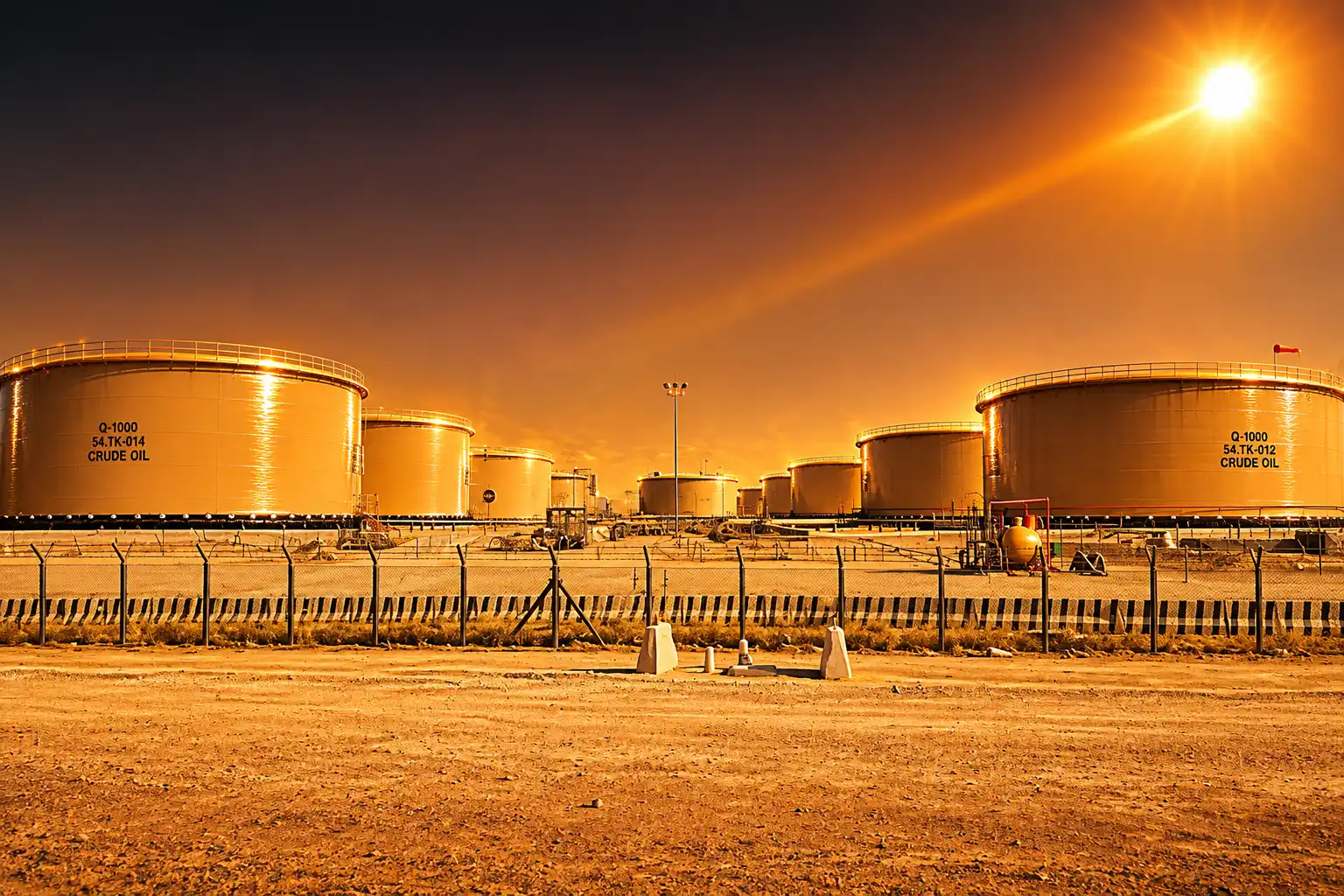
Brent settled at $91.49 on Tuesday, down 1.17 per cent, after touching $89.16, the first print under $90 since August. West Texas Intermediate settled at $86.04, down 0.93 per cent. That followed a drop of about 5.85 per cent on Monday. Brent had traded near $118 on 30 October, a six-month peak, and is now about 22 per cent below that high.
We’re seeing momentum toward the end of this conflict. I think it’s going to be ending fairly soon.
Donald Trump, at the White House after talks with Qatar’s prime minister
Trump spoke on 9 November after meeting Sheikh Mohammed bin Abdulrahman Al Thani, Qatar’s prime minister. He told reporters that Iran “militarily is effectively over” and that further US military action did not seem “a very necessary thing” at this point, while adding that US forces were “locked and loaded.” Tehran, he said, was “talking very politely” with Washington.
ING strategists Ewa Manthey and Warren Patterson wrote that the market has been unwinding some of the geopolitical risk premium built into prices, with recovering regional oil flows adding to the pressure. Fereidun Fesharaki, chairman of energy consultancy FGE, told a CNBC Asia programme he still sees no peace deal, because Washington wants enriched nuclear material moved out of Iran and wants the Strait of Hormuz open as it was before the war, and he does not believe Tehran will accept either term.
FROM THE FIRST STRIKES TO THE $89 HANDLE
- 1 February 2026: Union Budget is presented with Brent near $70 a barrel.
- 28 February 2026: The US-Israeli war with Iran begins; Brent later trades as high as $130.
- 30 October 2026: Brent hits a six-month peak near $118.
- 9 November 2026: Trump says the war could end fairly soon after talks with Qatar.
- 10 November 2026: Brent hits $89.16 and settles at $91.49.
- 11 November 2026: Indian cash markets reopen; Sensex and Nifty print eight-month highs.
Vijayakumar called the drop in Brent to $92 “an additional macro relief for India.” Pronob Sen, a former chief statistician of India, was cooler. He said the decline is welcome, but looking at it through the FY27 budget presented before the war, “it is still not a comfortable situation, and the pressure continues.” Brent was around $72 a barrel before the war began on 28 February.
The $90.6 Billion Bill That Oil Just Cut
India imports 88.1 per cent of the crude it uses, on the oil ministry’s own consumption measure for April to September. Spot prices do not hit the current account the same afternoon. They hit it through cargoes already on the water, through the rupee, and through the losses state fuel retailers have been carrying.
THE H1 CRUDE SHOCK, PER PPAC
- The dollar bill: India’s $90.6 billion crude import bill in April-September compares with $61.9 billion a year earlier, a 46.3 per cent jump.
- The barrels: Import volume rose only 0.8 per cent, to 122.7 million tonnes from 121.8 million tonnes, so almost all of the extra cost was price.
- The rule of thumb: Every $1-a-barrel increase held for a year can add up to ₹18,000 crore to the annual bill.
- The external gap: RBI data put the April-June current account deficit of $4.2 billion, or 0.5 per cent of GDP, with the net petroleum bill already wider.
D.K. Pant, chief economist at India Ratings, said that if oil stays at this level or falls further, prices of oil by-products and fertilisers could ease, freight could drop, and a smaller import bill could support the rupee and the current account. That is the second-order chain the cash market is trading.
It has not reached the pump. State-run oil marketing companies still posted an under-recovery of about ₹230 a cylinder on domestic LPG in October, and marketing losses of ₹9 a litre on petrol and ₹12 a litre on diesel, according to Prashant Vashisht at Icra. Those retailers raised pump prices by about ₹10 a litre in May. The Centre’s March excise cut of ₹10 a litre on fuel was meant to shrink those losses, not to deliver a matching cut at the retail board. Cheaper crude is a paper gain for the indices until that gap closes.
Foreign Funds Buy as Domestic Institutions Sell
Foreign portfolio investors bought shares worth ₹53,172 crore between 1 and 9 November, ending a 10-month streak of monthly equity outflows. They had pulled ₹4.48 trillion from Indian equities between January and October, including ₹45,162 crore in October and ₹44,013 crore in September. On Monday they were net buyers of ₹7,212.22 crore. Domestic institutions sold ₹7,172.53 crore, an eighth straight session of net selling.
WHO WAS ON THE OTHER SIDE OF THE TAPE
| Window | Foreign funds (₹ crore) | Domestic institutions (₹ crore) |
|---|---|---|
| 9 November cash | +7,212.22 | -7,172.53 |
| 1 to 9 November | +53,172 | Net sellers into the rally |
| January to October | -4.48 trillion | Absorbed the 2026 outflow |
That is a reversal of the months when oil pushed foreign investors out of Indian markets, and of the October pattern in which domestic buyers who absorbed the October selling stood in for departing foreigners. The rupee gained 1.09 per cent against the dollar last week, moving past 94 and to its strongest level in more than four months. On Wednesday it opened at 93.72 from Monday’s 93.93.
Deven Mistry and Aanshul Agarawal of Motilal Oswal Financial Services wrote that any moderation in the global AI trade could encourage a stronger revival in FPI interest in underperforming emerging markets such as India. HSBC Global Investment Research upgraded India to overweight, citing market depth, domestic demand and valuations that have moved back toward historical averages. Citi raised its December 2027 Nifty 50 target to 28,000, 11.8 per cent above Monday’s close of 25,044.65, and said it expects oil to stay “below prior fears.”
FPIs also bought ₹7,480 crore of Fully Accessible Route government securities in the first nine days of November, the highest monthly debt inflow since July. Their equity long-short ratio stood at 26.8 per cent on Monday, the second-highest reading this year after 29.2 per cent on 23 February, just before the war began. They still hold more shorts than longs. The bet is less bearish, not yet bullish.
Paints, Planes and Wedding Gold Lead the Tape
If cheaper crude is a tax cut for an importer, it shows up first in businesses that burn fuel or sell into a firmer rupee and a festive week. Banks led because foreign money still treats them as the liquid way into India. Jewellery led because results landed into that bid.
WHERE THE OIL CUT HIT FIRST
- Kalyan Jewellers: The stock jumped 12.3 per cent to a 52-week high of ₹686 after consolidated net profit rose 64 per cent to ₹427 crore from ₹261 crore, on revenue of ₹10,323 crore, up 31.4 per cent. A ₹73.5 crore land-sale gain flattered the profit line.
- Bank Nifty: The index was up 2.09 per cent near 60,990 by early afternoon, with Federal Bank, RBL Bank and IDFC First Bank among the private-bank leaders and Punjab & Sind Bank, Indian Overseas Bank and UCO Bank among the PSU leaders.
- Aviation, paints and tyres: IndiGo and Mahindra & Mahindra were among the early Sensex leaders, the fuel-cost side of the same oil move.
- Software: Nifty IT was the clear laggard by early afternoon, down 0.53 per cent, as the India trade and the US tech trade pulled apart.
Ramesh Kalyanaraman, executive director at Kalyan Jewellers, said the festive quarter had started on a strong note, with encouraging growth during Navratri and Dhanteras. UBS kept a Buy rating and a ₹900 target on the stock. Wedding-season gold and a 12 per cent share-price gap-up are not an oil story in the narrow sense. They are what a returning FII bid and a firmer rupee look like on a single name.
Thursday’s Inflation Print Can Snap the Chain
September retail inflation was 5.54 per cent, with food inflation at 7.74 per cent, and the RBI has already lifted the repo rate to 5.50 per cent. MoSPI’s calendar puts October CPI due on 12 November at 4 pm IST. That reading is the last full inflation print the Monetary Policy Committee will have before its 2 to 4 December meeting.
A Reuters poll of 36 economists put the median at 5.93 per cent, with a range from 5.50 to 6.60 per cent, and nearly half of those surveyed at or above 6 per cent. A Business Standard poll of 11 economists had a median of 6.05 per cent. Aditi Nayar, chief economist at ICRA, expects 6.1 per cent, in part because of an unfavourable GST base. The RBI’s tolerance band is 2 to 6 per cent around a 4 per cent target. A print above 6 per cent would be the first since October 2024.
Hotter US inflation of 0.4 per cent for October has already pushed the two-year Treasury yield up 18 basis points to 4.73 per cent and put a larger December Federal Reserve hike in play. That is the other blade. Indian stocks can rally on $92 oil while global liquidity tightens, until a domestic CPI surprise forces the RBI to follow the Fed rather than enjoy the oil cut.
Fesharaki’s warning sits on the same fuse. If talks stall and Brent reclaims the $110s, the import bill, the rupee and the FII bid reverse together, which is how this market traded for most of 2026. The 11 November gap-up priced a cheaper barrel and a returning foreigner. Thursday’s CPI, and whatever Tehran and Washington say next, decide whether that price holds.
Disclaimer: This article is news reporting and market analysis for information only. It is not investment advice, a recommendation to buy or sell any security, commodity or currency, or a forecast of index or oil prices. Readers should consult a SEBI-registered investment adviser or other qualified financial professional before acting on any market move described here. Figures, index levels and policy dates reflect the sources available on 11 November 2026 and can change in the next session, the 12 November CPI release, or further Iran-related headlines.

Gold Prices Fall to a 14-Month Low Despite Strikes

SpiceJet Clears a Rs 5,500 Crore Raise After Mumbai Stalled

Honda Activa’s Record Month Came With a Share Loss

Sony Turns the GTA 6 Launch Into a Firmware Gate

Xiaomi 18 Leak Skips the Rear Screen for Battery

Volkswagen Sells the Osnabruck Plant to Clear a Board Fight

Apple’s Foldable iPhone Hinges on Samsung Display Supply

Saksham Gaur Finds He Is His Own Company’s Client

Tata Motors’ Iveco Tender Opens as Holders Still Decide

What Is SD on Amazon Prime?
-
 AUTO2 months ago
Volkswagen Sells the Osnabruck Plant to Clear a Board Fight
-
 NEWS3 months ago
Apple’s Foldable iPhone Hinges on Samsung Display Supply
-
 BUSINESS3 months ago
Saksham Gaur Finds He Is His Own Company’s Client
-
 AUTO3 months ago
Tata Motors’ Iveco Tender Opens as Holders Still Decide
-
 TECHNOLOGY3 years ago
What Is SD on Amazon Prime?
-

 BUSINESS3 months ago
Hyderabad 22-Carat Gold Jumps After a False Bargain
-

 GAMING3 months ago
Onimusha Way of the Sword Preload Hits a Windows 11 Wall
-
 BUSINESS3 months ago
UltraTech Ultravolt Launch Splits Friday Stocks to Watch