
NEWS
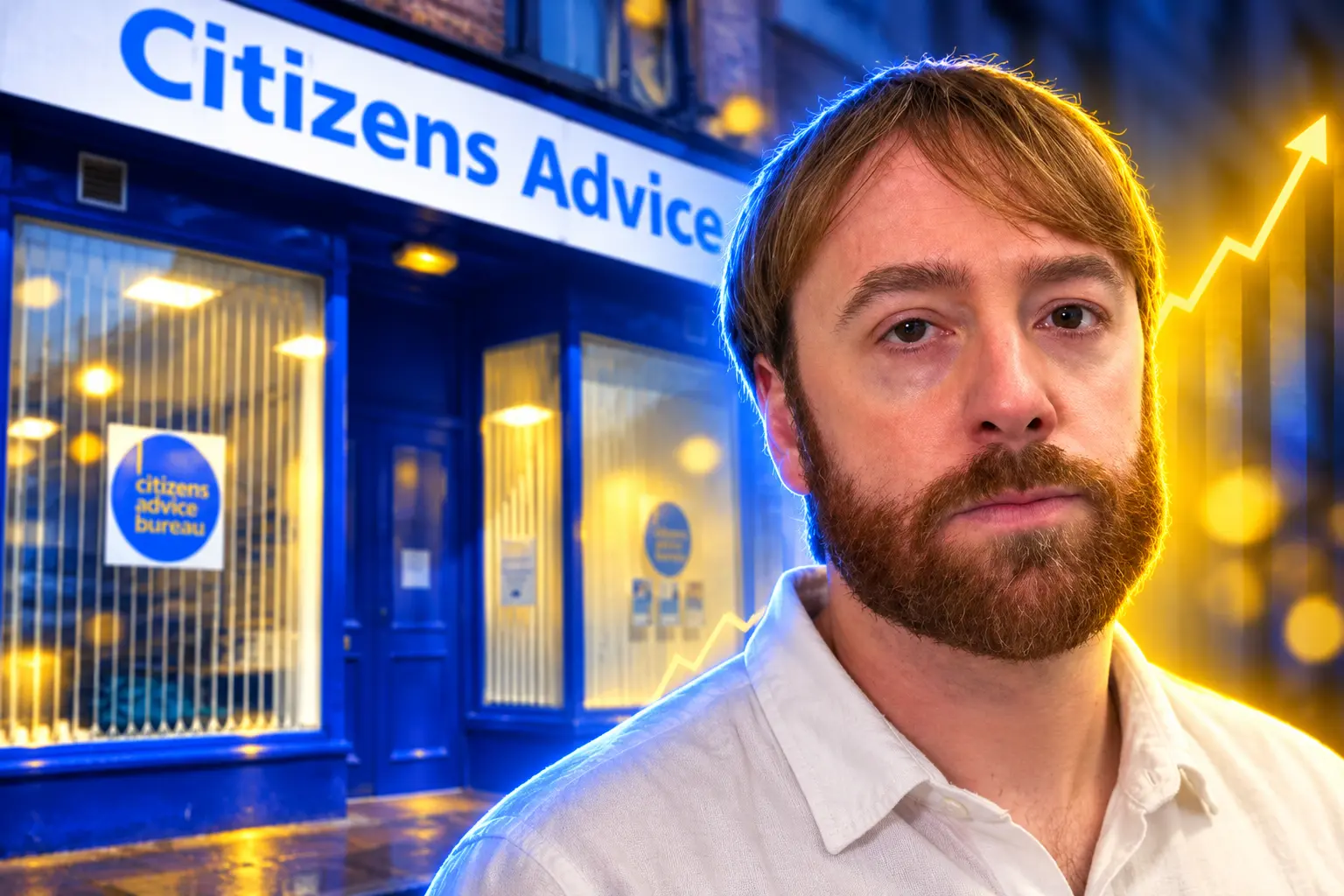
Citizens Advice Scotland Absorbs the Cost of Going Online
As digitally excluded clients rose 15% in a year, Scotland’s advice bureaux began handing out phones, SIMs and unused social-tariff switches the market left idle.

Citizens Advice Scotland recorded a 15% year-on-year rise in digitally excluded clients in 2023/24, as more public services moved online. The 58 local member charities that make up Scotland’s largest independent advice network now spend part of each week doing a job that looks a lot like a telecoms counter: switching people onto cheaper broadband, handing over a SIM, or walking a client through a phone they could not buy.
That work exists because the cheap deals already on the market still miss most of the people they were built for, and because benefits, energy and care keep migrating to screens. The bureaux did not choose that role. They inherited it.
Digitally Excluded Clients Keep Walking In
CAS logged 1,932 digitally excluded clients in 2021/22. By 2023/24 the count was 3,065, a 59% rise in two years. The 15% jump in 2023/24 sits inside that climb. A separate CAS briefing puts digital exclusion advice up 110% since 2021, a different tally of issues rather than people, and it points the same way.
In 2023/24 the wider network helped nearly 192,000 people in Scotland and dealt with more than 680,000 advice issues, unlocking over £158 million. Digital access is no longer a side query in that caseload. Clients who cannot get online struggle to apply for welfare, compare energy suppliers, keep a Universal Credit journal, or even stay in touch with a carer.
THE CAB DIGITAL EXCLUSION COUNT
| Measure | Figure | Period |
|---|---|---|
| Digitally excluded clients | 1,932 | 2021/22 |
| Digitally excluded clients | 3,065 | 2023/24 |
| Two-year rise in those clients | 59% | 2021/22 to 2023/24 |
| Year-on-year rise in those clients | 15% | 2023/24 |
| Digital exclusion advice issues | up 110% | since 2021 |
Audit Scotland’s 2024 review found that 91% of Scottish households have internet access, which leaves 9% with none, the “almost one in ten” figure Kyle Scott, policy manager at CAS, still uses. The same audit found that 15% of Scotland’s adults lack foundation level digital skills, a population measure, not a CAB headcount. Across the UK, Good Things Foundation’s Digital Nation 2026 update, drawing on Lloyds Bank and Ofcom, puts 2.2 million adults fully offline and 34 million online with some barrier. Only one in three adults are comfortably online. Eight million still lack basic digital skills.
Nine in Ten Eligible Homes Still Pay Full Price
The policy answer to unaffordable broadband has been sitting in the market for years: social tariffs, cheaper home and mobile packages for people on Universal Credit, Pension Credit and a short list of other benefits. CAS has been telling providers to expand them since at least 2022. Take-up never caught the people the tariffs were aimed at.
Ofcom’s pricing and consumer engagement work found that 532,000 customers took a social tariff in June 2025. Customer numbers rose by 26,000, or 5%, in a year. The share of eligible households on those deals still fell, from 9.6% in June 2024 to 8.6% in June 2025, because the Department for Work and Pensions count of Universal Credit households, Ofcom’s proxy for eligibility, had risen to 6.2 million. The cheap deals added customers more slowly than the pool of people who could have used them.
SOCIAL TARIFF TAKE-UP, OFCOM
| What Ofcom measured | Figure |
|---|---|
| Share of eligible households on a social tariff, June 2025 | 8.6% |
| Same share, June 2024 | 9.6% |
| Eligible adults with home broadband who had not heard of social tariffs, October 2025 | 70% |
| Year-on-year rise in social-tariff customers | 26,000 (5%) |
| Share of social-tariff take-up that is mobile | 3% |
BT held 64% of fixed broadband social-tariff connections in June 2025, with Sky on 24% and Virgin Media O2 on 6%. Almost all of that take-up is home broadband. Ofcom puts the thin mobile share down to ordinary low-cost SIM-only and pay-as-you-go deals that can undercut the branded social tariff. The gap the bureaux keep seeing is not a missing product. It is a product most eligible homes have never been told about.
Cost is doing the rest. Good Things Foundation, using Ofcom’s April 2026 Communications Affordability Tracker, says 2.3 million households struggle to afford their mobile contract. People who are offline are 2.5 times more likely to be on a low income. Food, fuel and heating already come first. A broadband bill that could have been cut never gets cut, because the customer never hears the offer exists, or cannot complete the switch without help.
Get Connected Puts Cheap Deals on the Desk
CAS answered that hole with a local campaign. Get Connected, launched for the bureaux in 2025, was built to push social tariffs and other low-cost mobile options, not to invent a new network. Gillian Fyfe, head of the CAS Strong Communities team, wrote in September 2025 that the push would run “for the next six months or so”, with bureaux working local partners to raise take-up. The timed burst has passed. The offer on the campaign page is still the one advisers use.
CAS tells clients that if a provider already sells a cheaper deal for Universal Credit, there is no fee to move, and there is no need to wait for a contract to end. If the current provider has no such deal, the client can switch to one that does. The network’s own pitch is that this one change can save you around £200 per year. The catch, which the page states in plain terms, is eligibility: the right benefits, the client named as the main account holder, and a package that still covers what the household needs.
A SIM sits beside that advice. Local bureaux can help eligible clients get a free SIM with a year’s data, a separate on-the-ground offer from the social-tariff switch.
WHO THE FREE SIM IS FOR
- Age and income: Applicants must be 18 or over and from a low-income household.
- Home connection: They have no internet at home, or not enough of it.
- Away from home: They have no internet, or not enough, when they are out.
- The bill itself: They cannot afford their current monthly contract or top-up.
That list is the shape of data poverty, not a skills class. Advisers still have to sit with people who cannot complete an online switch even after they qualify, which is why the campaign never lived only as a website. The bureau is the shopfront for a discount the providers already sell and barely advertise.
A Handset, a Home Visit and a Care Package
On 2 September 2025, CAS, Virgin Media O2, Hubbub and the Scottish Government announced a batch of 1,200 refurbished smartphones for bureaux in 12 local authorities: Glasgow, South Lanarkshire, North Lanarkshire, Renfrewshire, East Renfrewshire, Scottish Borders, Dumfries and Galloway, Aberdeenshire, Highlands, Inverclyde, East Lothian and West Lothian. The handsets came from customer returns and O2 Recycle, moved through Hubbub’s Community Calling scheme, and arrived with free O2 data, texts and calls from the National Databank, which Virgin Media O2 founded with Good Things Foundation.
The Scotland batch was a slice of Virgin Media O2’s 2025 pledge to pass 12,000 pre-owned devices to UK charities. Advisers had been watching people fail at ordinary tasks because they had no device at all, among disabled people, those on low incomes or without a home, refugees and asylum seekers, people leaving prison, and those fleeing domestic violence. A phone, in that setting, is how you open a Universal Credit claim, bid for social housing, call an energy firm, or keep a medical appointment.
Having access to a device opens so many opportunities for people, especially within the vulnerable groups identified. We know that almost one in ten households in Scotland do not have access to the internet. By providing access to a device, we’re one step closer to eradicating digital exclusion.
Kyle Scott, policy manager, Citizens Advice Scotland
The 3G switch-off made the device question sharper. Virgin Media O2 began withdrawing 3G in Scotland from 5 November 2025, starting in the east, including Aberdeen and Dundee, after Vodafone, EE and Three had already shut their 3G networks in 2024. Known vulnerable customers were offered a 4G handset free; everyone else still on an old phone was pointed to a cheaper upgrade. For people who could not pay, the bureau became the upgrade path.
One island client, named Elaine in CAS’s account, is disabled and on a low income. Her phone was about to die because it still used 2G and 3G, and she could not afford a new one. The bureau gave her a refurbished handset and an adviser visited her home to set it up. She kept running her assisted care package on the new device. Another island case, in CAS evidence to Holyrood, ended worse: a client was sanctioned on Universal Credit because there was no mobile signal to update an online journal.
Richard Lochhead, then business minister, called the phone partnership a way for people to “engage more fully with essential services, employment opportunities, and their communities.” Dana Haidan, chief sustainability officer at Virgin Media O2, framed the same drop as reuse: phones out of landfill, data into households that had none. Both can be true. The volume is still 1,200 handsets against 9% of Scottish households with no internet.
Where Motherwell Took Digital Advice Next
Skills still sit under the affordability problem. Nairn Citizens Advice Bureau has run a digital inclusion hub since 2022 so people with limited skills can practise on the devices they need for ordinary life. The bureau built it because social security and fuel vouchers were moving online by default, cutting off the people who needed those payments most. Staff went out through other community groups so the hub was not a secret kept for those who already knew to walk through the CAB door.
Motherwell Citizens Advice Bureau put a Digital Inclusion Officer on a mixed brief: full advice plus digital skills, delivered at the bureau and then taken out to housing associations and foodbanks. The people who needed a password reset or a benefits form were already in those rooms for something else. Scott has said every bureau in Scotland is doing similar work, week after week, “helping people who are left behind in an increasingly digital world,” and that Nairn and Motherwell are the examples CAS cites when it talks to the Scottish and UK governments.
That is the second job the network did not write into its original charitable objects. A foodbank queue is now a digital clinic. A housing office is a place to learn how to keep a claim alive. The adviser who once filled in a paper form now also teaches someone how to use the phone that form now lives on.
Who Pays When Services Go Online First?
CAS told Audit Scotland in March 2025 what that overflow requires. If public bodies send digitally excluded people to a bureau, the bureau needs extra money for the extra work. Public services should keep a real choice of channel, digital for those who want it and another route for those who do not. New online services should be tested with the people who will fail them first. Those are not abstract design notes. Social Security Scotland still took 26% of applications by telephone or paper in July 2024. Universal Credit, a reserved benefit, remains a digital-first system that can sanction a claimant who cannot reach a journal.
WHAT CAS ASKED PUBLIC BODIES TO CHANGE
- Channel choice: Fund a non-digital route so a claim does not die when the applicant cannot use a screen.
- The overflow bill: If services signpost to bureaux, pay for the capacity that signposting creates.
- Design before launch: Test online public services with people who are older, disabled, rural, or broke, not only with staff who already live on apps.
The Scottish Government’s Benefit Take-Up Strategy for 2026 to 2031, published on 21 October 2026, still lists digital exclusion among the barriers to claiming, and it says non-digital and supported routes should remain. That is the right sentence. It does not, on its own, staff a bureau, buy a handset, or tell 70% of eligible broadband customers that a cheaper tariff exists.
Lloyds figures, via Good Things Foundation, say people with higher digital and financial capability save £815 more a year. Forty per cent of UK adults worry about being left behind as more services move online, and 72% think government should do more. The Scotland network is already doing more, with a SIM, a refurbished phone, and a desk where someone will sit until the form submits. Until take-up of the cheap deals moves with the eligible population, that desk remains the public counter for getting online.

Gold Prices Fall to a 14-Month Low Despite Strikes

SpiceJet Clears a Rs 5,500 Crore Raise After Mumbai Stalled

Honda Activa’s Record Month Came With a Share Loss

Sony Turns the GTA 6 Launch Into a Firmware Gate

Xiaomi 18 Leak Skips the Rear Screen for Battery

Volkswagen Sells the Osnabruck Plant to Clear a Board Fight

Apple’s Foldable iPhone Hinges on Samsung Display Supply

Saksham Gaur Finds He Is His Own Company’s Client

Tata Motors’ Iveco Tender Opens as Holders Still Decide

What Is SD on Amazon Prime?
-
 AUTO2 months ago
Volkswagen Sells the Osnabruck Plant to Clear a Board Fight
-
 NEWS3 months ago
Apple’s Foldable iPhone Hinges on Samsung Display Supply
-
 BUSINESS3 months ago
Saksham Gaur Finds He Is His Own Company’s Client
-
 AUTO3 months ago
Tata Motors’ Iveco Tender Opens as Holders Still Decide
-
 TECHNOLOGY3 years ago
What Is SD on Amazon Prime?
-

 BUSINESS3 months ago
Hyderabad 22-Carat Gold Jumps After a False Bargain
-

 GAMING3 months ago
Onimusha Way of the Sword Preload Hits a Windows 11 Wall
-

 ENTERTAINMENT2 years ago
Andy Scott’s Steel Loon Repeats the Kelpies Regeneration Bet