
BUSINESS
Airlines Block the 737 MAX Software Certified in August
A 737 MAX VNAV dropout after go-arounds sits on the same FMC load used to certify the MAX 7, and carriers are refusing those jets.

A Boeing 737 MAX software glitch can drop vertical navigation after a missed approach, and the same code is on the newly certified MAX 7. Southwest Airlines and United Airlines have already told Boeing they will not take new jets with that load. The Federal Aviation Administration said on September 26, 2026 that it will convene a Corrective Action Review Board and act if it finds a safety concern.
The fault is not a runaway pitch law. It is a flight-management computer mode change at the busiest minute of a landing, on software Boeing used this summer to finish the last two MAX models.
What the Glitch Does After a Missed Approach
Boeing told 737 operators in August that crews may lose automated flight guidance in a specific landing case. The company later described the mechanics. After a missed approach, if the pilot changes the programmed flight path, the flight management computer can move the jet out of VNAV, the vertical navigation mode that tracks altitude and speed constraints in the plan, and into a simpler pitch mode such as level change or vertical speed.
Autopilot can stay engaged. Boeing says every 737 crew is trained to land without VNAV. The extra work is the point of the complaint from carriers. A go-around already packs configuration changes, radio calls, and a new path into a few hundred feet of air. Adding steps to rebuild the vertical profile is a cockpit tax, not a loss of the airplane.
HOW THE VNAV DROPOUT STARTS
- The setup: The crew is on a precision approach with the autopilot on.
- The go-around: They abandon the landing and fly the missed-approach path.
- The change: They then alter the route that was stored in the flight management system.
- The drop: VNAV can disconnect and hand pitch to a more basic automated mode.
- The next approach: The crew must take extra steps to manage the vertical path and, Boeing says, to turn VNAV back on.
Boeing also told operators to reset the system after a missed approach while it writes a lasting software change. The condition showed up in versions 14 and 14.1 of the MAX flight-management load. How many jets worldwide carry those versions has not been published, in part because airlines can update the computer without filing each install back to Boeing.
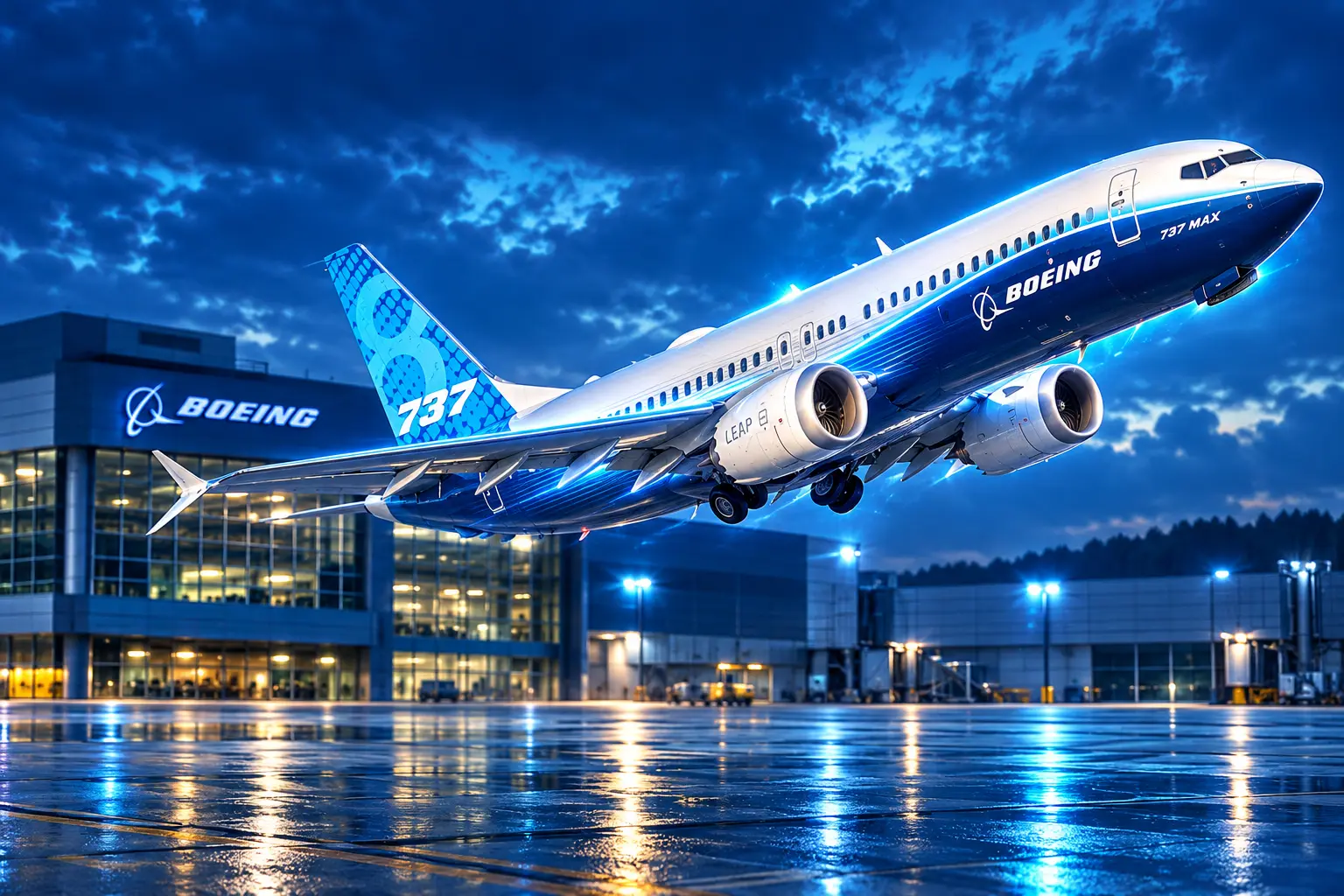
Boeing First Heard in November 2024
An airline brought the condition to Boeing in November 2024. The manufacturer reviewed it and concluded in February 2025 that it was not a safety issue. More operator detail later in the year pushed Boeing to open a formal safety review. Findings went to the FAA in September 2026.
The first airline bulletin went out in late August 2026, and it still called the glitch no immediate safety concern. That note pointed to a software repair in 2028 and to updated crew guidance in November. Boeing now says it is trying to pull both dates forward. Work on the patch is under FAA oversight.
FROM THE FIRST REPORT TO THE FAA BOARD
- November 2024: An airline reports the missed-approach VNAV condition to Boeing.
- February 2025: Boeing reviews the report and treats it as not a safety issue.
- August 3, 2026: The FAA certifies the 737-7 with version 14 of the flight-management software.
- Late August 2026: Boeing sends all 737 operators a bulletin and restates existing crew procedures.
- September 2026: Boeing files its formal safety-review findings with the FAA.
- September 26, 2026: The FAA says it will convene a Corrective Action Review Board.
The long gap is the part that will follow Boeing into the hearing room. A procedure memo is a legal answer. It is a thin one when the same company spent years promising that MAX software surprises would not again land on the crew.
No New Jets With Version 14, Two Airlines Say
Southwest and United have told Boeing they will not accept new 737 MAX aircraft with the affected software and want an earlier load instead. Alaska Airlines, American Airlines, Southwest, and United said their MAX jets already flying do not use versions 14 or 14.1. Southwest said none of its fleet, including new MAX 8 deliveries, has Version U.14, the carrier’s name for that load.
WHO WILL TAKE THE NEW FMC LOAD
| Airline | In-service MAX on v14 or 14.1 | New aircraft with that software |
|---|---|---|
| Southwest Airlines | None, including new MAX 8s | Will not accept the affected load |
| United Airlines | None on the new FMC software | Will not take deliveries with it |
| Alaska Airlines | None | Launch customer for the MAX 10 |
| American Airlines | None | Not stated for new jets |
United put the delivery freeze in writing. “United does not currently have any 737s operating with this new FMC software, and we are not taking deliveries of new aircraft with the new FMC software.”
That is a factory-door veto, not a grounding. The big US MAX fleets can keep flying on older computers. The jets that cannot are the ones Boeing still has to hand over, including the smallest and largest members of the family.
Version 14 Is Already on the MAX 7
On August 3, 2026, the FAA issued an amended type certificate for the MAX-7 after almost a decade of review. The jet was certified with version 14. Southwest is the main customer and was in line for first deliveries. Refusing the affected software means Boeing needs a different cockpit load before those handovers can proceed.
The larger 737-10 used version 14.1 in certification flight tests. Boeing chief executive Kelly Ortberg said on September 16 that all planned MAX 10 tests were done and that the program was in final paperwork with the FAA, with approval expected very soon. The agency has not said whether the software review will move that date. Alaska Airlines is due to be the first MAX 10 operator. United holds a large order too.
THE TWO JETS NOW TIED TO THE LOAD
- MAX 7 certificate: Issued August 3, 2026, on version 14, with Southwest as launch customer.
- MAX 7 orders: 282 firm orders, typically 135 to 160 seats in two classes, with a stated range of 3,800 nautical miles.
- MAX 10 tests: Flown on version 14.1; Ortberg said on September 16 that flight tests were complete.
- Family book: More than 7,200 MAX orders, with first deliveries of both remaining models aimed at 2027.
Boeing’s own count is 2,360 MAX jets delivered through June 2026. The software problem does not have to touch most of those airframes to matter. It only has to sit on the configuration the company needs for the next ones.
India’s 96 MAX Jets Leave a Software Gap
India flies about 96 Boeing 737 MAX aircraft, 53 at Air India Express and 43 at Akasa Air. Boeing said it informed all 737 operators. Akasa said it is coordinating with Boeing and that there is no impact to the safety of its operations, and that its jets continue to fly under existing procedures and rules. The carrier did not say whether any of its MAX aircraft run versions 14 or 14.1.
Air India Express had not commented. India’s Directorate General of Civil Aviation had not said by September 27 whether it was looking at the issue or whether it had sent airlines an advisory of its own.
WHAT WE KNOW
- The bulletin: Boeing says every 737 operator, including the two Indian MAX carriers, was told in August.
- Akasa’s line: The airline says operations remain safe under existing procedures.
- The US check: Four large US MAX operators say their in-service fleets are not on v14 or 14.1.
WHAT IS UNCONFIRMED
- Indian loads: Neither Air India Express nor Akasa has said which FMC version is in its computers.
- DGCA action: No public Indian advisory had been issued as of September 27.
- Fleet share: Boeing has not published a global count of jets on versions 14 and 14.1.
Because carriers can load FMC software without reporting each update, a quiet Indian install would not show up in Seattle’s books. That is the open operational question for the 96 jets, and it is separate from the delivery fight in the United States.
Go-Arounds Already Load the Crew
MAX software has a public history that this fault will be read against, fairly or not. Two crashes in 2018 and 2019 killed 346 people. The Maneuvering Characteristics Augmentation System, running in the flight control computer, pushed the nose down on bad angle-of-attack data. The FAA ordered the worldwide fleet down on March 13, 2019, after the March 10 Ethiopian accident, and later required four design changes after the MAX grounding, including new flight control computer software. An Alaska Airlines MAX 9 lost a cabin door plug in flight in January 2024.
This VNAV case is a different box. The flight management computer builds the path. The flight control computer, the unit that once ran MCAS, is not the unit named in the August bulletin. Boeing’s public line is that crews already know how to fly the missed approach without the fancy vertical mode.
Last month, we informed all 737 operators about a software issue where pilots may not have access to automated flight guidance during a specific landing scenario. We shared information with operators that reinforced existing pilot procedures for safely handling such cases. Our engineers are working on a software update to permanently address the issue.
Boeing spokesperson, company statement, September 2026
Existing procedures are the same first answer the company gave after earlier MAX failures. The difference this time is on the ramp. Southwest and United are not waiting to see whether a 2028 load arrives. They want last year’s computer in next month’s airplane.
The 2028 Fix Calendar Meets the Review Board
The FAA’s Corrective Action Review Board is the next hard date that is not a date. The agency said it knows of a potential issue in a software update for the flight computers on certain 737 MAX airplanes, that it is working with Boeing and the airlines, and that it will move at once if the board finds a safety problem. Until that finding lands, Boeing is selling a workaround: reset after the go-around, fly the next approach with less vertical automation, and wait for code that was first scheduled two years out.
The FAA is aware of a potential issue in a software update for the flight computers on certain Boeing 737 MAX airplanes and is working closely with Boeing and the airlines. The FAA will convene a Corrective Action Review Board (CARB) and will take immediate action if it identifies a safety concern.
Federal Aviation Administration statement, September 26, 2026
Updated crew guidance was planned for November. The lasting software change was planned for 2028. Boeing says both are now being accelerated, under the FAA’s eye, while it works with airlines on a formal way to bring VNAV back if it drops. Southwest was due to start taking MAX 7s this fall. That handover now depends on a cockpit load the carrier has already rejected.
The missed-approach case is still a rare sequence on a subset of computers. The jets that have to live with it first are the ones Boeing most needs to park at Southwest and Alaska, because those are the ones built on versions 14 and 14.1.

Edinburgh Opens a 2027 Tour Built for Time Trials

Korda Maps Auður From Meðalland to Irvine Bay

Apple Music Films Its New Logo in Mineral Oil

Oppo Prices the Pad Mini Above India’s iPad Mini

Austen Soaks Scotland Before Boelo Brings Weekend Gales

Volkswagen Sells the Osnabruck Plant to Clear a Board Fight

Apple’s Foldable iPhone Hinges on Samsung Display Supply

Saksham Gaur Finds He Is His Own Company’s Client

Tata Motors’ Iveco Tender Opens as Holders Still Decide

Onimusha Way of the Sword Preload Hits a Windows 11 Wall
-
 AUTO2 months ago
Volkswagen Sells the Osnabruck Plant to Clear a Board Fight
-
 NEWS2 months ago
Apple’s Foldable iPhone Hinges on Samsung Display Supply
-
 AUTO2 months ago
Tata Motors’ Iveco Tender Opens as Holders Still Decide
-
 BUSINESS2 months ago
Saksham Gaur Finds He Is His Own Company’s Client
-
 GAMING2 months ago
Onimusha Way of the Sword Preload Hits a Windows 11 Wall
-

 ENTERTAINMENT3 years ago
What is SD on Amazon Prime? – All You Need to Know
-

 BUSINESS2 months ago
Hyderabad 22-Carat Gold Jumps After a False Bargain
-

 NEWS2 months ago
iQOO 16 Locks 8,400 mAh While 100W Charging Holds