
BUSINESS
Bakkafrost’s Scottish Harvest Beat Came With 3.0 kg Fish
Bakkafrost booked DKK 42 million in Scottish mortality costs as Q3 harvests of 4,500 tonnes averaged just 3.0 kg.

Bakkafrost booked DKK 42 million (€5.6 million) of exceptional mortality costs in Scottish farming in the third quarter and none in the Faroe Islands. Scotland harvested 4,500 tonnes head-on gutted at an average 3.0 kg, while Faroese sites landed 23,100 tonnes at 5.0 kg.
Of the Scottish bill, DKK 33.5 million related to farming sites harvested out during the quarter, according to the group’s 5 October 2026 trading update. The remaining DKK 8.5 million sat on fish that were not part of those clear-outs. Freshwater units in both countries recorded zero exceptional mortality.
3.0 kg Fish and a DKK 42 Million Bill
The Scottish volume sits above the company’s own third-quarter slice of its year. Bakkafrost had sketched Scotland as 19 per cent of a 20,000-tonne 2026 harvest, about 3,800 tonnes. It took 4,500 tonnes. That extra 700 tonnes arrived 2.0 kg lighter than the Faroese average and 2.2 kg lighter than Scotland’s own second-quarter fish, which averaged 5.2 kg on 3,145 tonnes.
SEB analyst Sander Lie put the same point in market language after the update, saying Scotland’s outperformance was not driven by “the right reasons” and pointing to lower harvest weights and continued mortality costs. The bank treated the release as neutral: Faroese volume could support higher earnings estimates, while Scottish estimates could fall further even though harvests exceeded guidance.
Q3 2026 AT A GLANCE
- Scottish farming mortality: DKK 42.0 million, of which DKK 33.5 million on sites harvested out.
- Faroese farming mortality: DKK 0, with 23,100 tonnes landed at 5.0 kg.
- Scottish harvest: 4,500 tonnes at 3.0 kg, against a 3,800-tonne quarterly profile.
- Group harvest: 27,600 tonnes head-on gutted from both regions combined.
Those four lines are the quarter. Scotland sold more fish than the plan implied because cages came off early, and the average fish on the packing line was a portion fish, not the 5 kg animal the Faroese sites kept turning out.
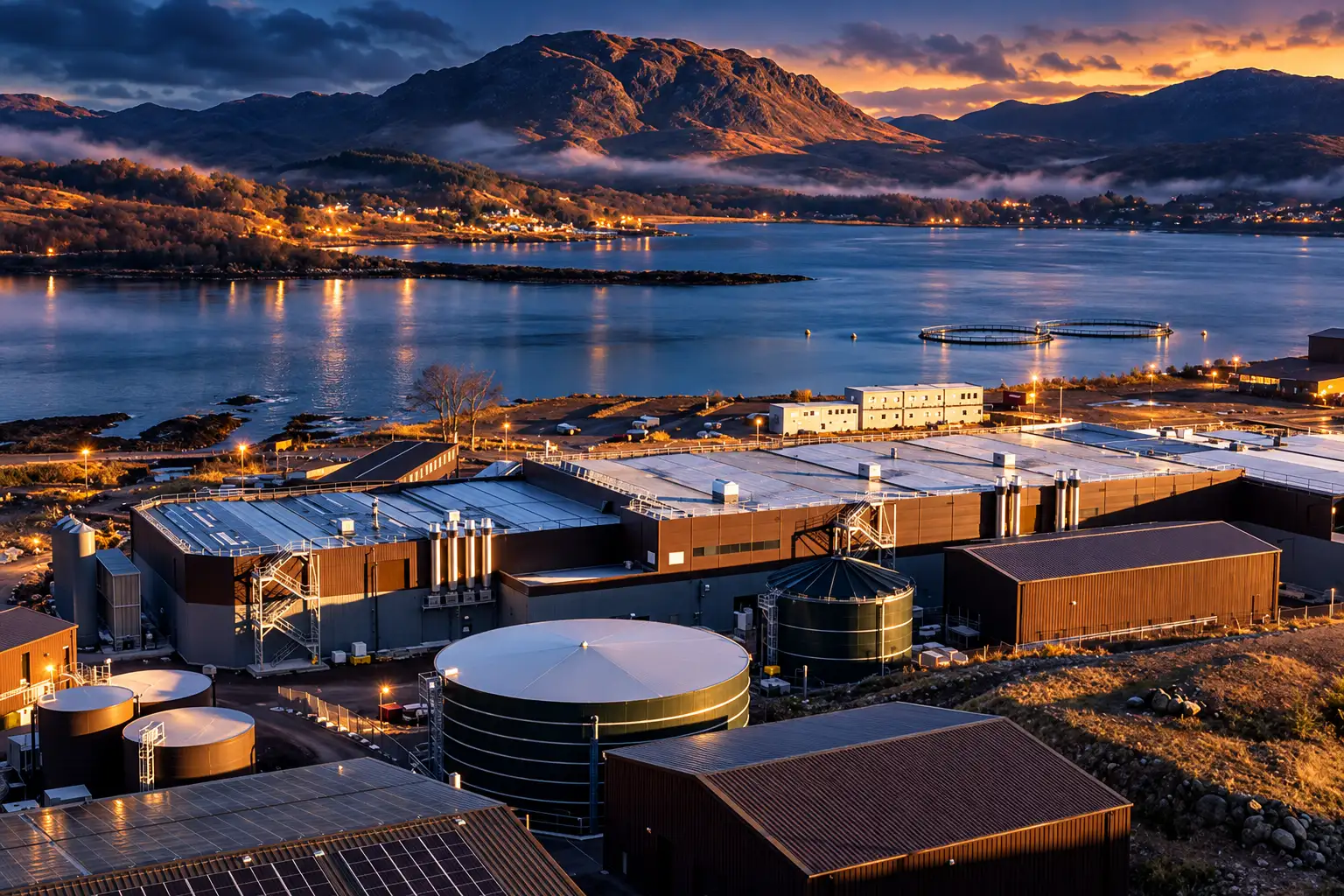
The Harvest Beat Scotland Did Not Want
Bakkafrost published Q3 harvest and mortality figures by month after correcting an earlier fishmeal total. Faroese weights barely moved. Scottish weights never left the low 3 kg band.
Q3 HARVEST BY MONTH
| Region | Month | Volume (thousand t HOG) | Average weight (kg) |
|---|---|---|---|
| Faroe Islands | July | 8.3 | 5.0 |
| Faroe Islands | August | 7.1 | 5.0 |
| Faroe Islands | September | 7.7 | 4.9 |
| Faroe Islands | Q3 total | 23.1 | 5.0 |
| Scotland | July | 1.2 | 2.9 |
| Scotland | August | 1.3 | 3.1 |
| Scotland | September | 1.9 | 3.0 |
| Scotland | Q3 total | 4.5 | 3.0 |
Year to date the Faroe Islands have harvested 75,000 tonnes and Scotland 13,900 tonnes. That leaves about 22,000 tonnes of the 97,000-tonne Faroese guide for the fourth quarter, and 6,100 tonnes of the 20,000-tonne Scottish guide. The company’s own Scottish profile had 34 per cent of the year in the fourth quarter, so the remaining tonnes are tight against that sketch, and they will be harvested from a biomass that just spent three months coming off at 3 kg.
Smolt went into the water anyway. Scotland released 2.9 million in the quarter and 7.8 million in the first nine months, against a 10.0 million full-year plan, leaving 2.2 million for the last quarter. The Faroe Islands released 4.5 million in the quarter and 14.0 million year to date toward a 20.0 million plan.
What Vuia Mor’s 48.2% Cycle Means
The trading update does not name the Scottish sites behind the DKK 33.5 million of harvest-out costs. A cycle that closed in July does name one. Bakkafrost Scotland confirmed a 48.2 per cent mortality rate over the production cycle at Vuia Mor in Loch Roag, on the Isle of Lewis, and said the site was fallowed in July. A company spokesperson said the losses were “largely concentrated within one externally sourced batch of smaller smolts that experienced significant gill health challenges.”
largely concentrated within one externally sourced batch of smaller smolts that experienced significant gill health challenges
Bakkafrost Scotland spokesperson, on the Vuia Mor cycle
July’s Scottish harvest was 1.2 thousand tonnes at 2.9 kg, the lightest month of the quarter. That is what a damaged cycle looks like once the remaining fish are taken out and weighed. Scottish farmers also file mortality reports to the Fish Health Inspectorate when losses pass set thresholds, so the public register trails the same events the trading update later prices in kroner.
SCOTTISH HITS ON THE CLOCK
- Third quarter 2025: Incident-based mortality costs of DKK 59 million, concentrated at Portree after a Pasteurella outbreak, with the site later harvested at very low average weight.
- Fourth quarter 2025: DKK 58 million of farming mortality costs in Scotland and DKK 2 million in freshwater, still with no matching Faroese charge.
- Second quarter 2026: DKK 32 million of exceptional farming mortality in Scotland, tied to one batch of externally supplied smolt at Sgian Dubh and Ardyne; Scottish harvest 3,145 tonnes at 5.2 kg.
- July 2026: Vuia Mor fallowed after a 48.2 per cent mortality cycle on smaller external smolts with gill trouble.
- Third quarter 2026: DKK 42.0 million of exceptional farming mortality, DKK 33.5 million of it on sites harvested out, average weight 3.0 kg.
The common thread is not a one-week storm. It is small or bought-in smolt that fail in the sea, followed by a harvest that books volume and a cost line in the same quarter. In the second quarter, 1.489 million of the 3.885 million smolts Scotland put to sea, 38 per cent, still came from outside the company.
Applecross Is Still a Third Full
That external share is the gap the recirculating hatchery at Applecross was built to close after Bakkafrost bought The Scottish Salmon Company in 2019. The plant is meant to hold fish longer in freshwater and send heavier smolt to sea, shortening the marine cycle. On the second-quarter call the company said Applecross was running at around 35 per cent of capacity, with full production and full stock around the second quarter of 2027.
Chief executive Regin Jacobsen had already drawn the line in the second-quarter results on 31 August 2026.
We are not satisfied with the result in Scotland. Harvest volumes were substantially lower, and biological challenges affecting one batch of fish originating from externally sourced smolt had a significant impact on the result.
Regin Jacobsen, CEO, Q2 2026 results
He also said most other Scottish sites were stable that quarter, and that Applecross was still ramping. The third-quarter weights show how much of the sea biomass is still the old mix. Benefits from larger smolt, the company has said, should show more clearly from 2027 as legacy fish are replaced. The DKK 5.0 billion investment plan for 2026-2030 is built around that shift in both countries.
SMOLT PLAN VERSUS THE WATER
- Scotland 2026 plan: about 10.0 million smolt at 179 g, including fish bought in as well as fish from Applecross and other hatcheries.
- Faroe Islands 2026 plan: about 20.0 million smolt at around 440 g, all on the group’s own freshwater platform.
- Applecross in Q2: transfers from the site averaged 219 g, while all Scottish releases averaged 137 g because of the external and other-hatchery mix.
- Capacity: about 35 per cent used, with full stock around Q2 2027, so most of this year’s Scottish sea generation is still not an Applecross fish.
Jacobsen has said the Applecross build-up has taken longer than first planned, with the company choosing stability and biosecurity over a faster volume push. That choice shows up as a 3.0 kg harvest in 2026, not as a 5 kg harvest brought forward.
Faroe Islands Posted Zero Mortality Costs
The Faroese numbers are the other half of the same filing. Twenty-three thousand one hundred tonnes at 5.0 kg, zero exceptional mortality in farming, zero in freshwater, 4.5 million smolt released. In the second quarter the same region harvested 26,749 tonnes and posted operational EBIT of DKK 411 million. Group operational EBIT that quarter was DKK 273 million, after Scotland recorded operational EBIT of DKK -139 million on 3,145 tonnes.
Bakkafrost still holds its 2026 harvest guidance of 117,000 tonnes, split as about 97,000 tonnes in the Faroe Islands and 20,000 tonnes in Scotland. Faroese freshwater is adding capacity at a new hatchery in Skálavík, where the first eggs went in in June 2026, with the first smolt due toward the end of 2027. On completion the company puts Faroese smolt capacity at about 24.4 million fish at 500 g, against around 18 million now.
The feed arm, Havsbrún, sourced 9,600 tonnes of marine raw material in the third quarter, sold 48,200 tonnes of feed and 1,200 tonnes of fishmeal, and sold no fish oil. A correction issued the same evening as the trading update restored the fishmeal total after it had been shown as zero. Feed is not where this quarter broke. The break is the Scottish marine sites that had to be emptied.
SEB Holds at NOK 450 Before 2 November
SEB estimates third-quarter EBIT at DKK 247 million, around 3 per cent above FactSet consensus, and kept a Hold rating with a target of NOK 450. Lie’s note is the cleanest reading of the split: Faroese tonnes can still lift the model; Scottish tonnes at 3.0 kg, with DKK 42.0 million of mortality, work the other way.
WHAT WE KNOW
- The Q3 bill: DKK 42.0 million of exceptional farming mortality in Scotland, DKK 0 in the Faroe Islands, DKK 0 in freshwater in both countries.
- The weights: 3.0 kg in Scotland, 5.0 kg in the Faroe Islands, on 4,500 and 23,100 tonnes.
- The calendar: the full Q3 2026 report is due at 06:00 CET on 2 November 2026.
WHAT IS UNCONFIRMED
- Named Q3 sites: the trading update does not list which Scottish farms make up the DKK 33.5 million of harvest-out costs.
- Final kroner: the company labels the mortality totals as preliminary until the 2 November report.
- Q4 biology: whether the remaining 6,100 tonnes in Scotland come off closer to 5 kg or stay in the 3 kg band is not in this update.
Until 2 November the public record is a Faroese harvest that looks like Bakkafrost and a Scottish harvest that looks like a clear-out. The 4,500 tonnes are real. So is the 3.0 kg average that came with them.
Disclaimer: This article is news reporting and analysis of a company trading update and related biological figures. It is for information only and is not investment advice, a recommendation to buy or sell Bakkafrost shares, or a forecast of earnings. Readers should consult a qualified financial adviser before making any investment decision. Figures and ratings here reflect the company filings, harvest tables and analyst notes cited above as of the dates on those documents, and they may be revised when Bakkafrost issues its full third-quarter report.

Edinburgh Opens a 2027 Tour Built for Time Trials

Korda Maps Auður From Meðalland to Irvine Bay

Apple Music Films Its New Logo in Mineral Oil

Oppo Prices the Pad Mini Above India’s iPad Mini

Austen Soaks Scotland Before Boelo Brings Weekend Gales

Volkswagen Sells the Osnabruck Plant to Clear a Board Fight

Apple’s Foldable iPhone Hinges on Samsung Display Supply

Saksham Gaur Finds He Is His Own Company’s Client

Tata Motors’ Iveco Tender Opens as Holders Still Decide

Onimusha Way of the Sword Preload Hits a Windows 11 Wall
-
 AUTO2 months ago
Volkswagen Sells the Osnabruck Plant to Clear a Board Fight
-
 NEWS2 months ago
Apple’s Foldable iPhone Hinges on Samsung Display Supply
-
 BUSINESS2 months ago
Saksham Gaur Finds He Is His Own Company’s Client
-
 AUTO2 months ago
Tata Motors’ Iveco Tender Opens as Holders Still Decide
-
 GAMING2 months ago
Onimusha Way of the Sword Preload Hits a Windows 11 Wall
-

 ENTERTAINMENT3 years ago
What is SD on Amazon Prime? – All You Need to Know
-

 BUSINESS2 months ago
Hyderabad 22-Carat Gold Jumps After a False Bargain
-

 NEWS2 months ago
iQOO 16 Locks 8,400 mAh While 100W Charging Holds