
BUSINESS
Scottish Salmon’s India Mission Opens After an $801 Sample
Four Scottish salmon producers are in India this week after a $801.81 sample shipment, with Salmon Scotland’s own low case at only £21 million over a decade.

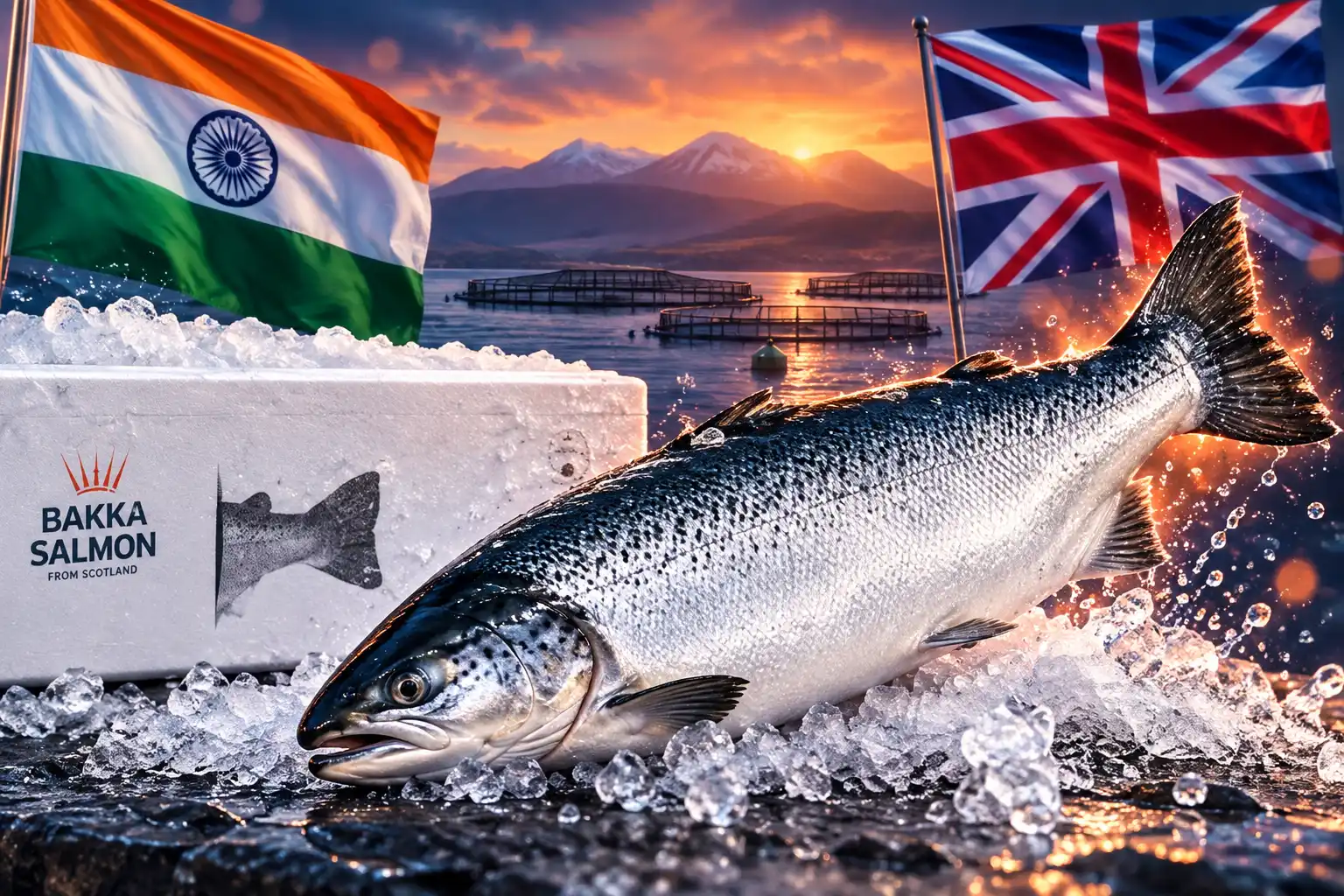
Four of Scotland’s largest salmon producers began a five-day trade mission to India on 5 October, 82 days after a sample box of duty-free fish landed in Bengaluru. Salmon Scotland has taken Bakkafrost Scotland, Loch Duart, Mowi Scotland and Scottish Sea Farms to New Delhi and Mumbai to turn a zero tariff into repeat orders. The first consignment under the new UK-India deal was a sample that importer Kedarnath Reddy put at $801.81.
Four Producers Open a Five-Day India Mission
Salmon Scotland says this is the first time it has brought producers together for a dedicated overseas trade mission anywhere in the world. The four firms are connected to more than 80% of Scottish salmon exports. The fifth of the five largest producers is not on the trip, and the trade body has not named the company that stayed home.
UK India Business Council staff are supporting the visit. Over 5 to 9 October the group is due to sit down with buyers who actually move fish, not only with officials who signed the tariff schedule.
THE FIVE-DAY PROGRAMME
- The cities: Meetings run in New Delhi and then Mumbai, with importers, distributors, retailers, hotel buyers and chefs.
- The officials: The diary also includes the British High Commission and Indian government departments.
- The bottleneck: Talks with Indian customs and food safety authorities are aimed at faster, more predictable clearance for fresh fish.
- The pitch: One-to-one sessions with potential customers are meant to turn the tariff cut into contracts rather than another sample.
James Park, Salmon Scotland’s head of international trade and engagement, has framed the week as listening time, not a victory lap.
This week is about getting out into the market, listening to Indian businesses and turning that opportunity into long-term trade.
James Park, Head of International Trade and Engagement, Salmon Scotland
One of the four is travelling after a hard year at home. Scottish Sea Farms posted an £11.85 million operating loss for 2025 after weaker global prices and gill-health trouble in Shetland. The India call is a search for new demand, not a victory tour for a sector that already has more fish than some of its best markets want at last year’s prices.
A hugely exciting opportunity for Scottish salmon. 🐟🏴🇮🇳
We'll be heading to #India this month, building new relationships with importers, retailers, hotel buyers and chefs following the removal of the 33% tariff.#ScottishSalmon | #Aquaculture | #TradeMission pic.twitter.com/qEP9GaS11S— Salmon Scotland (@ScotlandSalmon) October 2, 2026
The First Duty-Free Box Was a Sample Consignment
The UK-India Comprehensive Economic and Trade Agreement, CETA, entered into force on 15 July. India had taxed Scottish salmon at 33%. That duty went to zero. The UK government had already named salmon among products facing lower tariffs when the deal was struck, alongside whisky, lamb and medical devices.
On 31 July, 16 days after the pact took effect, Bakkafrost Scotland landed fresh farmed salmon at Sashimi Foods Private Ltd in Bengaluru. Reddy, the importer’s chief executive and managing director, called it a sample consignment and put the value at $801.81. The box weighed 82 kg. Owen Richards, deputy head of mission at the British Deputy High Commission in Bengaluru, opened it on site and said businesses were already seeing better access.
A British Deputy High Commission official in that city talked of follow-on orders of 300 kg to 400 kg a week, worth $4,000 to $5,000. Even if that weekly run-rate holds for a full year, it comes to $208,000 to $260,000 of trade. That is a test order. It is not a second France.
A big catch for UK-India trade. A box of Scottish salmon 🐟 landing in Bengaluru just weeks after the UK-India Free Trade Agreement came into force. pic.twitter.com/XBC44FUWqE
— UK in India🇬🇧🇮🇳 (@UKinIndia) August 7, 2026
Harjinder Kang, His Majesty’s trade commissioner for South Asia and British deputy high commissioner for Western India, has called Scottish salmon a premium UK product that can meet growing Indian demand. The July box proved a consignment can clear. It did not prove that hotels and shops will take tonnes of it, week after week, at Scottish prices.
Salmon Scotland’s Own India Cases Run From £21 Million
The figure that travelled with the mission is the high case. Salmon Scotland’s own analysis, set out as the producers left, is a range, and the floor is a long way from the ceiling.
SALMON SCOTLAND’S INDIA CASES
| Case | 10-year total | How the trade body describes it |
|---|---|---|
| Low growth | £21 million | Cumulative exports to India over the next decade |
| Medium growth | £70 million | Cumulative exports over the same 10 years |
| High growth | £131 million | Cumulative total, with more than £30 million a year by the end of the decade |
The high-growth run-rate of more than £30 million a year would still be 3.6% of the £828 million Scotland sold abroad in 2025. China, which is already a live market, took £97 million of Scottish salmon last year. India is being asked to grow from an $801.81 sample toward a sum China already clears in a single year, and only in the optimistic case.
Kishore Jayaraman, group chief executive of the UK India Business Council, has talked about a cold-chain corridor for hotels and retailers, not a mass market of 1.4 billion people suddenly eating sashimi. That is the honest product: air-freighted fresh fish for kitchens that can pay. It is also why the low case exists. If those kitchens do not order, the decade ends closer to £21 million than to £131 million.
A Giant Fish Market With Almost No Atlantic Salmon
India is the world’s third-largest fish market, with domestic consumption near 12 million tons in 2021. Almost none of that is Atlantic salmon. World Bank trade figures show India bought only 153,867 kg of frozen Atlantic salmon in 2024, worth $634,850, nearly all of it from the United States.
Chile is already in the same thin stream. Chilean customs data put Atlantic salmon shipments to India at 56.46 tonnes in 2025, with another 50.56 tonnes of coho, almost all frozen. In early October, Chile’s fisheries service sat down with Indian health officials on a sanitary roadmap and a possible memorandum of understanding. Frozen Pacific and Atlantic fish from the southern hemisphere is the import India already knows. Scotland is trying to sell a different thing: fresh fish off the west coast, Highlands and islands, on a plane, on a plate in a few days.
More than 100 direct flights a week already link the UK and India, which is why the producers can talk about freshness at all. The constraint is not whether a salmon can fly. It is whether Indian customs will clear a perishable load on a timetable a hotel can trust, and whether diners who already eat a lot of fish will pay for this one.
France and the United States Still Take Most of the Catch
HMRC figures, published by Salmon Scotland in February, put international sales of £828 million (USD 1.1 billion) in 2025. Volume hit a record 111,000 tonnes, up 9%. Value slipped, because Norwegian supply pushed world prices down. The geography of that trade has barely moved.
SCOTTISH SALMON EXPORTS IN 2025
- The total: £828 million in export value and 111,000 tonnes, sold into 45 countries.
- France: 42% of export value, still the largest market even after a sharp drop in sales.
- The United States: 40% of export value, after a 34% rise in sales to £300.6 million.
- The jobs: About 2,500 people employed directly on the coast, with a further 8,500 in the supply chain.
Asia grew more than 18%, with China up 28% to £97 million and volume up 55% to 12,711 tonnes. Vietnam rose with it. By volume, Scottish salmon is already the largest single food export through Heathrow, because freshness depends on scheduled passenger jets. India is being added to that air network, not replacing France or the United States. A good India year at the high-case run-rate would still leave those two markets as the industry’s wage bill.
Customs Officers and Chefs Hold the Next Step
Park has said the producers need to hear what Indian businesses actually want. The agenda gives the answer the tariff schedule cannot. Fresh salmon dies on a dock if a certificate sits in a tray. Hotel groups will not print it on a menu if supply jitters. Chefs in Mumbai and Delhi are the demand side of the same problem.
FROM TARIFF CUT TO TRADE MISSION
- 15 July 2026: CETA takes effect. India removes or reduces tariffs on 64% of tariff lines at entry, with 85% of lines due to be tariff-free after 10 years, and the 33% salmon duty gone from day one.
- 31 July 2026: Bakkafrost Scotland’s sample reaches Sashimi Foods in Bengaluru, 82 kg worth $801.81.
- 5 to 9 October 2026: Four producers meet buyers and customs officials in New Delhi and Mumbai.
- 20 to 27 October 2026: First Minister John Swinney leads a wider Scotland trade visit to Delhi, Ahmedabad and Mumbai, with Salmon Scotland on the delegation again.
The goods chapter also sets up a Goods sub-committee that will meet every two years once the deal is running. That is a diplomatic calendar. Fish on ice run on a much shorter one. If clearance stays slow, the extra flights will not matter, and the high case will not either.
John Swinney Follows the Farmers Two Weeks Later
The political argument in Scotland has attached itself to the First Minister’s trip, not to the producer meetings now under way. Swinney will visit India between 20 and 27 October with Salmon Scotland, the Scotch Whisky Association, chambers of commerce, VisitScotland and universities. Tavish Scott, Salmon Scotland’s chief executive, thanked him for making time and said the UK-India deal helps the sector find new customers.
Whisky still carries the louder CETA fight, because Indian duties on Scotch only fell from 150% to 75% and are staged down to 40% by year ten. Salmon already sits at zero. The farmers therefore have less law left to argue about and more logistics to fix. Scott will be on the second visit as well, which means the trade body is taking two bites at the same buyers in three weeks.
Bakkafrost Scotland, Loch Duart, Mowi Scotland and Scottish Sea Farms are due to keep those meetings going through 9 October in Mumbai. Swinney’s party lands on 20 October.

The BMW iX4 Undercuts Mercedes and Trails Its Twin

Scotland’s Ten Big Supermarkets Already Hold the Weekly Shop

Scotland EMS Faces a State Probe After a Wagram Death

Meritz Signs Ripple to Race Korea’s 2027 Token Rules

Pocognoli’s First Camp Leaves Scotland Third and Exposed

Volkswagen Sells the Osnabruck Plant to Clear a Board Fight

Tata Motors’ Iveco Tender Opens as Holders Still Decide

Saksham Gaur Finds He Is His Own Company’s Client

Onimusha Way of the Sword Preload Hits a Windows 11 Wall

Hyderabad 22-Carat Gold Jumps After a False Bargain
-
 AUTO1 month ago
Volkswagen Sells the Osnabruck Plant to Clear a Board Fight
-
 AUTO1 month ago
Tata Motors’ Iveco Tender Opens as Holders Still Decide
-
 BUSINESS1 month ago
Saksham Gaur Finds He Is His Own Company’s Client
-
 GAMING1 month ago
Onimusha Way of the Sword Preload Hits a Windows 11 Wall
-

 NEWS1 month ago
Apple’s Foldable iPhone Hinges on Samsung Display Supply
-

 NEWS1 month ago
The Frame Pro’s $1,200 Labor Day Cut Needs a Soundbar
-
 BUSINESS1 month ago
Hyderabad 22-Carat Gold Jumps After a False Bargain
-

 AUTO1 month ago
Simple Wave Chases Range as Ather Konarc Cuts Price