
NEWS
CIP Commits €270 Million to a 4-Hour Kilmarnock Battery
CIP’s €270 million Kilmarnock South battery runs four hours, twice Coalburn’s duration, as UK frequency markets fill and Scottish wind still hits the wires.

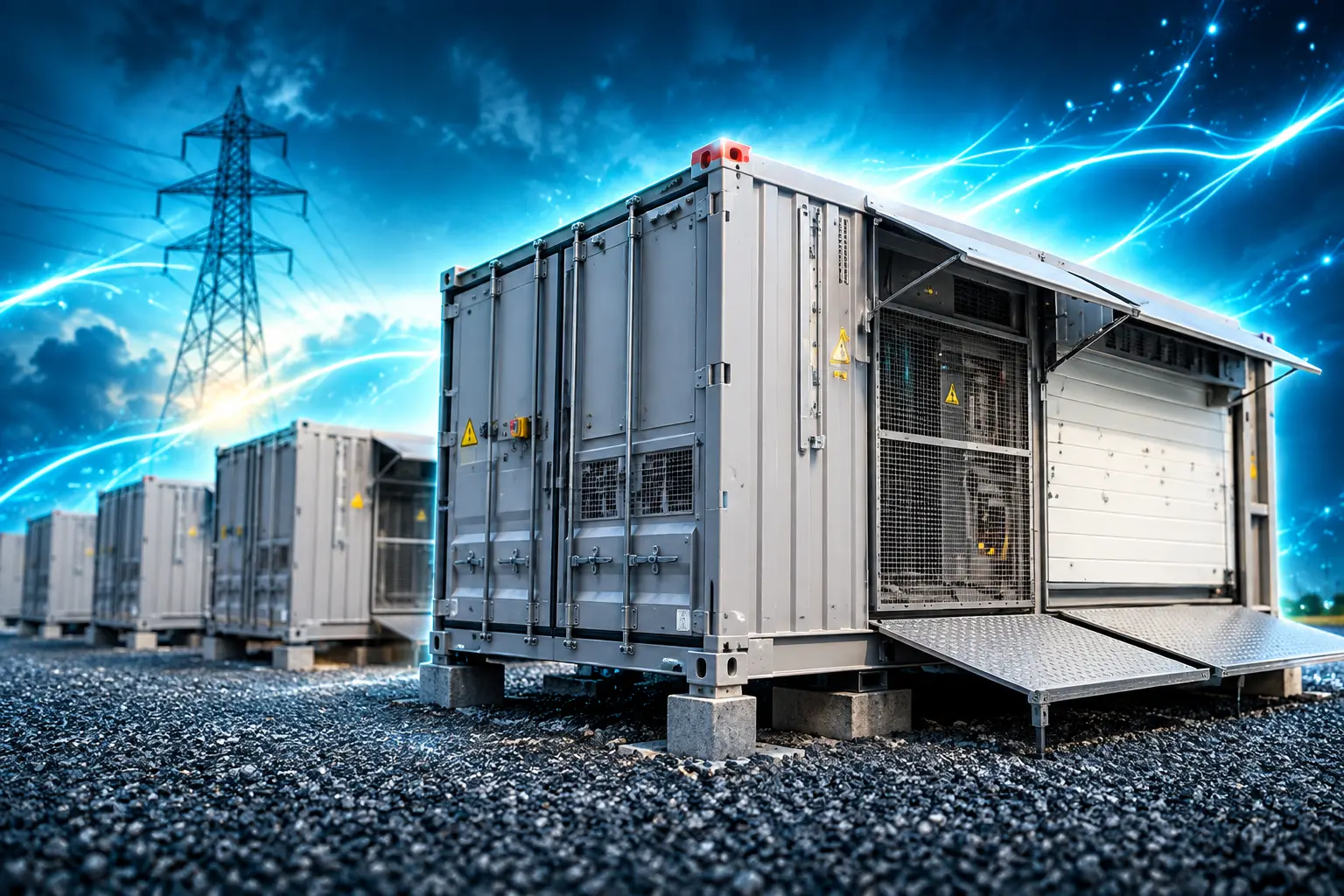
Copenhagen Infrastructure Partners has taken a final investment decision on a 350 MW / 1,400 MWh battery at Kilmarnock South in South Ayrshire. The four-hour system is already under construction, with commercial operations due in the first quarter of 2028. CIP is funding it through Copenhagen Infrastructure IV at more than €270 million (£232 million).
CIP’s three earlier Scottish batteries are two-hour, 500 MW machines. This one cuts power to 350 MW and lifts stored energy to 1,400 MWh, and it will sit on the side of the border where Scottish wind still cannot always travel south.
CIP Locks In a 4-Hour Battery at Kilmarnock South
The 2 October 2026 notice names a 350 MW / 1,400 MWh lithium-ion battery as CIP’s fourth transmission-connected storage project in Scotland. At four hours, it will be the longest-duration asset in the firm’s UK storage book once it runs. The announcement does not name a battery supplier, and it does not publish the detailed terms of the trading contract.
Noriker Power, a UK developer of storage and grid-stability assets, brought the project to FID and will keep managing the build. Shell Energy Europe Ltd holds an optimisation agreement that CIP says will supply long-term contracted revenue. UK Energy Minister Michael Shanks put the sterling figure on the decision at £232 million.
THE FID AT A GLANCE
- The kit: A 350 MW / 1,400 MWh four-hour lithium-ion system in South Ayrshire.
- The money: More than €270 million through Copenhagen Infrastructure IV, cited in sterling as £232 million.
- The clock: Construction is under way, with a first-quarter 2028 start of operations.
- The book: Fourth Scottish site after Coalburn 1, Coalburn 2 and Devilla, together 1.85 GW and 4.4 GWh.
CIP says that 4.4 GWh is equal to almost a third of Great Britain’s operational battery storage today, and to the electricity demand of more than 5.5 million households across a two-hour period. Those comparisons are the firm’s own, set against a national fleet Ofgem still puts at about 7 GW already running.
Why Four Hours, When Coalburn Runs Two
Coalburn 1, CIP’s first Scottish unit, is a 500 MW / 1 GWh, two-hour battery on a former coal mine in South Lanarkshire. It entered commercial operations in August 2026 and is, on CIP’s account, the largest operating battery in Europe. Coalburn 2 and Devilla copy that two-hour, 500 MW shape. Kilmarnock South does not.
Power falls 30 per cent against those 500 MW units. Stored energy rises 40 per cent. The extra hours are the product. Fast frequency services that paid the first wave of one-hour and two-hour batteries are already crowded, so new plants have to earn in day-ahead and intra-day trading and in the Balancing Mechanism, where the system operator buys and sells energy after the market closes.
That shift is now written into the Grid Code. NESO has switched on Maximum Delivery Offer and Bid parameters so control rooms see how much energy a limited-duration plant can actually deliver, rather than treating every battery as a 30-minute burst. Full operational use of those parameters is required by 5 November 2026.
WHY THE EXTRA HOURS
- Frequency markets: The old readiness products that suited short batteries are already full relative to what the system buys.
- Balancing Mechanism: Dispatch now tracks real stored energy over time, which rewards a plant that can still deliver in hour three and hour four.
- Wholesale cycles: Day-ahead and intra-day spreads need a full charge and discharge, not a 30-minute pulse.
- Scottish constraints: Wind turn-down behind the England export path often lasts for hours, which is the window a four-hour unit is built to sit in.
Ed Porter is a director at Modo Energy, which tracks battery trading. In early August he noted that Coalburn 1’s five 100 MW units had started taking Balancing Mechanism bids and offers, after showing up in the background through the winter. CIP already has a two-hour flagship in that market. Kilmarnock South is the same owner buying more hours on the same constrained side of the country.
CIP’s Scottish Fleet Reaches 4.4 GWh
The four sites are one strategy with two durations. Three plants hold 1 GWh each at 500 MW. The new one holds 1,400 MWh at 350 MW. Add them and the arithmetic is 1.85 GW and 4.4 GWh, which is the total CIP published with the FID.
CIP’S SCOTTISH BATTERY BOOK
| Project | Power | Energy | Duration | Status | Trader |
|---|---|---|---|---|---|
| Coalburn 1 | 500 MW | 1 GWh | 2 hours | Operating since August 2026 | SSE Energy Markets |
| Coalburn 2 | 500 MW | 1 GWh | 2 hours | Due in 2027 or 2028 | SSE Energy Markets |
| Devilla | 500 MW | 1 GWh | 2 hours | Due in 2027 or 2028 | SSE Energy Markets |
| Kilmarnock South | 350 MW | 1,400 MWh | 4 hours | Under construction, first quarter 2028 | Shell Energy Europe |
SSE Energy Markets holds a ten-year optimisation deal covering Coalburn 1, Coalburn 2 and Devilla. Kilmarnock South is the first of the four to go to Shell. Coalburn 1 also carries a 15-year Capacity Market contract on 300 MW of its output, plus a seven-year contract on 75 MW, which is a second contracted floor the new site has not disclosed.
THE BUILD PATH
- November 2023: Construction starts on Coalburn 1 at the former mine in South Lanarkshire.
- January 2026: Coalburn 2 and Devilla take their own final investment decisions, with build then due from 2027.
- August 2026: Coalburn 1 enters commercial operations as a 500 MW / 1 GWh, two-hour plant.
- 2 October 2026: CIP takes FID on Kilmarnock South and says construction is already under way.
- First quarter of 2028: Target start of operations for the 350 MW / 1,400 MWh, four-hour unit.
Canadian Solar’s e-STORAGE unit supplied Coalburn 1. CIP has not said whether that repeats at Kilmarnock South. AXA IM Alts bought 50 per cent of Coalburn 1 in 2025, which is a different capital structure from the new CI IV wholly described FID.
Another Kilmarnock South Battery Is Already Running
The name is already on the map. Zenobē’s 300MW battery in Kilmarnock began commercial operations on 21 January 2026. That plant is 300 MW / 600 MWh, a two-hour system with grid-forming inverters, and it is a separate project from CIP’s 350 MW / 1,400 MWh unit.
Zenobē has a four-hour plant of its own at Coalburn as well: 200 MW / 800 MWh, financial close in June 2026, also aiming at 2028. CIP’s Kilmarnock South unit is larger than that four-hour Coalburn battery in both power and stored energy. It is not the first four-hour transmission battery in the UK pipeline. It is CIP’s first four-hour machine, and the longest in that firm’s UK fleet if it hits the 2028 date.
Two owners, two durations, one town name, and a former coalfield a few dozen miles east already hosting Europe’s largest operating battery on CIP’s figures. The cluster is the point of the map. Scotland is where new wind still meets a thin export path, so storage is being stacked on the constrained side rather than beside English demand.
1.4 GWh Against a Year of Turned-Down Wind
CIP’s press line is that the battery will store surplus Scottish wind that would otherwise go unused and release it when the network has capacity. The unused wind is real. The scale of one battery against that waste is the part the ministerial quotes skip.
Scottish Futures Trust analysis of 2025 balancing data found 9.7 TWh of Scottish wind turned down because of network constraints, with some curtailment in 57 per cent of the year’s hours. That 9.7 TWh is 9,700 GWh. Kilmarnock South holds 1.4 GWh. CIP’s whole four-site book holds 4.4 GWh. Against one year of Scottish wind already switched off, the new unit is 0.014 per cent of the volume; the four sites together are 0.045 per cent.
The cash cost is moving faster than the storage build. On 5 October Octopus Energy said Britain had already blown past last year’s £1.47 billion bill for switching wind off and firing gas up, with three months of 2026 still to run. Its Wasted Wind tracker put September alone at £404.3 million, including £30 million on 30 September. Some Scottish transmission boundaries, including B4, were running at 40 per cent of capacity because of upgrade works. NESO has forecast £3.2 billion of constraint costs in the year to July 2027. Octopus, citing government warnings, said the figure could reach £10 billion by 2030.
We’ve already blown past last year’s entire bill, and customers are paying every pound of that waste. It’s madness.
Greg Jackson, founder and chief executive, Octopus Energy, 5 October 2026
A four-hour battery cannot retire that bill. It can buy cheap, constrained hours on the Scottish side and sell when the wires and the English price allow, which is a trading job, not a replacement for new transmission. Shanks still tied Coalburn and Kilmarnock South to “less homegrown power going to waste” and “lower bills over the long term.” The 1.4 GWh figure sits beside 9.7 TWh of 2025 turn-down, and beside a 2026 constraint bill that had already passed the previous year’s total by 5 October.
A Shell Contract for Long-Term Revenue
CIP is not taking a naked merchant view on Kilmarnock South. The notes to the 2 October notice say the project “holds an optimisation agreement with Shell Energy Europe Ltd which will provide long-term contracted revenue.” That is the sentence lenders want. It is also why the extra hours matter to someone other than CIP: Shell has to find four hours of value in wholesale, balancing and reserve, not 30 minutes of frequency.
The announcement does not say whether the contract is a revenue floor, a toll, or a share of trading profit. Floors are the common UK structure, and CIP used a ten-year SSE optimisation on the three two-hour sites, so a contracted wrapper is already how this owner finances Scottish batteries. What changed is the counterparty and the duration of the kit underneath.
Nischal Agarwal is a partner at CIP. His comment stayed on flexibility and bills, not on frequency saturation or constraint spreads.
CIP is pleased to add Kilmarnock South to our growing portfolio of UK battery projects, which, once commissioned, will be the longest-duration BESS asset in our UK fleet. Well-sited battery energy storage projects provide valuable power system flexibility which enables the full benefits of low-cost renewables to be captured, strengthening security of supply and helping to both cut and stabilise energy bills for consumers.
Nischal Agarwal, Partner, Copenhagen Infrastructure Partners, 2 October 2026
Well-sited, in this case, means south-west Scotland, behind the bottleneck, with a Shell book and four hours in the tank. The ministerial line about storing wind “for when it’s needed most” and the fund’s line about contracted revenue are the same plant described from two desks.
Ofgem Puts a Fee on Spare Battery Slots
CIP is taking FID into a queue the regulator is trying to thin. On 17 September Ofgem opened a consultation on an Oversubscribed Technologies Commitment Fee for batteries, after NESO had already cut 40 per cent of grid-level battery capacity from the connections queue in 2025 for failing its tests.
Even after that cut, Ofgem says there is around 90GW of battery capacity either operational or in the reformed connections queue, against a projected need of around 29 GW by 2035. The notes put 83 GW on the new shortlist plus 7 GW already running. That is 14.8 GW above NESO’s 24 GW estimate for 2030, and 61.7 GW above the 29 GW figure for 2035. The proposed fee starts at £3,000 per MW and can rise to £25,000 per MW if the queue stays badly oversubscribed. A final decision is due later in 2026.
Eleanor Warburton is Ofgem’s director for energy system design and development. She said Britain has three times more battery capacity in the connections queue than the system is expected to need by 2035, and that the queue must reflect real projects, not placeholders. Kilmarnock South is past that test: money is in, construction is under way, and a trader is on the contract. The 4.4 GWh CIP will own in Scotland is still a slice of a pipeline the regulator now treats as three times too large.
Construction is already under way in South Ayrshire. Commercial operations are due in the first quarter of 2028, with Shell on the trading desk and four hours in a market that no longer pays for the short stuff.
Frequently Asked Questions
Is CIP’s Kilmarnock South Battery the Same as Zenobē’s Kilmarnock South Plant?
No. Zenobē’s plant is a 300 MW / 600 MWh, two-hour system that went live on 21 January 2026 with Wärtsilä Quantum kits, Omexom on balance of plant, EDF Energy as route to market, and grid-forming inverters for stability services. CIP’s project is a separate 350 MW / 1,400 MWh, four-hour lithium-ion system, developed by Noriker Power, still in construction, and due in the first quarter of 2028.
Who Is Building the CIP Project on the Ground?
Noriker Power developed Kilmarnock South and, CIP says, will continue to manage the construction phase. CIP describes Noriker as a UK developer of energy storage and grid-stability assets. The 2 October notice does not name the firm that will supply the battery cabinets themselves.
How Large Is Copenhagen Infrastructure Partners as a Fund Manager?
CIP was founded in 2012 and, at the date of the Kilmarnock South notice, said it had about €43 billion raised, 15 funds under management, more than 200 institutional backers, projects in more than 30 countries, and a headcount above 2,300. Kilmarnock South sits in Copenhagen Infrastructure IV, the fourth flagship fund, not in the newer CI VI pool.
Did CIP Name a Battery Supplier for Kilmarnock South?
No. The FID notice leaves the cabinet maker blank and does not publish the detailed Shell terms. Canadian Solar’s e-STORAGE unit supplied Coalburn 1, but that contract is not stated as repeating on the four-hour Ayrshire site.

The BMW iX4 Undercuts Mercedes and Trails Its Twin

Scotland’s Ten Big Supermarkets Already Hold the Weekly Shop

Scotland EMS Faces a State Probe After a Wagram Death

Meritz Signs Ripple to Race Korea’s 2027 Token Rules

Pocognoli’s First Camp Leaves Scotland Third and Exposed

Volkswagen Sells the Osnabruck Plant to Clear a Board Fight

Tata Motors’ Iveco Tender Opens as Holders Still Decide

Saksham Gaur Finds He Is His Own Company’s Client

Onimusha Way of the Sword Preload Hits a Windows 11 Wall

Hyderabad 22-Carat Gold Jumps After a False Bargain
-
 AUTO1 month ago
Volkswagen Sells the Osnabruck Plant to Clear a Board Fight
-
 AUTO1 month ago
Tata Motors’ Iveco Tender Opens as Holders Still Decide
-
 BUSINESS1 month ago
Saksham Gaur Finds He Is His Own Company’s Client
-
 GAMING1 month ago
Onimusha Way of the Sword Preload Hits a Windows 11 Wall
-

 NEWS1 month ago
Apple’s Foldable iPhone Hinges on Samsung Display Supply
-

 NEWS1 month ago
The Frame Pro’s $1,200 Labor Day Cut Needs a Soundbar
-
 BUSINESS1 month ago
Hyderabad 22-Carat Gold Jumps After a False Bargain
-

 AUTO1 month ago
Simple Wave Chases Range as Ather Konarc Cuts Price