
BUSINESS
Elon Musk Hits $1.04 Trillion Again After the Summer Slide
Elon Musk is a trillionaire again at $1.04 trillion, still about $290 billion below his June peak, with more than 98% of the fortune in SpaceX and Tesla.

Elon Musk’s fortune jumped $65 billion on Monday to $1.04 trillion, according to the Bloomberg Billionaires Index. SpaceX shares are up 13% since the start of October and Tesla is up 6.7%, and those two stakes make up more than 98% of the total.
The same index had him at $684 billion on July 31, after a peak of about $1.33 trillion on June 16. He is a trillionaire again, and still about $290 billion below the high he set four days after SpaceX listed.
Musk’s Fortune Jumped $65 Billion on Monday
The Bloomberg Billionaires Index ranking put the 55-year-old back into 13 figures for the first time in three months. The Monday gain was his largest one-day dollar rise since August 12, and it followed a Sunday research note from Morgan Stanley that framed SpaceX as cheap on growth-adjusted math, plus Tesla’s delivery beat on October 2.
Elon Musk is a trillionaire again.
The fortune of the world’s richest person jumped by $65 billion on Monday to $1.04 trillion, according to the Bloomberg Billionaires Index, as the value of his stakes in SpaceX and Tesla rose. https://t.co/GvDSsEAFnH
📷: Chip Somodevilla/Getty… pic.twitter.com/XuNeyQZ3zc
— Bloomberg (@business) October 6, 2026
SpaceX, listed on Nasdaq as SPCX, closed October 2 at $158.96, up 7.35%, and was quoted around $164.63 Monday morning before trading near $167. Tesla added a second session of gains after the delivery print. Almost none of the $65 billion is cash. It is the mark-to-market of two listed piles, and that is why the number can cross $1 trillion and fall back through it in the same season.
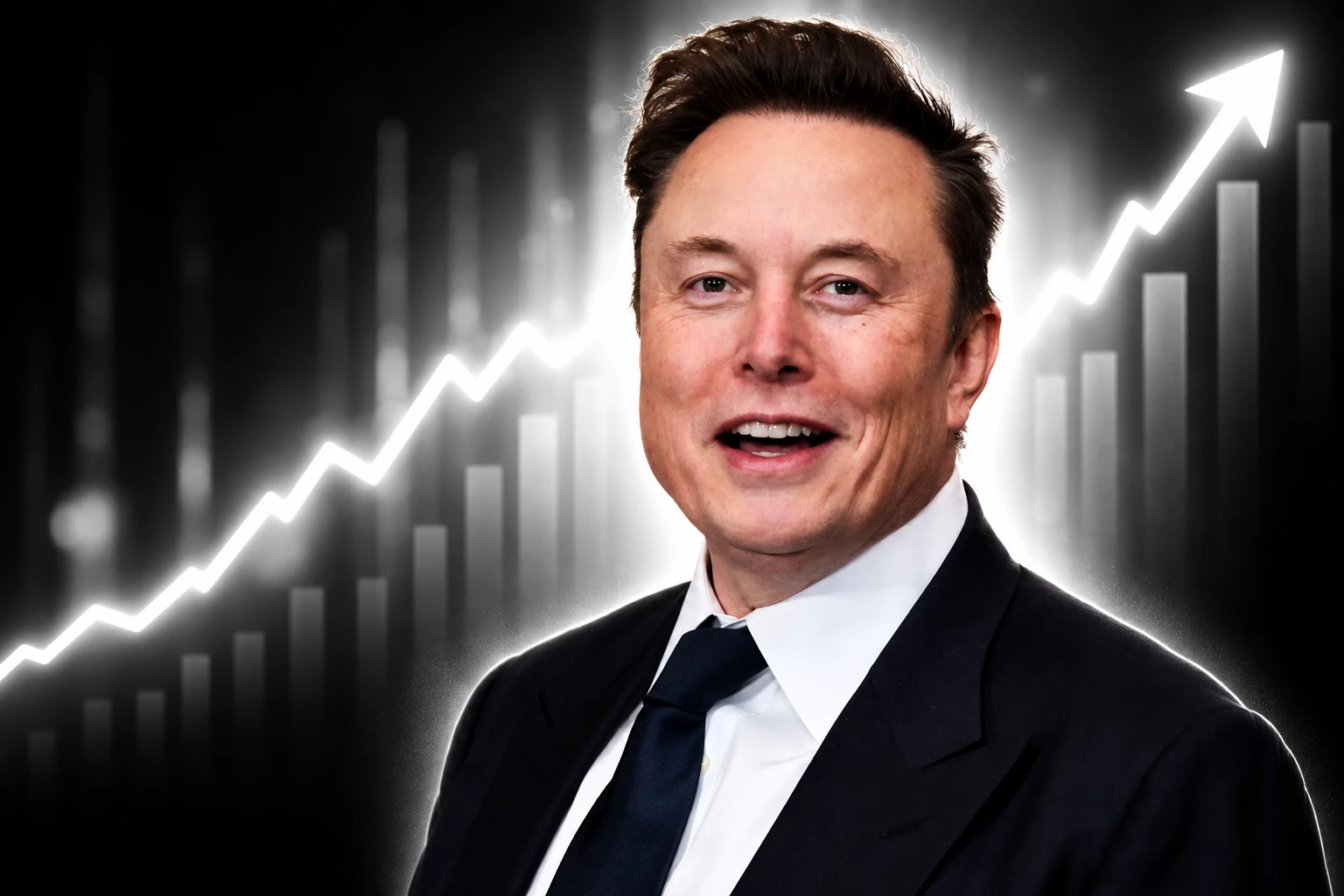
The June Peak Remains About $290 Billion Higher
SpaceX priced 555.6 million shares at $135 on June 12 and raised $75 billion, the largest IPO on record, at a valuation of about $1.77 trillion. The stock closed its first session at $160.95, up 19%. By June 16 it had printed a 52-week high of $225.64 and a closing high of $201.80, and the index put Musk at about $1.33 trillion.
The print did not last. By June 24 the index had him at $957 billion, back under $1 trillion in less than two weeks. On July 31, after SpaceX had tumbled 46% from that June 16 close to $108.37, the index read $684 billion. That drop of more than $600 billion from the peak was larger than the entire fortune of anyone else who had ever appeared on the 500-person list, other than Musk.
THE PATH BACK TO 13 FIGURES
- June 12, 2026: SpaceX lists on Nasdaq at $135 and Musk crosses $1 trillion on the index.
- June 16, 2026: His fortune peaks at about $1.33 trillion as SPCX hits $225.64.
- June 24, 2026: The index falls to $957 billion, ending the first trillion-dollar run.
- July 31, 2026: The reading is $684 billion, with SpaceX at $108.37 and Tesla stock in his name worth $129 billion.
- August 3, 2026: SPCX prints $104.83, the low of the post-IPO slide.
- October 2, 2026: Tesla reports 486,532 third-quarter deliveries and SPCX closes at $158.96.
- October 5, 2026: The index jumps $65 billion to $1.04 trillion.
From the July 31 trough to Monday’s $1.04 trillion is a recovery of hundreds of billions of dollars that never left a bank account. It also leaves him short of June. The second title is smaller than the first.
SpaceX Has Only Recovered Part of the IPO Spike
Bloomberg’s wealth desk counted a 58% rebound from the August low. That math lands near Monday’s $165 to $167 quotes after the $104.83 print on August 3. The stock is still well below the June 16 close of $201.80 and far below $225.64. The IPO price of $135 is no longer a floor that broke; it is a midpoint the shares have now crossed twice, once on the way down and once on the way back.
SPCX MARKS SINCE THE LISTING
| Mark | Date | Share price |
|---|---|---|
| IPO price | June 12 | $135 |
| First-day close | June 12 | $160.95 |
| Closing high | June 16 | $201.80 |
| 52-week high | June 16 | $225.64 |
| July close cited in the slump | July 31 | $108.37 |
| Post-IPO low | August 3 | $104.83 |
| Last Friday close | October 2 | $158.96 |
| Morgan Stanley target | Sunday note | $300 |
The August turn came after the first big lock-up, when as many as 911.5 million insider and early-backer shares became eligible to trade. The feared supply wave was the thing bulls had used to justify lower prices. Shares then ran instead. That is the same pattern Monday is asking investors to trust again: a headline multiple that looks rich until a new story, a new flight, or a new note relabels it as cheap.
Morgan Stanley’s $300 Target Bets on 2028 Profits
Morgan Stanley analyst Adam Jonas, in a Sunday note titled “Cheap and Getting Cheaper,” kept an Overweight rating and a $300 price target. At a $159 reference price, he had SpaceX at about 30 times estimated 2028 EV/EBIT, versus roughly 16 times for a group of mega-cap AI names. On a growth-adjusted basis he had it at 0.3 times, about 40% below that group’s 0.5 times median.
Adjusted for growth, SpaceX is one of the cheaper ways to play the strong optionality of the space and intelligence economy.
Adam Jonas, Morgan Stanley analyst, in a Sunday note
His sum-of-the-parts math assigns $8 a share to external launch, $118 to Starlink, $8 to consumer AI tools such as Grok, and $165 to enterprise AI, or $299 rounded to $300. At $159, he argued the market was paying $127 for rockets and Starlink and only $32 for the AI stack. Even at $300, he wrote, the growth-adjusted multiple would sit near Amazon and still below Meta and Alphabet.
Institutional ownership among Morgan Stanley clients remains low, Jonas wrote, because the company is several businesses that have to be valued together. The bank co-managed a SpaceX offering in the past year and has taken investment-banking fees from the company. The $300 target is a 2028 earnings argument, not a reading of last quarter’s cash, and it is the argument that helped reprice Musk’s fortune on Monday.
Tesla Beat Forecasts With Fewer Cars Than Last Year
Tesla’s other pillar of the $1.04 trillion is a car company that beat a lowered bar. Tesla’s third-quarter delivery report, filed with the SEC on October 2, showed 486,532 vehicles delivered and 464,391 produced, with 13.7 GWh of energy storage deployed. The company-compiled consensus of 24 analysts had been 461,974 deliveries, so the beat was 24,558 units. Deliveries still fell 2.1% from 497,099 in the third quarter of 2025, when U.S. buyers rushed to use a federal tax credit that then expired.
TESLA’S THIRD-QUARTER SCORECARD
- Deliveries: 486,532 vehicles, up 1.3% from 480,126 in the second quarter.
- Production: 464,391 vehicles, or 22,141 fewer than deliveries as inventory was drawn down.
- Model 3 and Model Y: 478,237 deliveries and 457,387 produced.
- Other models: 8,295 deliveries and 7,004 produced, covering Cybertruck, Semi, and leftover Model S and Model X stock.
- Year to date: 1,324,681 deliveries, up 8.8% from 1,217,902 a year earlier.
Tesla will post full third-quarter results after the close on October 21, with a question-and-answer webcast at 4:30 p.m. Central Time, and it points investors to the October 21 earnings webcast details on its investor site. The July slump in Musk’s fortune already showed how fast this ticker can take the total down: Tesla shares had fallen 17% after second-quarter results that included $5.8 billion of capital spending and the first cash-negative quarter in two years, with the company guiding more than $25 billion of capex for the year. Robots and robotaxis remain the long-duration bid, and Tesla has already arranged credit lines tied to Optimus and the Cybercab against that bet. Until those products throw off cash, the wealth index is still marking a car stock that sold fewer vehicles than it did a year ago.
What a Starship Catch Would Do to the Shares
Jonas told clients to build a position before Starship Flight 15, which he timed for late October or early November, and said a possible ship catch “could be the biggest positive catalyst since the IPO.” SpaceX already flew Flight 14 on September 28 from Starbase, Texas, and the company described Starship’s first orbital flight as the first to put meaningful payload in orbit, with 26 Starlink V3 satellites. Third-quarter SpaceX earnings, also due later this month, are the first look Jonas wants at Cursor and Grok Bot economics after the xAI combination.
Those are the next levers on a fortune that is, in practice, a leveraged bet on whether Starship reuse, Starlink, and the AI stack can grow into a 2028 multiple. They are also the levers that can unwind Monday’s $65 billion. A missed catch, a soft earnings print, or another stretch of Tesla deliveries that beat estimates while shrinking against last year would hit the same two lines on the index that just restored 13 numerals.
More Than 98% of the Fortune Is Two Stocks
On July 31, when the index sat at $684 billion, Bloomberg’s wealth desk had his SpaceX position worth more than $550 billion and his Tesla stock at $129 billion. Neuralink and the Boring Company were rounding error then, and they still are. More than 98% of $1.04 trillion is SPCX and TSLA. The remaining sliver is not large enough to hold the total above $1 trillion if either of the big holdings slips.
That concentration is the whole joke of the second crown. He is the first person to lose a trillion-dollar reading and then get it back, and he did it because two stocks bounced, one of them still 58% off an August low that was itself a collapse from $225.64. The index will print another number when Flight 15 and October 21 have traded, and that number will be as real, and as thin, as $1.04 trillion was on Monday.
Disclaimer: This article is news reporting and analysis for information only. It is not investment advice, a recommendation to buy or sell Tesla, SpaceX or any other security, or a forecast of anyone’s net worth. Readers should consult a licensed financial adviser before acting on any stock, valuation or wealth figure mentioned here. Net-worth totals, share prices and ratings reflect the sources cited as of the dates given in the piece and can change with the next trading session.

The BMW iX4 Undercuts Mercedes and Trails Its Twin

Scotland’s Ten Big Supermarkets Already Hold the Weekly Shop

Scotland EMS Faces a State Probe After a Wagram Death

Meritz Signs Ripple to Race Korea’s 2027 Token Rules

Pocognoli’s First Camp Leaves Scotland Third and Exposed

Volkswagen Sells the Osnabruck Plant to Clear a Board Fight

Tata Motors’ Iveco Tender Opens as Holders Still Decide

Saksham Gaur Finds He Is His Own Company’s Client

Onimusha Way of the Sword Preload Hits a Windows 11 Wall

Hyderabad 22-Carat Gold Jumps After a False Bargain
-
 AUTO1 month ago
Volkswagen Sells the Osnabruck Plant to Clear a Board Fight
-
 AUTO1 month ago
Tata Motors’ Iveco Tender Opens as Holders Still Decide
-
 BUSINESS1 month ago
Saksham Gaur Finds He Is His Own Company’s Client
-
 GAMING1 month ago
Onimusha Way of the Sword Preload Hits a Windows 11 Wall
-

 NEWS1 month ago
Apple’s Foldable iPhone Hinges on Samsung Display Supply
-

 NEWS1 month ago
The Frame Pro’s $1,200 Labor Day Cut Needs a Soundbar
-
 BUSINESS1 month ago
Hyderabad 22-Carat Gold Jumps After a False Bargain
-

 AUTO1 month ago
Simple Wave Chases Range as Ather Konarc Cuts Price