
NEWS
Plastow Presses Holyrood for a Live Facial Recognition Law
Scotland’s biometrics commissioner wants a Holyrood statute for live facial recognition and a wider remit, while UK forces and shops already scan faces.

Scotland’s biometrics commissioner used his 30 September annual report to press Holyrood for a live facial recognition law and a wider brief for his own office.
Dr Brian Plastow calls the cameras mass public surveillance. He also says Police Scotland should get them, under a statute, for organised crime, counter-terrorism, county lines drug dealing, and male violence against women and girls.
The Commissioner Wants a Statute Before the Cameras
Plastow, in post since 2021, launched the 2025-26 annual report with a double ask that the “safeguards” headline only half covers. He wants primary legislation in the Scottish Parliament before Police Scotland switches the system on, and he wants the force to have “proportionate and equitable access” once that law exists.
LFR technology is highly intrusive and constitutes mass public surveillance, so it is my view that primary legislation is the best route to deliver safeguards capable of ensuring both public acceptance and legitimacy.
Dr Brian Plastow, Scottish Biometrics Commissioner, annual report 2025-26
That is the brake. The accelerator sits in the next sentences of the same report. He told MSPs the technology will matter against serious organised crime groups, for counter-terrorism, for county lines, and as part of the response to male violence towards women and girls. In a letter to the Criminal Justice Committee on 16 March, he had already backed future adoption by Police Scotland and set out options for parliamentary scrutiny.
PLASTOW’S FOUR POLICING CASES
- Organised crime: He says the cameras should be available against serious and organised crime groups operating in Scotland.
- Counter-terrorism: He lists national security work as a reason Police Scotland should not be left without the tool.
- County lines: He treats UK-wide drug dealing as a cross-border problem that a Scots-only ban would not stop.
- Violence against women and girls: He frames live matching as part of a strategic policing response to what he calls a national emergency.
On 23 April he went further, issuing a High Court dismissal of the London challenge as welcome. Judges in Thomson and Carlo held that the Metropolitan Police’s live facial recognition policy did not breach human rights law and that legal safeguards were in place. Plastow also welcomed UK policing minister Sarah Jones saying Home Office money would put the cameras in every force in England and Wales, and he warned of a public safety risk if Police Scotland became the only mainland British service without them.
UK Forces Sit Outside the 2020 Act
The sharper point in the annual report is jurisdictional. Police Scotland still has not adopted live facial recognition. Other UK policing bodies that work in Scotland, including British Transport Police, already have access to it. None of those bodies falls under the Scottish Biometrics Commissioner Act 2020.
Plastow said no tangible progress has been made by Scottish government officials to align those policing activities in Scotland with his oversight. If a reserved force switched the cameras on at Waverley or Glasgow Central, his office would have no statutory grip. His code of practice binds Police Scotland, the Scottish Police Authority, and the Police Investigations and Review Commissioner. It does not bind BTP, the Ministry of Defence Police, or any other UK force passing through Scottish stations, ports, or events.
WHO SITS INSIDE THE 2020 ACT
| Body | Live facial recognition now | Under Plastow’s Act |
|---|---|---|
| Police Scotland | Not deployed; still exploring | Yes |
| Scottish Police Authority and PIRC | Oversight bodies, not operators | Yes |
| British Transport Police | London station trial; UK-wide force | No |
| Other UK forces working in Scotland | Access in England and Wales | No |
| Supermarkets and private sites | Plastow says live systems already run | No |
| Prisons and the wider justice system | Sought by the commissioner | No |
England and Wales already treat the cameras as a working tactic. A Home Office factsheet lists thirteen territorial forces using the cameras as of November 2025, from South Wales and the Met to Greater Manchester and West Yorkshire. That list does not include BTP. Live matching, as the Home Office describes it, compares faces in a live video stream against a watchlist of people the police want. If there is no match, the biometric data is deleted at once. A match still has to be reviewed by an officer, who must form reasonable grounds before anyone is stopped.
Plastow noted a multi-million Home Office programme to spread the kit, and commercial money too, including £3.42 million from the English Premier League to the Met for a trial at top-flight London matches. Scotland, he keeps repeating, has no surveillance camera commissioner and no forensic science regulator of the English kind. Public-space CCTV sits outside his functions. His own frequently asked questions page states there is currently no oversight of public-space CCTV surveillance in Scotland.
Checkout Cameras Already Scan Shoppers
The gap is not only reserved policing. Plastow has been arguing since early September that the 2011 Scottish CCTV strategy is a dead letter in an era of AI video analytics, and that private operators have moved while Holyrood has not.
He said Sainsbury’s and Asda have deployed or trialled live facial recognition, while Tesco uses a non-live camera system against shoplifting. In his telling, those live systems scan shoppers against private watchlists of suspected thieves. “If you have used a supermarket self-checkout in Scotland, you have already experienced live facial recognition,” he wrote. He then pointed to an SNP conference motion in autumn 2025 opposing future Police Scotland use of the same class of tool, and asked why a government party would trust a grocer to catch a thief more than a chief constable to catch a rapist or a terrorist.
That line is his, not an independent audit of every store. It still lands on a real split. A shopper can be matched at a till today under ordinary data-protection rules. A wanted person walking past a Police Scotland van cannot, because the van does not exist and the force has not procured the software. Any Holyrood bill written only for the police would leave the checkout cameras where they are, unless ministers also build a public-space surveillance code that reaches private operators.
Ministers Must Report on His Powers by 30 November
The annual report is timed against a clock in the 2020 Act. Plastow’s first four-year strategic plan expired on 30 November 2025. Section 6 requires Scottish ministers to prepare and publish a report on whether his functions remain appropriate, and whether bodies should be added or removed. That paper must be laid by 30 November 2026.
The government already ran the public part of the review. A consultation on his functions was open from 27 February to 26 May 2026. The Cabinet Secretary for Justice published a summary of the 14 consultation responses on 4 September, nine from organisations and five from individuals. Officials said they were considering those replies, with a broader conclusions paper later in 2026. Plastow has for years asked for the job to run from police to prisons, and for a Scotland-specific code on public-safety cameras. The November report is the first statutory chance to say yes or no.
THE PATH TO A HOLYROOD DECISION
- June 2024: The Scottish Police Authority chair launches a tripartite national conversation on live facial recognition with Police Scotland and the commissioner.
- Autumn 2025: The SNP conference passes a motion opposing future Police Scotland use of the cameras.
- 9 February 2026: SPA policing performance chair Alasdair Hay puts a business case 18 to 24 months away.
- 27 February 2026: The statutory consultation on Plastow’s functions opens.
- 16 March 2026: Plastow writes to the Criminal Justice Committee backing future Police Scotland use under a statute.
- 10 March 2026: An SPA freedom of information reply confirms the force has not trialled, piloted, tested, or procured live facial recognition.
- 23 April 2026: The High Court dismisses a challenge to the Met’s policy; Plastow welcomes the ruling and the Home Office funding pledge.
- 26 May 2026: The functions consultation closes.
- 4 September 2026: Ministers publish the 14-response analysis and promise a later conclusions paper.
- 30 September 2026: Plastow’s annual report renews the call for primary legislation and a wider remit.
- 30 November 2026: The statutory ministerial report on his functions is due in Parliament.
A Scottish government spokesman, answering the annual report, did not commit to a bill. “Police Scotland and the Scottish Police Authority are leading a national conversation on the use of live facial recognition technology in Scotland,” the spokesman said. “Any decision to deploy this technology is an operational matter for the chief constable under the scrutiny of the Scottish Police Authority.”
Police Scotland Is Still Years From a Decision
That operational formula collides with the paperwork the SPA has already published. In a 9 February update, Hay, chair of the authority’s Policing Performance Committee, said no decision had been made on implementation. What had been decided was that Police Scotland would keep exploring potential use, consult the public and stakeholders, and only then build the governance stack for a final call. He put 18 to 24 months for a business case to reach the authority, a window that runs from August 2027 to February 2028 if the clock started in February 2026.
Assistant Chief Constable Stuart Houston, who is leading the force’s exploration, told the same committee there are still a number of steps before any decision on use can be taken. Hay said the authority would expect a dedicated live facial recognition code of practice covering watchlists, public notice, deployment thresholds, and who can authorise a job, plus a full set of impact assessments, all run through the Rights Based Pathway adopted in June 2023. A March 2026 FOI reply was blunt: the technology had not been trialled, piloted, tested, procured, or operationally deployed by or on behalf of Police Scotland, and the authority held no business case, contract, or memorandum of understanding for it.
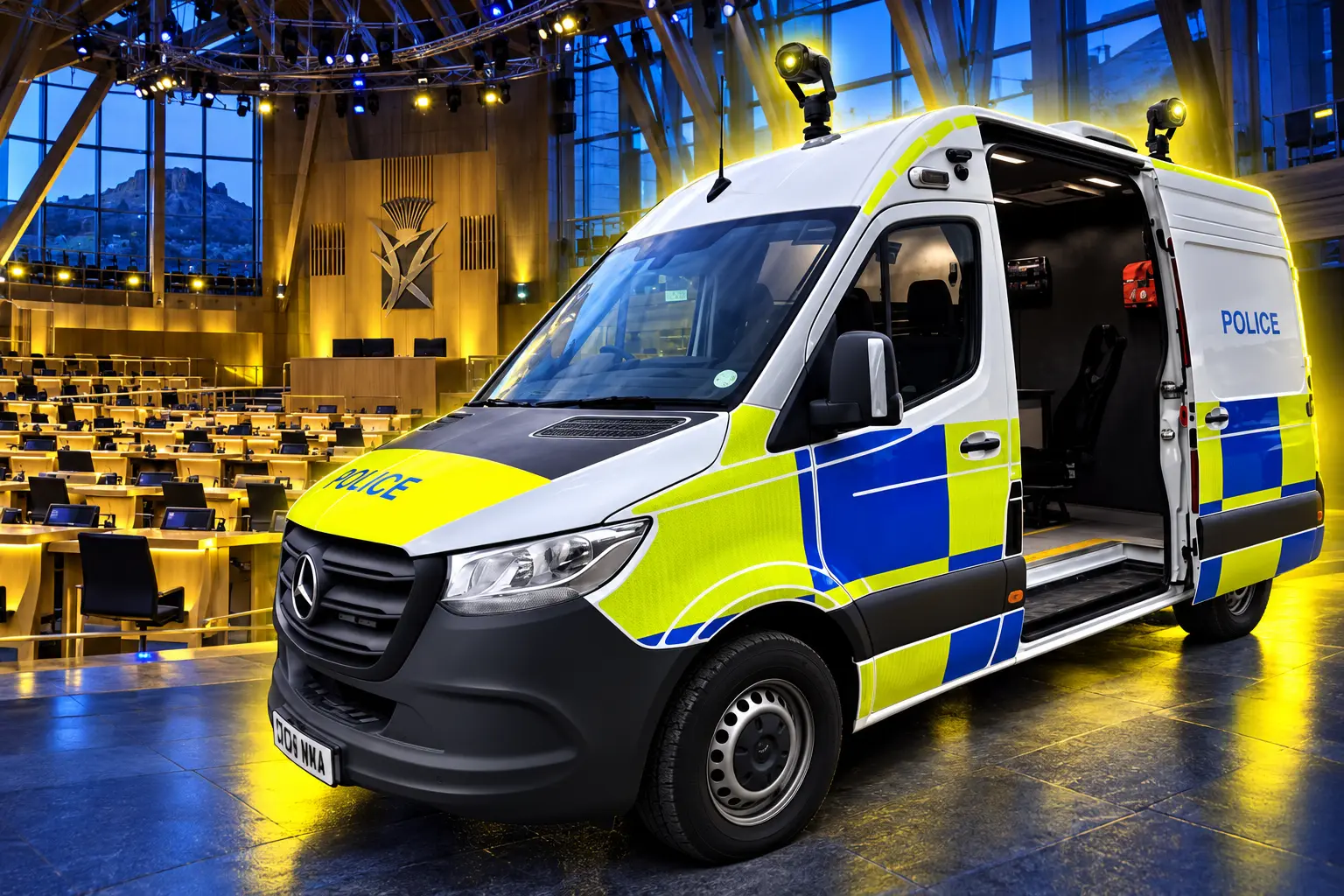
In June, then cabinet secretary for justice Neil Gray wrote that Scottish policing bodies were at least two years from a workable business case, and that Edinburgh would watch whatever legal frame Westminster built. Police Scotland has since looked at adjacent video tools that stop short of naming a face. A paper described a planned Aberdeen proof of concept for object-matching search on public CCTV at Marischal College, with facial recognition functions restricted. The force can buy software that finds a red coat in a crowd. It still cannot, on current policy, match that crowd to a wanted list.
Why the Railway Trial Matters for Scotland
A six-month British Transport Police trial at London stations scanned more than 500,000 faces at a cost of £320,786, produced one false alert and no arrests, then was extended toward November. That record is the closest UK-wide rail-force evidence Holyrood has, and that force sits outside Plastow’s Act even when it polices Scottish track.
Figures obtained by Liberty through freedom of information requests cover 18 deployments between February and July 2026 at hubs including London Bridge, Waterloo, Euston, King’s Cross, St Pancras, Liverpool Street, and Victoria. Equipment hire and staffing consumed almost 100 officer hours. The system generated one watchlist alert, which was a false positive. There were no arrests tied directly to an alert. BTP still extended the pilot by four months and took it onto London Underground stations from 11 August, with a stated focus that includes violence against women and girls. Chief Superintendent Chris Casey has said BTP is the force that protects the railways in England, Scotland, and Wales. The published 2026 deployment register, though, is a London list.
THE BTP LONDON TRIAL
- Cost: £320,786 for equipment hire and police staffing across the six-month run.
- Scale: More than 500,000 faces scanned in 18 deployments at major London stations.
- Result: One watchlist alert, confirmed as a false positive, and no arrests from an LFR alert.
- Next step: A four-month extension toward November 2026, including Underground stations.
Jasleen Chaggar, senior legal and policy officer at Big Brother Watch, said the figures would be laughable if they did not carry implications for rights and freedoms. The Met, by contrast, is the example Plastow and the Home Office prefer: deployments in London from January 2024 to September 2025 led to over 1,300 arrests, the Home Office says, including work to check that registered sex offenders were obeying court orders. Those two data sets are different forces, different watchlists, and different streets. A Scots statute that simply copied the English common-law-plus-guidance model would still have to pick which evidence it trusts.
Football Disorder Has Become the Next Test Case
The political fight in Scotland is no longer abstract. In his 20 August annual report, Craig Naylor, His Majesty’s Chief Inspector of Constabulary in Scotland, said facial recognition and other modern tools should be explored and enacted to keep banned people out of football grounds. He pointed to disorder around high-profile matches last season, including the Ibrox cup tie, and to the officer numbers those fixtures swallow. Putting cameras on the approaches to a ground would turn a banning-order list into a live scan of everyone walking in, which is why match-day use is the version of the technology that lands on supporters first.
Jack Coulson of Big Brother Watch said the inspector had no democratic right to treat the cameras as a when rather than an if, and pointed to the SNP conference vote against Police Scotland use. Police staff representatives made a colder point: the inspectorate cannot inspect a tool the force does not have, and “how quickly” is a policy call Parliament has not made. Plastow’s report does not settle that argument. It tries to move it into a bill, where MSPs would have to vote on watchlists, grounds, and who is allowed to run a van.
Until 30 November, ministers owe Parliament a report on whether the commissioner’s job is still the right shape. No Holyrood bill on live facial recognition has been tabled. Police Scotland still has no cameras of its own, and Plastow still cannot oversee the UK bodies that already do.

Edinburgh Opens a 2027 Tour Built for Time Trials

Korda Maps Auður From Meðalland to Irvine Bay

Apple Music Films Its New Logo in Mineral Oil

Oppo Prices the Pad Mini Above India’s iPad Mini

Austen Soaks Scotland Before Boelo Brings Weekend Gales

Volkswagen Sells the Osnabruck Plant to Clear a Board Fight

Apple’s Foldable iPhone Hinges on Samsung Display Supply

Tata Motors’ Iveco Tender Opens as Holders Still Decide

Saksham Gaur Finds He Is His Own Company’s Client

Onimusha Way of the Sword Preload Hits a Windows 11 Wall
-
 AUTO2 months ago
Volkswagen Sells the Osnabruck Plant to Clear a Board Fight
-
 NEWS2 months ago
Apple’s Foldable iPhone Hinges on Samsung Display Supply
-
 AUTO2 months ago
Tata Motors’ Iveco Tender Opens as Holders Still Decide
-
 BUSINESS2 months ago
Saksham Gaur Finds He Is His Own Company’s Client
-
 GAMING2 months ago
Onimusha Way of the Sword Preload Hits a Windows 11 Wall
-

 ENTERTAINMENT3 years ago
What is SD on Amazon Prime? – All You Need to Know
-

 BUSINESS2 months ago
Hyderabad 22-Carat Gold Jumps After a False Bargain
-

 NEWS2 months ago
The Frame Pro’s $1,200 Labor Day Cut Needs a Soundbar