
BUSINESS
Loganair Profit Rebounds as Island Routes Need Public Money
Loganair raised profit to £11 million by cutting delays, paid shareholders £8 million, and still needed public cash for island flights.

Loganair posted a £6.9 million profit for the year to 31 March 2024, after delays, supply-chain snags and a fleet swap had already taken a bite out of the year before. Chief executive Luke Farajallah said the job for 2024 was to cut disruption costs. The next set of filings shows who got paid when that plan worked.
A Healthy Return After a Messy Year
On 13 December 2024 the airline called the result a healthy return. It still sat well below the £11.2 million pre-tax profit of the year to March 2023. Farajallah, who became chief executive in 2024, pointed at supply-chain trouble, operational disruption and inflation in 2023, and at the cost of finishing the move onto ATR turboprops.
Loganair Limited, company number SC170072, is the UK’s largest regional airline, based at the Lightyear Building beside Glasgow Airport. In that year it said it employed more than 850 people, flew 36 aircraft on over 60 routes, and carried over 1.5 million scheduled passengers, plus oil-and-gas charters and Royal Mail work.
The owners are brothers Stephen and Peter Bond. They did not take a dividend out of the 2023/24 year. Farajallah told them, and everyone else, that the delay bill was the lever.
Having now completed our fleet renewal programme, our focus in 2024 has been to improve operational performance, and reduce costs including those associated with flight disruption. I am pleased to report that the business has responded very well to the changes introduced and that we have seen a dramatic reduction in delays and cancellations and their associated costs.
Luke Farajallah, chief executive, Loganair results statement, 13 December 2024
He also said future financial performance would reflect those changes. Twelve months later, the profit line had recovered. The passenger count had not.
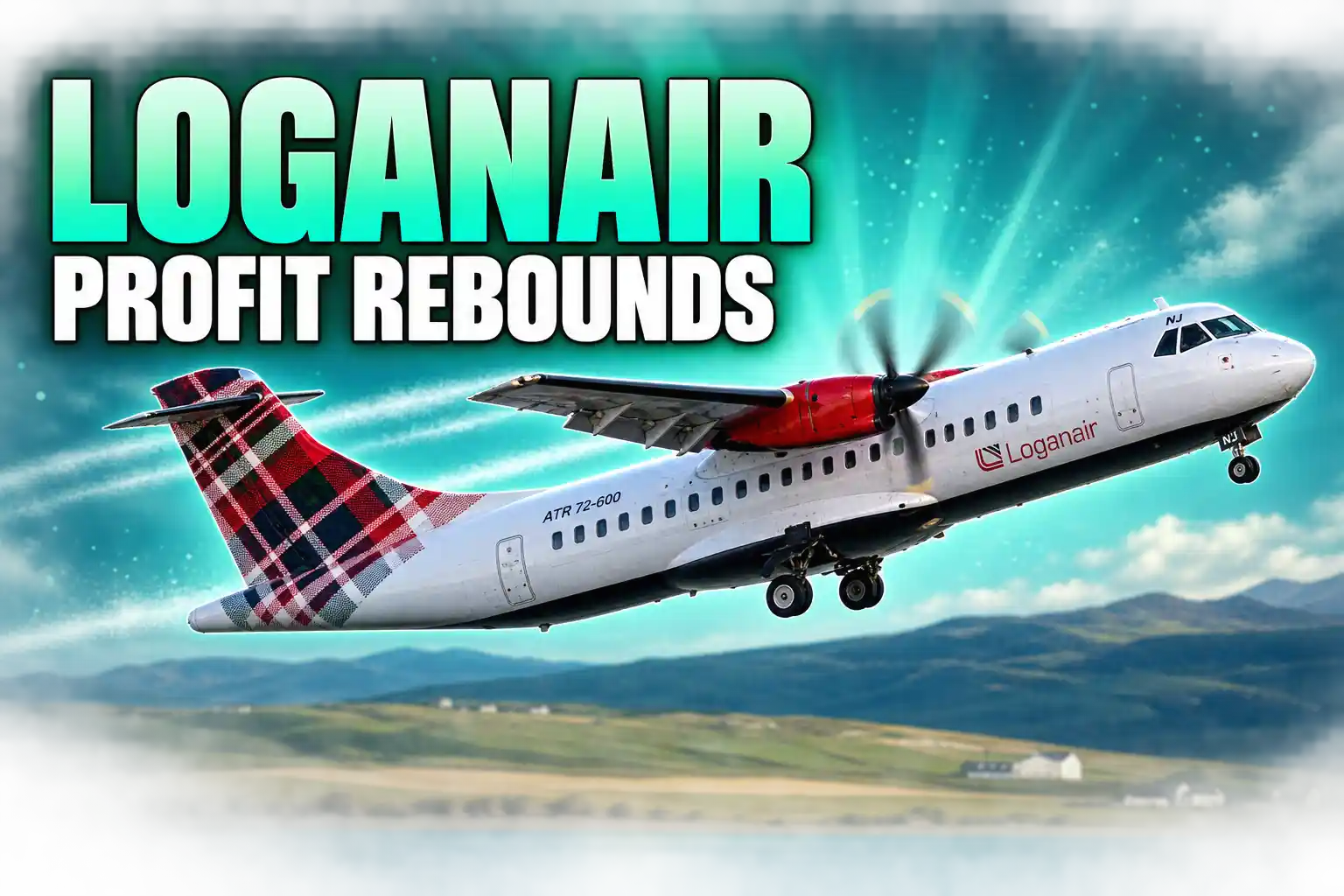
The Last Saab Left Glasgow in January
The messy year was the tail of a 24-year Saab 340 era. Loganair had run 18 of the Swedish twin-turboprops, flown more than 430,000 sectors on them, and carried over 8 million customers, mail, newspapers and pets. On some routes the ATR replacements were sold as carrying up to 45 percent more people, with a quieter cabin and bigger overhead bins.
THE FLEET CHANGE AND THE NEW BOSS
- 25 January 2024: Flight LM340, the last Saab 340, flies Kirkwall to Inverness to Glasgow. Captain Eddie Watt, the airline’s longest-serving pilot, retires on the same trip. Outgoing chief executive Jonathan Hinkles leaves that day.
- March 2024: Farajallah is in the chief executive’s chair for the first full year that will follow.
- 13 December 2024: Loganair publishes the £6.9 million year and says disruption costs are already falling.
- 27 November 2025: Companies House records the full accounts made up to 31 March 2025.
- 19 July 2026: Frequencies drop on Inverness links to Stornoway, Kirkwall and Sumburgh.
- 6 August 2026: The Scottish Government confirms extra money so full weekday island frequencies can return.
Hinkles had called the Saabs essential to island work. The ATRs were meant to stimulate more tourism into the islands. What the next accounts recorded was a smaller airline in flying hours, and a fatter one in profit.
What the Filed Accounts Show for 2025
Pre-tax profit for the year to 31 March 2025 came in at £11 million, up 59 percent on £6.9 million. Turnover went the other way, down 4 percent from £264.1 million to £253.1 million. Scheduled passengers fell from 1.52 million to 1.362 million, a drop of 157,521 people. Flight hours fell from 49,536 to 43,775. The load factor on scheduled passenger services slipped from 59.5 percent to 56.3 percent.
LOGANAIR’S TWO-YEAR SCORECARD
| Measure | Year to 31 March 2024 | Year to 31 March 2025 |
|---|---|---|
| Turnover | £264.1 million | £253.1 million |
| Pre-tax profit | £6.9 million | £11 million |
| Scheduled passengers | 1.52 million | 1.362 million |
| Flight hours | 49,536 | 43,775 |
| Load factor | 59.5% | 56.3% |
Operating profit was £10.5 million. After a £2.7 million tax charge, profit after tax was £8.2 million, up from £5.7 million. The filings put staff at 878. Staff costs still rose by almost 8 percent, to £52.2 million. The fleet stayed at 36 aircraft, 10 of them owned, with most busy services on ATR twins. The accounts described a “transformative shift” to stable flying, fewer delays and fewer cancellations, and a smaller compensation bill.
Global shortages of engines, landing gear and other parts had not gone away. The company said it had bought ahead on scarce components, and that many of those shortages were not expected to ease fully until late 2026 or even 2027. Next accounts, to 31 March 2026, are due by 31 December 2026.
Shareholders Collected an £8 Million Dividend
Those accounts also record the first dividends in many years: £8 million to shareholders. Orkney MSP Liam McArthur used the profit jump to press for cheaper island tickets. Island councils and HITRANS, the regional transport partnership, had already been asking Holyrood to look at fares that, on one island estimate, had risen by about 17 percent over the same stretch.
Simon McNamara, Loganair’s head of government and corporate affairs, defended the result at Shetland’s external transport forum. He said the profit margin was 4.3 percent and “not excessive”. That percentage matches £11 million on £253.1 million of turnover. Farajallah said a large chunk of seats, especially on Shetland routes, went out on reduced fares, and that the airline has to make a profit.
This year’s results reflect the remarkable progress our team has made in delivering sustained stability and resilience across Loganair’s operation. In a challenging environment for regional aviation, we have delivered stronger financial performance than the previous year, across a wider network, with improved punctuality, and ultimately a more reliable service for the communities we serve.
Luke Farajallah, chief executive, responding to Liam McArthur, December 2025
THE LEDGER AFTER THE DELAY CUT
- The owners: Stephen and Peter Bond received an £8 million dividend after years without one.
- The taxman: The charge rose to £2.7 million with the higher profit.
- The passenger count: 157,521 fewer scheduled travellers, and a load factor down 3.2 points, even after ATRs were sold as bigger cabins.
- The public purse: Inverness island frequencies were later cut, then put back with extra government money through Highlands and Islands Airports Ltd.
McNamara’s modest-margin defence and McArthur’s fare demand can both be true at once. A 4.3 percent return is not a windfall by airline standards. It is still a recovery large enough to send £8 million out of the company in the same year island routes were being described as too thin to stand up on their own.
A Punctuality Record With a Cost Saving
Farajallah had set on-time flying as an objective a year before the Q2 2025 figures landed, after what he called a lot of noise about punctuality. He told one interviewer the airline’s relationship with on-time performance had been inconsistent, and that the accolade was hard won. In that second quarter, 86 percent of Loganair flights arrived or left within 15 minutes of schedule, the usual industry cut-off, across the UK’s main airports in the UK flight punctuality statistics for 2025.
THE ON-TIME SHIFT
- The Q2 mark: 86 percent of flights were within 15 minutes in April to June 2025.
- The company’s claim: Loganair later said the Civil Aviation Authority named it the most punctual airline of 2025.
- The money: The 2024/25 accounts tie the profit recovery to fewer delays, fewer cancellations and lower compensation.
- The network: Farajallah cited the Q2 title when answering McArthur on fares.
Reliability was the product the 2024 plan was supposed to buy. It also became a cost cut. Compensation that is not paid stays in the business. So does the aircraft time that used to be eaten by disruption. Charter work still sits beside that scheduled network. On 30 April 2026 Loganair announced a multi-year contract for bp North Sea crews between Aberdeen and Sumburgh on ATR-42s, and used the same note to repeat the 2025 punctuality title and a tenth base at Southampton.
Why the Inverness Timetable Needed a Rescue
The same airline that had just paid a dividend then said it had been losing money for five or six years on Inverness to Stornoway, Kirkwall and Sumburgh. From 19 July 2026 it cut frequencies, including weekday flying on the Northern Isles legs. It asked for a public service obligation on those corridors, on top of the PSO flying it already does from Kirkwall to six outer Orkney islands and on the Scottish Government’s Glasgow links to Barra, Tiree and Campbeltown.
Emma Roddick, SNP MSP for Inverness and Nairn, put the cut in industrial as well as island terms. “The withdrawal of Loganair services between Inverness and the Northern Isles is a great concern for islanders, but also has huge potential impacts on Inverness and the Inner Moray Firth, limiting a key pipeline of skilled energy workers,” she wrote on X as @EmmaRoddickSNP, after raising it with the first minister.
On 6 August 2026 the Scottish Government confirmed over £1 million to restore island flights, paid to Highlands and Islands Airports Ltd so full frequencies from Inverness to Stornoway, Kirkwall and Sumburgh can restart on 26 October 2026. Cabinet secretary Stephen Flynn said HIAL and Loganair had worked through commercial talks, and that Transport Scotland would now look for a longer fix. Farajallah’s reply is the clearest statement of the private-public split.
“These routes matter enormously to the people who rely on them, and we’ve never lost sight of that throughout this process,” he said. “We’re a privately owned airline, and keeping thin routes like these flying isn’t something we can always do alone, so we’re genuinely pleased that the Scottish Government has stepped in to make full services possible again from October.”
By 9 September 2026 he was telling Shetland’s external transport forum there was “no danger” of the Sumburgh-Kirkwall-Inverness service being cancelled, and that threatening the route had been “the wrong way” to negotiate. If the financing through HIAL slipped, he said, Loganair would “find a way” to subsidise it. The Dundee operating base is still scheduled to close after 23 October 2026, which would leave that airport without the scheduled flying Loganair had based there.
A privately owned airline can post £11 million, send £8 million to its shareholders, and still be right that a handful of thin island legs do not cover their own costs. That combination is why island politicians now treat every Loganair funding ask as a repeat round, not a one-off rescue.
The Fuel Charge Islanders Cannot Discount
On 1 October 2026 a dossier went to Willie Rennie, chair of Holyrood’s Transport Committee, claiming Loganair had taken about £2.1 million of extra revenue over six months by raising fuel surcharges. The workings, based on public remarks, fuel prices and passenger counts, put about half of that on Highlands and Islands routes, where the standard surcharge had gone from £7 to £27 per return since the Iran war began. That add-on sits outside basic fares, so it does not get the Air Discount Scheme cut.
WHAT WE KNOW
- The hedge: The 2024/25 accounts show Loganair had forward bought around 80 percent of its 2025/26 fuel.
- The March remark: Farajallah said the airline had already acquired half the fuel it would need for 2026 and had recently added 20 to 25 percent to stocks.
- The committee: Rennie has said the inquiry into Loganair and island links will resume.
WHAT IS UNCONFIRMED
- The £2.1 million: That total is the dossier’s estimate, not a figure Loganair has accepted.
- The split: The claim that about half came from Highlands and Islands routes has not been audited in public.
- The motive: Whether a hedge and a surcharge rise amount to extra profit is still a political charge, not a finding.
Torcuil Crichton MP said the figures appear to show Loganair “banked fuel by buying ahead and then banked profits by increasing the cost of air fares,” and that there is a growing case for the Competition and Markets Authority to look at a monopoly air service. Loganair has not published a line-by-line rebuttal of the dossier in the material on record here. High island fares are already pushing a review of the 50 percent resident discount, which the airline says it will try to keep prices in reach of.
Full weekday frequencies on the Inverness island links are due back on 26 October 2026, on an airline that has already taken its dividend, booked the delay saving, and still needs a government cheque to keep those particular routes at full strength.

Gold Prices Slip to $4,120 as France Lifts the Dollar

Gemini Call for Me May Reach Friends and Family

Yemen Forces Claim Mokha as the Mecca Pact Activates

TCS Opens Q2 as Mid-Cap IT Keeps the Growth

Bitcoin’s Jobs Rally Fails While December Hike Odds Hold

Volkswagen Sells the Osnabruck Plant to Clear a Board Fight

Tata Motors’ Iveco Tender Opens as Holders Still Decide

Saksham Gaur Finds He Is His Own Company’s Client

Onimusha Way of the Sword Preload Hits a Windows 11 Wall

The Frame Pro’s $1,200 Labor Day Cut Needs a Soundbar
-
 AUTO4 weeks ago
Volkswagen Sells the Osnabruck Plant to Clear a Board Fight
-
 AUTO1 month ago
Tata Motors’ Iveco Tender Opens as Holders Still Decide
-
 BUSINESS1 month ago
Saksham Gaur Finds He Is His Own Company’s Client
-
 GAMING1 month ago
Onimusha Way of the Sword Preload Hits a Windows 11 Wall
-
 NEWS4 weeks ago
The Frame Pro’s $1,200 Labor Day Cut Needs a Soundbar
-

 BUSINESS1 month ago
Hyderabad 22-Carat Gold Jumps After a False Bargain
-

 BUSINESS1 month ago
The Rs 4.66 Lakh Crore IPO Queue Is Mostly Paper
-

 AUTO1 month ago
Simple Wave Chases Range as Ather Konarc Cuts Price